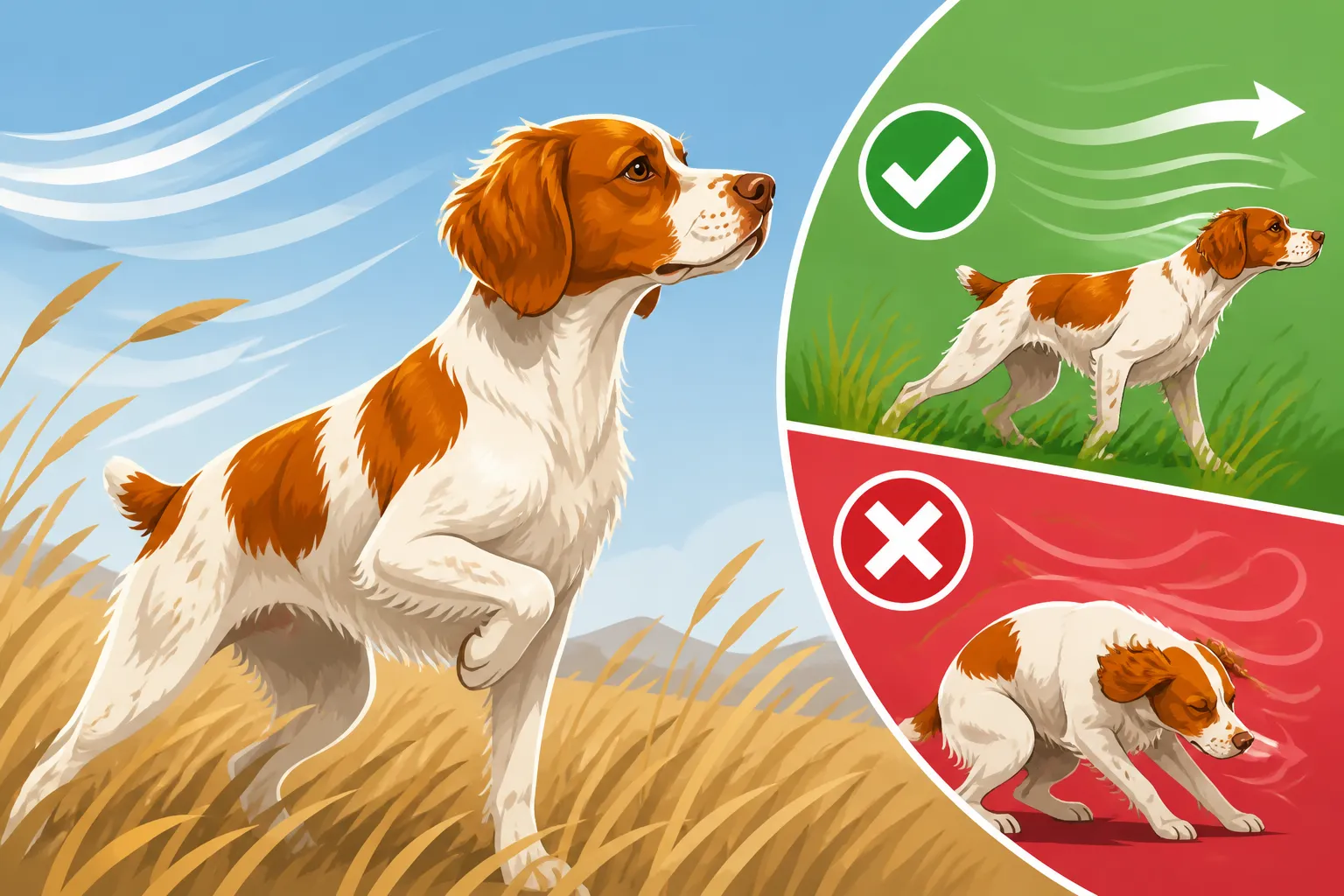
Whether a Brittany Handles Wind Correctly
One of the most thrilling and sometimes perplexing aspects of bird hunting with a Brittany is watching them work the wind. For new owners, or even seasoned hunters new to the breed, it can be a source of wonder and occasional frustration. How exactly does a Brittany use the wind to find birds, and what happens when the breeze isn't cooperating? This guide will dive deep into the Brittany's innate ability to handle wind, what proper technique looks like in the field, and how you can better understand and support your dog's instinctual prowess.
The Brittany's Instinct for Wind and Scent
There's a reason Brittanys excel as pointing breeds, and much of it boils down to their incredible noses and their inherent understanding of how scent travels on the wind. It's not just a cute trick; it's a finely tuned survival mechanism honed over generations of selective breeding.
Understanding Scent Cones and Air Currents
Imagine a bird hiding in the cover. As it sits there, its unique scent is constantly being shed into the air around it. This creates what we call a "scent cone" – a plume of odor that drifts downwind, much like smoke from a chimney. The stronger the wind, the wider and longer this cone can stretch. A Brittany's job is to intercept this scent cone, follow it to its source, and then pinpoint the bird.
When your Brittany is working, its head will often be held high, nose into the wind. They're not just enjoying the breeze; they're actively sampling the air, processing subtle changes in scent concentration. A sudden increase in scent tells them they're getting closer, while a decrease means they might have drifted out of the cone or that the wind has shifted. This constant interpretation of air currents is what allows them to unravel the mystery of a bird's location, even when the bird itself is completely hidden from view.
Natural Aptitude vs. Training
The good news for Brittany owners is that this breed comes with a strong, natural aptitude for wind work. It's deeply ingrained in their genetics. You'll often see a young Brittany puppy, even before formal training, naturally turning its head into the breeze or trying to get downwind of an interesting smell. This raw instinct is a tremendous asset and forms the foundation of all their future field work.
However, "natural" doesn't always mean "perfect." While the instinct is there, effective wind handling is refined through experience and good training. A novice Brittany might follow a scent cone too far downwind, blowing past the bird, or might not adjust quickly enough to swirling winds in dense cover. This is where a partnership with the handler comes in. By observing your dog, understanding their signals, and providing subtle guidance, you can help them develop their natural talent into a polished, efficient hunting style. Think of it as guiding a natural artist to master their craft; the talent is there, but technique and experience make all the difference.
How a Brittany Should Work the Wind
When you see a well-trained Brittany in the field, their wind work often looks effortless, almost magical. But there's a method to their graceful madness, a calculated approach to maximizing their scenting abilities.
Quartering Into the Wind
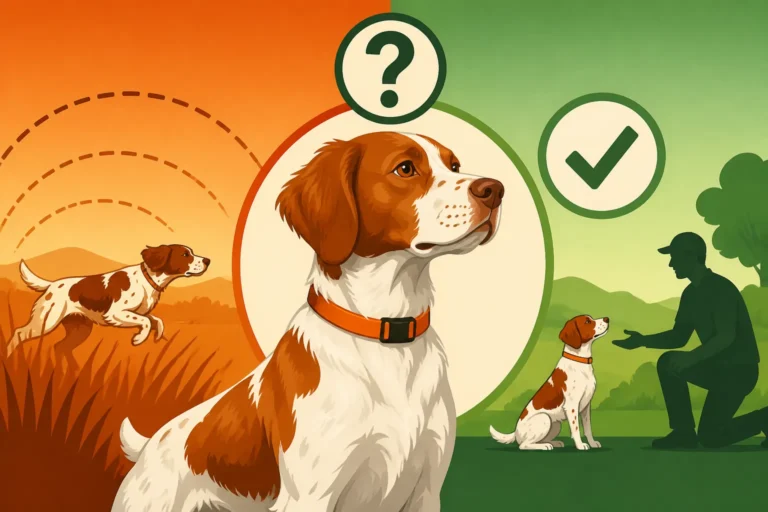
The hallmark of effective wind handling in a Brittany, especially when working open ground, is quartering directly into the wind. Imagine dividing the field into a series of imaginary lanes. Your Brittany should be running back and forth across these lanes, in front of you, always keeping the wind flowing into their face. This isn't just arbitrary; it's strategic. By continually moving into the wind, they expose their nose to the freshest scent possible, allowing them to detect a bird from the furthest distance.
As they quarter, you'll see them making wide, sweeping turns. With each turn, they briefly bring the wind across their flanks, allowing them to quickly reassess scent availability. If the wind carries the scent of a bird, they'll often "lock on" during one of these sweeps, adjusting their angle to get directly downwind and follow the cone to its source. The ideal is to have them cover the ground thoroughly but efficiently, ensuring no bird is missed. The range at which they do this can vary; an How Far an American Brittany Ranges might cover significantly more ground than a How Close a French Brittany Hunts, but the principle of working into the wind remains the same.
Adjusting to Wind Direction Changes
Nature rarely offers a perfectly consistent breeze. Winds can shift, swirl, or even die down entirely, especially in broken terrain or near topographical features. A truly skilled Brittany demonstrates its prowess by adapting seamlessly to these changes. When the wind shifts, a Brittany might initially seem to "lose" the scent, but watch closely. They'll often widen their cast, make a quicker turn, or even circle back slightly to re-establish the scent cone based on the new wind direction.
This adaptability is a testament to their intelligence and their constant communication with the environment. They're not just running; they're constantly evaluating. Sometimes, in particularly tricky conditions, a Brittany might even pause and look back at you, almost asking for direction or a confirmation of where to search next. This mutual understanding and trust between handler and dog is paramount. Your job is to be aware of wind changes yourself and, if necessary, provide a subtle whistle command or hand signal to guide them back into an effective quartering pattern.
Using Crosswinds and Tailwinds
While working directly into the wind is ideal for initial bird detection, Brittanys also navigate crosswinds and even tricky tailwinds with learned skill. In a crosswind, where the wind blows across the field rather than directly at you or your dog, a Brittany will still try to get downwind of any potential scent. They might quarter slightly wider on the downwind side, using the crosswind to help them catch the edge of the scent cone as they traverse. This allows them to quickly intercept and then pivot to follow the scent directly upwind to the bird.
Tailwinds, where the wind is blowing from behind the dog towards the bird, are arguably the most challenging. In this scenario, the bird's scent cone is blowing away from the dog, making it much harder to pick up. A smart Brittany will often adjust its run, perhaps hunting tighter to the gun, or making more frequent checks back with the handler. They might also rely more heavily on foot scent in these conditions, transitioning from air scenting to nose-to-the-ground work, a true display of their versatility. It's in these tough conditions that their dedication and drive truly shine, proving their mettle as reliable hunting partners.
Common Wind-Related Challenges and Solutions
Even the most naturally gifted Brittany can face challenges when it comes to wind. Understanding these common issues can help you diagnose problems and implement effective solutions, turning potential frustrations into opportunities for growth.
Hunting Upwind or Downwind Incorrectly
One of the most common pitfalls, especially for younger dogs, is hunting upwind or downwind incorrectly. If your Brittany consistently tries to run directly upwind, with its nose constantly to the ground, it's missing out on the vast advantage of air scenting. They might eventually find a bird, but it will be through ground scent, which is far less efficient for a pointing dog. Conversely, if a dog runs too far downwind, it's prone to "blowing past" birds. The scent cone will be strong, but the dog might overshoot the bird, only to circle back in confusion when the scent disappears.
The solution to these issues lies in consistent training and reinforcement of proper quartering patterns. Start in areas with light winds and visible game (like pigeons or quail) so your dog can associate the scent with the bird's location while working into the wind. Use a check cord initially to guide their quartering, helping them understand the desired pattern. Teaching a Brittany to Hunt for the Gun is essential here, as it teaches them to work in partnership with you, covering the ground effectively within your shooting range. For more persistent issues, an e-collar, when used humanely and correctly, can be an invaluable tool to reinforce direction and range. You'll find a wide selection of e-collars suitable for Brittanys on platforms like Amazon, but always prioritize proper training and fitting.
Dealing with Swirling Winds or No Wind
Swirling winds, often encountered in thick cover, rolling hills, or dense timber, present a unique challenge. The scent cone becomes erratic, constantly changing direction, making it difficult for the dog to establish a clear line to the bird. In these conditions, a Brittany might naturally shorten its range, hunting tighter and relying more on its ability to sift through chaotic scent particles. They may also switch to more ground-scenting, understanding that the air currents are too unreliable.
A complete lack of wind is another tough scenario. When the air is still, scent rises vertically rather than drifting horizontally, making it incredibly hard for a dog to pick up from a distance. In these situations, a Brittany will often slow down, becoming more methodical in its search. They will cover ground more thoroughly, paying closer attention to foot scent and any subtle air movement. As a handler, recognizing these conditions is key. You might need to adjust your expectations for how widely your dog hunts and allow them to work at a slower, more deliberate pace. Patience is your best friend on windless days.
Over-Relying on Sight vs. Scent
Sometimes, especially with young, energetic Brittanys, the excitement of the chase can override their sophisticated scenting instincts. They might spot a bird moving or flush one by accident and give chase, relying on sight rather than methodically working the scent cone. While the Brittany's drive is admirable, this can lead to missed birds and inefficiency in the field.
It's crucial to train your Brittany to focus on scent and to be steady to wing and shot. This means teaching them that their job is to find and point the bird, not to chase it. Early training should emphasize holding point. When a Brittany Should Stop Chasing is a critical milestone, ensuring they understand that chasing is not allowed. A strong foundation in obedience and control, ideally built through consistent, positive training methods, can help immensely. For new puppy owners, a comprehensive online program like those offered by BAXTER & Bella can provide structured guidance, helping to instill focus and biddability from an early age, long before complex field concepts are introduced. This foundational work makes it easier for them to resist the urge to chase and instead trust their nose.
| Aspect | Effective Wind Handling (Ideal Brittany) | Ineffective Wind Handling (Common Issues) |
|---|---|---|
| Quartering | Sweeping patterns directly into the wind, maximizing air scent. | Runs sporadically, often downwind, misses scent. |
| Scenting Technique | Head high, actively sampling air currents, identifies scent cones. | Nose often to ground, relies on foot scent, slow to detect. |
| Adaptability | Adjusts quickly to wind shifts, changes range/pattern as needed. | Confused by wind shifts, overshoots birds, struggles in swirls. |
| Focus | Driven by scent, maintains point, waits for handler. | Distracted by movement, prone to chasing, bumps birds. |
| Efficiency | Covers ground thoroughly and rapidly, finds birds consistently. | Misses areas, takes longer to find birds, flushes erratically. |
Supporting Your Brittany's Wind Work
Even with their incredible natural instincts, your Brittany benefits immensely from your informed support and dedication to consistent training. Think of yourself as their field partner, helping them navigate the nuances of wind and scent.
Reading the Wind Yourself
One of the most powerful things you can do to support your Brittany is to become a student of the wind yourself. Before and during a hunt, observe the wind direction and strength. Look at how grass bends, how leaves fall, or use a wind checker (a small bottle of powder) to visibly see the air currents. Knowing the wind allows you to position yourself and guide your dog more effectively. If the wind is coming from your left, you'll want to encourage your dog to work from left to right in front of you, always quartering into that breeze.
Your understanding of the wind allows you to anticipate where a bird's scent cone might be drifting. You can then use subtle commands, like a whistle or a hand signal, to direct your Brittany into the most advantageous position. This isn't about overriding their natural ability, but rather enhancing it by providing them with the best possible starting point and continuous environmental feedback. It builds a harmonious partnership where both of you are "reading" the field.
Practice in Varied Conditions
It's easy to train on calm, sunny days, but real hunting rarely offers such perfect conditions. To truly hone your Brittany's wind handling skills, you need to expose them to a variety of wind strengths and directions. Seek out different terrains as well – open fields, areas with light cover, and even places with swirling winds. This helps your dog build experience and learn to adapt.
Using training birds is invaluable for this practice. Start with pigeons or quail, allowing your Brittany to find and point them in different wind scenarios. How to Start a Brittany on Pigeons is a great resource for beginning this process. Don't be afraid to plant birds in tricky spots, forcing your dog to really work the wind and solve the scent puzzle. The more diverse experiences your Brittany has, the more resilient and capable they will become when faced with unpredictable field conditions. Remember, every outing is a learning opportunity.
Health and Physical Condition
A Brittany's ability to handle wind correctly is inextricably linked to their overall health and physical condition. A dog that is out of shape will tire quickly, losing focus and the energy needed to quarter effectively and process subtle scent changes. Therefore, ensuring your Brittany is properly conditioned before the season opens is paramount. How to Keep a Brittany Fit in Summer provides excellent guidance on building their stamina and muscle tone. A fit dog not only hunts better but also recovers faster, ready for the next outing.
Equally important is the health of their primary tool: their nose. Any issues that affect their olfactory senses, such as allergies or nasal infections, can severely impair their ability to detect and follow scent. Regular veterinary check-ups and attention to general health are crucial. Pay close attention to their ears too; Why a Brittany's Ears Get Infected Every Season is a common concern that can distract a dog or even lead to systemic issues that impact their overall performance and ability to focus on scenting. A healthy dog is a happy and effective hunting partner, fully capable of utilizing their amazing wind-working instincts.
Disclaimer
This article is for general informational purposes only and does not constitute professional advice. Laws, prices and regulations vary by location and change over time. Consult a qualified professional for guidance on your specific situation.