Whether a Brittany Gets Separation Anxiety
One of the biggest worries many Brittany owners face is leaving their beloved companion alone, wondering if their highly social and affectionate dog will cope or crumble. It's a valid concern, as these dogs thrive on companionship, and it's easy to mistake their strong bond for an inability to be independent. This guide will dive deep into the nuances of Brittany behavior, helping you understand the difference between normal clinginess and true separation anxiety, and equip you with practical strategies to ensure your Brittany feels secure and content, whether you're home or away.
Understanding the Brittany's Affectionate Nature
Brittanys are undeniably people-oriented dogs, bred to work closely with their human partners in the field. This inherent desire for companionship extends into their home life, making them incredibly loyal and affectionate family members. It’s this deep connection that often makes owners wonder if their Brittany is prone to separation anxiety.
The Brittany's Strong Bond with Its Family
If you own a Brittany, you've likely experienced the "velcro dog" phenomenon. They follow you from room to room, curl up at your feet while you work, and are always ready with a wagging tail and an expectant gaze. This isn't just a quirk; it's deeply ingrained in their breed history. Unlike some more independent hunting breeds, Brittanys were developed to be close-working gun dogs, constantly checking in with their handler. This history translates directly to their modern home lives, where they form incredibly strong, almost inseparable, bonds with their human families. It’s this profound attachment that makes the thought of leaving them alone so daunting for many owners. You might find yourself wondering, Whether a Brittany Follows You Room to Room, and the answer is usually a resounding yes! They love being part of whatever you're doing.
Why Brittanys Crave Company
Their energetic, intelligent nature means Brittanys are always observing, learning, and seeking interaction. They thrive on being involved in family activities, whether it's a walk in the park, a training session, or simply relaxing on the couch. This craving for company isn't just about physical proximity; it's also about mental and emotional engagement. A Brittany left alone without enough mental stimulation or social interaction can quickly become bored, and boredom can sometimes manifest in ways that mimic anxiety. They're not just pets; they're active participants in your life, and they truly enjoy sharing experiences with you.
Signs of a Brittany Being "Clingy" Not Necessarily Anxiety
It’s crucial to distinguish between a naturally affectionate, "clingy" Brittany and one suffering from true separation anxiety. A clingy Brittany might greet you enthusiastically, follow you around the house, or whine a little when you prepare to leave. They might even try to sneak onto your lap or lean against you constantly. These behaviors, while intense, are often just expressions of their deep affection and desire to be near you. They might be a bit sad or restless when you leave, but they generally settle down within a reasonable time, chew on an appropriate toy, or simply nap until you return. This is often just part of What a Brittany's Temperament Is Really Like.
Differentiating Normal Clinginess from True Separation Anxiety
Understanding the difference between a dog who simply misses you and one who is truly distressed is paramount. Many Brittany owners initially misinterpret normal signs of affection or boredom as separation anxiety, leading to unnecessary worry or even incorrect interventions.
What Normal Brittany Behavior Looks Like When Alone
When a well-adjusted Brittany is left alone, they typically exhibit a calm resignation. They might watch you leave, perhaps give a small whimper or sigh, but then they usually settle into a routine. This might involve patrolling the house once, getting a drink of water, finding a comfortable spot to nap, or engaging with a favorite chew toy. You might find them exactly where you left them, or perhaps they've moved to a different sunny spot. They might greet you with excitement upon your return, but the house will generally be intact, and there won't be any signs of extreme distress. They understand you're coming back, even if they're not thrilled about your departure. If you're wondering How Many Hours a Brittany Can Be Left, a well-adjusted Brittany can usually manage a typical workday if they've had proper exercise and mental stimulation before you leave.
The Destructive Side of True Separation Anxiety
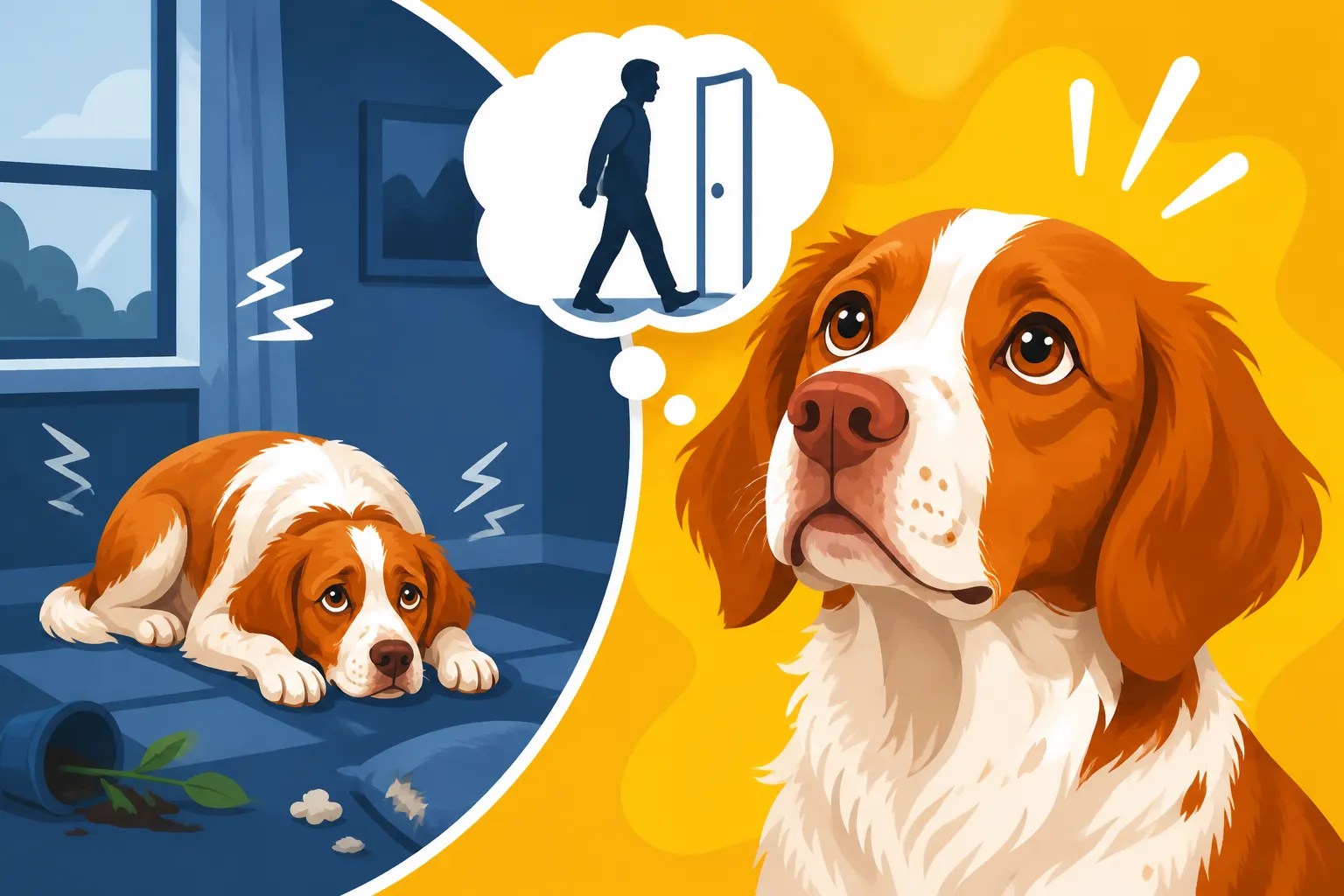
True separation anxiety manifests in much more severe and often destructive ways. This isn't just boredom; it's panic. A Brittany suffering from separation anxiety might engage in frantic efforts to escape, leading to scratched doors, chewed window sills, or damaged crates. They might urinate or defecate inside, even if they are otherwise perfectly house-trained. This isn't defiance; it's a physiological response to extreme stress. They aren't "being bad" or "getting even"; they are genuinely terrified and trying to cope with an overwhelming sense of abandonment. This kind of destructive behavior is a clear red flag that something more serious than simple clinginess is at play. It's far beyond just What a Bored Brittany Destroys.
Physical Symptoms That Signal Deeper Distress
Beyond destructive behavior, several physical symptoms can indicate genuine separation anxiety. These include excessive drooling, panting, trembling, and sometimes even self-mutilation, such as licking or chewing paws until they're raw. They might bark or howl incessantly, not just for a few minutes after you leave, but for extended periods. Some dogs will frantically pace or circle, unable to settle. When you return, they might be overly exuberant, almost frantic in their greeting, and it can take them a long time to calm down. These are signs that their sympathetic nervous system is in overdrive, indicating a genuine panic response rather than just missing their person. You might notice them Whether a Brittany Whines in the Crate for prolonged periods, which can be a sign of distress.
Here's a quick comparison to help you tell the difference:
| Behavior | Normal Clinginess / Boredom | Separation Anxiety |
|---|---|---|
| Reaction to Departure | Minor whining, watches you leave, settles. | Frantic efforts to prevent departure, extreme distress as you leave. |
| Behavior When Alone | Naps, plays with toys, explores, calm. | Destructive chewing/digging, attempts to escape, persistent barking/howling, pacing, elimination indoors. |
| Physical Symptoms | None or minor restlessness. | Excessive drooling, panting, trembling, self-mutilation (paw licking). |
| Greeting Upon Return | Enthusiastic, happy, settles quickly. | Frantic, overwhelming excitement, takes a long time to calm down. |
| Destruction | Mild chewing on toys/approved items (if bored). | Severe destruction of exits (doors, windows, crates), furniture. |
| Vocalization | Occasional whine, bark at sounds. | Continuous, high-pitched barking, howling, distressed crying. |
Common Triggers for Separation Anxiety in Brittanys
Separation anxiety isn't always something a dog is born with; it's often a learned response or triggered by specific events. Understanding these triggers can help you either prevent it from developing or identify the root cause if your Brittany is already struggling.
Changes in Routine and Environment
Brittanys, like many dogs, thrive on routine and predictability. A sudden change in their daily schedule, such as a shift in your work hours, a move to a new home, or even the loss of another pet or family member, can be deeply unsettling. For a dog that relies on consistency, these disruptions can lead to feelings of insecurity and heightened anxiety when left alone. Imagine being accustomed to a certain rhythm, only for it to be completely upended without explanation – that's how it can feel to your Brittany. It's vital to introduce changes gradually whenever possible to help them adjust.
Early Life Experiences and Insufficient Training
A Brittany's early experiences play a huge role in their resilience. Puppies who are separated from their mothers or littermates too early, or who experience neglect or trauma, may be more predisposed to anxiety. Furthermore, a lack of proper socialization and independent training during puppyhood can contribute. If a puppy is never taught to be comfortable alone, even for short periods, it can develop an over-reliance on constant human presence. This is why positive, consistent training from an early age, including crate training and short periods of solitude, is so important. Ensuring Whether a Brittany Needs Puppy Class can provide crucial foundational skills.
Over-Attachment and Lack of Independent Play
Sometimes, as owners, we inadvertently contribute to separation anxiety by fostering too much dependence. While it's wonderful to have a close bond, never leaving your Brittany alone, constantly picking them up, or reacting strongly to every whine can reinforce the idea that they need you constantly. Brittanys are intelligent and active, and they need to learn to entertain themselves and feel secure even when you're not actively engaging with them. Encouraging independent play with puzzle toys or chews, and calmly ignoring attention-seeking behaviors, can help them build confidence in their own company.
Proactive Steps to Prevent Separation Anxiety in Brittany Puppies
The best offense is a good defense, and this holds true for separation anxiety. Starting early with intentional training and socialization can lay a solid foundation for a confident, independent Brittany.
Building Independence from Day One
Even as adorable puppies, Brittanys need to learn to be comfortable on their own. This doesn't mean neglecting them, but rather gently encouraging self-reliance. Start by simply having them in a different room while you do chores, with a comforting chew toy. Gradually increase the distance and the duration. Don't make a big fuss every time you leave or return. A calm "see you later" and an equally calm greeting upon return help normalize your comings and goings, teaching your Brittany that your absence isn't a catastrophe. Think about setting up a safe space for them, perhaps a comfortable dog bed or a crate, where they can relax away from constant interaction. This helps them build confidence in their own space.
Crate Training as a Foundation for Security
Crate training is one of the most effective tools for preventing separation anxiety. When introduced correctly and positively, a crate becomes a safe, den-like space where your Brittany feels secure. It's not a punishment; it's their personal sanctuary. Start with very short periods, with the door open, offering treats and praise. Gradually increase the time the door is closed, always ensuring your dog is comfortable and never using the crate as a penalty box. A well-crate-trained Brittany will often go into their crate voluntarily for naps, feeling safe and secure when you're out of sight. This comfort in their personal space is invaluable for fostering independence.
Gradual Desensitization to Alone Time
Teaching your Brittany that being alone is okay is a process of gradual desensitization. Start with leaving for just a few minutes, then slowly increase the duration. Before you leave, provide a high-value, long-lasting chew or a puzzle toy stuffed with something delicious. This creates a positive association with your departure. Practice mock departures – pick up your keys, put on your coat, then sit back down. Repeat this until these actions no longer trigger an anxious response. The goal is to make your absence a non-event. Consistency is key, and remember that How Long a Brittany's Training Session Should Be applies to alone time training as well; keep it short and positive, gradually extending.
Strategies for Managing Existing Separation Anxiety
If your Brittany is already showing signs of separation anxiety, it can feel overwhelming. But there are many effective strategies, from environmental adjustments to behavior modification, that can help your dog overcome their distress.
Creating a Calming and Secure Environment
The first step is to ensure your Brittany's environment contributes to a sense of calm and security. This might mean providing a comfortable crate or a designated "safe zone" with their bed, blankets, and favorite toys. Using a calming pheromone diffuser (like Adaptil) or a thunder shirt can also help some dogs feel more secure. Ensure they have access to fresh water and appropriate chew toys to help redirect anxiety. Think about leaving on a radio or TV at a low volume to provide some background noise, making the house feel less empty. For some dogs, the simple presence of familiar sounds can be a huge comfort.
Behavior Modification Techniques and Counter-Conditioning
Behavior modification involves changing your Brittany's emotional response to being alone. Counter-conditioning means associating your departure with something positive. Before you leave, give your Brittany a special treat or toy that they only get when you're going out – a Kong stuffed with peanut butter or a puzzle toy with kibble. This transforms your departure from a negative event to one associated with a desirable reward. Start with very short departures (just seconds), returning before your dog becomes anxious, and gradually increase the time. Keep greetings and departures low-key and calm, avoiding overly emotional goodbyes or hellos that can heighten their anxiety. The BAXTER & Bella online puppy school offers some fantastic resources and lessons on managing these behaviors, providing structured guidance for owners.
Seeking Professional Help and Veterinary Consultations
If your Brittany's separation anxiety is severe, professional help is crucial. A certified professional dog trainer or a veterinary behaviorist can assess your dog's specific needs and create a tailored plan. They might employ advanced behavior modification techniques, and in some cases, medication might be considered as an adjunct to training, especially if the anxiety is debilitating. Your veterinarian can rule out any underlying medical conditions that might be contributing to the behavior. It's important to remember that separation anxiety is a genuine panic disorder for dogs, and there's no shame in seeking expert guidance to help your beloved Brittany cope.
Tools and Resources to Support Your Brittany
Beyond training and environmental changes, several tools and resources can make a significant difference in helping your Brittany manage their alone time and reduce anxiety.
Enrichment Toys and Puzzle Feeders
Mental stimulation is vital for an intelligent breed like the Brittany. Enrichment toys and puzzle feeders can keep their minds engaged and distracted when you're not around. Toys that dispense treats as your dog manipulates them can turn alone time into a rewarding scavenger hunt. Long-lasting chews, such as durable rubber toys (like those found on Amazon) that can be stuffed with food, can keep them occupied for a significant period. These aren't just toys; they're vital tools for redirecting anxious energy into constructive, satisfying activities. Providing these before you leave can help create a positive association with your absence.
Calming Aids and Supplements
For some Brittanys, certain calming aids and supplements can provide a gentle assist. Pheromone diffusers, sprays, or collars mimic the natural calming pheromones produced by nursing mother dogs, helping to create a sense of security. Supplements containing ingredients like L-theanine, tryptophan, or calming herbs are also available. While these are not a cure-all, they can sometimes lower the overall anxiety level, making your dog more receptive to training and behavior modification. Always consult your veterinarian before introducing any new supplements to ensure they are safe and appropriate for your Brittany.
Online Training Programs and Community Support
You don't have to face this challenge alone. Many online training programs offer structured guidance and support for separation anxiety. Platforms like BAXTER & Bella provide comprehensive courses that walk you through step-by-step methods for building your dog's confidence and managing alone time. Additionally, connecting with other Brittany owners through breed-specific forums or social media groups can offer a wealth of shared experiences, tips, and emotional support. Sometimes just knowing you're not the only one dealing with a particular issue can be incredibly reassuring. Remember, your Brittany's well-being is a shared journey, and there are many people and resources ready to help.
Disclaimer
This article is for general informational purposes only and does not constitute professional advice. Laws, prices and regulations vary by location and change over time. Consult a qualified professional for guidance on your specific situation.