Whether Range Can Be Trained Out of a Brittany
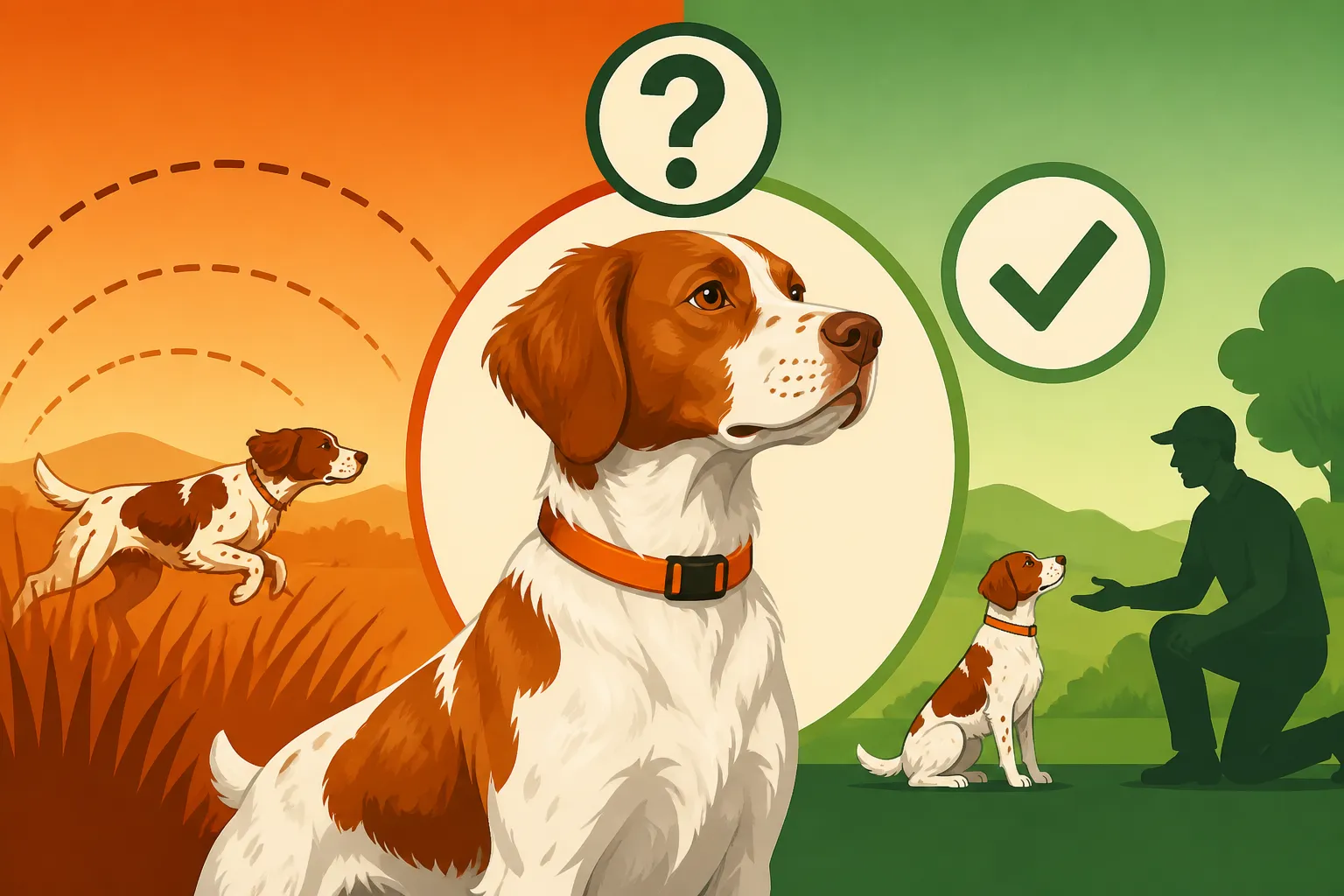
One of the most common frustrations for new Brittany owners, especially those who dream of a close-working bird dog, is seeing their energetic companion disappear over the horizon. It's a question many of us have wrestled with: can you truly train the natural "big run" out of a Brittany, or are we fighting against their very essence? This guide dives deep into managing your Brittany's range, understanding their instincts, and implementing strategies to cultivate a more cooperative, yet still passionate, hunting partner.
Understanding the Brittany's Natural Tendency to Range
Let's be honest, the Brittany was bred to cover ground. These dogs are athletes, designed with an insatiable drive to find birds. It’s in their DNA to investigate every scent, every whisper of game, and sometimes, that means venturing further than we might prefer.
Why Brittanys Love to Run Wide
Brittanys, particularly the American lines, were developed with vast prairies and big country in mind. They were meant to work quickly and efficiently, quartering the field to locate game. This isn't laziness or defiance; it's instinct. When you see your Brittany take off, nose to the ground, with that incredible burst of speed, they're simply doing what generations of their ancestors were bred to do. They possess an almost boundless energy and an intelligence that, when paired with their bird drive, means they’re constantly assessing the environment for opportunities to hunt.
For many American Brittany lines, the breeding emphasis has been on covering extensive territory. You can learn more about this by exploring Why an American Brittany Was Bred to Run Bigger. They need to get out there, use that powerful nose, and locate birds before they fly off. This desire to work big isn't just for show; it's functional for certain hunting styles. If you're a foot hunter, however, this natural tendency can feel like a constant battle, especially when you're trying to keep pace or just keep them in sight. They aren't trying to be disobedient; they are just following their profound instincts.
The Challenges of a Wide-Ranging Brittany
The joy of watching a Brittany work can quickly turn into anxiety when they push their range too far. For starters, there’s the obvious safety concern. A dog ranging hundreds of yards away is vulnerable to traffic, other hunters, livestock, or getting disoriented and truly lost. Even in open country, an invisible boundary like a road or a property line can quickly become a hazard.
From a practical hunting perspective, a dog that ranges too wide can be detrimental. If you're a walking hunter, you simply can't keep up with a dog that's consistently 300 yards out. It disrupts the rhythm of the hunt, leading to missed opportunities when birds are flushed too far away or, worse, to a lost dog. Furthermore, it can be incredibly frustrating. You spend hours training, developing a bond, and then in the field, it feels like all that work disappears the moment a bird scent hits the air. This often leads owners to question their training or even the breed itself. However, it's about understanding the dog's inherent drive and learning to channel it effectively. This is why many foot hunters look into a French Brittany, which typically hunts closer. You might find some helpful information in Whether a French Brittany Suits a Walking Hunter.
Strategies to Manage and Shorten a Brittany's Range
While you might not completely "train out" a Brittany's natural desire to cover ground, you can absolutely manage and shorten their effective working range. It takes consistency, patience, and the right tools.
Foundation Training and Consistent Recall
Everything starts with a rock-solid foundation, and for a wide-ranging dog, that foundation is recall. Your Brittany must come when called, every single time, without hesitation. This isn't just a command; it's a lifeline. Begin recall training early, in low-distraction environments, using high-value rewards. Make coming back to you the most exciting and rewarding thing your puppy can do. Short, frequent sessions are far more effective than long, drawn-out ones.
Consider enrolling in a comprehensive puppy training program, even if it's online. Resources like BAXTER & Bella offer fantastic, step-by-step guidance that can help you build this crucial bond and obedience from day one. Consistent practice in varied environments is key. Once your Brittany has a strong recall in a fenced yard, gradually introduce more distractions, but always ensure success. If you call and they don't come, you've asked for too much too soon, and you've inadvertently taught them that recall is optional. Understanding How Reliable a Brittany's Recall Is is fundamental to working on range.
As your dog progresses, the check cord becomes an indispensable tool. A 20 to 50-foot check cord allows you to give your dog the illusion of freedom while maintaining control. When they start to push their boundaries, a gentle but firm tug on the cord, followed by a recall command, reinforces the desired range. This isn't punishment; it's clear communication of expectations. They learn that straying too far means encountering resistance and being re-directed, while staying within range means continued freedom and positive reinforcement. You can find a good quality, long check cord easily on Amazon.
Utilizing Training Tools and Techniques
Beyond the basics, several tools can significantly aid in managing a Brittany's range, especially when transitioning to more open environments.
The Electronic Collar (E-Collar)
The e-collar, when used correctly, is a communication device, not a punishment tool. It provides a consistent, remote tap on the shoulder that can interrupt undesirable behavior (like pushing too far) and reinforce desirable ones (like checking in). Introduction should be done under the guidance of a knowledgeable trainer, starting at very low stimulation levels. The goal is for your Brittany to associate the e-collar's sensation with a command they already know, like "come" or "here."
Once that association is solid, you can use the e-collar to reinforce your desired range. As your Brittany starts to push out, a low-level stimulation can prompt them to check back with you. Reward them enthusiastically when they do. This teaches them that staying within a certain distance from you leads to continued freedom and positive interaction. For more insights, you might want to look into What an E Collar Costs a Brittany Owner and understand its potential benefits versus its price. Remember, it's about making your expectations clear and consistent, not about startling or hurting your dog.
The Beeper Collar
While not a direct range control tool in the same way an e-collar or check cord is, a beeper collar (or a GPS collar with beeper function) can be invaluable for awareness. It lets you know where your Brittany is, even when they're out of sight in thick cover. This knowledge can give you confidence to let them work a little bigger, knowing you can locate them quickly. Some beeper collars have a "point" mode that changes the beeping rhythm when the dog is on point, helping you navigate directly to them.
Knowing your dog's exact location can indirectly help manage their range by reducing anxiety. If you know they are still moving and you hear the steady "run" beep, you can then decide if they need a recall via e-collar or whistle. While it doesn't train range, it supports your ability to manage it. Curious about the investment? Check out What a Beeper Collar Costs a Brittany Owner. Some trainers also believe that a constant beeping can subtly influence a dog's tendency to range, prompting them to stay closer simply because the sound of the beeper is more immediate. Whether a Beeper Collar Changes a Brittany's Range discusses this further.
Environmental Management and Progressive Training
Training a wide-ranging Brittany requires a graduated approach to environments.
Start Small and Controlled
Begin all off-leash training in a completely fenced area where there are no external distractions and no chance of your dog getting truly lost. This could be your backyard, a secure dog park during off-peak hours, or a friend's property. The goal here is to establish the habit of checking in with you regularly. Every time your dog looks at you, comes close, or responds to a quick whistle, reward them. This builds the understanding that "near me" is a good place to be.
Gradually Increase Space and Distractions
Once your Brittany consistently performs well in a small, controlled space, slowly expand the training area. Move to an open field, but perhaps one that's bordered by woods or a road far enough away that you have a buffer. As you increase the size of the area, you'll inevitably encounter new distractions. This is where your recall and e-collar work become critical. The moment you see your Brittany starting to push beyond your comfort zone, give your recall command. If they hesitate, a low-level e-collar stimulation reinforces the message.
The key is to set your dog up for success. Don't go straight from a backyard to an unfenced national forest. Incrementally increase the challenge, always ensuring that you can intervene successfully if your dog starts to ignore your boundaries. Think of it as slowly stretching a rubber band: you can let it go further, but you always maintain the ability to snap it back.
The Importance of "Checking In"
One effective technique for shortening range is to instill a strong "check-in" habit. From an early age, teach your Brittany to periodically look back at you or even return to your side, even without a command. Reward this behavior heavily. This cultivates a dog that is aware of your location and your expectations. In the field, every time they naturally check in, praise them, give them a treat, and then release them to hunt again. This reinforces that hunting close to you is rewarding.
You can actively encourage check-ins by changing direction frequently, hiding behind a tree, or stopping unexpectedly. When your dog realizes you're not where they last saw you, they'll often come looking. Reward this initiative. For more on this, you can read How Often a Brittany Should Check In. This consistent, positive reinforcement for checking in gradually teaches your Brittany that their hunting world revolves around you, the handler.
| Training Tool/Technique | Purpose for Range Control | When to Use | Key Benefits |
|---|---|---|---|
| Consistent Recall | Fundamental control, safety | Always, from puppyhood | Builds strong bond, immediate safety |
| Check Cord | Physical boundary, communication | Early stages of off-leash, higher distraction | Safe practice, clear physical limit |
| E-Collar | Remote communication, reinforcement | After solid recall, for distance control | Consistent correction, expanded control range |
| Beeper/GPS Collar | Location awareness, safety | Hunting in dense cover or large fields | Peace of mind, bird finding aid |
| Frequent Check-Ins | Mental connection, self-management | All the time, proactively in field | Dog stays aware of handler, natural habit |
Realistic Expectations and Limitations
It's important to approach range training with a realistic mindset. While you can certainly influence and manage your Brittany's natural inclinations, there are limits.
Can You Truly "Train Out" Range?
The short answer is: probably not completely, and trying to might stifle the very qualities that make a Brittany such an exceptional bird dog. "Training out" range implies eradicating the instinct to cover ground and search, which is deeply ingrained in the breed. Instead, think of it as "training for a more cooperative range." Your goal isn't to turn your Brittany into a flush dog that stays at your heel; it's to have a pointing dog that works with you, understands your boundaries, and checks in reliably.
Genetics play a significant role here. Some Brittanys are naturally tighter working, while others are born with an even stronger drive to run big. You can certainly influence any dog through consistent training, but you can't fundamentally change their genetic blueprint. The most successful approach is to embrace their drive and channel it productively, teaching them when and where it's appropriate to express that big run, and when they need to bring it back in. Ultimately, you're looking for a dog that is responsive and thoughtful, not one whose natural instincts have been suppressed. The techniques mentioned, especially those found in How to Shorten a Brittany's Range, are all about modification and management rather than complete eradication.
When to Seek Professional Help
Sometimes, despite your best efforts, you might feel like you're not making progress, or your Brittany's range is consistently causing problems. This is not a sign of failure on your part, but rather an indication that it might be time to bring in a professional. A good gun dog trainer specializes in understanding breed-specific instincts and how to work with them, not against them.
A professional trainer can:
- Identify gaps in your training: They can observe your interactions and pinpoint subtle cues you might be missing or areas where your technique could be refined.
- Provide new tools and strategies: They have a wealth of experience with different dogs and temperaments, offering alternative approaches you haven't considered.
- Introduce new environments: Training alongside an expert in diverse hunting scenarios can accelerate your dog's understanding of appropriate range.
- Offer objective feedback: It's hard to be objective when you're emotionally invested in your dog. A trainer provides unbiased assessment and guidance.
When choosing a trainer, look for someone who has extensive experience with Brittanys or other versatile pointing breeds. Ask about their philosophy regarding e-collars and check cords, and ensure it aligns with your own humane training principles. A good trainer will not just train your dog; they will train you to be a better handler. Investing in professional guidance can save you immense frustration and potentially dangerous situations in the long run. For an idea of the costs involved, take a look at What a Professional Gun Dog Trainer Charges for a Brittany.
Ultimately, managing a Brittany's range is an ongoing journey of understanding, communication, and consistent reinforcement. You're not aiming to remove their innate drive, but to sculpt it into a harmonious partnership that allows both you and your remarkable Brittany to enjoy many successful days in the field.
Disclaimer
This article is for general informational purposes only and does not constitute professional advice. Laws, prices and regulations vary by location and change over time. Consult a qualified professional for guidance on your specific situation.