Whether a Shy Brittany Grows Out of It
It's absolutely heartbreaking when you bring home that bouncy, eager Brittany puppy, full of dreams of adventures together, only to find them shrinking from new experiences, cowering from strangers, or showing apprehension where you expected bold curiosity. The question that gnaws at many owners is, "Will my shy Brittany just grow out of it?" This guide aims to tackle that often-painful question head-on, offering realistic insights and actionable steps for supporting your sensitive companion.
Understanding the Roots of Brittany Shyness
When we talk about a "shy" Brittany, it's crucial to understand what that actually looks like and what might be behind it. Is it a temporary phase, or something deeper? Often, owners hope it’s just a puppy awkwardness that will naturally resolve, but true shyness, if not addressed, tends to become more ingrained rather than disappearing on its own.
What Does Shyness Look Like in a Brittany?
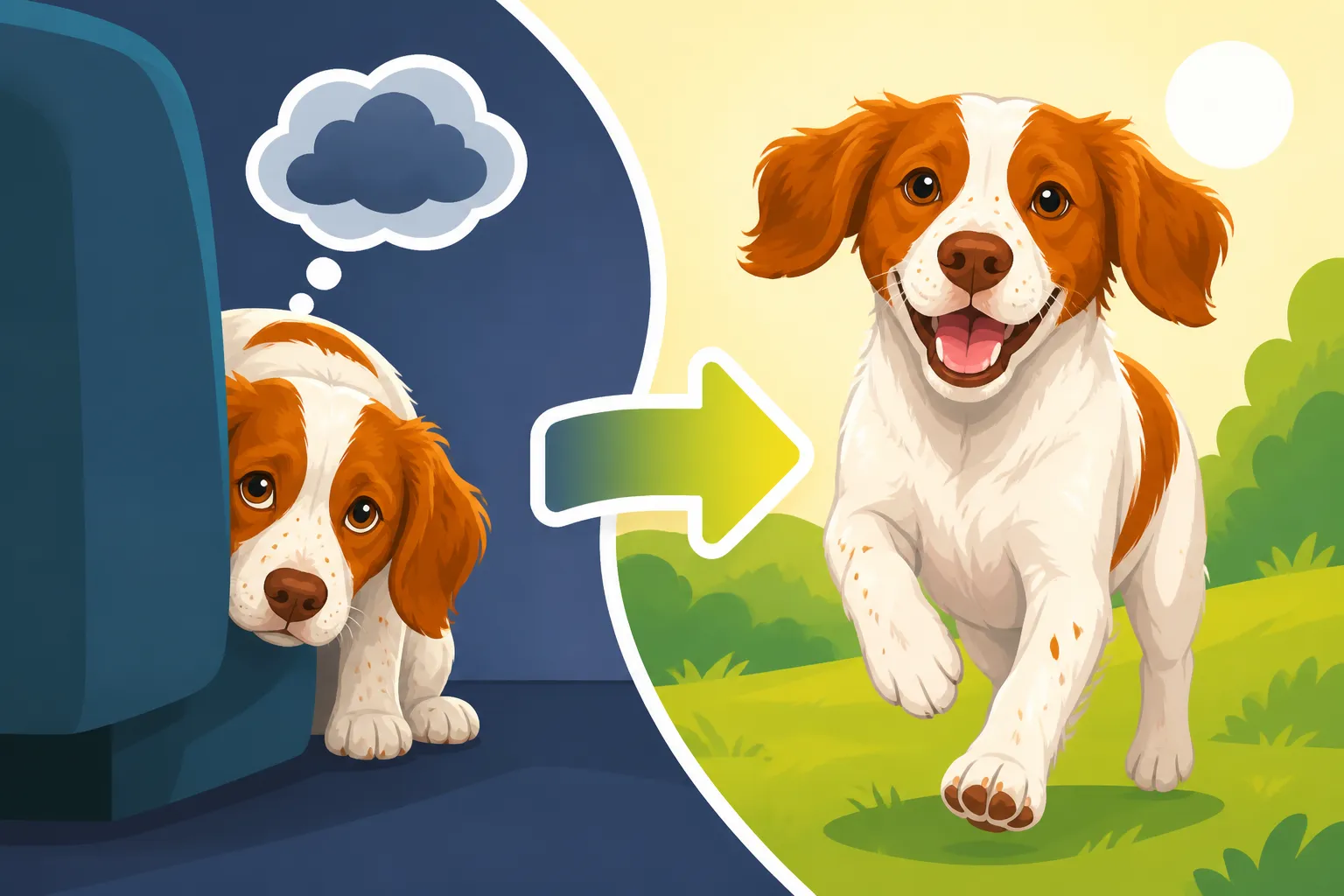
A truly shy Brittany isn't just a little hesitant; they might actively avoid new people, places, or objects. This isn't the same as a curious puppy taking a moment to observe before bounding forward. A shy pup might:
- Cower or hide: Ducking behind your legs, attempting to escape, or even running to another room when guests arrive.
- Avoid eye contact: Looking away or refusing to engage with strangers.
- Tremble or freeze: In new situations, their body might stiffen or shake.
- Urinate submissively: This can happen when overwhelmed, often associated with meeting new people or dogs.
- Refuse treats: Even high-value treats might be ignored when they are too stressed or scared.
- Growl or snap: In extreme cases, a shy dog might resort to aggression if they feel trapped or pushed too far, trying to make the scary thing go away.
It's vital to differentiate between shyness and a healthy level of caution. A well-socialized Brittany puppy might pause before diving into a noisy new environment, but they should recover quickly and show an inclination to investigate. A truly shy pup remains overwhelmed and withdrawn. If you're seeing signs like these, it's a signal that your Brittany needs your proactive support, not just time to "grow out of it." You might find it helpful to review Signs a Brittany Puppy Is Shy to get a clearer picture.
Nature Versus Nurture: The Role of Genetics and Environment
Shyness can stem from a combination of factors, often intertwined. Sometimes, a puppy is simply born with a more sensitive temperament, making them predisposed to shyness. If a pup’s parents or even grandparents showed extreme shyness or fear, there could be a genetic component at play. A responsible breeder will typically avoid breeding overly timid dogs precisely for this reason, as temperament is largely inherited.
However, environmental factors play an equally, if not more, significant role, especially during those critical developmental periods. A lack of early, positive socialization can absolutely lead to shyness. This isn't about throwing your puppy into every new situation, which can actually backfire, but about controlled, positive exposures. Experiences like traumatic events, harsh training methods, or even a lack of consistent, reassuring human interaction can exacerbate any natural tendencies toward timidity. Understanding How Sensitive a Brittany Is to Correction can shed light on how delicate these dogs can be.
The Critical Window for Socialization and Early Intervention
The period from approximately 3 to 16 weeks of age is often referred to as the "critical socialization window." This is a time when puppies are most open to new experiences and form lasting impressions about the world. For a shy Brittany, missing or mismanaging this window can have profound, long-lasting effects.
Maximizing Positive Experiences During Puppyhood
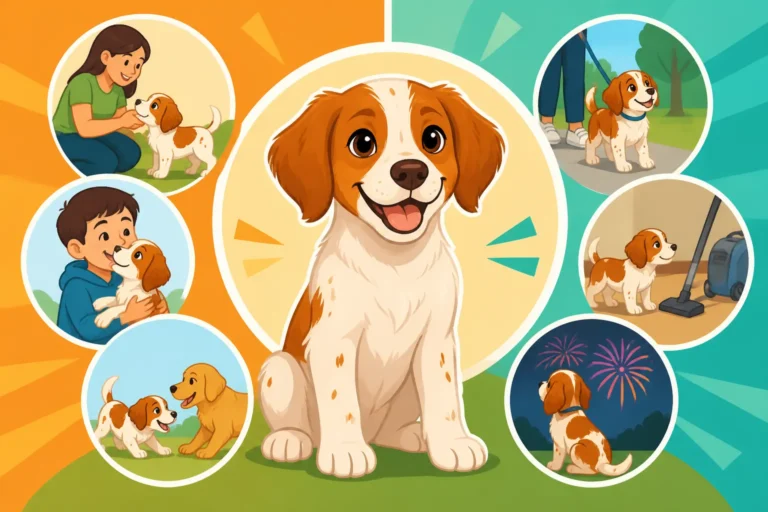
During this crucial time, it's not just about exposing your Brittany puppy to as many things as possible, but about ensuring those exposures are overwhelmingly positive and within their comfort zone. Overwhelming a shy puppy can actually make them more fearful. Think quality over quantity. Every new sound, sight, person, or dog should be paired with something wonderfully positive, like high-value treats or gentle praise. This helps them form positive associations.
For example, when a new person approaches, rather than letting them rush in, have them stand a distance away and toss treats gently towards your puppy. Allow your Brittany to approach at their own pace. If your puppy shows signs of discomfort, move further away. The goal is to build confidence, not create panic. Many owners find structured online programs, such as those offered by BAXTER & Bella, incredibly helpful during this stage, as they guide you through safe, controlled socialization exercises you can do at home or in carefully selected environments. This controlled approach is especially important for breeds like the Brittany, which are known to be quite sensitive. Whether a Brittany Puppy Should Be Socialized Heavily is an important read in this context.
The Dangers of "Waiting It Out"
Many owners, with the best intentions, adopt a "wait and see" approach, hoping their shy puppy will spontaneously gain confidence with age. Unfortunately, for truly shy dogs, this rarely happens. Instead, unresolved shyness often deepens and can evolve into more complex behavioral issues, like fear-based aggression or extreme anxiety. When a dog consistently experiences situations that trigger fear without a positive resolution or coping mechanism, that fear pathway in their brain becomes stronger.
Imagine a shy Brittany puppy who is consistently allowed to avoid strangers. While this might seem kind in the short term, it teaches the puppy that avoidance is the only way to cope, and that strangers are, indeed, something to be feared. As they mature, this avoidance might escalate, making it incredibly difficult to introduce them to new people or environments later in life. What starts as mild timidity can become debilitating fear, limiting their quality of life and your ability to enjoy activities together.
Proactive Intervention Strategies for a Shy Brittany
If your Brittany is showing signs of shyness, proactive intervention is key. This isn't about "fixing" your dog, but about equipping them with the confidence and coping skills they need to navigate the world comfortably.
Building Confidence Through Positive Reinforcement
Positive reinforcement is your most powerful tool. Every successful interaction, no matter how small, should be celebrated. For a shy Brittany, this means creating situations where they can succeed and feel safe. Use high-value treats, praise, and gentle play to reward any brave moment—a sniff of a new object, a glance at a stranger, or a step forward in a new place.
Focus on building a strong, trusting relationship with your Brittany. Be their safe haven. If they look to you for reassurance, provide it. Work on basic obedience cues in a quiet, familiar environment. Mastering commands like "sit," "stay," and "come" builds their confidence, not just in you, but in their own ability to understand and respond to the world. Remember, What Happens When You Shout at a Brittany can be very detrimental to a sensitive dog.
Here’s a simple table illustrating how to approach common triggers for a shy Brittany:
| Trigger | Incorrect Approach (Avoid) | Correct Approach (Positive Reinforcement) |
|---|---|---|
| New Person | Forcing interaction, allowing stranger to pet, picking up dog. | Stranger stands far away, tosses treats. Allow dog to approach on their terms. |
| New Place (e.g., park) | Immediately entering a crowded area, letting off-leash. | Start with quiet times/edges of park. Reward observation. Gradual exposure. |
| Loud Sound | Ignoring, scolding, or exposing to louder sounds to "get over it." | Pair soft sounds with treats. Create a safe space. Desensitize gradually. |
| Strange Object | Pushing object towards dog, forcing interaction. | Place object at a distance. Reward curiosity. Let dog investigate naturally. |
| New Dog | Allowing uncontrolled greeting, letting dogs rush each other. | Parallel walk at a distance. Reward calm behavior. Controlled, brief greetings. |
Desensitization and Counter-Conditioning
These are technical terms for powerful techniques. Desensitization means gradually exposing your Brittany to the thing they fear, at such a low intensity that they don't react fearfully. Counter-conditioning means changing their emotional response from fear to a positive one by pairing the scary thing with something good.
For example, if your Brittany is scared of vacuums, don't just vacuum around them. Start by having the vacuum in the room, off, at a distance, and feed your pup treats. If they're comfortable, move it slightly closer, still off, and treat. Then, turn it on for a second, from afar, and treat. The key is to stay below their fear threshold and always end on a positive note. This process takes patience and consistency, but it builds resilience. A tool like a long line, easily found on Amazon, can be invaluable for maintaining a safe distance during these exercises in new environments.
Seeking Professional Guidance
While self-help resources are great, for significant shyness, a certified professional dog trainer or veterinary behaviorist can be invaluable. They can assess your Brittany's specific fears, create a tailored behavior modification plan, and guide you through the process. They can also help identify if there are any underlying medical conditions contributing to the shyness. Remember, your Brittany's well-being is paramount, and there's no shame in asking for expert help. They can provide insights into Whether a Shy Brittany Grows Out of It and how best to manage their specific temperament.
Living with an Adult Shy Brittany: Acceptance and Ongoing Support
It's a misconception that shyness is something a dog completely "grows out of" like a puppy coat. For many Brittanys with true shyness, it's more about learning to manage their anxieties and build coping mechanisms. As their owner, your role shifts from preventing shyness to continuously supporting their confidence and managing their environment.
Managing Expectations and Environments
Once a Brittany matures, deeply ingrained shyness is unlikely to vanish completely. However, with consistent positive reinforcement, desensitization, and careful management, a shy dog can become a much more confident and well-adjusted companion. This often means managing your expectations. Your shy Brittany might never be the life of the party at the dog park, or enthusiastically greet every stranger. And that's okay.
Instead of trying to force them into situations that cause distress, focus on creating a predictable, safe, and enriching environment where they feel comfortable. This might mean:
- Controlled introductions: When guests come over, manage the situation. Have your Brittany on a leash, or in a separate room initially. Let them approach guests on their own terms, or not at all.
- Quiet walks: Opt for less crowded parks or trails during off-peak hours instead of bustling city sidewalks.
- Safe spaces: Ensure your Brittany has a quiet, comfortable "den" (like a crate or a cozy bed in a low-traffic area) where they can retreat when feeling overwhelmed.
- Consistent routine: Predictability can be very reassuring for a shy dog.
Remember, the goal isn't to make them extroverted, but to help them feel safe and reduce their stress levels in their everyday life.
Continued Training and Confidence Building
Even for an adult shy Brittany, training should be an ongoing process. This doesn't mean drilling them, but engaging in activities that continue to build their confidence and strengthen your bond. Canine sports like Scent Work or Agility (modified for shy dogs) can be fantastic outlets, as they focus on individual achievement and problem-solving, often in controlled environments. Learning new tricks also boosts a dog's confidence immensely.
Regular, structured training sessions, even short ones, reinforce positive behaviors and give your Brittany a sense of purpose. Always keep sessions positive and upbeat, ending before your dog gets bored or stressed. This continuous engagement helps counteract any tendency to retreat into their shell. For sensitive dogs, this consistent, positive interaction helps them realize that the world, with you by their side, is a pretty good place. Even something as simple as Whether a Brittany Reads Your Mood can play into their confidence, so remaining calm and positive yourself is critical.
The Long Game: Patience and Understanding
Living with a shy Brittany is a marathon, not a sprint. There will be good days and bad days, breakthroughs and setbacks. Patience, empathy, and unwavering understanding are your most important qualities as their owner. Never punish fear, as this will only worsen it and erode the trust you've worked so hard to build. A Brittany is inherently a loving and loyal companion, and their shyness is not a reflection of their character, but often a result of their past experiences or inherent sensitivity.
Celebrate every small victory. If your Brittany, who once cowered from the mail carrier, now watches them from a distance without trembling, that's a huge win! Your acceptance and commitment to their well-being will ultimately allow your shy Brittany to live their fullest, happiest life possible, even if that life looks a little different than you initially imagined. How Long a Brittany Remembers a Bad Session highlights just how important it is to maintain a positive and patient approach throughout their life.
Disclaimer
This article is for general informational purposes only and does not constitute professional advice. Laws, prices and regulations vary by location and change over time. Consult a qualified professional for guidance on your specific situation.