Whether the Brittany Is in the Sporting Group
It’s a common question, and one that sometimes causes a bit of head-scratching for new Brittany owners or those unfamiliar with the breed: where exactly does the Brittany fit in the vast landscape of dog breeds? Given its historical "spaniel" moniker, some folks wonder if it's truly a pointing dog or more of a flusher. Rest assured, your Brittany is absolutely, unequivocally, a proud member of the American Kennel Club's (AKC) Sporting Group, and this guide will unpack exactly why that is, and what it means for your life with one of these incredible dogs.
Deconstructing the AKC Sporting Group
Before we dive into the Brittany specifically, let's set the stage by understanding what the AKC's Sporting Group is all about. This isn't just a random assortment of breeds; it's a carefully curated collection of dogs designed for a very specific and noble purpose: assisting hunters in the field.
What Defines a Sporting Dog?
At its heart, a sporting dog is a hunter's partner. These breeds were developed over centuries to work alongside humans, using their incredible senses, athleticism, and biddability to locate, point, flush, and retrieve game birds. Think about it – these dogs need to be able to cover vast amounts of ground, sometimes for hours on end, without tiring. They need to be smart enough to understand commands, yet independent enough to make decisions in the field. Their senses, particularly their nose and eyes, are finely tuned for finding birds in all sorts of cover, from dense briar patches to open prairie.
The Sporting Group itself is often informally divided into categories:
- Pointers and Setters: These dogs are bred to "point" or "set" (crouch) when they find game, holding a steady stance to indicate the bird's location to the hunter. The Brittany falls squarely into this category.
- Retrievers: As the name suggests, these breeds specialize in bringing downed game back to the hunter, often from water or heavy cover. Many pointing breeds, including the Brittany, are also natural retrievers.
- Flushing Spaniels: These dogs are typically smaller, designed to work closer to the hunter, flushing birds from dense cover to send them airborne within shooting range. While the Brittany once carried "spaniel" in its name, its primary method of finding game is pointing, not flushing.
Common characteristics shared across the entire Sporting Group include high energy levels, a strong prey drive, an eagerness to please, and generally a friendly, outgoing disposition, making them not just great hunting companions but often wonderful family pets.
The Role of Versatility in the Group
One of the most remarkable aspects of many sporting breeds, and certainly of the Brittany, is their versatility. These aren't one-trick ponies. While a Labrador Retriever might be renowned for its water retrieves, and an English Setter for its graceful point, many sporting dogs are expected to perform a combination of tasks.
The Brittany, for instance, is often considered a "versatile gun dog" because it can locate game (often ranging widely, like An American Brittany Ranges Wide and a French One Stays Close), point it steadfastly, and then retrieve it once shot. This all-around capability is precisely why hunters love them and why they fit so perfectly within the Sporting Group. They embody the ideal of a dog that can do it all in the field, making them highly valued partners. This inherent desire to work and their impressive skill set define their place among their sporting brethren, showcasing a functional beauty that is truly captivating.
Why the Brittany Is a Quintessential Sporting Dog
Let's get right to the heart of the matter: the Brittany wasn't just placed in the Sporting Group; it earns its spot every single day, whether in the field or simply displaying its natural instincts in your backyard.
The Brittany's Natural Hunting Instincts
From the moment a Brittany puppy is born, the drive to hunt is often palpable. It's woven into their DNA.
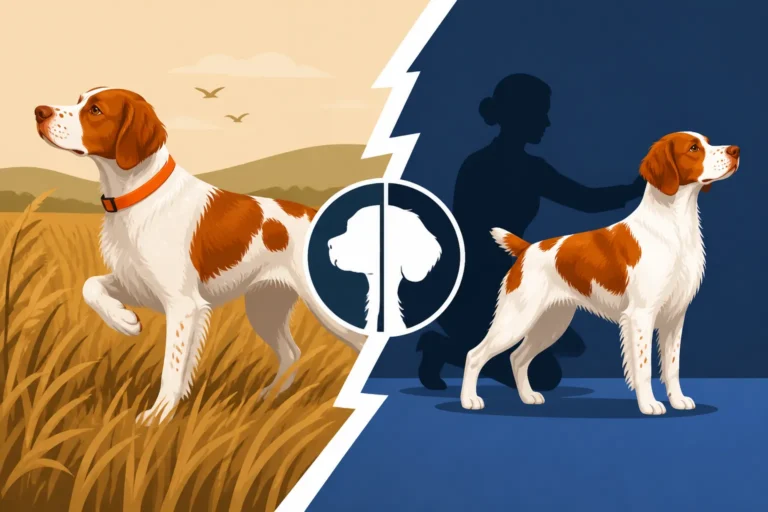
- The Point: This is perhaps the Brittany's most iconic trait. When a Brittany catches the scent of game, it will freeze, often with one foot raised, its body rigid, and its nose intently directed towards the bird. This isn't taught; it's instinctual. It's a truly magnificent sight, and it's what defines them as a pointing breed. We often say The Brittany Points, It Does Not Flush, which is a key differentiator from many traditional spaniels.
- Retrieving Capabilities: While some Brittanys may need a little encouragement for formal "force fetch" training, most have a natural inclination to pick up and carry objects, and this translates beautifully into retrieving downed game. They want to bring that bird back to you, driven by their desire to please and their strong prey drive. Whether a Brittany Retrieves Naturally delves into this further.
- Stamina and Endurance: These dogs are athletes. A Brittany can cover miles of rugged terrain in a single hunting session, running tirelessly through fields, forests, and marshes. They possess an almost boundless energy that allows them to keep going where many other dogs would falter. This stamina is essential for their role in the Sporting Group.
- Keen Senses: A Brittany's nose is legendary. They can pick up scent from surprising distances, air-scenting and ground-scenting with equal proficiency. Their intelligence combined with their senses makes them incredibly effective at finding birds that other dogs might miss.
Imagine watching a young Brittany puppy, just a few months old, suddenly "point" a butterfly or a leaf fluttering in the wind. That's the instinct shining through, raw and undeniable. This innate talent means much of their bird-finding ability doesn't need to be drilled in; it just needs to be channeled and refined.
A Hunter's Companion Through and Through
Beyond their inherent instincts, the Brittany's entire being is geared towards being an exceptional hunting companion.
Their moderate size is a huge advantage for foot hunters. Unlike some of the larger pointers or setters that might work better with horseback hunters, a Brittany is compact enough to navigate dense cover with ease and stay within a comfortable range for someone walking the fields. Yet, they're robust enough to handle tough conditions.
Their temperament, which is often described as sensitive and eager to please, makes them highly trainable. While they absolutely need consistency and a gentle hand (they are famously a "soft" breed and don't respond well to harsh corrections), their biddability means they genuinely want to work with you. How Biddable a Brittany Is is a testament to this trait. They form strong bonds with their owners, and that partnership translates directly into effective teamwork in the field.
The high energy levels we discussed are a double-edged sword: fantastic for hunting, but demanding for daily life. How Much Exercise a Brittany Needs Off Season highlights the need to keep them physically and mentally stimulated even when hunting season is over. This consistent need for activity is characteristic of most sporting breeds.
Finally, one of the most compelling pieces of evidence for the Brittany's sporting prowess is its unparalleled record as The Brittany Holds the Dual Champion Record. This means more Brittanys than any other breed have achieved both an AKC Conformation Champion title (winning in the show ring) and an AKC Field Champion title (winning in field trials). This incredible feat underscores their perfect blend of beauty and brains, form and function—a true dual-purpose sporting dog.
The "Spaniel" Identity and Its AKC Evolution
This is where some of the confusion often stems from, but understanding the history really helps clarify the Brittany's place in the Sporting Group.
The Historical Context of the Name "Brittany Spaniel"
The Brittany breed originated centuries ago in the Brittany region of France. Where the Brittany Comes From tells more about their deep roots. In those early days, breed names were often much more loosely defined than they are today. Many dogs used to find and retrieve game, particularly those with a blockier head or feathering, were simply referred to as "spaniels." It wasn't always about their exact hunting style (pointing vs. flushing) as much as a general type of bird dog.
Early Brittanys undoubtedly worked dense thickets and cover, and in such environments, they might have "flushed" birds in a way that resembled a spaniel. However, their primary instinct to point game was always present and eventually became the dominant characteristic. Over time, as dog breeding became more formalized and distinctions between hunting styles became clearer, the name "Brittany Spaniel" started to feel a bit anachronistic for a breed so clearly defined by its pointing ability.
Why the AKC Changed the Name
In 1982, the American Kennel Club officially dropped the word "Spaniel" from the breed's name, leaving it simply as "Brittany." This was a significant move, and Why the AKC Dropped Spaniel From the Brittany's Name in 1982 explains the motivations behind it.
The main reason for the change was to accurately reflect the breed's primary hunting style. The Brittany is, first and foremost, a pointing breed, not a flushing spaniel. The AKC wanted to avoid confusion with true flushing spaniels like the Cocker Spaniel or English Springer Spaniel, whose hunting methods are quite different. While the Brittany shares some physical similarities with spaniels—those soft, expressive eyes, the feathered coat—its working function firmly places it among the pointers and setters.
Despite the name change, its place in the Sporting Group was never questioned because its core purpose and abilities aligned perfectly with the group's definition. The name modification was a clarification, not a reclassification of its fundamental identity as a gun dog.
To help visualize the difference, here's a brief comparison of how Brittanys and true flushing spaniels typically interact with game:
| Characteristic | Brittany | Flushing Spaniel |
|---|---|---|
| Primary Hunting Style | Points to indicate game, then retrieves | Flushes game out of cover, then retrieves |
| Range in Field | Often wide-ranging (American type) or close-working (French type) | Generally close-working |
| Body Posture | Rigid point when game is scented | Bustles and pushes through cover |
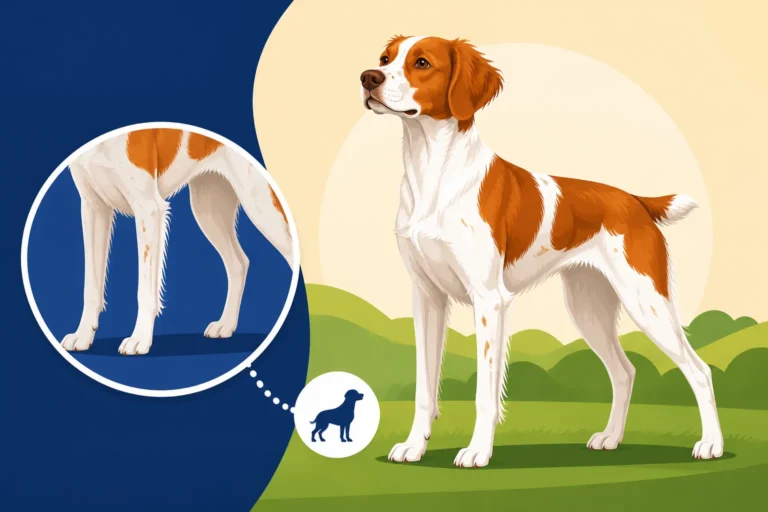
| Typical Build | Athletic, medium-sized, often leggy | Compact, sturdy, lower to the ground |
| Ear Set | High-set, moderately feathered | Lower set, often heavier feathering |
This table clearly illustrates the functional differences that solidified the Brittany's standing within the pointing dog community, despite its historical nomenclature.
Living with a Sporting Group Brittany
Understanding that your Brittany belongs to the Sporting Group isn't just about trivia; it has very real implications for how you live with and care for your dog. These aren't couch potatoes!
Exercise Needs and Mental Stimulation
The most critical takeaway for any Brittany owner is their profound need for exercise. We're not talking about a leisurely stroll around the block. A Brittany requires vigorous, sustained activity every single day, typically for at least an hour or two. Without it, you're setting yourself and your dog up for frustration.
Think about it: these dogs are bred to run miles in a day, covering vast fields in pursuit of birds. That energy doesn't just disappear because they're now living in a suburban home. Activities like running alongside you, long hikes, intense games of fetch, or participation in dog sports like agility or flyball are essential. Whether a Brittany Can Do Agility is a resounding yes, and many Brittanys excel at it!
Beyond physical exertion, these intelligent dogs also crave mental stimulation. Puzzle toys, training sessions, scent work, or even just learning new tricks can help keep their minds engaged and prevent boredom. A bored Brittany is often a destructive Brittany. What a Bored Brittany Destroys can give you a stark warning about what happens when their needs aren't met. To support their active lifestyle, you'll find a wide array of durable toys and specialized gear, like hands-free leashes for running, available on platforms like Chewy, making it easy to keep your energetic companion happy.
Training and Temperament Considerations
As a Sporting Group dog, the Brittany's biddable nature makes them generally eager to please and highly trainable. However, their sensitivity means that positive reinforcement methods are key. Harsh corrections or yelling can quickly shut a Brittany down and even lead to timidity. How Sensitive a Brittany Is to Correction is something every owner needs to understand. Patience, consistency, and reward-based training will yield the best results.
While they are excellent hunting dogs, Brittanys are also deeply affectionate and bond strongly with their families. They typically thrive when they are integrated into daily family life, not left alone in a kennel all day. Many Brittanys will happily follow you from room to room, just wanting to be near you. Whether a Brittany Follows You Room to Room captures this endearing trait. They are often described as "Velcro dogs" in this regard.
Given their high activity levels, it's also worth considering their nutritional needs. A working Brittany, or even an active family companion, often benefits from a high-quality performance dog food that provides adequate protein and fat to fuel their energy. Brands that specialize in sporting dog nutrition can be found readily, and websites like Chewy offer a fantastic selection to ensure your Brittany gets the right diet. Whether a Working Brittany Needs a Performance Food can guide you on making the best choice for your active companion.
In summary, the Brittany's place in the Sporting Group is not just a classification; it's a descriptor of their very essence. They are athletic, intelligent, driven, and affectionate dogs bred to be magnificent partners in the field and beloved members of the family.
Disclaimer
This article is for general informational purposes only and does not constitute professional advice. Laws, prices and regulations vary by location and change over time. Consult a qualified professional for guidance on your specific situation.