Whether a Brittany Retrieves Naturally
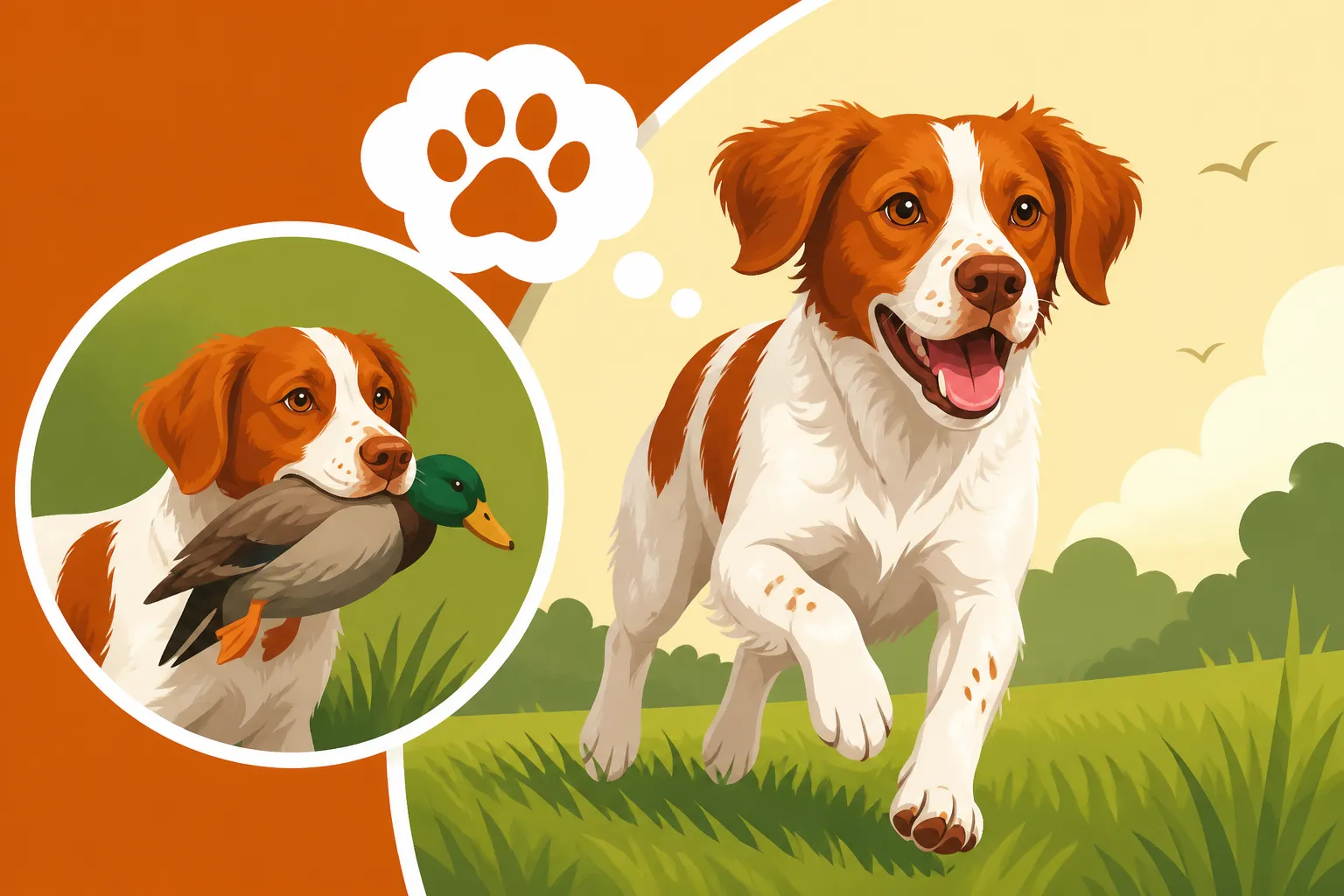
One of the most common assumptions new Brittany owners or prospective hunting dog enthusiasts make is that these beautiful, driven dogs will just naturally bring back every bird they retrieve. It's a lovely thought, isn't it? The reality, however, is often a little more nuanced. While many Brittanys possess a strong prey drive and a desire to pick up game, the act of delivering it politely to hand is frequently a learned behavior, not an innate one. This guide will explore the truth about Brittany retrieval, distinguish natural instincts from trained skills, and walk you through how to develop a reliable retrieving partner in your Brittany.
The Brittany's Instinct for Retrieval
It’s easy to watch a Brittany in the field, see them enthusiastically pounce on a fallen bird, and assume the job is done. But the journey from finding the bird to delivering it gracefully to your hand is often a multi-step process, with instinct covering only the initial phases.
Natural Desire vs. Trained Skill
When we talk about a dog's "natural retrieve," what do we really mean? For many Brittanys, that includes a high prey drive—an intense urge to chase, capture, and sometimes mouth objects. They often have a strong desire to pick things up, especially birds. You might see a young Brittany puppy grab a toy, shake it, and carry it around, which is a fantastic start! This innate interest in carrying things is the raw material we work with.
However, the "natural" part usually stops short of the polished, reliable delivery you need in the field. A dog with a natural desire might pick up a bird, but then they might run off with it, play keep-away, drop it a few feet from you, or even chew on it. They haven't inherently learned the entire sequence: find, pick up, carry, come all the way back, and gently release the bird into your hand on command. That full sequence is a trained skill, built upon their natural desire. Think of it like a child who loves to run (natural desire) versus a marathon runner who has trained extensively to run 26.2 miles with proper form and pacing (trained skill). The initial spark is there, but refinement is key.
The Role of Genetics and Early Exposure
Genetics absolutely play a significant role in a Brittany's predisposition to retrieve. Breeders who consistently produce dogs with strong retrieve drives and biddable temperaments are invaluable. If a puppy comes from a line where the parents and grandparents were enthusiastic, reliable retrievers, that puppy has a much better genetic blueprint for learning the skill. This doesn't mean it will happen without effort on your part, but you're starting with a decided advantage.
Beyond genetics, early exposure is critical. A young Brittany puppy who is gently introduced to various objects, allowed to carry them, and rewarded for bringing them back (even just a few steps) is building positive associations with retrieval. Simple games of fetch with soft toys in the living room lay a foundational brick. Furthermore, early exposure to birds, even just a wing on a string or a dead pigeon, can ignite that innate prey drive in a controlled way. A puppy that has positive experiences picking up and carrying appropriate items from a young age is far more likely to develop into a strong retriever than one left to figure it out on their own later in life. This is why many reputable breeders start basic "hold" games with their pups even before they go to their new homes. For more on early bird introduction, check out When a Brittany Puppy Should Meet Its First Bird.
Why Some Brittanys Don't Retrieve Naturally (Or Well)
It's common for owners to express frustration when their Brittany either doesn't seem interested in retrieving or performs poorly in the field. Understanding the root causes can help you address these issues effectively and avoid common pitfalls.
Lack of Opportunity and Exposure
One of the most straightforward reasons a Brittany might not retrieve well is simply a lack of opportunity. If a dog has never been given a clear understanding of what is expected, or hasn't had positive experiences associated with picking up and bringing back objects, why would they suddenly perform flawlessly with a valuable bird?
Consider a Brittany that spent its puppyhood without much focused play, or perhaps only had access to toys it could chew to pieces. When suddenly introduced to a downed bird, the dog might be overwhelmed, confused, or unsure what to do. Maybe it sniffs the bird, maybe it nudges it, but it doesn't pick it up. Or perhaps it picks it up, but then drops it or just stands there, looking at you blankly. These aren't signs of a "bad" dog; they're often signs of an untrained one. Every step of the retrieval process needs to be taught and reinforced. Without a foundation of positive retrieve-like games, consistent rewards, and clear expectations, the instinct to carry might never translate into a functional retrieve.
Negative Experiences
Just as positive experiences build a strong foundation, negative ones can quickly dismantle it. A dog that is scolded, yanked, or pressured too harshly during early retrieval attempts can develop an aversion to the entire process. For a sensitive breed like the Brittany, which is often described as "soft" (and you can learn more about that in Why a Brittany Is Called Soft), harsh corrections can be particularly damaging.
Imagine a young Brittany excitedly picking up a training dummy, only for the owner to shout "NO! Bring it here!" when the dog veers off course. Or perhaps the dog picks up a bird and, due to a weak "hold" command, accidentally crunches down too hard, receives a sharp reprimand, and then associates retrieving with pain or fear. Such experiences can lead to a dog that is hesitant to pick up birds at all, or one that develops a "hard mouth" (gripping too tightly) out of anxiety, or conversely, a dog that releases birds far from the handler to avoid confrontation. A single traumatic event, like an injury during retrieval, can also set a dog back significantly. It's vital to make every step of training positive and rewarding, focusing on encouragement and gentle guidance rather than punishment.
Soft Mouth vs. Hard Mouth Tendencies
The concept of a "soft mouth" is paramount for any retrieving dog, especially a bird dog. A soft-mouthed Brittany will carry a bird gently, without damaging it. This allows the bird to be retrieved unharmed, which is crucial for conservation or for delivering game to the table in good condition. You want a dog that holds the bird like it's a precious jewel, not a chew toy.
Conversely, a "hard mouth" describes a dog that grips a bird too tightly, chews on it, or delivers it mangled. This can be caused by several factors:
- Genetic Predisposition: Some lines might be more prone to a hard mouth, though this is less common in well-bred Brittanys.
- Lack of Training: If a dog isn't taught to hold gently, or isn't given appropriate items to carry, they might default to a stronger grip.
- Anxiety or Fear: As mentioned, harsh corrections can cause a dog to grip tighter out of stress.
- Excitement: An overly excited dog might unintentionally grip too hard.
While many Brittanys naturally have a softer mouth, it's still a behavior that needs reinforcement. A good training program emphasizes gentle holding from the very beginning. If you suspect your Brittany has a hard mouth, addressing it immediately is crucial, as it can be a challenging habit to break. You can explore this more in depth by reading Whether a Brittany Has a Soft Mouth.
Cultivating Retrieval Skills in Your Brittany
Building a reliable retrieving Brittany is a process that begins early and requires consistency, patience, and positive reinforcement. It's about breaking down the complex behavior into small, manageable steps.
Starting Young: Puppy Play and Introduction to Objects
The best time to start building retrieval skills is when your Brittany is a playful puppy. At this stage, everything is a game, and you can capitalize on their natural curiosity and desire to interact with you.
Start with simple retrieve games using toys that are appropriate for a puppy's mouth—soft, easy to carry, and not too big. Crinkly toys, small tennis balls, or even a knotted rag can work wonders. The key is to make it fun and low-pressure. Toss the toy a short distance and encourage your puppy to go get it. When they pick it up, praise them enthusiastically! Don't worry too much about them bringing it all the way back at first. If they come a few steps, squat down, and celebrate them. Offer a trade for a treat or another toy if they don't want to release it immediately. The goal here is to instill a love for chasing and carrying. As they get better, gradually increase the distance and start adding a gentle "Come!" command when they pick up the toy.
Introduce various textures and weights early on. A soft toy, then a slightly heavier rubber dummy, then perhaps a retrieving bumper with a little scent. This helps generalize the idea of "retrieve" to different objects. Remember, short, positive training sessions are best for a Brittany puppy's attention span. You can find more tips on training duration in How Long a Brittany's Training Session Should Be. BAXTER & Bella, for instance, offers comprehensive online puppy programs that often include foundational retrieve games, providing a structured approach you can follow from home.
Introducing Birds and the "Hold" Command
Once your Brittany has a good grasp of retrieving toys, it's time to introduce bird-like objects and the critical "hold" command. The "hold" is foundational because it teaches your dog to gently grip and carry an object in their mouth until released.
Begin by teaching "hold" separately, away from the excitement of a retrieve. With your Brittany calmly beside you, place a training dummy or a retrieving bumper in their mouth and gently close your hand around their muzzle, holding it there for a second or two. Immediately praise and reward them when they maintain the hold. Gradually increase the duration of the hold. Once they can hold it for several seconds, introduce the "give" or "release" command, taking the object from their mouth and rewarding them. This method builds a reliable behavior before the dog is distracted by the thrill of the chase. Many excellent training dummies and scent products are available on Amazon to help with this step.
After the "hold" is solid, start integrating it into your retrieve games. Use a retrieving dummy or a frozen bird wing (which is less tempting to chew than a fresh bird). Toss it, let your Brittany retrieve it, and as they come back, use your established "hold" command. When they get close, give the "give" command. This systematic approach ensures they learn how to carry the bird correctly, not just that they should pick it up. For more ideas on getting them started with actual birds, consider How to Start a Brittany on Pigeons.
The Force Fetch Process When Necessary
Sometimes, despite all the positive reinforcement and gentle introduction, a Brittany just doesn't reliably retrieve to hand, or perhaps shows tendencies towards a hard mouth. This is where "force fetch" comes into play. It's a structured, methodical training technique designed to teach a dog to pick up, hold, and deliver any object on command, regardless of whether they "want" to. It’s important to clarify that "force" in this context does not mean harsh or abusive; it refers to the systematic pressure applied to ensure the dog understands and performs the command.
Force fetch involves a series of steps, typically starting with teaching the dog to take and hold a dowel or retrieving bumper in their mouth from hand, often using a slight ear pinch or toe pinch as a prompt. The pressure is applied just until the dog opens its mouth and takes the object, then immediately released, followed by praise. The process then progresses to picking up objects from the ground, carrying them, and finally, retrieving them.
This type of training is highly effective but requires a calm, consistent, and knowledgeable handler. It's not something to undertake lightly or without proper guidance, as doing it incorrectly can indeed create negative associations. Many reputable trainers use force fetch as a standard part of their gun dog curriculum, ensuring a reliable retrieve for hunting dogs. If you're considering it, I strongly recommend working with a professional gun dog trainer or enrolling in a detailed online program that guides you through each step. This ensures both your safety and the emotional well-being of your Brittany. You can learn more about this intensive training method by looking into Whether a Brittany Needs Force Fetch.
Common Retrieval Challenges and How to Overcome Them
Even with careful training, Brittanys, like all dogs, can develop quirks or issues with their retrieve. Recognizing these common problems and knowing how to address them is key to maintaining a consistent hunting partner.
The "Soft Release" or Dropping the Bird
One of the most frustrating retrieval issues is when your Brittany does all the hard work of finding and picking up the bird, only to drop it a few feet from you, just out of reach. This "soft release" can stem from a few places. Sometimes it's simply a lack of understanding of the "give" command, or perhaps they've learned that dropping it prematurely still gets them praise. Other times, it might be a subtle discomfort holding the bird, or even an attempt to initiate a game of keep-away.
To fix this, go back to basics with the "hold" command. Practice in a controlled environment, ensuring your Brittany holds the object until you give the "give" command and gently take it from their mouth. Use a short leash or check cord during retrieves to guide them all the way to you. As they approach, verbally encourage them with "Good hold! Bring it here!" and physically guide them right to your feet. Don't reward them for dropping it early. Only reward when they deliver the bird directly to your hand on command. If necessary, use a gentle reminder from your leash to prevent them from dropping it before they reach you. Consistency is paramount here.
Running Off With the Bird
A Brittany running off with a bird they just retrieved can be incredibly frustrating, especially if they see it as a fun game of chase. This usually indicates a lack of control and a weak recall. Your Brittany needs to understand that the retrieve is a team effort, not a solo mission to capture a prize for themselves.
Address this by reinforcing a rock-solid recall, separate from retrieving. Practice "Come!" in various environments and with increasing distractions, always making coming back to you the most rewarding thing they can do. During retrieve training, use a long check cord, perhaps 30 to 50 feet long, especially if you're training in an open field. What a Fifty Foot Check Cord Costs a Brittany Owner might give you an idea of the equipment needed. When your Brittany retrieves the bird, immediately give your "Come!" command and gently reel them in with the check cord. Praise and reward them lavishly when they arrive at your side with the bird. If they try to run off, the check cord prevents it, allowing you to guide them back without a frustrating chase. Never chase your dog; if they run, turn and walk away, encouraging them to follow you. This often shifts their focus back to you.
Refusal to Retrieve
A Brittany that simply refuses to retrieve can be heartbreaking for a hunter. This can happen for several reasons: perhaps they had a negative experience, they associate retrieving with discomfort or fear, they're not motivated by the bird itself, or they simply haven't had the proper foundation.
First, rule out any physical issues. Is there pain in their mouth, jaw, or neck that makes holding uncomfortable? A vet check can clear this up. If it's behavioral, you'll need to re-engage their prey drive and build positive associations. Go back to basics: try different types of toys. Some dogs prefer soft, feathery objects, while others like harder bumpers. Make retrieving a fun game, even if it's just chasing after a thrown tennis ball. Don't put any pressure on them to pick up a bird initially.
Use high-value rewards (favorite treats or a quick game of tug) when they show any interest in the thrown object, even if they just sniff it. Gradually work your way up to picking it up. If they pick it up and drop it, praise and reward that small step. Consider using a bird wing on a string, dragging it to pique their interest, and then letting them "catch" it. If all else fails, a skilled professional gun dog trainer can assess the situation and implement a tailored plan, which might include force fetch if appropriate, to instill a reliable retrieve.
| Retrieval Challenge | Common Causes | Solutions |
|---|---|---|
| Soft Release | Lack of "give" understanding, habit, mild discomfort | Reinforce "hold" and "give" commands strictly. Use a check cord to guide delivery to hand. Reward only for full delivery. |
| Running Off with Bird | Weak recall, sees it as a game, lack of control | Establish a rock-solid "Come!" command. Use a long check cord during retrieves to prevent running off. Never chase; instead, turn and encourage them to follow. |
| Refusal to Retrieve | Negative experience, pain, low motivation, lack of training | Rule out physical discomfort with vet check. Re-engage prey drive with fun, low-pressure games and varied toys/dummies. Use high-value rewards. Seek professional trainer guidance for severe cases or force fetch if appropriate. |
| Hard Mouth | Anxiety, improper training, excitement | Go back to "hold" command focusing on gentle grip. Use softer, less tempting items initially. Ensure positive, calm training environment. Professional force fetch training with emphasis on soft delivery can be effective. |
Equipment and Resources to Aid Retrieval Training
Successful retrieval training often goes hand-in-hand with using the right tools and seeking expert guidance when needed. These resources can make the process smoother and more effective for both you and your Brittany.
Training Dummies and Scent Products
You don't need a freshly shot bird for every training session. In fact, training dummies are invaluable because they allow for consistent, repetitive practice without the pressure or cost of live birds.
- Bumpers: These are typically hard plastic or canvas cylindrical dummies, often brightly colored for visibility. They float, making them excellent for water retrieves. Many come with knots or raised textures for a better grip. Start with softer, lighter bumpers for puppies and gradually move to heavier, more realistic ones.
- Dokken DeadFowl Training Dummies: These are fantastic because they're designed to mimic the weight, feel, and head-flop of real birds, which helps a Brittany learn to hold a bird properly. They also discourage hard mouthing due to their realistic, hard-foam construction.
- Canvas Dummies: These are softer and can be great for dogs with sensitive mouths or as a transition from soft toys. They can also absorb scent better.
- Bird Wings/Scent Kits: Attaching a real bird wing to a dummy, or using scent liquid or wax on a dummy, can make the training more realistic and engage your Brittany's incredible nose. This helps them transition from retrieving "objects" to retrieving "birds." You can find a wide variety of these items, from basic bumpers to advanced scent kits, easily on Amazon.
Remember to introduce these items gradually. Start with what your Brittany is comfortable with, and slowly introduce new types and textures. The goal is to build confidence and enthusiasm for retrieving any object you ask them to.
Online Programs and Professional Trainers
While much of retrieval training can be done at home, sometimes a little extra help makes all the difference.
- Online Training Programs: Websites like BAXTER & Bella offer comprehensive online courses for puppy training and basic obedience that often include segments on foundational retrieve skills. These programs provide structured lessons, video demonstrations, and sometimes even direct access to trainers for questions. They can be a fantastic resource for owners who prefer to learn at their own pace and in their own environment. Look for programs specifically geared towards gun dog breeds or field work, as they will emphasize the type of retrieve you need.
- Books and DVDs: There's a wealth of knowledge in traditional media. Many classic gun dog training books offer detailed, step-by-step instructions for retrieval, including techniques like force fetch. While not interactive, they provide a deep dive into proven methods.
- Professional Gun Dog Trainers: This is often the best option if you're serious about developing a consistent, reliable retrieving gun dog, or if you're encountering significant behavioral roadblocks. A professional trainer has the experience to read your dog, identify specific issues, and implement a tailored training plan. They have the facilities (like bird fields) and often live birds to progress your Brittany's skills effectively. Sending your Brittany to a trainer for a few weeks or months can be a significant investment, but it often yields remarkable results, especially for more advanced skills like force fetch or steadying your dog to wing and shot. They can also help your Brittany understand Teaching a Brittany to Hold Point Until You Arrive and develop other crucial field skills.
Remember, every Brittany is an individual. What works quickly for one might take more time and a different approach for another. Be patient, be consistent, and always strive to make training a positive, bonding experience. With dedication, your Brittany can become a superb retrieving partner in the field.
Disclaimer
This article is for general informational purposes only and does not constitute professional advice. Laws, prices and regulations vary by location and change over time. Consult a qualified professional for guidance on your specific situation.