What FCI Group the Epagneul Breton Sits In
It's quite common for new and even experienced Brittany owners to get a little tangled up in the various names and classifications for our beloved dogs, especially when you start looking at the international scene. We know them as Brittanys here, but across the pond, they're often called Epagneul Breton, and how these different names fit into global kennel club structures can be a bit of a head-scratcher. This guide aims to clear up exactly where the Epagneul Breton, our wonderful Brittany, sits within the Fédération Cynologique Internationale (FCI) system and why that matters.
Understanding the FCI: The Global Canine Authority
When you dive into the world of purebred dogs, you quickly realize it's not just the American Kennel Club (AKC) making all the rules. The Fédération Cynologique Internationale, or FCI, is a huge international federation of kennel clubs, representing over 90 countries worldwide. Think of it as the United Nations for dog breeds, working to standardize breed recognition, health testing, and show regulations across national borders. For breeds like our Brittany, which originated in France, the FCI standard is incredibly important as it often reflects the breed's historical purpose and characteristics as defined in its country of origin.
The Global Standard Setter
The FCI plays a monumental role in maintaining breed purity and function on a global scale. Each member country's kennel club adheres to the FCI's international breed standards, which describe the ideal characteristics, temperament, and working abilities of each breed. This means that an Epagneul Breton bred in France, shown in Germany, or owned in Australia should, in theory, conform to the same fundamental expectations. It helps maintain a consistent vision for the breed, ensuring that its core traits, like its strong bird drive and desire to point, are preserved wherever the breed is found. Without this international coordination, breeds could diverge significantly between countries, leading to confusion and loss of original type and function.
How Breeds Are Grouped by the FCI
The FCI organizes all recognized dog breeds into ten distinct groups, each based on the breed's primary function or shared characteristics. This system is a bit different from the AKC's seven groups, which can sometimes add to the confusion for American owners. Understanding these groups helps us appreciate the historical roles dogs were bred for, and it guides judges in evaluating breeds according to their intended purpose.
Here's a quick overview of the FCI groups:
- Group 1: Sheepdogs and Cattle Dogs (except Swiss Cattle Dogs): Think herding breeds like German Shepherds and Border Collies.
- Group 2: Pinscher and Schnauzer – Molossoid Breeds – Swiss Mountain and Cattle Dogs: Includes breeds like Dobermans, Rottweilers, and Bernese Mountain Dogs.
- Group 3: Terriers: All your feisty terrier breeds, from Jack Russells to Airedales.
- Group 4: Dachshunds: Exclusively for the various types of Dachshunds.
- Group 5: Spitz and Primitive Types: Breeds like Siberian Huskies, Chows, and Basenjis.
- Group 6: Scent Hounds and Related Breeds: Beagles, Basset Hounds, Rhodesian Ridgebacks, etc.
- Group 7: Pointing Dogs: This is where our Brittany (Epagneul Breton) lives!
- Group 8: Retrievers – Flushing Dogs – Water Dogs: Labradors, Golden Retrievers, Cocker Spaniels, Poodles (traditional hunting Poodles).
- Group 9: Companion and Toy Dogs: Chihuahuas, Pugs, Maltese, etc.
- Group 10: Sighthounds: Greyhounds, Whippets, Afghan Hounds, etc.
Each group has its own specialized roles and expectations, and knowing which group a breed belongs to immediately gives you insight into its fundamental purpose.
The Epagneul Breton's Place: FCI Group 7 – Pointing Dogs
Now, to the heart of the matter! The Epagneul Breton, known universally as the Brittany in the United States, proudly sits within FCI Group 7: Pointing Dogs. This classification is a critical piece of information that clearly defines the breed's primary role and innate abilities as a hunting companion on the global stage. It emphasizes what breeders and fanciers around the world value most about the Brittany: its exceptional pointing instinct and its suitability for bird hunting.
What Defines a Pointing Dog
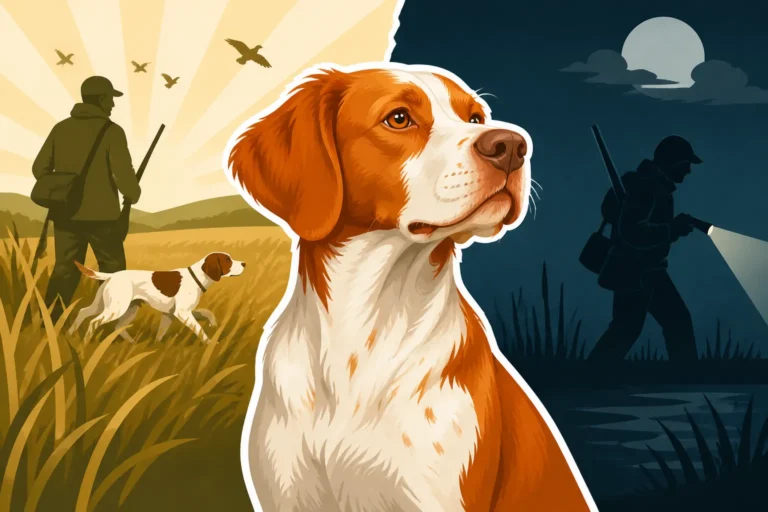
Dogs in FCI Group 7 are bred for one specific, incredible purpose: to find game birds, then freeze and point to their location, holding steady until the hunter arrives. This isn't just a random act; it's a finely honed instinct. A pointing dog uses its superior sense of smell to quarter a field, searching for the scent cone of hidden birds. Once located, it will typically stop dead, often lifting a front paw and stiffening its tail, locking its eyes on the cover where the bird is hidden. This intense stance effectively "points" out the game to the hunter, allowing them to approach and flush the birds for a shot.
The Brittany embodies these traits perfectly. They are renowned for their keen noses, their tireless work ethic in the field, and their stylish, often intense points. Unlike flushing spaniels, which are bred to push birds out of cover, pointing dogs are meant to locate and then wait. This is a nuanced difference, but it's fundamental to understanding the Brittany's true nature. When you see a Brittany lock up on a bird, you're witnessing generations of selective breeding at work, fulfilling the very definition of a Group 7 dog. The Brittany Points, It Does Not Flush speaks directly to this core characteristic.
The "Spaniel" Misnomer and Historical Context
One of the biggest points of confusion, especially for American enthusiasts, comes from the name "Brittany Spaniel." For many years, the AKC also included "Spaniel" in the breed's name. However, as the understanding of the breed's true hunting style evolved and its unique pointing abilities became undeniable, the AKC officially dropped "Spaniel" from the name in 1982, recognizing that it was, in fact, a pointing breed, not a flushing spaniel. Why the AKC Dropped Spaniel From the Brittany's Name in 1982 delves into the reasons behind this significant change.
Internationally, the name "Epagneul Breton" itself means "Breton Spaniel" in French. The term "Epagneul" in French historically referred to dogs that "lie down" or "crouch" on game, which was a precursor to the modern point. Over time, as hunting methods changed, these dogs evolved from crouching to standing points. So, while the linguistic root might suggest "spaniel," the function clearly aligns with pointing. The FCI's placement of the Epagneul Breton in Group 7 unequivocally affirms its identity as a pointing dog, aligning with the functional classification rather than a potentially misleading historical naming convention. What Epagneul Breton Means provides more insight into this fascinating etymology.
Why This Classification Matters for Owners and Breeders
Knowing the FCI group for the Epagneul Breton isn't just a fun fact; it has tangible implications for anyone invested in the breed, whether you're a casual pet owner or a dedicated breeder. It shapes how the breed is understood, judged, and perpetuated worldwide, offering a consistent framework that transcends national kennel club variations.
Impact on Breeding and Showing
For breeders, the FCI Group 7 classification directly influences breeding goals. The standard for Group 7 dogs emphasizes natural hunting ability, keen senses, stamina, and a biddable temperament. Breeders aiming to produce top-tier Epagneul Bretons will prioritize these traits, often testing their dogs in field events that mirror actual hunting scenarios. This focus helps ensure that the breed continues to excel at its intended purpose. If you're looking for a puppy, understanding this classification helps you ask breeders the right questions about their dogs' working lines and why certain traits are valued. Many breeders carefully select dogs with strong pointing instincts, which is a hallmark of the breed and its classification.
When it comes to showing, FCI conformation judges evaluate the Epagneul Breton against a standard that describes the ideal pointing dog. This means assessing not just appearance, but also the physical attributes that contribute to its efficiency in the field: strong legs, proper coat for protection, an intelligent expression, and a conformation that allows for agile, tireless work. How a French Brittany Differs From an American One highlights how different standards can lead to subtle variations, but the core pointing function remains central.
Bridging the American and International Understanding
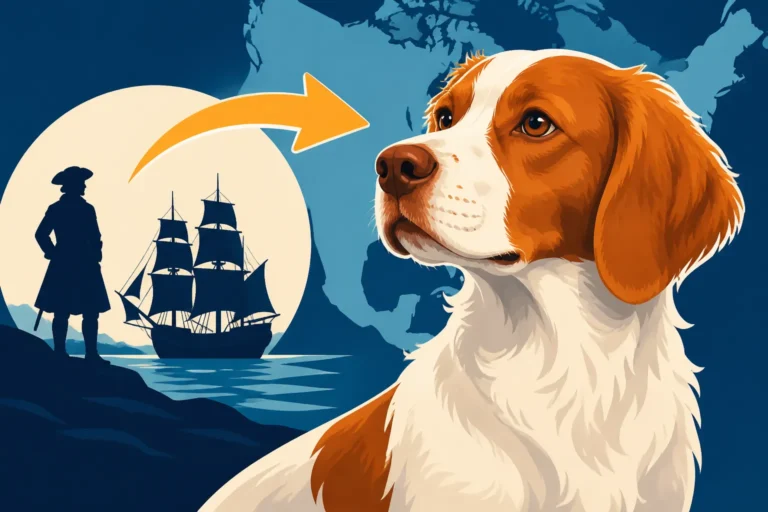
For American Brittany owners, understanding the FCI Group 7 designation helps bridge the gap between our local terminology and the broader international dog world. While our American Brittanys might look slightly different or hunt with a wider range than some Epagneul Bretons, the fundamental DNA of a pointing dog is the same. American Brittany and Epagneul Breton Went Separate Ways further explains these divergences. It allows us to appreciate the shared heritage and purpose that connects our dogs to their European cousins.
This international perspective is especially valuable if you're ever considering importing a dog or participating in international events. It also helps when you're looking for gear or resources, as many products are designed with these specific breed functions in mind. For instance, when you're shopping for high-performance dog food on a site like Chewy, knowing your Brittany is a dedicated pointing dog with high energy needs can guide you toward formulas designed for active sporting breeds, rather than a generic "all-purpose" kibble. You'll find specific brands and formulas tailored to sustain the energy and muscle recovery required for a dog that spends hours intensely searching and pointing in the field. Similarly, if you need durable, comfortable vests for field work, knowing the breed's core function helps you select appropriate gear that accounts for its active lifestyle.
Here’s a summary of the FCI Groups:
| FCI Group Number | FCI Group Name | Primary Function & Key Characteristics | Example Breeds | Brittany's Location |
|---|---|---|---|---|
| Group 1 | Sheepdogs and Cattle Dogs (except Swiss) | Herding livestock, highly intelligent, trainable, energetic. | German Shepherd, Border Collie, Australian Shepherd | No |
| Group 2 | Pinscher & Schnauzer – Molossoid & Swiss Cattle | Guarding, protection, strong build, often powerful and loyal. | Doberman, Rottweiler, Boxer, Great Dane, Bernese Mt. Dog | No |
| Group 3 | Terriers | Hunting vermin, tenacious, fearless, often feisty. | Jack Russell Terrier, Airedale Terrier, Bull Terrier | No |
| Group 4 | Dachshunds | Hunting badgers and other burrowing animals, long-bodied, courageous. | All Dachshund varieties | No |
| Group 5 | Spitz and Primitive Types | Ancient breeds, often thick-coated, watchful, independent. | Siberian Husky, Akita, Chow Chow, Basenji | No |
| Group 6 | Scent Hounds and Related Breeds | Hunting by scent, strong nose, melodious bark, great stamina. | Beagle, Basset Hound, Bloodhound, Rhodesian Ridgeback | No |
| Group 7 | Pointing Dogs | Locating game birds and indicating their presence by "pointing." | Brittany (Epagneul Breton), German Shorthaired Pointer, English Setter | YES |
| Group 8 | Retrievers – Flushing Dogs – Water Dogs | Retrieving game, flushing birds from cover, water retrieving. | Labrador Retriever, Golden Retriever, Cocker Spaniel | No |
| Group 9 | Companion and Toy Dogs | Companionship, small size, varied temperaments, often bred for looks. | Chihuahua, Pug, Maltese, French Bulldog | No |
| Group 10 | Sighthounds | Hunting by sight, incredible speed, elegant build, keen eyesight. | Greyhound, Whippet, Afghan Hound, Saluki | No |
In summary, the Epagneul Breton's designation within FCI Group 7 is a clear testament to its heritage and purpose. It affirms what every Brittany owner intuitively knows: these dogs are born to point, and their entire being is geared towards finding and indicating game in the field. Whether you call them Brittany or Epagneul Breton, their place among the world's elite pointing dogs is secure, a legacy that continues to define this remarkable breed across continents. It's a wonderful thing when the international community agrees on the true essence of a breed!
Disclaimer
This article is for general informational purposes only and does not constitute professional advice. Laws, prices and regulations vary by location and change over time. Consult a qualified professional for guidance on your specific situation.