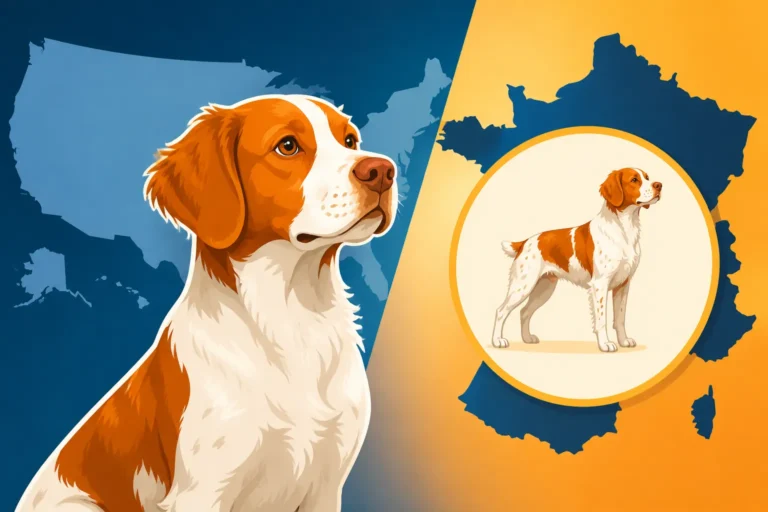
Why the AKC Dropped Spaniel From the Brittany’s Name in 1982
If you're a new Brittany owner, or even if you've admired these fantastic dogs for years, you might have noticed a peculiar thing: sometimes they're called "Brittany Spaniels," and other times just "Brittanys." It can be a little confusing, making you wonder if there are two different breeds, or if one name is more correct than the other. This guide will clear up that mystery, diving deep into the history behind why the American Kennel Club officially dropped "Spaniel" from the breed's name back in 1982, and what that change truly signified for this remarkable sporting dog.
The Early Days: The Brittany's European Roots
Before the Brittany ever set paw on American soil, its story began centuries ago in the rustic, mist-shrouded region of Brittany, France. It's a tale steeped in the traditions of game birds and dedicated hunters, long before formal breed clubs or kennel organizations even existed. Understanding these origins is key to grasping why the "Spaniel" designation was ultimately seen as a misnomer.
A French Origin Story
Imagine the rugged countryside of northwestern France, a place where everyday people, not just the gentry, relied on their dogs for putting food on the table. The Brittany emerged from this landscape, a working dog bred by peasants and poachers alike to hunt small game birds. These dogs weren't about grand estates or elaborate pedigrees in their earliest forms; they were about efficiency and an innate ability to find and point birds. The local people developed these dogs for their hunting prowess, needing an agile, intelligent companion that could work in various terrains, from dense hedgerows to open fields. The Brittany Comes From the Northwest Corner of France They were often smaller than the elaborate setters and pointers owned by the aristocracy, making them ideal for a hunter on foot who needed a close-working, tireless partner.
These early dogs were selected purely for their ability to find and hold game, displaying a keen pointing instinct that became their hallmark. They were a testament to practical breeding, honed over generations by the demands of subsistence hunting. The dog's appearance was secondary to its performance, as long as it could do the job. This direct connection to the land and the hunt forged a breed with a deep-seated instinct for game, a trait that would later be championed by those who argued for its true classification.
The "Spaniel" Misnomer
So, if these dogs were clearly pointing, why were they ever called "spaniels"? The confusion likely arose from a few factors. Historically, "spaniel" was a broad term, sometimes used to describe various types of bird dogs, especially those that "sprang" or "flushed" game. Many of these early dogs in Europe were indeed spaniel-like in appearance – smaller, often with longer coats and hanging ears, which could have led to a generic classification. In the early days of dog fancy and breed recognition, classifications weren't always as precise or functionally driven as they are today. The physical resemblance to the spaniel types prevalent in Europe at the time, combined with a lack of rigorous distinction in nomenclature, meant the "Brittany Spaniel" label stuck as the breed gained initial recognition.
However, the key difference was in their hunting style. While spaniels are primarily flushers, driving birds out of cover, the Brittany exhibited a distinct pointing behavior, freezing and indicating the presence of game. This fundamental functional difference, despite any superficial similarities in appearance, was always at the heart of the breed's identity. To call a dog that points a "spaniel" was, for many, like calling a duck a chicken simply because both have feathers. The label didn't accurately describe the dog's most defining characteristic, causing a persistent disconnect between its name and its inherent abilities.
The First Official Recognition
The journey from a local French hunting dog to an internationally recognized breed involved a slow but steady process of standardization and formal acknowledgment. The first official standard for the breed in France was established in 1907, a significant step in defining what an Epagneul Breton (the French name for the Brittany) should be. This standard began to articulate the physical characteristics and, crucially, the working aptitudes that defined the breed. As the breed's reputation spread beyond its native Brittany region, it began to attract attention from hunters and dog enthusiasts in other countries, including the United States.
It's worth noting that even with formal recognition, the "spaniel" tag often persisted through translation or common understanding. When the breed began to make its way to America, cultural interpretations and existing classifications of sporting dogs played a role in how it was perceived and named. This initial labeling set the stage for decades of discussion and, eventually, the pivotal change that would clarify its identity once and for all.
Arrival in America and Early AKC Recognition
The Brittany's journey across the Atlantic marked a new chapter in its history, bringing it to the fields and forests of North America where its talents quickly found appreciation among American hunters. However, this new home also brought with it the challenge of fitting into an established canine classification system that didn't quite understand its unique niche.
Crossing the Atlantic
The first Brittanys began arriving in the United States in the early 20th century, bringing their keen hunting instincts and amiable dispositions to a new continent. When the Brittany Reached America American hunters, accustomed to wide-ranging setters and pointers, were intrigued by this smaller, more compact dog that worked closer and with incredible bird sense. These early imports quickly proved their worth, demonstrating an innate ability to point and retrieve game with enthusiasm and skill. They were versatile, adaptable, and eager to please, making them an instant favorite for foot hunters who didn't want a dog ranging hundreds of yards away.
The breed's distinct abilities made it clear that this was not just another dog; it was a highly specialized and effective bird dog. Owners quickly grew to appreciate their intelligence and trainability, finding them to be exceptional partners in the field. Word of mouth and successful hunts spread their reputation, slowly but surely establishing a presence for the Brittany in the American sporting dog scene.
The "Brittany Spaniel" Era
When the American Kennel Club (AKC) officially recognized the breed in 1934, they adopted the name "Brittany Spaniel." This decision, while perhaps understandable at the time, stemmed from a combination of factors. The breed's appearance, with its floppy ears, medium build, and often feathered coat, resembled traditional spaniels more than the sleek, short-coated pointers. In a world where visual cues often dictated classification, it was an easy assumption to make. Furthermore, the term "spaniel" itself carried connotations of bird hunting, even if the specific method of hunting differed from flushing.
However, the "spaniel" part of the name immediately caused confusion among those familiar with the breed's true working style. Hunters knew this dog pointed game, standing staunchly to indicate birds, rather than flushing them out of cover like a Cocker or Springer Spaniel would. The name created a paradox: a pointing spaniel. This internal conflict within the name itself would fuel decades of discussion and ultimately lead to its eventual removal. It was a period where the breed's official designation didn't quite align with its reality, a frustration shared by many dedicated Brittany owners.
A Breed Apart, or So It Seemed
Even with the "spaniel" attached to its name, the Brittany quickly carved out a unique identity in America. Its versatility was unmatched. It wasn't just a pointing dog; it often retrieved naturally and was smaller and easier to handle than many of the larger pointing breeds. Hunters found them to be highly biddable and quick learners, making them a joy to train. Many owners loved that they could take their Brittany out for a serious hunt and then bring them home to be a wonderful, affectionate family companion.
This inherent versatility, combining a strong pointing instinct with a willingness to retrieve and a gentle disposition, set the Brittany apart from its namesake "spaniels." While a Springer Spaniel might enthusiastically flush game and bring it back, a Brittany would first lock up on point, holding steady until the hunter arrived, then retrieve the downed bird. This distinction wasn't just a nuance; it was the very essence of the breed's utility in the field, making the "spaniel" label increasingly inaccurate in the eyes of those who knew and worked with these dogs.
The Debate Rages: Is It Really a Spaniel?
As the Brittany's popularity grew in the United States, so did the internal debate within the breed community. The question "Is it really a spaniel?" wasn't just semantic; it went to the heart of the breed's identity, its function, and how it should be understood and presented to the world.
Function Over Form
The core of the argument against the "spaniel" tag lay in the Brittany's primary hunting function: pointing. While other "spaniels" were developed to flush game, driving birds from cover into the air for the gun, the Brittany was bred to point. This means it freezes, often with one paw raised and its body oriented towards the game, indicating the bird's precise location without disturbing it. The Brittany Points, It Does Not Flush This behavior is characteristic of setters and pointers, not spaniels. For a serious bird hunter, this distinction is monumental. A flushing dog provides an immediate shot opportunity, while a pointing dog allows the hunter to approach, prepare, and flush the bird themselves, or work with another dog to honor the point.
This fundamental difference in working style meant that classifying the Brittany as a spaniel was not only technically incorrect but also misleading to potential owners and the general public. It implied a different set of expectations for their behavior in the field. Imagine buying a car advertised as a sports car, only to find it drives like a minivan. While both are vehicles, their purpose and performance are vastly different. The same applied to the Brittany and its "spaniel" misnomer.
Anatomical and Behavioral Differences
Beyond its pointing instinct, the Brittany also displayed a range of anatomical and behavioral traits that further distanced it from true spaniel breeds. While it shared some superficial similarities like its coat and ear set with certain spaniels, its overall build was more aligned with pointing breeds. Brittanys are typically more leggy and athletic than the compact, barrel-chested spaniels like Cockers. They possess a lighter bone structure and a gait designed for covering ground efficiently, rather than crashing through dense cover.
Behaviorally, Brittanys are often described as sensitive, intelligent, and highly biddable, traits also common in setters and pointers. They tend to be less prone to the independent, headstrong nature that some flushing spaniels can exhibit, and more attuned to their handler's cues. While these are generalizations, the cumulative differences in physical structure, gait, and innate working temperament painted a clear picture for those deeply involved with the breed: the Brittany simply didn't fit the spaniel mold.
Breeder and Hunter Perspectives
For the breeders and hunters who dedicated their lives to the Brittany, the "spaniel" designation was a constant source of frustration. They knew their dogs were exceptional pointers, competing successfully in field trials alongside English Setters, Pointers, and German Shorthaired Pointers. To have their prized pointing dog labeled as a "spaniel" felt like an injustice, undermining the breed's true identity and hard-earned reputation. It was a bit like calling a world-class sprinter a long-distance runner – technically both are athletes, but the specialization is ignored.
Many felt it prevented the breed from being fully appreciated for its unique abilities. It was also challenging when educating new owners; they often had to explain that despite the name, their Brittany wouldn't be flushing birds but staunchly pointing them. This persistent need to correct a fundamental misrepresentation fueled a strong desire within the American Brittany Club and its members to seek a formal change from the AKC, to align the name with the dog's true nature and function in the field.
The Push for Change: A New Identity
The growing dissatisfaction within the Brittany community eventually galvanized into a concerted effort to change the breed's name. This wasn't a casual request; it was a deeply felt conviction that the breed deserved a name that accurately reflected its essence as a pointing dog.
Advocating for Accuracy
The American Brittany Club, the parent club for the breed in the United States, spearheaded the movement to remove "Spaniel" from the name. Members, including prominent breeders, field trialers, and passionate owners, argued vociferously that the designation was incorrect and misleading. They presented historical evidence of the breed's origins as a pointer, detailed accounts of its performance in the field, and comparisons with other pointing breeds and spaniels to highlight the stark differences. Their goal was simple: to bring integrity and accuracy to the breed's official name, ensuring it was recognized for what it truly was.
This wasn't just about semantics; it was about pride and clarity. Breeders felt that the name was an impediment to the breed's understanding and growth. They envisioned a future where the Brittany could stand proudly alongside other pointing breeds, its name clearly signaling its primary function to anyone new to the sporting dog world. They spent years accumulating evidence, drafting proposals, and engaging in respectful but firm dialogue with the AKC.
The Weight of Tradition vs. Reality
Changing an established name within an organization as steeped in tradition as the AKC is no small feat. The AKC, founded in 1884, naturally values historical continuity and established standards. Any proposed change, especially one as fundamental as a breed's name, would be met with careful deliberation and scrutiny. There were likely arguments for maintaining the "Brittany Spaniel" name due to its long-standing use and the familiarity it had gained, however misguided. It's tough to alter something that's been on the books for decades, even if the reasoning for the original designation was flawed.
The advocates for change had to demonstrate not just that the existing name was inaccurate, but that the proposed change was essential for the breed's identity and future. They had to overcome the inertia of tradition with the undeniable reality of the Brittany's performance and heritage. It was a testament to the dedication and persistence of the American Brittany Club that they continued to press their case, armed with facts and a deep understanding of their beloved breed.
The Year 1982
After years of sustained effort, discussion, and persuasive argumentation from the American Brittany Club, the American Kennel Club finally made a landmark decision. In 1982, the AKC officially dropped "Spaniel" from the breed's name, and it became simply "the Brittany." This was a triumphant moment for advocates who had fought so hard for accuracy and recognition. It was a formal acknowledgment that the breed's true heritage and primary function were that of a pointing dog, not a flushing spaniel.
This change wasn't just a bureaucratic update; it was a powerful statement about the breed's identity. It signaled to the world that the Brittany was a distinct and unique pointing breed, deserving of its own classification, free from the misdirection of its previous name. It was a victory for realism and for those who believed that a breed's name should accurately reflect its core attributes and purpose. Why the AKC Changed the Brittany's Name From that point forward, the name "Brittany" officially and unequivocally referred to the vibrant, intelligent pointing dog we know and love today.
What the Name Change Meant for the Breed
The official name change in 1982 was more than just altering a few letters on a registration certificate. It had profound implications for how the Brittany was perceived, both within the sporting dog community and by the general public. It solidified an identity that had long been obscured by an inaccurate label.
Clarifying Identity and Purpose
The removal of "Spaniel" from the Brittany's name brought a much-needed clarity to its identity. No longer was there an inherent contradiction in its official designation. It was now unequivocally recognized as a pointing breed, a status that accurately reflected its centuries-old purpose and innate abilities in the field. This clarification was incredibly important for breeders, who could now confidently present their dogs as true pointers, aligning their breeding goals and marketing efforts with the breed's correct classification. For new owners, it removed a significant point of confusion, allowing them to understand from the outset what kind of hunting companion they were bringing home.
This clarified purpose helped reinforce the breed's unique place among sporting dogs. It highlighted its versatility as The Brittany Is the Smallest of the Versatile Pointing Breeds, capable of excelling in a variety of hunting scenarios while maintaining its biddable nature. It also validated the efforts of generations of breeders who had diligently preserved and enhanced the pointing instinct that defines the Brittany.
Impact on Breed Recognition and Public Perception
The name change undeniably had a positive impact on the Brittany's recognition and public perception. For years, the "spaniel" tag might have led some prospective owners or hunters to overlook the breed, assuming it was a flushing dog when they specifically sought a pointer. By dropping "Spaniel," the breed was now correctly positioned alongside other well-known pointing breeds like Pointers, Setters, and German Shorthaired Pointers. This helped it gain wider acceptance and understanding within the broader sporting dog community.
It also simplified education. When someone asked about a Brittany, the conversation no longer had to start with an explanation of why a "spaniel" actually pointed. Instead, the focus could immediately shift to the breed's remarkable abilities, its amiable temperament, and its suitability as both a hunting partner and a family dog. This streamlined communication helped elevate the Brittany's standing and increased its appeal to a wider audience, from dedicated bird hunters to active families looking for an intelligent and energetic companion.
Enduring Legacy of "Dual Champions"
Perhaps one of the most powerful affirmations of the Brittany's true identity, and one that was undoubtedly bolstered by the name change, is its incredible record for Dual Champions. A Dual Champion (DC) is a dog that has earned both an AKC conformation championship (for appearance) and an AKC field championship (for hunting ability). This title is incredibly difficult to achieve, demanding excellence in both form and function. The Brittany Holds the Dual Champion Record The Brittany has produced more Dual Champions than all other sporting breeds combined, a truly astonishing feat.
This unparalleled achievement underscores the breed's rare ability to maintain its working instincts while also adhering to breed standards for appearance. The name change to simply "Brittany" emphasized this dual nature, correctly placing it in the pointing group where its field prowess could be fully appreciated. It's a testament to the breed's versatility and the dedication of its breeders that it continues to produce dogs that are not just beautiful, but also supremely capable in the field. This legacy ensures that the Brittany's true purpose and exceptional abilities remain at the forefront of its identity.
The Brittany Today: A Clearer Picture
Even decades after the official name change, the legacy of the "Brittany Spaniel" sometimes lingers. For many, the breed's true identity is now well-established, but remnants of the past classification still pop up, leading to gentle corrections and ongoing education.
Brittany vs. Epagneul Breton
One interesting aspect of the Brittany's identity, especially in America, is its relationship with its French cousin, the Epagneul Breton. While fundamentally the same breed, over decades, the American Brittany and the Epagneul Breton in France have evolved along slightly different paths, with differing breed standards and sometimes preferences in hunting style. American Brittany and Epagneul Breton Went Separate Ways The French standard for the Epagneul Breton still officially includes the term "Epagneul," which translates to "spaniel" in English. This is largely due to historical European classifications where "epagneul" broadly referred to gun dogs, rather than strictly defining a flushing action.
So, while the AKC dropped "Spaniel" from the American Brittany's name, the French equivalent retains a form of it. This distinction sometimes causes confusion for those looking at the breed internationally. However, for American owners, the "Brittany" name clearly sets their dog apart as a pointing breed in the North American context, emphasizing its role in the field trial and hunting scenes as a pointer, distinct from what might be inferred by the "Epagneul" in its ancestral name.
Why the Old Name Still Lingers
Despite the official change in 1982, it's not uncommon to still hear people refer to the breed as a "Brittany Spaniel." Whether People Still Say Brittany Spaniel This persistence is often due to habit, passed-down knowledge, or simply a lack of awareness about the name change. For many who grew up before 1982, "Brittany Spaniel" was the name they always knew, and old habits die hard. You might even find it in older books, online articles that haven't been updated, or conversations with seasoned hunters who stick to the traditional nomenclature.
It's not usually out of malice or disrespect for the breed's true nature, but rather a reflection of how deeply ingrained the original name became during its long tenure. As a Brittany owner, you'll likely encounter this, and it provides a perfect opportunity for a friendly educational moment about the breed's history and its true pointing heritage.
Education and Appreciation
This lingering confusion underscores the ongoing importance of education. For new Brittany owners, understanding the history behind the name is crucial for appreciating their dog's unique abilities and place in the sporting dog world. When you're picking out a new collar or a bag of performance food on Chewy, knowing that you're buying for a "Brittany" – a pointer – informs your choices. It influences how you approach training, what kind of exercise you provide, and how you interact with your dog in the field.
Educating others, whether at the dog park or out on a hunt, helps to solidify the breed's correct identity. It fosters a deeper appreciation for the Brittany's intelligence, athleticism, and that unmistakable pointing instinct that sets it apart. By understanding why the name changed, we honor the breeders and enthusiasts who fought to ensure the Brittany's identity was accurately represented, securing its legacy for future generations of hunters and companions.
Understanding the Brittany's Unique Place
The journey from "Brittany Spaniel" to "Brittany" highlights not just a name change, but a deeper understanding of this incredible breed's attributes. It's about recognizing its nuanced position in the dog world, a place forged by its intelligence, versatility, and unwavering passion for birds.
Not Just a "Small Pointer"
While the Brittany is definitively a pointing breed, it's more than just a smaller version of an English Pointer or a German Shorthaired Pointer. It has its own distinct characteristics that make it unique. For example, The Brittany Is the Smallest of the Versatile Pointing Breeds, making it an ideal companion for hunters who prefer to cover ground on foot rather than horseback. Its closer working range, while varying between American and French lines, is often appreciated in dense cover or smaller hunting plots. They are also known for their intense desire to please and their sensitivity, which means they respond best to positive reinforcement and gentle training methods.
Their compact size also makes them excellent house dogs, fitting comfortably into family life after a long day in the field. They are often described as "big dogs in small packages" due to their boundless energy and tenacious hunting drive, which still makes them demand substantial exercise. But it's this unique combination of powerhouse hunter and affectionate family member that truly sets them apart, making them distinct even among other pointers.
Versatility Beyond the Field
The Brittany's versatility extends far beyond its remarkable abilities in the hunting field. While they excel at pointing and retrieving, their intelligence and eager-to-please nature make them fantastic candidates for a wide array of canine activities. Whether a Brittany Is a Versatile Breed Many Brittanys compete in agility, obedience, flyball, and even scent work, showcasing their athletic prowess and mental acumen. They thrive on having a job to do and love being engaged with their human companions, making them adaptable to many different lifestyles, as long as their need for physical and mental stimulation is met.
This inherent versatility is part of their charm. A Brittany that spends its weekdays as a beloved family pet, retrieving toys from a Chewy box or accompanying its owner on long hikes, can transform into a focused, driven bird dog on the weekend. This ability to switch gears, to be both a fierce hunter and a gentle companion, is a hallmark of the breed and something their dedicated owners cherish.
Living with a Brittany
Bringing a Brittany into your life means embracing an active, intelligent, and affectionate companion. They are renowned for being "velcro dogs," often following their favorite human from room to room. What a Brittany's Temperament Is Really Like They thrive on interaction and can become bored and destructive if not given enough physical exercise and mental stimulation. Think long walks, runs, hikes, or even dedicated training sessions to keep their busy minds and bodies satisfied.
Their sensitive nature means they respond best to consistent, fair training, often shying away from harsh corrections. They form strong bonds with their families and are generally good with children and other pets, especially if socialized from a young age. Owning a Brittany is a commitment to an active lifestyle, but the rewards are immeasurable – a loyal, intelligent, and endlessly enthusiastic partner who brings joy and adventure into every day, whether in the quiet of your home or the thrill of the hunt.
| Feature | Brittany (Pointer) | Typical Spaniel (Flusher) |
|---|---|---|
| Primary Hunt Style | Points game, freezes to indicate location | Flushes game, drives birds from cover |
| Body Build | More leggy, athletic, square-proportioned | Often more compact, barrel-chested, longer body |
| Tail | Often naturally bobtailed or docked short | Usually full, long tail, often feathered |
| Energy Level | High drive, needs significant exercise, wide-ranging | High drive, needs significant exercise, works closer |
| Head Shape | Distinct stop, sometimes slightly dished face | Broader skull, more pronounced stop, sometimes dome-shaped |
| Biddability | Highly biddable, intelligent, sensitive to correction | Often biddable, can be more independent, robust |
Disclaimer
This article is for general informational purposes only and does not constitute professional advice. Laws, prices and regulations vary by location and change over time. Consult a qualified professional for guidance on your specific situation.