Why the Brittany Is Grouped With Pointing Breeds
It's a common head-scratcher for new Brittany owners or even just admirers: you hear "Brittany Spaniel," but then everyone talks about them as a pointing breed. This mix-up can be genuinely confusing, making you wonder if your new family member is supposed to be flushing birds or standing rock-solid over them. This guide aims to clear up that historical and practical puzzle, explaining precisely why the Brittany, despite its old name, is firmly a pointing breed and what that means for its instincts and training.
The Historical Confusion: "Spaniel" in the Name
The journey of the Brittany's name is a fascinating tale, full of history and a bit of a misnomer that has stuck around for some people. It's totally understandable why the "Spaniel" part throws folks off, conjuring images of dogs busting through cover to send birds airborne. But the Brittany's true heritage tells a different story.
Tracing the Name Back to Brittany, France
To really grasp why the name came to be, we have to travel back to the breed's origins in the rugged, bird-rich region of Brittany, France. Here, long before formal breed clubs and written standards, local hunters relied on these quick, intelligent dogs to help them put food on the table. The term "Epagneul Breton" was used, with "Epagneul" being a French term often associated with dogs that "couch" or "lie down" in front of game, or were bred in Spain—which eventually evolved to mean spaniel-type dogs that could be used for pointing. It's a bit of a linguistic winding road, but the key is that even in their earliest days, these dogs were valued for their ability to locate and indicate game, not necessarily to flush it. They were working alongside their owners, quietly and effectively.
These early dogs weren't typically seen crashing through dense briars like a Springer Spaniel might. Instead, they were more refined in their approach, using their incredible noses to pinpoint game and then freezing, or "pointing," to show their handler exactly where the quarry lay hidden. This made them ideal companions for hunters on foot, who needed a dog that could cover ground but also hold steady, allowing the hunter to get into position. The "spaniel" part of the name, for many, was more about their size, ear set, and general appearance, rather than their hunting style. It was a catch-all term that didn't quite capture the nuances of their unique working method.
The AKC's Decision to Drop "Spaniel"
The official recognition of the breed in the United States brought this naming convention to a head. For decades, the American Kennel Club (AKC) recognized the breed as the "Brittany Spaniel." However, as breeders and enthusiasts championed the breed's true nature and distinctive hunting style, a movement grew to align the name with its actual function. The "spaniel" designation was simply misleading, causing confusion among those unfamiliar with the breed's historical role. People would often expect them to act like a Cocker Spaniel or an English Springer, and then be surprised by their hard-pointing instinct.
Eventually, in 1982, the AKC officially dropped "Spaniel" from the breed's name, henceforth recognizing it simply as the "Brittany." This change was a monumental one, reflecting a deeper understanding and appreciation of the breed's primary purpose. It wasn't just a cosmetic change; it was an affirmation of the Brittany's identity as a bona fide pointing dog, a testament to its instinctive ability to locate game and hold a rock-solid point. If you're curious about the specifics of this change, there's a great article that dives into When the AKC Dropped Spaniel From the Brittany's Name. This decision truly solidified the breed's place among the pointing breeds and helped clarify its unique contribution to the sporting dog world.
The Core Behavior: Why the Brittany Points
At the heart of every Brittany lies an undeniable instinct: the point. This isn't just a learned trick; it's a deep-seated, genetic drive that defines the breed and sets it apart. Understanding this core behavior is crucial to appreciating why these dogs are such exceptional bird dogs.
Instinctive Pointing Behavior
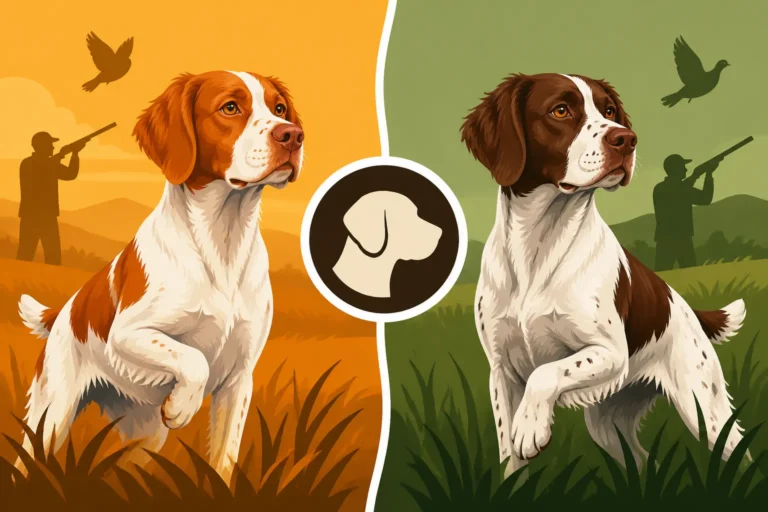
From the moment a Brittany puppy catches its first whiff of game, the pointing instinct begins to manifest. It's a beautiful, almost balletic display. The dog freezes, often with one front paw lifted, its body taut and alert, nose pointed directly at the hidden bird. Its tail might be held high or flagged rhythmically, signaling to the hunter, "Here they are!" This isn't a behavior that needs to be heavily taught; it's something they are born with, waiting to be honed. A good breeder will often observe puppies "pointing" butterflies or even toys at a very young age, a clear indicator of this innate drive. It's why many hunters seek out Brittanys—they arrive with this essential software already installed.
This instinct is so strong that even a Brittany with no formal bird training might suddenly slam on point when it encounters a covey of quail or a pheasant in the field. It's a magical moment for any owner, witnessing this ancient predator-prey relationship manifest so perfectly in their companion. Unlike flushing breeds that might burst into a bird's hiding spot, scattering them, the Brittany's point gives the hunter time to approach, prepare, and make an ethical shot. This cooperative hunting style is precisely what distinguishes them and aligns them squarely with the pointing dog category. Truly, The Brittany Points, It Does Not Flush, which is a fundamental difference in how they work the field.
How a Brittany Locates and Locks onto Scent
The Brittany's ability to point so effectively is intrinsically linked to its extraordinary olfactory capabilities and its methodical hunting pattern. These dogs are natural hunters, employing a keen sense of smell to locate game birds. They typically quarter a field, moving back and forth in a systematic pattern, using the wind to bring them scent. They don't just run blindly; they're constantly evaluating the air, processing subtle shifts in odor. When they pick up the scent cone of a bird, their body language changes instantly. Their pace might slow, their head will drop slightly, and their tail might begin to wag with a focused intensity.
As they get closer to the source of the scent, their movements become more deliberate, almost cat-like. They're trying to pinpoint the exact location of the bird without disturbing it. This delicate dance culminates in the point, where the dog locks its entire body, effectively becoming an arrow pointing directly at the hidden game. It’s a moment of complete focus and control, a testament to their intelligence and their genetic programming. This precise location of game by scent, followed by a motionless stance, is the hallmark of a true pointing dog and a skill Brittanys excel at, making them fantastic partners for wild bird hunting.
The Difference Between Pointing and Flushing
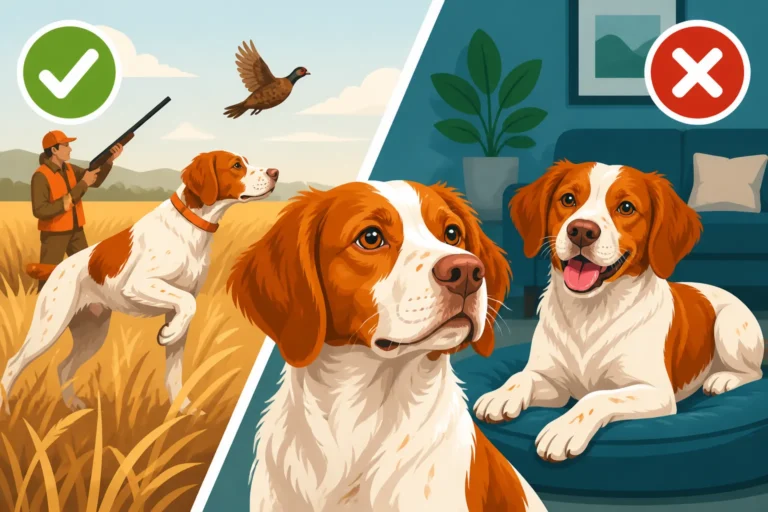
Understanding the distinction between pointing and flushing is key to grasping the Brittany's role. A flushing dog, like many spaniels, is bred to burst into cover and send birds flying into the air within gun range. Their job is often to create chaos, driving the birds up and out. This can be exhilarating and effective, especially in dense cover where a point might be hard to see.
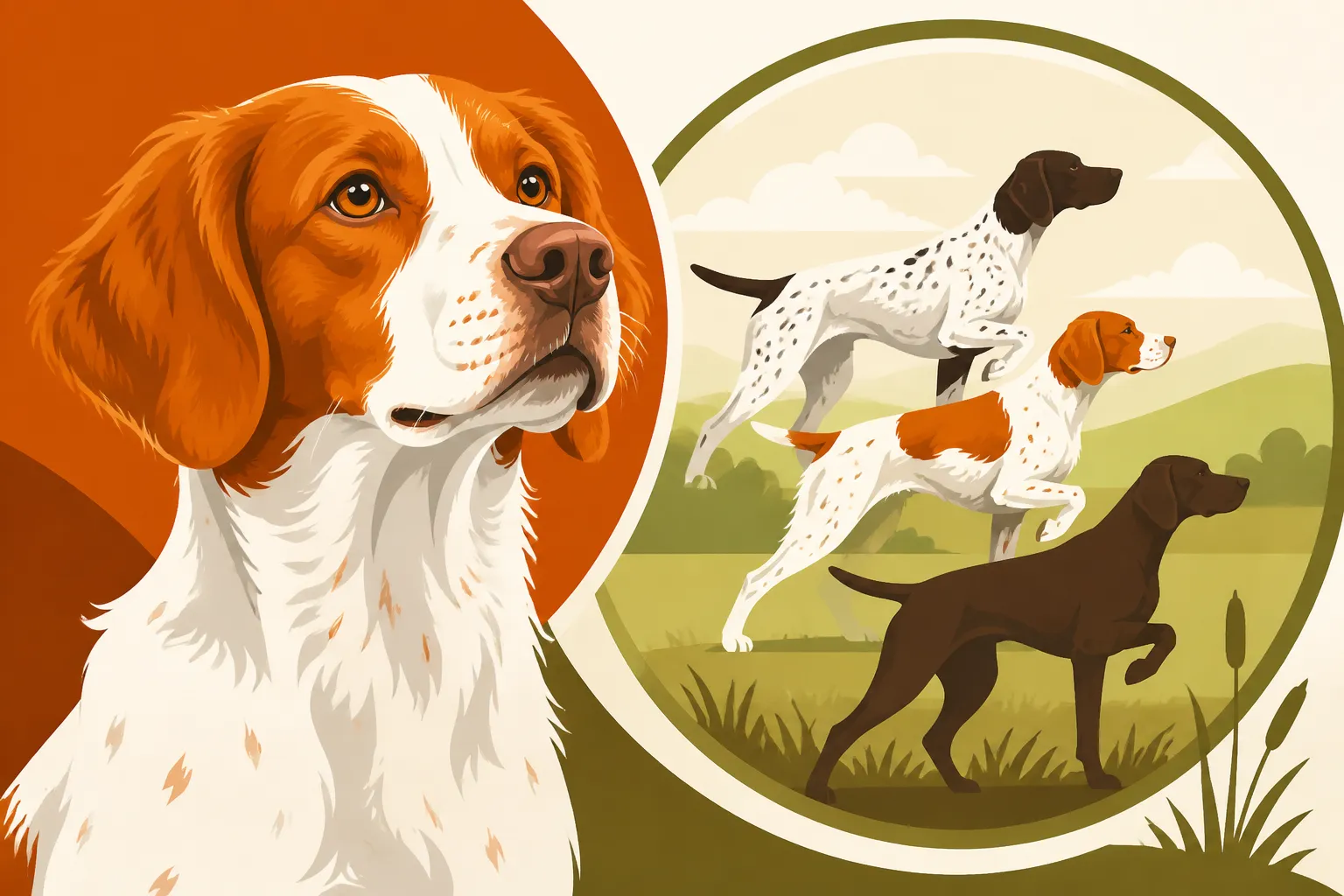
A pointing dog, on the other hand, is bred to locate game and then stand absolutely still, indicating the bird's precise location without disturbing it. This allows the hunter to walk in, flush the bird themselves, and then take the shot. The point is a moment of anticipation, a silent communication between dog and hunter. The Brittany's natural inclination is to find the bird and hold it, giving the hunter control over when and where the flush occurs. This controlled approach is highly valued by many upland bird hunters, as it often leads to more strategic shooting opportunities and a better chance of recovering downed game. When you see a Brittany out in the field, it's this magnificent, statuesque point that you're looking for, not a mad dash into the brush.
Field Work and Training: Reinforcing the Point
While the pointing instinct is innate in a Brittany, it's through careful training and field work that this natural ability is refined into the polished performance seen in accomplished bird dogs. A Brittany's intelligence and desire to please make them highly trainable, but their sensitivity means the right approach is crucial.
Early Development of Point in Puppies
A responsible Brittany breeder will often start observing their puppies for signs of pointing instinct from a very young age. Even before they are fully coordinated, you might see a young pup "pointing" a feather, a toy, or even an interesting shadow. These early displays are exciting because they confirm the genetic predisposition. Once a puppy is with its new family, gentle introductions to birds like pigeons or quail can further encourage this behavior. It's not about force-feeding them the concept, but rather nurturing what's already there.
For instance, a simple bird wing on a string, or even just letting a young puppy explore a field where birds might have been, can spark that initial curiosity and lead to an early, albeit wobbly, point. Experienced trainers and owners often start with live, flight-restricted birds in controlled environments to build a puppy's confidence and reinforce the idea that good things happen when they point. They learn quickly that holding still means the bird stays put, and the hunter eventually comes in. This positive reinforcement, often with delicious treats from a brand like Chewy, goes a long way. If you're wondering about the timing, you might be interested in The Age a Brittany Puppy First Points to understand when to expect these early signs.
Training for a Steady Point
Once the natural pointing instinct is clear, the next step in training is to develop a "steady" point. This means the dog will hold its point even when the hunter approaches, the bird flushes, and the shot is fired. This is where patience and consistent training truly shine. The "whoa" command is absolutely critical here, teaching the dog to freeze in place, no matter the excitement around them. It starts simply, perhaps by having the dog "whoa" on a barrel or a low platform, then gradually introducing birds.
A check cord is an invaluable tool in this stage. When the dog points, the handler can use the check cord to gently reinforce the "whoa" command, preventing the dog from creeping or breaking point. Over time, the dog learns that holding steady leads to a retrieve and praise, while breaking early might mean missing out on the fun. It's a delicate balance of encouragement and firm, but gentle, correction. Teaching a Brittany to Hold Point Until You Arrive is a core tenet of Brittany training, ensuring they become a reliable and enjoyable hunting partner. Without a steady point, the cooperative hunt simply doesn't work as intended.
Brittany's Versatility in Field Trials
The Brittany's exceptional pointing ability is not just for the duck blind or the grouse woods; it's celebrated and tested in various field trial events. These events are designed to evaluate a dog's natural hunting ability and its training in real-world scenarios. Brittanys consistently excel in these competitions, often demonstrating superior range, bird-finding ability, and, of course, a staunch point. Events like AKC Hunt Tests and Field Trials, as well as NAVHDA (North American Versatile Hunting Dog Association) tests, showcase their talents.
Perhaps one of the most compelling pieces of evidence for the Brittany's pointing prowess is its unparalleled record in achieving Dual Champion titles. A Dual Champion is a dog that has earned both an AKC conformation championship (for its looks) and an AKC field trial championship (for its hunting ability). Brittanys hold more Dual Champion titles than any other breed, by a significant margin. This incredible achievement speaks volumes about the breed's ability to maintain both its conformation standards and its inherent working ability. It's a testament to dedicated breeders and owners who have preserved the breed's integrity. For more on this remarkable feat, you can read The Brittany Holds the Dual Champion Record. Their success in these demanding events unequivocally cements their status as a premier pointing breed.
Physical Characteristics Supporting the Pointing Style
Beyond their instinct and trainability, the Brittany's physical makeup is perfectly adapted to its role as a pointing dog. Their compact yet athletic build, coupled with their excellent scenting apparatus, makes them a force to be reckoned with in the field.
Build and Agility for Covering Ground
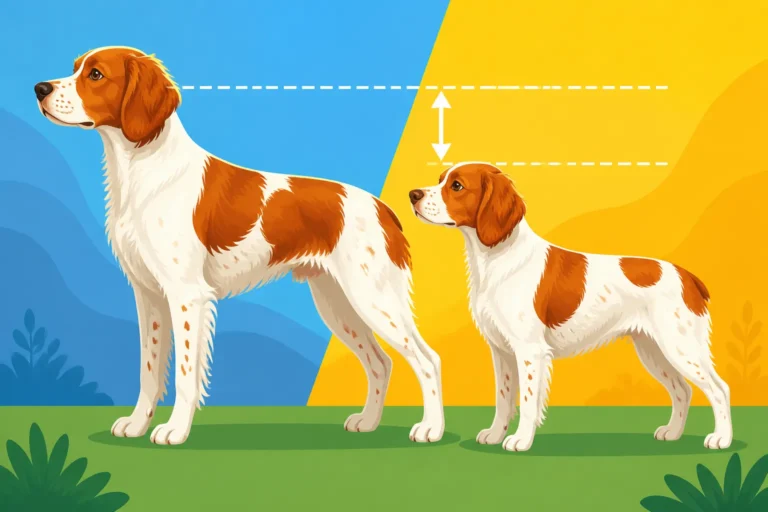
The Brittany is often described as a "big dog in a small package." They are the smallest of the versatile pointing breeds, standing generally between 17.5 and 20.5 inches tall at the shoulder. However, what they lack in towering stature, they more than make up for in athleticism and endurance. Their legs are strong and well-muscled, allowing them to cover vast amounts of ground tirelessly. They possess a compact, well-balanced body that is neither too heavy nor too slight, granting them the agility to navigate dense cover, leap over obstacles, and change direction at a moment's notice.
This combination of size and athletic prowess makes them incredibly efficient hunters. They can work a field all day without becoming overly fatigued, a crucial trait for a pointing dog expected to meticulously search for game. Their lighter build also means they can move more quietly through cover, getting closer to birds without spooking them prematurely, thus ensuring a solid point. You can get a good overview of their dimensions in How Tall a Brittany Stands. This ideal physical conformation is a key factor in their success as a pointing breed, allowing them to perform their job with grace and stamina.
Scenting Abilities and Nose Design
A pointing dog is only as good as its nose, and the Brittany possesses an exceptional one. Their muzzle is moderately long and deep, providing ample space for a highly developed olfactory system. The nostrils are wide and open, allowing for maximum intake of scent particles. Furthermore, the internal structure of their nose, with its intricate turbinates, is designed to efficiently capture and process even the faintest airborne scent of game birds. This means they can pick up scent from a considerable distance, working the wind to their advantage.
Their excellent scenting ability is why they can find birds that other dogs might miss. They are methodical in their search, using their nose like a finely tuned instrument to locate game precisely. This allows them to "foot scent" a bird that might be running, or to air scent a bird holding tight in heavy cover. The combination of their innate pointing instinct and their superior olfactory system makes the Brittany a highly effective and reliable bird finder, perfectly equipped for the pointing role they were bred to perform.
Comparing Pointing and Flushing Breeds
To truly appreciate the Brittany's classification as a pointing breed, it helps to understand the fundamental differences in hunting styles. While both types of dogs are invaluable to bird hunters, their approaches are distinct.
| Feature | Pointing Breeds (e.g., Brittany, Pointer, Setter) | Flushing Breeds (e.g., Springer Spaniel, Cocker Spaniel) |
|---|---|---|
| Primary Hunting Action | Locate game and hold a staunch, motionless point. | Locate game and vigorously flush it into the air. |
| Hunter's Role | Walks in to flush the bird after the dog points. | Waits for the dog to flush the bird within gun range. |
| Pace in Field | Often covers ground quickly, then freezes. | Typically works cover more closely, with energetic flushing. |
| Communication | Silent, visual signal (the point). | Audible, active (barking, tail wagging, crashing cover). |
| Typical Range | Can work wide or close, depending on breed/style. | Generally works closer to the hunter. |
| Goal | Strategic flush, controlled shot opportunity. | Creates immediate flush, often more chaotic. |
| Retrieval | Often part of their versatile skillset. | Strong retrieval instinct, especially from water. |
This table highlights why a Brittany's behavior aligns so clearly with the pointing group. Their entire purpose in the field revolves around that moment of stillness and indication, a stark contrast to the dynamic flush of a spaniel.
The Brittany's journey from a rural French hunting companion to a recognized pointing breed is a testament to its inherent abilities and the dedication of breeders and hunters. Despite the historical "Spaniel" in its name, which often caused confusion, the breed's actions in the field speak for themselves. The Brittany is, and always has been, a pointing dog—a keen-nosed, athletic, and intelligent partner that works in silent cooperation with its hunter, bringing a unique elegance and effectiveness to the pursuit of upland game. When you witness a Brittany lock onto point, you'll understand completely why it belongs in the pointing group. Its instinct, coupled with proper training from an early age, makes it one of the most cherished and successful bird dogs available, a true joy to hunt over and live with. You can find many great products for their care and training, from performance foods to durable leashes, on sites like Chewy.
Disclaimer
This article is for general informational purposes only and does not constitute professional advice. Laws, prices and regulations vary by location and change over time. Consult a qualified professional for guidance on your specific situation.