Whether a Brittany Is Leggy
A Brittany can look leggy in a photo or beside a heavier dog, especially when its coat is clipped short or its stance is alert. But “leggy” is a visual impression, not a problem by itself. This guide explains how to judge a Brittany’s proportions, what can make the breed look long-legged, and when a noticeably unusual shape deserves a closer look.
Is a Brittany supposed to look leggy
A light, athletic outline is part of the breed
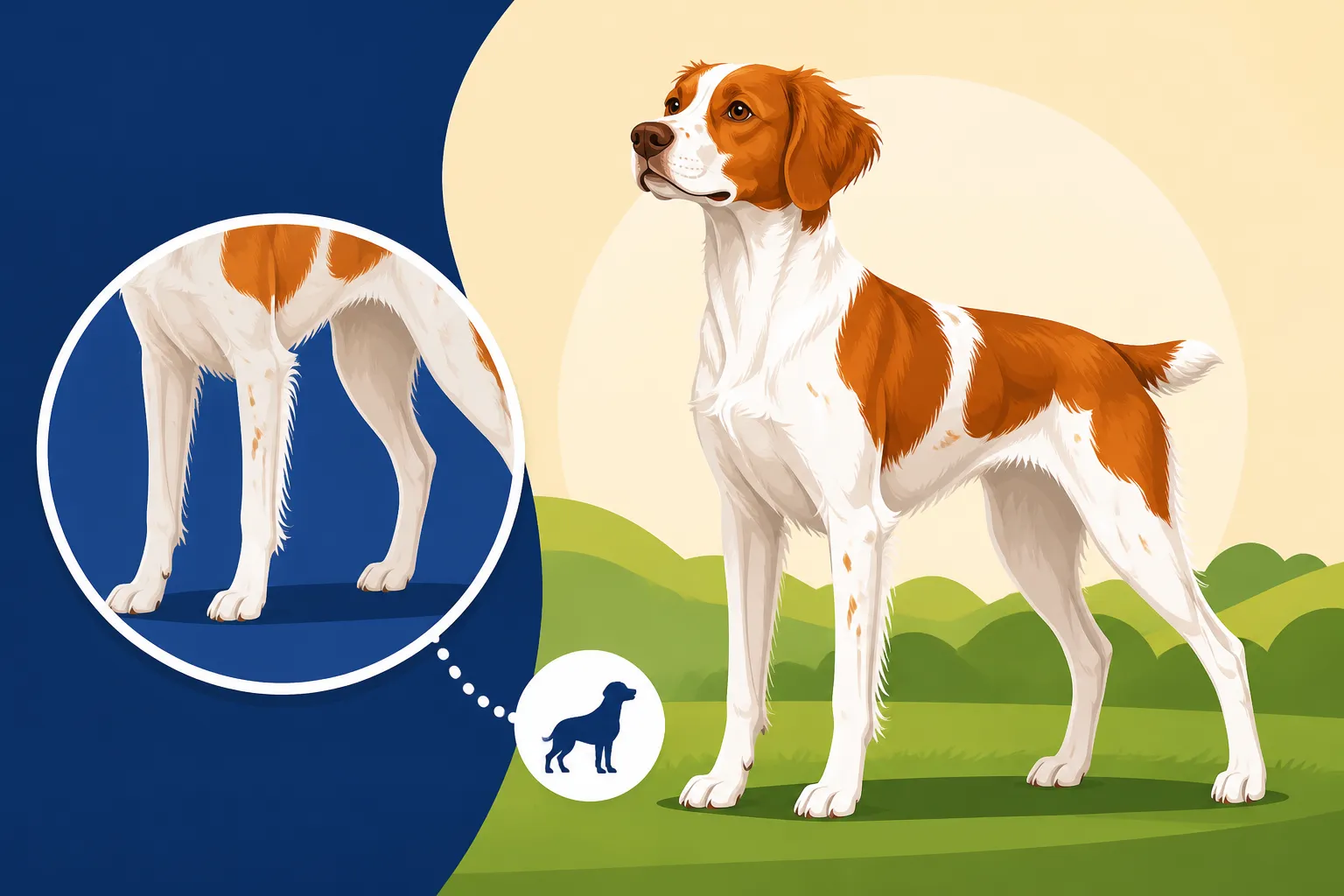
Brittanys are medium-sized, athletic pointing dogs, not broad, low-slung dogs. Their bodies are built to move efficiently through cover, and their legs give them the reach and ground clearance needed for an active day outdoors. A lean Brittany may therefore look long-legged next to a compact companion, even when its proportions are entirely typical.
The breed’s outline is often described as square or nearly square: the body length, measured from the front of the chest to the rear of the pelvis, is broadly comparable to the dog’s height at the shoulder. That does not mean every Brittany looks like a perfect geometric square. Individual dogs vary, and stance, coat, conditioning, and camera angle can all change the impression. For a closer look at the proportion behind that outline, see Whether a Brittany Should Be Square.
A Brittany should generally look balanced rather than delicate or exaggerated. The legs should appear to support the body naturally, and the dog should move comfortably and freely. A lanky-looking youngster may also change shape as it grows: during adolescence, legs can seem to lengthen before the chest and body fill out. That temporary, slightly awkward stage is familiar to many owners.
“Leggy” is not the same as unusually tall
People often use “leggy” to mean one of two things: a dog has long-looking legs relative to its body, or the dog is simply taller than they expected. Those are different observations. A Brittany might be within the normal size range but appear leggy because it is lean, stands tall, or has little coat on its body. Another may look short-legged beside it despite being a similar height, simply because it has a deeper chest or a fuller coat.
Height is only one part of the picture. The dog’s body length, chest depth, bone, and overall balance matter too. A dog that looks tall in a single snapshot may look quite different when standing naturally on level ground. If you are trying to understand a particular dog’s size, How Tall a Brittany Stands and What a Brittany Weighs and How Tall It Stands are useful companion reads.
There is no need to worry just because someone calls your Brittany “leggy.” The more useful questions are whether the dog is growing normally, moving comfortably, and maintaining a healthy body condition. Appearance alone cannot establish whether a dog is healthy or whether its structure is correct.
Why a Brittany may look long-legged
Age and changing proportions
Puppies and adolescents can look all legs for a while. Growth does not happen evenly: the legs may lengthen before the chest deepens and the body develops a more adult outline. During this phase, a Brittany might seem narrow, tall, or a little uncoordinated. That does not automatically mean the dog will remain unusually leggy as an adult.
It can help to compare photographs taken from the side over several months rather than judging a puppy from one image. Take the pictures with the dog standing naturally on level ground, and keep the camera around the dog’s body height. A photo taken from above or at a steep angle can distort proportions and make the legs look longer or shorter than they are.
Growth is individual, so there is no single age when every Brittany’s frame looks finished. If you are concerned about a puppy’s development, ask your veterinarian to assess growth and body condition at routine appointments. They can consider the dog’s age, family size, and overall health rather than relying on a visual comparison with a breed photo online.
Coat, grooming, posture, and photography
A Brittany’s feathering can change the way its silhouette reads. Longer hair on the chest, legs, and underside may soften the outline and make the body look fuller. A neat trim, naturally short coat, or coat that is wet and lying flat can make the legs appear more prominent by contrast. The dog has not changed shape; the visual balance has.
Posture matters just as much. When a dog stands alert with its head up and weight evenly distributed, its legs may appear straighter and longer. If it leans forward, tucks a foot, or stands on uneven ground, the proportions can look quite different. Photos taken with a wide-angle phone lens close to the dog can also exaggerate the nearest body parts, while a low camera angle may make the legs look taller.
When you are comparing coat and outline, focus on the dog rather than a particular grooming style. What a Brittany's Coat Is Like explains the breed’s coat, and Whether a Brittany's Feathering Should Be Trimmed covers how trimming can affect the appearance and practicality of that feathering. If tangles or burrs are part of the grooming challenge, use a gentle comb and work slowly rather than pulling at the hair. Chewy is one place owners may look for basic grooming tools, but choose tools that suit your dog’s coat and comfort.
Leanness and body condition
A fit Brittany often has a visibly athletic outline. When a dog carries little extra fat, its waist and legs may look more defined, which can create a leggy impression. That is not the same as being underweight. Body condition is better judged by feeling the ribs and looking at the waist and abdominal tuck than by deciding whether the legs seem long.
If the ribs, spine, or hip bones are sharply prominent, or your dog is losing weight unexpectedly, contact your veterinarian. A lean sporting dog can still have an illness, dental discomfort, parasites, or another issue affecting appetite and weight. Conversely, a dog with a fuller coat or broader chest may look substantial while still being at a healthy weight.
| What you notice | What it may mean | A sensible next step |
|---|---|---|
| A young dog looks tall and narrow | Growth may be happening unevenly | Track development in natural side-view photos and discuss growth at routine vet visits |
| Legs look longer after a trim | Less feathering may make the limbs stand out | Compare the dog’s structure and movement, not just the coat outline |
| Ribs are easy to feel but not sharply visible | Often consistent with an athletic body condition | Ask your veterinarian to confirm the dog’s condition |
| Ribs, spine, or hips look sharply prominent | Possible underweight condition or weight loss | Arrange a veterinary assessment, especially if the change is new |
| Limping, stiffness, or reluctance to move accompanies the appearance | The issue is not simply visual | Limit strenuous activity and seek veterinary advice |
Chewy may also be useful when you need a soft measuring tape for keeping a basic record of your dog’s height or body measurements. Take measurements consistently, with the dog standing on a flat surface, and treat them as a tracking aid—not a diagnosis or substitute for veterinary assessment.
How to assess your Brittany’s proportions
Measure consistently rather than guessing from a photo
If you want to know whether your Brittany is tall, measure from the floor to the highest point of the shoulders while the dog is standing naturally on a level surface. A flexible measuring tape or a proper measuring stick can help, but measuring a wiggly puppy is rarely exact. Ask another person to calmly keep the dog standing square while you take the measurement.
For body length, measure from the front of the chest to the rear of the pelvis, using the same reference points each time. These measurements are most useful for following change over time or sharing details with your veterinarian. They are not a complete evaluation of structure. A small measuring error, a shifted stance, or a thick coat can affect the result.
If your dog is being evaluated for conformation or breeding, consult someone knowledgeable about the breed standard and have the dog assessed in person. A carefully posed show photograph can help you see a general outline, but it should not become a rigid template for every family pet. The goal is to understand your individual Brittany, not to make it match a picture.
Watch how the dog moves
A dog’s movement often tells you more than its standing silhouette. Watch your Brittany walk and trot on a flat, safe surface. Look for even steps, comfortable turns, and willingness to move. You do not need to diagnose gait or structure yourself; simply notice whether something looks different from your dog’s usual pattern.
A new limp, repeated stumbling, reluctance to jump into the car, or stiffness after rest is worth taking seriously, whether or not the dog looks leggy. Puppies can be clumsy during growth, but persistent or worsening movement changes deserve professional attention. Avoid trying to correct a perceived structural issue with strenuous exercise, supplements, or a change in diet without guidance.
For owners comparing the Brittany with other sporting dogs, breed differences can make proportions seem surprising. The Brittany is compact among pointing breeds, but it still has an athletic, leggy-looking outline compared with some heavier dogs. See Whether a Brittany Is the Smallest Pointing Breed for context, or How a Brittany Differs From a German Shorthaired Pointer and How a Brittany Differs From a Springer Spaniel for useful comparisons.
When a leggy appearance deserves attention
Appearance alone is rarely an emergency
A Brittany that has always looked tall and moves comfortably may simply have a naturally lean, long-legged appearance. This is especially likely if the dog has steady energy, eats normally, maintains a consistent body condition, and shows no signs of pain. Breed type includes variation; two healthy Brittanys can look noticeably different in their proportions.
Still, a marked change should not be brushed off as a cosmetic quirk. If your adult dog suddenly looks thinner, its legs seem more prominent because the body is losing muscle, or its posture has changed, consider what else is happening. Changes in appetite, thirst, energy, stools, or willingness to exercise can help your veterinarian understand the bigger picture.
It can be useful to take a few clear photos and jot down when you first noticed the change. Include the dog’s appetite, activity level, and any difficulty getting up or moving. A simple record is more helpful at an appointment than trying to remember whether the change began last week or several months ago.
Get help for pain, weakness, or sudden changes
Contact a veterinarian if your Brittany has persistent limping, obvious discomfort, weakness, a sudden change in gait, or an unexplained drop in weight. Seek prompt advice if the dog cannot bear weight, seems severely painful, or has difficulty standing. These signs are more important than whether its legs look long compared with its body.
Do not restrict normal, comfortable movement solely because the dog appears leggy. At the same time, do not push a puppy or an unconditioned adult into repetitive hard running to “build out” its frame. Appropriate exercise should fit the dog’s age, fitness, and health, with gradual increases rather than sudden bursts of strenuous activity.
If the question is whether your Brittany is simply built lightly or has a health concern, a veterinarian can assess body condition, growth, and movement together. A breeder or experienced breed mentor may offer perspective on typical outlines, but health concerns belong with a veterinary professional. The practical answer is often reassuring: a leggy look by itself is not a diagnosis, and a balanced, comfortable Brittany can be healthy even when its silhouette seems long-legged to you.
Disclaimer
This article is for general informational purposes only and does not constitute professional advice. Laws, prices and regulations vary by location and change over time. Consult a qualified professional for guidance on your specific situation.