Where the Brittany Comes From
It's easy to look at a Brittany today, whether they're tearing through a field or curled up on your couch, and simply appreciate them for the wonderful dogs they are. But have you ever stopped to wonder where they actually came from? It’s a fascinating journey that helps us understand their unique blend of enthusiasm, intelligence, and unwavering loyalty. This guide will take you back in time, tracing the roots of this beloved pointing breed from its humble beginnings in rural France to its prominent place in homes and hunting fields around the world.
The Misty Origins: Tracing the Brittany's Earliest Roots
When we talk about the Brittany, we're not just talking about a dog; we're talking about a living piece of history, deeply intertwined with the rugged, beautiful landscapes of its namesake region in France. For centuries, dogs resembling the modern Brittany have roamed these lands, helping their human companions survive and thrive. Understanding their ancient past helps us appreciate the instincts and traits that still define them today.
The Region of Brittany: A Landscape of Hunters
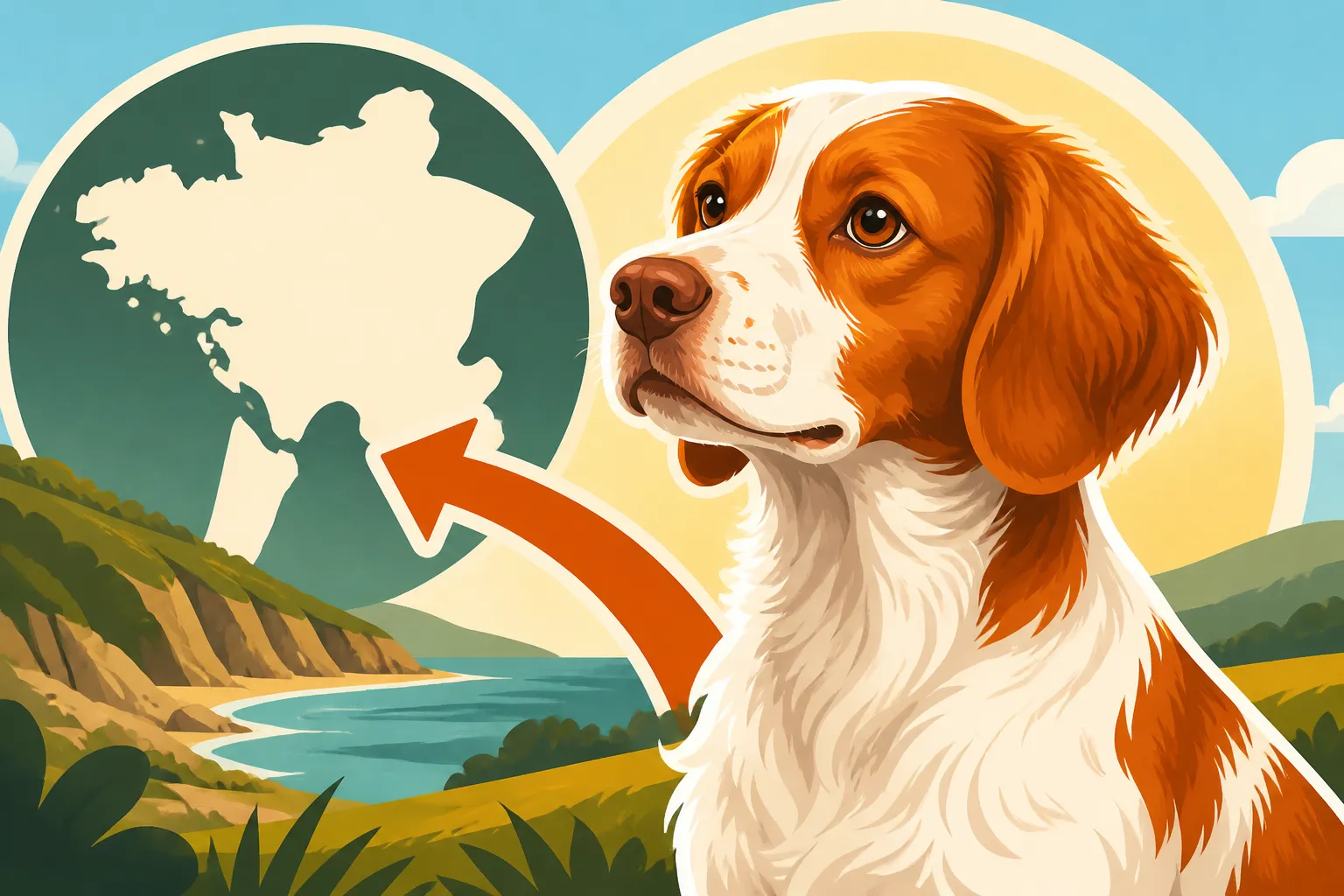
Imagine the northwestern corner of France – a place of rolling hills, dense forests, and coastal marshes, where hunting has been a way of life for generations. This is the historical backdrop for the Brittany Spaniel, or simply the Brittany, as it's known in the United States. The people here, often farmers and woodsmen, needed a dog that was hardy, intelligent, and versatile enough to handle various types of game, from small birds to rabbits, and to do so in challenging terrain. They couldn't afford a kennel full of specialized dogs; they needed one reliable partner for everything.
These early dogs were working companions, bred for utility rather than strict appearance. They were often smaller than many other hunting breeds, making them more agile and economical to keep in a rural setting. Their exceptional scenting ability and natural pointing instinct were paramount. This practical approach to breeding laid the foundation for the resilient and adaptable Brittany we know today. It wasn't about fancy pedigrees or show rings; it was about putting food on the table and protecting the farm.
Early Depictions and the Peasant's Dog
While the formal breed as we know it is relatively modern, dogs with very similar characteristics have been depicted in art and literature for centuries. There are tapestries and paintings from the 17th and 18th centuries that show small, short-tailed, liver-and-white or orange-and-white dogs, clearly pointing game for hunters in rural France. These aren't just generic hunting dogs; their distinct look strongly suggests a direct lineage to the Brittany. It speaks volumes that even then, these dogs were recognized for their unique abilities in the field.
These were truly the "peasant's dogs" – invaluable assistants to the working class. Unlike the large, aristocratic hounds kept by the nobility, the Brittany-type dog was compact, efficient, and discreet, often working alongside poachers who relied on their keen senses and quiet nature to find game without drawing attention. This association further solidified their reputation as highly effective and intelligent hunting partners. The idea that "good things come in small packages" certainly applied to these early Brittanys. You can explore this further by considering Whether the Brittany Was a Poacher's Dog.
Influences from English Setters and Pointers
As the 19th century progressed, the region of Brittany became a popular destination for English sportsmen. They often brought their own sophisticated hunting dogs with them – English Setters and English Pointers, known for their wide-ranging abilities and elegant points. It was only natural that some of these foreign dogs would interbreed with the local French "spaniels" or pointing dogs. This wasn't a planned, scientific breeding program; it was a more organic evolution, a mixing of bloodlines in the field.
This crossbreeding introduced new traits, refining the local dogs and enhancing their pointing abilities, range, and stamina. The infusion of English blood helped to solidify the pointing instinct and develop the "quartering" pattern – the systematic back-and-forth search that Brittanys are famous for. It's a fascinating thought, isn't it? That the very traits we admire in our Brittanys today might have been influenced by a bit of international canine collaboration centuries ago. This blending of native French practicality with English aristocratic hunting prowess ultimately created a dog with unmatched versatility and drive.
The Formative Years: Shaping the Modern Brittany
The casual interbreeding of the earlier centuries gradually gave way to more deliberate efforts to establish a distinct breed. The late 19th and early 20th centuries were pivotal, as breeders and enthusiasts began to formalize the characteristics and working style of the Brittany, leading to its official recognition and the establishment of a breed standard. This period truly cemented the Brittany's identity.
The Genesis at Pontou in the 1850s
While the breed’s origins are certainly older, a pivotal moment in the development of the modern Brittany is often traced back to the village of Pontou, in the region of Brittany, around the 1850s. The story goes that a notable cross occurred here between a white and mahogany female owned by a local hunter and a lemon and white English Setter belonging to a visiting English sportsman. The resulting offspring displayed exceptional hunting abilities, combining the biddability and compact size of the local dogs with the refined pointing style and wider range of the English Setter.
This specific cross at Pontou is often cited as a turning point, demonstrating the potential for a new, superior hunting dog. It captured the attention of local hunters who began to selectively breed for these desirable traits. This wasn't about creating a "pretty" dog, but about optimizing an already excellent hunter for the specific demands of the Breton landscape and hunting traditions. The dogs produced from this era were the direct ancestors of the Brittanys we know and love.
The First Official Recognition and Standard
As interest in these exceptional pointing dogs grew, so did the desire to formalize their characteristics and protect their bloodlines. The first breed standard for the Brittany was officially drawn up in France in 1907. This was a crucial step, moving the Brittany from a general type of hunting dog to a recognized breed with specific physical and working attributes. The standard outlined everything from coat color and ear set to tail length and, crucially, their natural hunting ability.
This early standard emphasized the compact, sturdy build, the short or naturally bobbed tail, and the distinctive roan or pied coat patterns. It also highlighted their strong pointing instinct and biddable nature. The creation of a formal standard meant that breeders now had a blueprint to follow, ensuring consistency and preserving the qualities that made the Brittany so beloved. This foundation allowed the breed to flourish, both in France and, eventually, across the globe. You might be interested in When the Brittany Standard Was First Written.
The Role of Early Breeders and Clubs
The formalization of the breed wouldn't have happened without the dedication of early Brittany enthusiasts. These were men and women who recognized the unique qualities of these dogs and were passionate about preserving and promoting them. They formed the first breed clubs, like the French Brittany Club (Club de l'Épagneul Breton) in 1907, which was instrumental in refining the standard, organizing field trials, and maintaining studbooks.
These clubs were vital for distinguishing the Brittany from other European pointing breeds and for ensuring that the emphasis remained on the dog's working capabilities. They fostered a community of breeders who shared knowledge, helped each other find suitable breeding partners, and collectively worked to strengthen the breed's genetic health and hunting prowess. Their efforts laid the groundwork for the Brittany's enduring popularity, ensuring that its legacy as a premier bird dog would continue for generations.
| Year | Key Event in Brittany History | Significance |
|---|---|---|
| 17th-18th Century | Early depictions in art | Shows presence of Brittany-type dogs, often short-tailed, pointing game. |
| ~1850s | Pontou cross | Significant crossbreeding event contributing to the modern Brittany's traits. |
| 1907 | First French Breed Standard | Formalized the breed's characteristics and working ability. |
| 1907 | French Brittany Club founded | Established dedicated organization for breed preservation and promotion. |
| 1920s | First Brittanys arrive in USA | Introduction of the breed to North America. |
| 1934 | AKC recognition | American Kennel Club officially recognizes the Brittany. |
| 1982 | AKC drops "Spaniel" from name | Reflects recognition of its true pointing dog classification. |
Crossing the Atlantic: The Brittany's Journey to America
Just like many other beloved dog breeds, the Brittany eventually made its way from its European homeland to the shores of North America. This transatlantic journey marked a new chapter in the breed's history, leading to its widespread adoption and, eventually, the development of a distinctly American interpretation of the Brittany. It’s a story of immigration and adaptation, much like the people who brought them here.
Introduction to the United States
The first Brittanys are believed to have arrived in the United States in the 1920s. Hunters and dog enthusiasts who had seen or heard about the breed's exceptional abilities in France recognized its potential for American hunting conditions. These early imports were highly prized, not just for their hunting skills but also for their relatively compact size and biddable temperament, which made them excellent companions in the home as well as the field. You can read more about When the Brittany Reached America.
Initially, these dogs were quite rare, primarily owned by a dedicated group of bird hunters who appreciated their unique combination of pointing prowess and retrieving instinct. They weren't just bringing over a dog; they were importing a rich hunting tradition. The enthusiasm of these pioneers quickly spread, laying the foundation for the breed's growth and popularity throughout the American hunting community. They were seen as a breath of fresh air, a dog that could truly do it all.
The American Kennel Club's Embrace
The breed's increasing presence and popularity in the US soon caught the attention of the American Kennel Club (AKC). In 1934, the AKC officially recognized the breed, initially under the name "Brittany Spaniel." This was a significant milestone, as AKC recognition provided a formal registry, allowing for organized breeding, showing, and participation in field trials. This brought the Brittany into the mainstream of American dog sports and made it accessible to a wider audience.
The AKC's recognition helped to solidify the breed's place in the American dog world, allowing it to compete alongside other established sporting breeds. However, the "spaniel" part of the name eventually became a point of contention. While their ancestors may have had spaniel blood, the Brittany's primary working style is that of a pointing dog, not a flushing spaniel. This led to a significant change many years later, reflecting a deeper understanding of the breed's true nature. You can learn more about When the AKC Recognized the Brittany.
The Birth of the American Brittany Type
Over decades, as the Brittany was bred and developed in the United States, subtle differences began to emerge between the dogs here and those still being bred in France. American breeders often favored a slightly larger, leggier dog with a wider range in the field, suited for the expansive hunting grounds of North America. This divergence wasn't intentional at first; it was a natural adaptation to the specific demands and preferences of American hunters and field trialers.
The focus in America often leaned towards dogs that could cover vast distances quickly, while still maintaining their strong pointing instinct. This emphasis on speed and range, combined with a slightly different interpretation of the breed standard, gradually led to the distinct "American Brittany" type. While still unmistakably a Brittany, it showcased a unique set of characteristics that optimized it for the American hunting experience, evolving alongside the land it worked.
Two Paths Diverged: American Brittany vs. Epagneul Breton
Perhaps one of the most interesting aspects of the Brittany's origin story is its split into two distinct, yet closely related, types: the American Brittany and the French Brittany, known in its homeland as the Epagneul Breton. While they share a common ancestor, their paths diverged due to different breeding goals and geographical influences, leading to variations in appearance and working style. It's a classic example of how environment and purpose can shape a breed.
The Development of Distinct Standards
The fundamental reason for the divergence lies in how the breed standards were interpreted and refined on different continents. In France, the standard for the Epagneul Breton continued to emphasize a more compact dog, often with a slightly shorter muzzle and a generally closer working range. The French desired a dog that worked cooperatively with a walking hunter in varied, often dense, European cover, prioritizing control and thoroughness over expansive speed.
In contrast, the American Brittany's standard, influenced by the vast open spaces and horseback field trials common in the US, began to favor a dog with greater height, a longer stride, and a tendency to range much wider. While both types retained the essential Brittany temperament and pointing instinct, these differing interpretations of the ideal working dog gradually led to subtle but noticeable physical and stylistic distinctions. It's a clear illustration of how cultural and environmental factors can influence a breed's development.
Hunting Styles and Physical Differences
The most significant distinctions between the two types are often seen in their hunting styles. The American Brittany is renowned for its expansive, fast-paced search, covering a lot of ground in a short amount of time. This makes them ideal for open plains and large fields where birds might be scattered and a wide-ranging dog is an asset. They are often described as more athletic and energetic, perfectly suited for a hunter covering ground quickly, sometimes even from horseback. You can learn more about How a French Brittany Differs From an American One.
The French Brittany (Epagneul Breton), on the other hand, typically exhibits a closer, more methodical working pattern. They stay within a more confined range, thoroughly investigating cover, which is highly prized in dense European forests or smaller hunting preserves. They are generally smaller, often with a slightly more square build, and are prized for their intense focus and biddability in close quarters. Both are incredible hunters, but they excel in different environments, showcasing the versatility of the core Brittany genetics.
Maintaining Heritage: CEB US and FCI Recognition
Despite their differences, both types of Brittanys are passionate about preserving the breed's heritage. The Club de l'Épagneul Breton des États-Unis (CEB-US) specifically champions the French Brittany in America, adhering strictly to the original French standard and promoting the close-working style. They ensure that the Epagneul Breton's unique characteristics are maintained and that breeders continue to focus on the traditional French type. For anyone interested in the French lines, understanding What CEB US Is to Brittany Owners is crucial.
The French Brittany is also recognized by the Fédération Cynologique Internationale (FCI), the international canine organization. Meanwhile, the American Brittany is primarily recognized by the AKC, which dropped "Spaniel" from its name in 1982 to better reflect its status as a true pointing breed. This name change, while seemingly small, was a huge moment in acknowledging the breed's identity. It clarified that this was not a flushing spaniel but a dedicated pointer, a fact deeply ingrained in its history and working style. You might be interested in Why the AKC Dropped Spaniel From the Brittany's Name in 1982. These different recognitions and clubs help ensure that each distinct type continues to thrive according to its respective ideal.
Why the Brittany Was Bred: A Versatile Hunter's Purpose
At its very core, the Brittany was bred for one overriding purpose: to be an exceptional hunting dog. Every aspect of its development, from its compact size to its keen intellect, was refined with the hunter in mind. It's not just a bird dog; it's a versatile, all-around gundog designed to assist its human partner in myriad ways, making it an invaluable asset in the field. This singular focus on utility shaped the breed from its earliest days.
The "Poacher's Dog" and Its Utility
As mentioned earlier, the Brittany's ancestors were often the companions of peasants and, yes, even poachers in rural France. This might sound a bit illicit, but it highlights a crucial aspect of their utility: discretion and efficiency. These hunters couldn't afford to be flashy or noisy; they needed a dog that was quiet, effective, and could help them find game without drawing undue attention. The Brittany fit this bill perfectly.
Their smaller stature meant they were easier to conceal and feed, making them an economical choice for those with limited resources. They were agile enough to navigate dense cover and retrieve game, but also intelligent enough to work closely with their handler. This adaptability and resourcefulness, born out of necessity, ingrained a strong work ethic and biddability into the breed's very essence. They were, and still are, dogs that want to please and actively participate in the hunt.
The Pointing Instinct: A Defining Trait
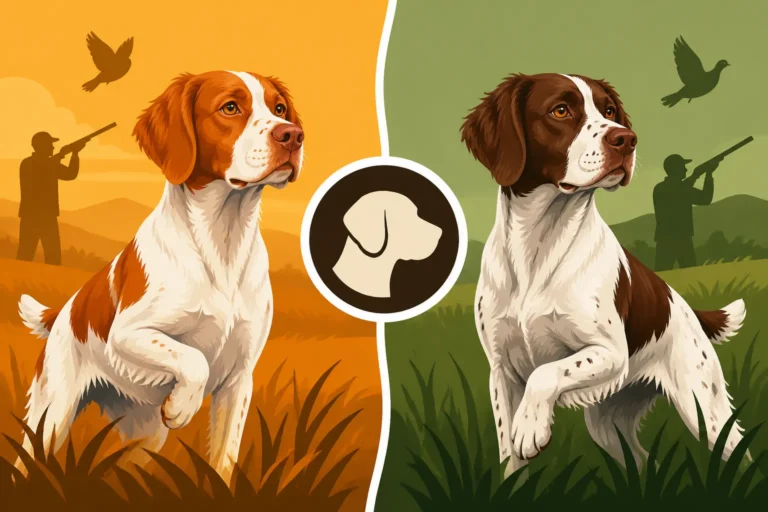
The defining characteristic of the Brittany, and indeed all pointing breeds, is its instinctive ability to "point" game. This means that when the dog scents a bird, instead of chasing or flushing it, it freezes, often with one paw raised, indicating the location of the hidden quarry to the hunter. This behavior is deeply hardwired into the Brittany and is the cornerstone of its hunting style. Without this, the breed simply wouldn't be the Brittany we know.
This pointing ability makes the Brittany incredibly efficient for bird hunting. It allows the hunter to approach the bird and get into position for a shot, rather than having the bird flushed unexpectedly. The Brittany's point is typically intense and stylish, a true joy to behold in the field. This instinct was carefully selected for and refined over generations, ensuring that modern Brittanys are born with this innate talent, ready to put it to work. The Brittany Points, It Does Not Flush is a phrase that encapsulates this fundamental trait.
The Legacy of a Dual-Purpose Dog
Beyond their pointing prowess, Brittanys were also developed to be excellent retrievers, often bringing downed game back to hand with a soft mouth. This makes them truly "versatile" gundogs – capable of finding, pointing, and retrieving. They are not one-trick ponies; they can perform multiple tasks in the field, making them highly valued by hunters who appreciate a dog that can do it all. This versatility meant a single dog could fulfill many roles, a huge advantage.
What's more, the Brittany's biddable nature and affectionate personality made it an ideal companion, even when not actively hunting. This dual purpose – excelling in the field and being a wonderful family pet – is a hallmark of the breed's origins. They were meant to be part of the family, sharing the home as well as the hunt. This enduring legacy is why the Brittany is not only a fantastic working dog but also beloved by families worldwide, making them one of the most popular sporting breeds. This versatility even led them to hold The Brittany Holds the Dual Champion Record, a testament to their balanced abilities in both conformation and field.
Acknowledging the "Spaniel" Past
For many years, the Brittany was officially known as the "Brittany Spaniel" in North America. This name, while historically understandable due to some shared ancestry and certain physical similarities with true spaniels, eventually became a point of confusion and, for many purists, a misnomer. Understanding this naming evolution helps clarify the breed's true identity and working style.
The Original Naming and Early Confusion
When the breed first gained recognition in America by the AKC in 1934, it was indeed registered as the "Brittany Spaniel." This decision likely stemmed from its historical European designation as an "épagneul," which translates directly to "spaniel" in English. In continental Europe, the term "épagneul" was often used more broadly to describe any pointing dog, not exclusively the flushing spaniels we think of today. So, while technically correct in its original European context, the English translation created some semantic confusion.
American dog enthusiasts, familiar with breeds like the Cocker Spaniel or Springer Spaniel, naturally associated the term "spaniel" with a flushing dog – one that drives game out of cover. However, the Brittany's primary function was to point game, holding it steady until the hunter arrived. This fundamental difference in working style meant that the "spaniel" tag, though historically rooted, didn't accurately describe the Brittany's core hunting behavior. Many wondered if it was truly a spaniel at all.
The Name Change: Dropping the "Spaniel"
Recognizing this discrepancy and wanting to accurately reflect the breed's true nature as a pointing dog, the American Kennel Club made a significant decision in 1982: they officially dropped "Spaniel" from the breed's name, henceforth calling it simply the "Brittany." This change was more than just cosmetic; it was a clear statement about the breed's identity and its rightful place among the pointing breeds. It solidified the understanding that the Brittany, despite its historical nomenclature, hunts in a manner distinct from traditional spaniels.
This change was widely supported by Brittany owners and breeders in the US who had long championed the dog as a pointer. It helped to educate the wider public about the breed's unique talents and prevented misunderstandings about its working style. While some traditionalists might still affectionately refer to them as "Brittany Spaniels," the official designation now accurately represents this intelligent, versatile bird dog. It's a reminder that names evolve, just as breeds do, to better reflect their essence.
Brittanys Today: The Enduring Legacy
Today, the Brittany stands proud as one of the most beloved and successful pointing breeds worldwide. Its journey from the fields of rural France to its current status as a champion in both hunting trials and family homes is a testament to its exceptional qualities. Whether you have an American Brittany known for its expansive range or an Epagneul Breton valued for its close work, you're experiencing the culmination of centuries of careful selection and passionate dedication.
The breed's intelligence, biddability, and affectionate nature make it a joy to train and live with. Its innate hunting abilities continue to shine, whether on wild birds or in competitive events. And let's not forget their striking good looks and eager-to-please attitude. This rich history is embedded in every Brittany, a legacy of companionship, hard work, and unwavering devotion. When you look at your Brittany, you're seeing generations of purposeful breeding reflected in their eyes, ready for their next adventure. For all your Brittany's needs, from training tools to nutrition, you can find a wide array of products available through retailers like Chewy, helping you continue their legacy of health and happiness.
Disclaimer
This article is for general informational purposes only and does not constitute professional advice. Laws, prices and regulations vary by location and change over time. Consult a qualified professional for guidance on your specific situation.