Who Brought the First Brittanys to America
The first Brittanys reached the United States in the early 1930s, but the story is less tidy than a single-name answer suggests. Breed histories commonly place the first imports in 1931; they do not consistently point to one person as the sole “first” importer. Here’s what that date means, how the breed became established, and why its arrival mattered to American hunters.
The first Brittanys arrived in the United States in 1931
Why 1931 is the key date
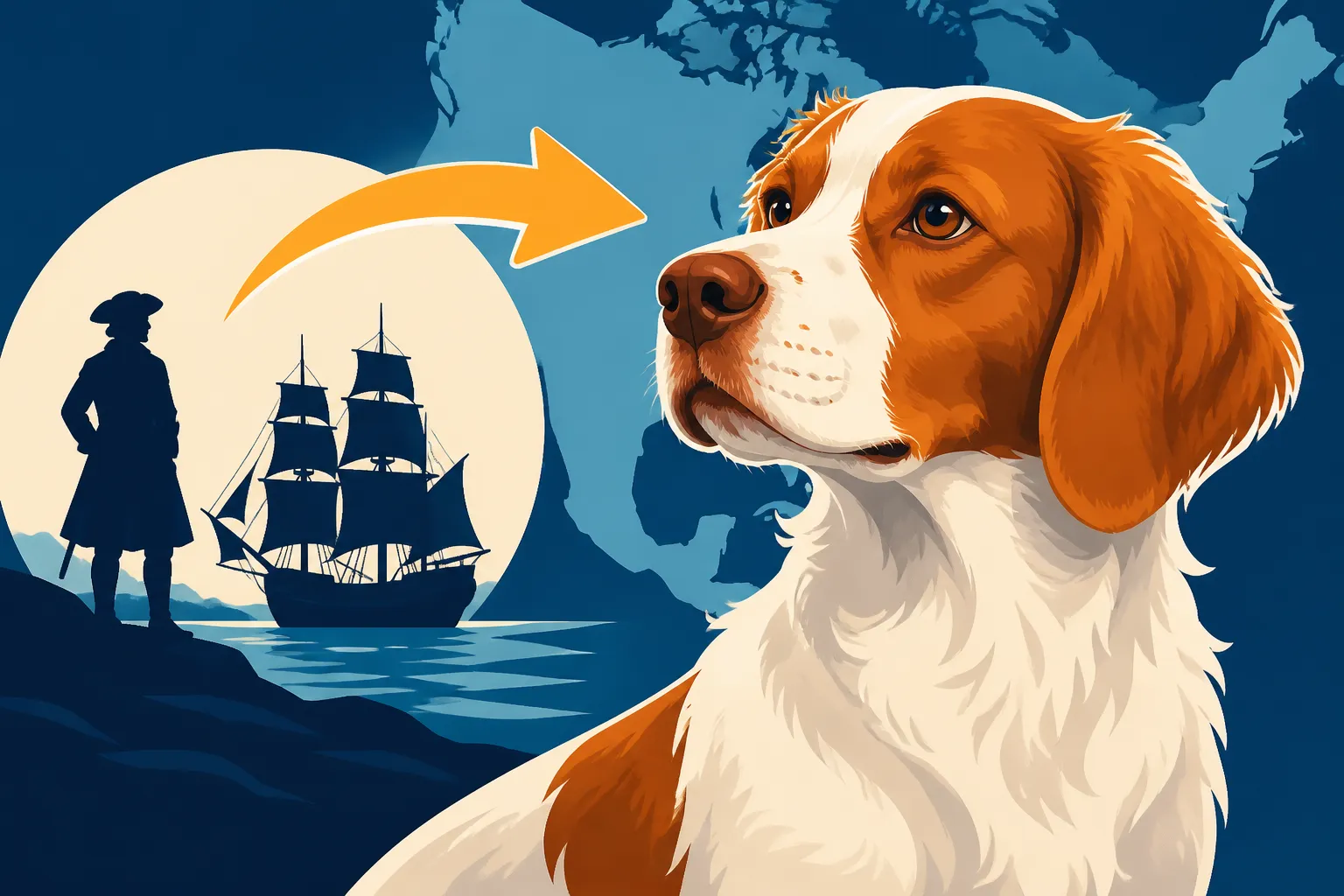
Breed histories generally identify 1931 as the year the first Brittanys were brought from France to the United States. That gives us a useful marker for the breed’s arrival, but it does not necessarily tell us that one person imported a single, definitively documented first dog. Early imports could involve several dogs and people, and later summaries do not always tell the story in the same way.
That distinction matters if you are looking for a clear-cut answer to “Who brought the first Brittany?” The date is repeated more consistently than a single individual’s name. Without a well-established name attached to the first import in the accounts most often used to describe the breed’s American beginnings, it is safer not to assign credit to one person as a settled fact.
The broader story is easier to follow: Brittanys came from France, where they were already valued as compact, energetic bird dogs. Americans interested in hunting and sporting dogs had reason to take notice. To understand the breed’s roots before its transatlantic journey, start with Where the Brittany Comes From.
What “first Brittany” can mean
Historical claims about a “first” dog can refer to different events. One account may mean the first dog physically brought into the country. Another may mean the first dog recorded in a kennel registry, the first dog shown at an American event, or the first dog to produce a lasting breeding line. Those milestones need not belong to the same animal or person.
There is also a difference between importing a dog and establishing a breed in a new country. An imported Brittany might have attracted attention, but a breed becomes established through more than one arrival. It takes owners who keep and work the dogs, breeders who plan matings, clubs that organize enthusiasts, and a registry that records dogs and their ancestry.
So when a breed history says Brittanys arrived in 1931, read that as the start of the American chapter—not necessarily as a complete record of every person, dog, and trip involved. For the timeline that follows, see When the Brittany Reached America.
Why the person’s name is harder to pin down than the date
Early breed histories were not always written like modern import records. A dog’s journey might be noted in a club history or a kennel account, while details about the importer, the original French owner, and the dog’s registration were recorded separately—or not preserved in the same way. Later writers may then repeat the date without carrying forward all the surrounding names and details.
That can leave modern readers with an awkward gap: the milestone is familiar, but the individual most often credited is not clearly identified across accounts. It is tempting to fill that gap with a confident-sounding name, especially when a short answer seems to demand one. But a name should not be treated as established just because it appears in a retelling.
The most careful answer is therefore that the first Brittanys are generally dated to 1931, while a single universally agreed-upon importer is not consistently identified in breed histories. That is less dramatic than a lone pioneer story, but it is more useful than repeating a name without solid footing.
From French bird dog to American sporting breed
The Brittany’s working background made it appealing
The Brittany was not brought to America as an unfamiliar novelty with no practical purpose. It had developed in France as a hunting dog, and its small-to-medium build, energy, and bird-finding instincts suited people who wanted a dog they could take into the field. The breed’s appeal was tied to work as much as appearance.
That working background helps explain why American hunters and dog enthusiasts might have been interested in importing Brittanys. A dog that could hunt birds while remaining relatively compact offered a different combination from some larger sporting breeds. For a foot hunter moving through cover, a dog’s stamina, range, trainability, and ability to work in partnership all mattered.
The Brittany’s history in France also connects to the rural hunting traditions of its home region. For more on those earlier beginnings, What the Peasants of Brittany Used the Dog For explores the practical role the dog played before the American chapter began.
Registration helped turn imports into a recognized breed
An imported dog can attract interest, but official recognition is a separate step. In the United States, kennel registration gave breeders a way to record dogs and their pedigrees, and recognition helped the breed gain visibility among sporting-dog owners. The American Kennel Club recognized the Brittany in the 1930s; the arrival of dogs and the process of formal recognition were related, but they were not the same event.
Registration also gives historical claims a paper trail, though that trail can be incomplete or easy to misread. A registry entry might identify a dog and owner without explaining who arranged the original import. And a dog described as the first registered Brittany is not automatically the first Brittany to set foot in the country.
That is why it helps to keep the milestones separate: first imports, first registrations, first successful breeding efforts, and formal recognition each tell a different part of the story. For the registration milestone, see When the AKC Recognized the Brittany.
A national community took time to form
Once Brittanys had arrived, the breed still needed people committed to keeping it visible and developing it in the United States. Owners and breeders had to share knowledge, discuss desirable working and physical traits, and create opportunities for dogs to compete or demonstrate their abilities. That community-building work is easy to overlook when a history focuses only on the first import.
A breed club can help turn scattered enthusiasm into a lasting network. It gives owners a place to exchange information and breeders a shared framework for the breed’s future. The American Brittany Club became part of that story after the first imports, helping organize interest in a dog that had crossed the Atlantic from France.
For that next stage, When the American Brittany Club Was Founded provides useful context. The club’s formation was not the beginning of the Brittany in America, but it was an important step in making the breed’s presence more organized and durable.
What happened after the first imports
Early dogs helped establish a wider American population
A few imported dogs cannot, by themselves, create a healthy, stable population. Breeders need suitable dogs to build pedigrees and make thoughtful mating choices. Owners also need to be willing to keep the dogs, work them, and introduce others to the breed. The American Brittany’s growth depended on those ongoing efforts, not simply on the moment the first dogs arrived.
The early population also shaped what later generations of American owners came to expect from a Brittany. Breeding choices can influence working style, size, and the balance between field ability and appearance. Those choices are part of why breed histories often move quickly from an import date to the development of a recognizable American type.
This was not an instant transformation. The breed’s American identity emerged over time, through breeding, hunting, competition, and changing preferences among owners. To see how the breed’s working reputation remained central, read Why the Brittany Kept Its Working Ability.
The American and French Brittany stories later took different paths
The Brittany did not remain identical in every country. Over time, differences in breeding goals and breed standards contributed to distinctions between American Brittanys and the French Epagneul Breton. That development came well after the first dogs crossed the Atlantic, but it is part of the longer story that began with those early imports.
It is easy to overstate the split as though the two types became unrelated or completely separate overnight. Their shared history remains important, even as differences in size, style, and preferred working range became points of discussion. For an overview of that divergence, see American Brittany and Epagneul Breton Went Separate Ways.
These later differences also explain why today’s owner may encounter more than one description of what a “typical” Brittany looks like or how one is expected to hunt. Breed traditions evolve as dogs are bred for different settings and competitions. The first imports opened the American chapter; later breeding decisions helped give that chapter its own character.
Early recognition was not the same as a finished breed identity
A breed’s first champion or first successful show dog can become an important historical marker, but it does not necessarily define the whole breed. Brittanys have long been associated with both field work and competition, and early success in one arena should not be mistaken for the sole reason the breed took hold in America.
For many owners, the appeal has always been the combination: a capable hunting partner that can also live closely with a family. That dual purpose is part of the breed’s reputation, though individual dogs vary in energy, confidence, and working drive. If you are following the competitive timeline, Which Brittany Was the First AKC Champion is a separate milestone from the first import.
It is also worth distinguishing an early champion from the arrival of the first dogs. A champion’s achievement can help bring attention to a breed, but the foundations were already being laid by imported dogs, their owners, and the people who chose to breed and work them.
How to understand the story as a Brittany owner today
Keep the historical milestones separate
When you read a short breed-history summary, check what event it is describing. “First Brittany in America,” “first Brittany registered,” “first champion,” and “first club” are not interchangeable claims. A timeline makes the story clearer: imports came first, then registration and recognition, followed by the growth of an organized breed community and a wider population.
This distinction is useful beyond history. It is a reminder that a breed’s reputation is built by many people and many generations, not one event or one dog. A single early import can be memorable, but the work of owners and breeders afterward determines whether a breed establishes itself.
If you are researching the breed before bringing one home, historical background is only one piece of the decision. Think about daily exercise, training, grooming, and health care as well. New owners often find it helpful to plan practical basics—food storage, a crate, grooming tools, and travel gear—before a lively puppy arrives. Chewy is one place owners may browse for everyday supplies, though the right choices depend on the dog and the household.
Don’t confuse a breed’s origin with a guarantee about an individual dog
The Brittany’s French origins and sporting history help explain common breed traits, but they cannot tell you exactly how one particular dog will behave. A Brittany may be energetic and bird-focused, for example, but its temperament and needs are shaped by genetics, early experiences, training, health, and the opportunities it gets to use its abilities.
That is why a prospective owner should talk with a breeder or rescue organization about the individual dog, not rely on a broad historical description alone. Ask what the dog’s parents are like, how the puppy has been raised, what health information is available, and what kind of home would suit that dog. Those questions are more practical than assuming every Brittany will fit the same picture.
The same care applies when gathering supplies. A product that works for one Brittany may not suit another dog’s coat, chewing habits, or travel routine. Owners can compare options at stores such as Chewy, then check sizing, ingredients, and suitability with a veterinarian or knowledgeable professional where needed.
What the first-import story can—and cannot—tell us
The 1931 date gives the American Brittany a starting point, but it does not provide every detail of the dogs’ journey or settle the identity of one universally accepted first importer. The most responsible account preserves what is clear—the early imports came from France and are generally dated to 1931—without adding certainty where the record is not consistent.
That careful reading makes the history more meaningful, not less. It recognizes the people who introduced and developed the breed while avoiding the urge to turn a gradual process into a single-hero story. The Brittany’s American history was shaped by importers, owners, breeders, club members, and hunters who kept the dogs working and shared their enthusiasm.
For today’s Brittany household, the lasting connection is the breed’s purpose: an energetic sporting dog with a deep history of partnership with people. Whether your dog hunts, competes, or spends its days as a much-loved companion, knowing how that history unfolded can help you appreciate why the Brittany is more than a name in a registry.
Disclaimer
This article is for general informational purposes only and does not constitute professional advice. Laws, prices and regulations vary by location and change over time. Consult a qualified professional for guidance on your specific situation.