Whether Show and Field Brittanys Have Split
Choosing between a show-bred and field-bred Brittany can feel like choosing between two different kinds of dog. The lines may differ in appearance, drive, and typical hunting style, but they have not become separate breeds. This guide explains what those differences usually mean in everyday life, how much variation exists within each line, and what to ask before bringing a Brittany home.
Have show and field Brittanys really split
They remain one breed, but selection goals differ
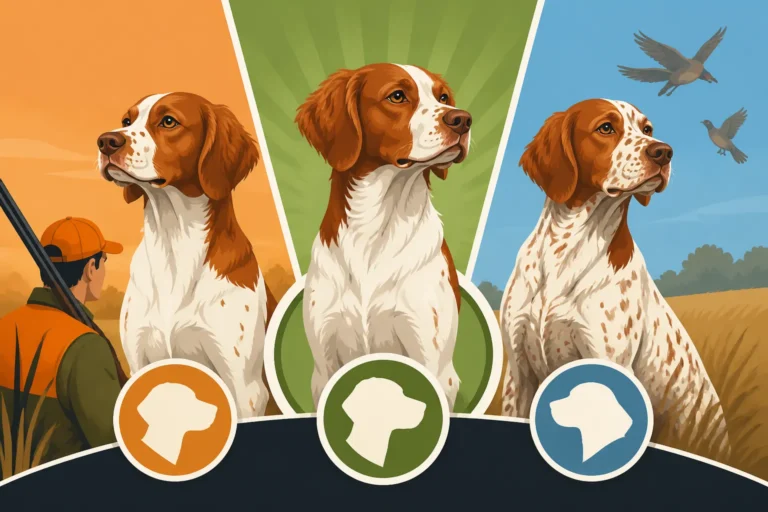
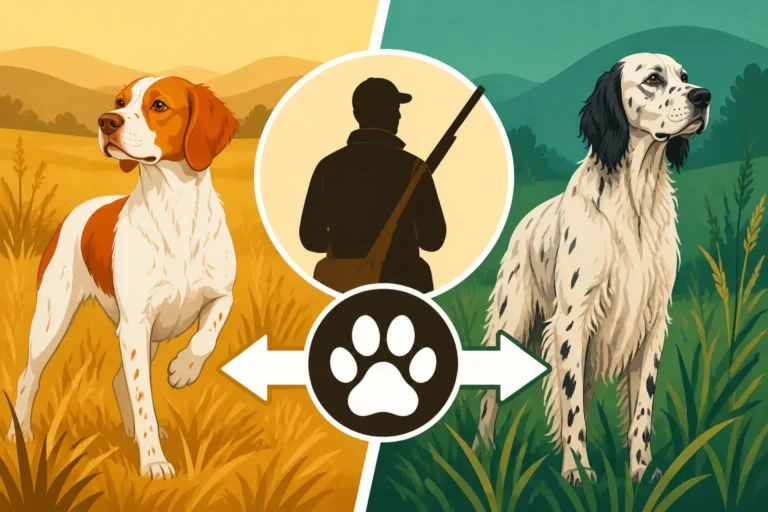
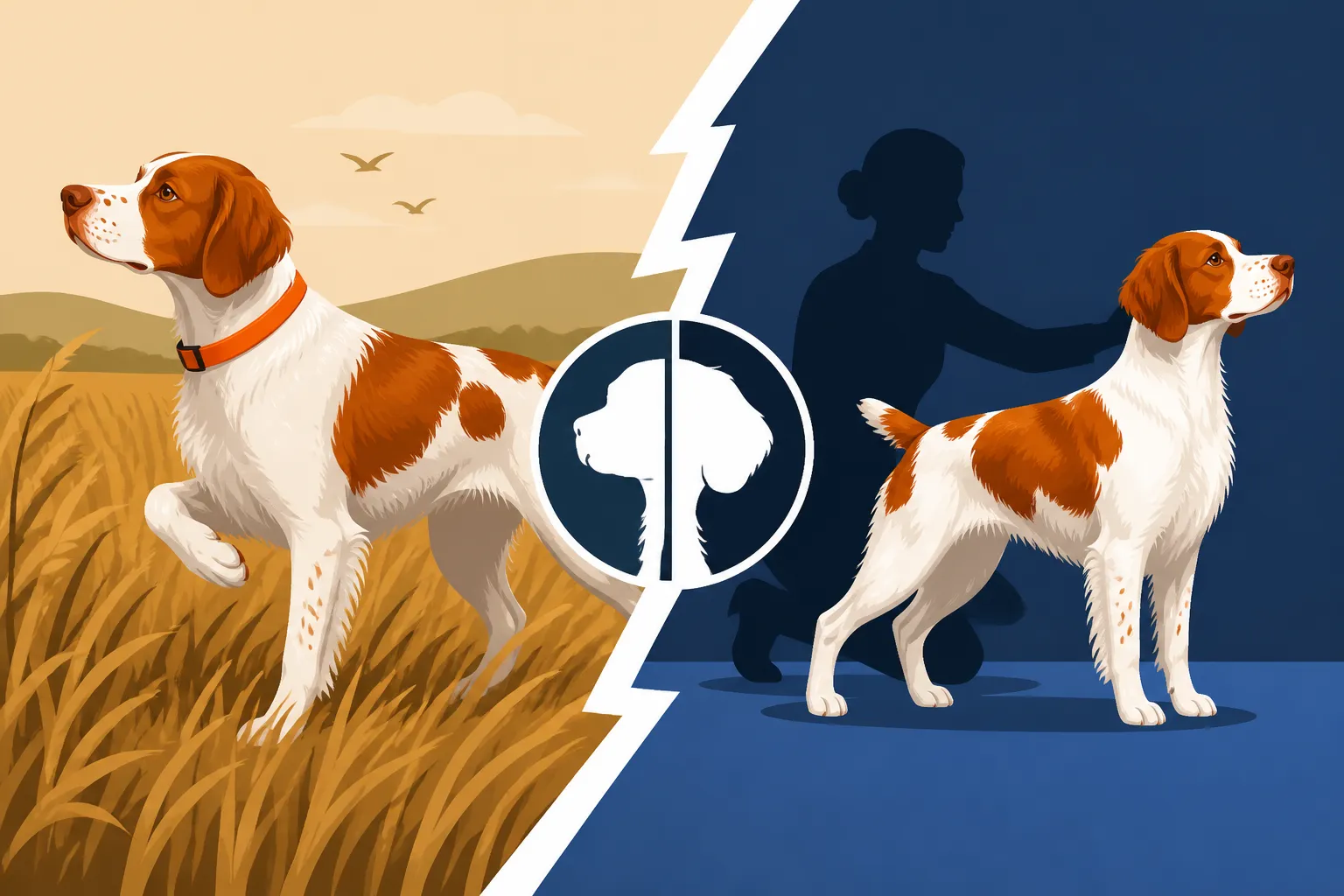
Show and field Brittanys are still Brittanys, not formally separate breeds. The distinction describes the priorities breeders tend to emphasize. In show breeding, selection commonly focuses on how closely a dog matches the breed standard, including its structure, movement, coat, and overall presentation. In field breeding, selection tends to put more weight on hunting ability, stamina, bird sense, and performance in the field.
That difference in emphasis can produce recognizable trends over generations. A field-bred dog may be selected because it has the drive and athleticism to cover ground and find birds. A show-bred dog may be selected because it combines sound structure with the appearance and movement favored in the show ring. Neither goal automatically tells you what an individual dog’s temperament or abilities will be.
There is a reason the conversation about a split comes up so often: the two types can look and behave differently enough that an owner may feel the distinction is substantial. But breeding preferences are not the same as a formal breed division. The Brittany has a history of success in both the field and the show ring, reflected in The Brittany Holds the Dual Champion Record. That history is a useful reminder that working ability and show-ring quality are not inherently incompatible.
The divide is a spectrum, not a hard boundary
It is tempting to assume every field-bred Brittany is a high-powered hunter and every show-bred Brittany is primarily a companion. Real dogs do not fit those tidy categories so neatly. Breeders vary in their goals, pedigrees can contain dogs selected for different strengths, and puppies from the same litter can have different levels of energy, confidence, and interest in birds.
A show-bred dog may still have strong hunting instincts. A field-bred dog may settle comfortably indoors after exercise and training. Even within a field-oriented litter, one puppy may be more intense and wide-ranging than a sibling that prefers to check in often. Individual behavior is shaped by inherited traits, early experiences, training, and the kind of life the dog leads.
That is why it helps to look beyond a label in an advertisement. Ask what the parents actually do, how they behave at home, and what the breeder hopes to produce. For broader context on how breeding priorities can influence behavior without determining it completely, see Why the Brittany Kept Its Working Ability and What a Brittany's Temperament Is Really Like.
What differences might you notice
Appearance and movement can vary
Some field-bred Brittanys have a lean, athletic look that reflects generations of selection for practical work and endurance. Some show-bred Brittanys may have a more polished outline, fuller feathering, or movement that breeders consider especially well suited to the ring. These are tendencies, not a dependable checklist: dogs in either line can vary in size, coat, build, and expression.
Coat and feathering are sometimes the first differences people notice, especially in photographs. A longer or fuller coat can take more brushing after walks through burrs, while a shorter, more practical coat may be easier to keep tidy during regular field work. Still, coat length alone does not tell you whether a dog will hunt, how much exercise it needs, or whether it will be easy to live with.
If you are comparing two puppies, consider their parents’ structure and movement in person when possible. Ask whether the adults are comfortable moving freely and whether they have any documented health screening. A striking silhouette is not a substitute for sound construction, a stable temperament, or thoughtful breeding.
Hunting drive, range, and intensity are individual traits
Field lines are often developed with hunting performance in mind, so buyers may encounter dogs with pronounced enthusiasm for searching, birds, and sustained activity. Some may range farther from a handler than a first-time owner expects. That can be rewarding for an experienced hunter who wants an energetic partner, but it also makes consistent recall, field awareness, and suitable exercise important.
Show breeding does not erase the Brittany’s identity as a pointing breed. A show-bred dog may show interest in birds, scent, and outdoor exploration, although the intensity and style of that interest can vary. If hunting is a priority, do not assume a show pedigree guarantees low drive; if hunting is not a priority, do not assume that choosing a show line removes the need for daily activity and training.
Ask breeders to describe the adult dogs’ real behavior, not just their titles or labels. How far do they tend to range? Do they check in naturally? What do they do when they encounter birds? A puppy’s future working style cannot be promised from a pedigree alone, but information about close relatives can help set realistic expectations. For more on the range question, compare How Far an American Brittany Ranges and Whether a Field Bred Brittany Is Bolder.
| What you are comparing | Common tendency in field-oriented breeding | Common tendency in show-oriented breeding | What to verify |
|---|---|---|---|
| Breeding priority | Hunting ability and field performance | Conformation, movement, and breed-standard presentation | The breeder’s specific goals and how they evaluate each dog |
| Appearance | Often an athletic, practical look | Often a more polished show-ring presentation | The actual parents, not just photos or line labels |
| Bird interest | May be strongly emphasized | May still be present, but can vary | What the parents and close relatives do around birds |
| Range and intensity | May include dogs that cover more ground | Can vary widely between dogs | How the adult dogs hunt and respond to their handlers |
| Home life | Depends on exercise, training, and temperament | Also depends on exercise, training, and temperament | How the parents behave indoors and around everyday distractions |
| Best fit | A buyer who wants field potential and can support it | A buyer interested in show goals or a dog from show-focused lines | Whether the individual dog suits your routine and plans |
How to choose a Brittany line for your life
Start with your plans, not the label
If you want a dog to hunt regularly, ask about the parents’ field work and the breeder’s approach to developing hunting ability. A field-oriented pedigree may be a sensible place to start, but it is not a guarantee that a puppy will mature into the exact hunting partner you imagine. Training, exposure, health, and the dog’s own personality all matter.
If your priority is the show ring, ask how the breeder evaluates structure and movement, and whether the adults have experience in conformation. If you want a companion, focus on the temperament and lifestyle of the particular dogs in front of you rather than assuming one line is automatically easier. Plenty of Brittanys need meaningful physical activity, attention, and training regardless of whether their relatives have show or field credentials.
A useful way to make the decision is to list your real weekly routine. Consider where the dog will exercise, how often it will be left alone, whether you have safe places to train, and whether you can manage a dog that is eager to follow scent. If you are choosing between lines for household life, Which Brittany Line to Buy for a House Dog can help frame the questions. If wild-bird hunting is your goal, also read Which Brittany Line to Buy for Wild Birds.
Talk to breeders about adult dogs and everyday life
A pedigree can tell you about ancestry and achievements, but a conversation with the breeder can reveal what living with those dogs is like. Ask how the sire and dam behave when they are not working or showing. Do they settle after exercise? Are they comfortable meeting new people? How do they respond to noise, handling, and changes in routine? These details are often more useful than a broad claim that a line is “calm” or “high drive.”
Ask about health screening and how the breeder chooses pairings. Responsible breeding is about more than producing a particular look or performance style. A breeder should be willing to discuss the parents’ health, the strengths and limitations of the line, and what support is available if you have questions after bringing a puppy home. For a field dog, ask how young dogs are introduced to birds and what the breeder expects from owners. For a show prospect, ask what the breeder can and cannot predict about a puppy’s eventual development.
It is also reasonable to ask to meet adult dogs or see them working, when that is practical. Observing a parent in a familiar setting can help you understand its energy and manner, although one meeting cannot forecast every aspect of a puppy’s future. The goal is to gather enough detail to assess whether the breeder’s dogs fit your expectations—not to find a puppy with a guarantee of a specific outcome.
Can show and field Brittanys succeed in both worlds
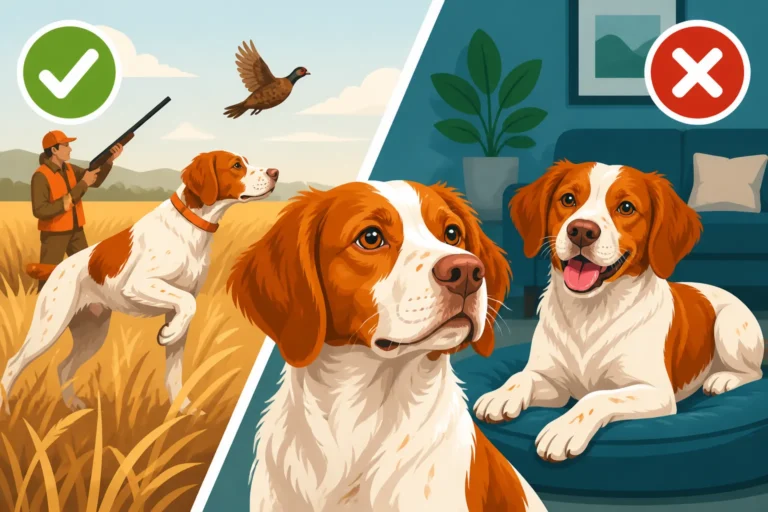
A show-bred Brittany can still hunt
A show-bred Brittany can retain hunting instincts and may be introduced to bird work, trained, and hunted. Some show-bred dogs have demonstrated working ability, and a dog’s registration or appearance does not by itself determine whether it can point or enjoy searching. What matters is the individual dog, its inherited tendencies, its experience, and the training it receives.
Still, buyers who specifically want a hunting dog should ask direct questions rather than rely on possibility. Find out whether close relatives have been hunted, what kind of work they do, and whether the breeder values field ability in the dogs they produce. A puppy from show-focused breeding may be a wonderful companion or show prospect, but it is sensible to be candid about how much evidence there is for the particular hunting outcome you want.
Likewise, a field-bred Brittany may be shown. Some owners participate in conformation with field-bred dogs, and an individual dog’s suitability depends on its structure, presentation, and the standards of the event. More importantly, being capable of entering a show is not the same as being bred primarily for show competition. The distinction is about emphasis, not an absolute barrier between activities. See Whether a Show Brittany Can Still Hunt and Whether a Field Brittany Can Be Shown for those questions in more detail.
Match the dog’s needs to your household
A Brittany that is bred for field performance may need purposeful outlets beyond a short walk around the block. That does not mean every such dog must hunt, but it does mean owners should plan for regular exercise, training, and opportunities to use the dog’s nose and mind. Without enough activity, a lively dog may become restless, noisy, or inventive about finding its own entertainment.
A show-bred Brittany should not be treated as a low-effort version of the breed. It still needs companionship, training, and appropriate exercise. If you are away for long stretches or prefer a very quiet household routine, talk honestly with breeders about the individual dogs’ needs and whether another breed or an adult dog might be a better match. A line label cannot solve a mismatch between a dog’s energy and an owner’s schedule.
For everyday preparation, think through the basics before the puppy arrives: a secure setup, a comfortable resting place, a brush suitable for the coat, and toys or activities that encourage appropriate play. Owners may find routine supplies through local pet shops or retailers such as Chewy, but equipment cannot replace training or time together. If you are comparing food or enrichment options, Chewy may be one place to browse alongside advice from your veterinarian and breeder. The important decision is not which store you use; it is whether you are prepared to meet the dog’s needs consistently.
Ultimately, show and field Brittanys have developed different emphases, but the boundary between them is not absolute. Look closely at the individual dog, ask what its relatives are like in both work and home settings, and choose a breeder whose priorities fit your plans. If you are still weighing whether a Brittany’s energy and temperament suit your experience, Whether a Brittany Suits a First Time Owner offers another useful perspective.
Disclaimer
This article is for general informational purposes only and does not constitute professional advice. Laws, prices and regulations vary by location and change over time. Consult a qualified professional for guidance on your specific situation.