Glaucoma in a Brittany Spaniel
It’s a terrifying moment when you look into your beloved Brittany’s eyes and see something is terribly wrong – perhaps a cloudiness, a dilated pupil, or an obvious change in the size or appearance of their eye. This could very well be glaucoma, an extremely painful and rapidly progressive eye condition that can steal your dog’s sight within hours if not addressed immediately. This guide will walk you through what glaucoma is, why Brittanys are particularly susceptible, how to recognize the urgent signs, and what steps you need to take to protect your furry companion's vision and comfort.
Understanding Glaucoma in Your Brittany
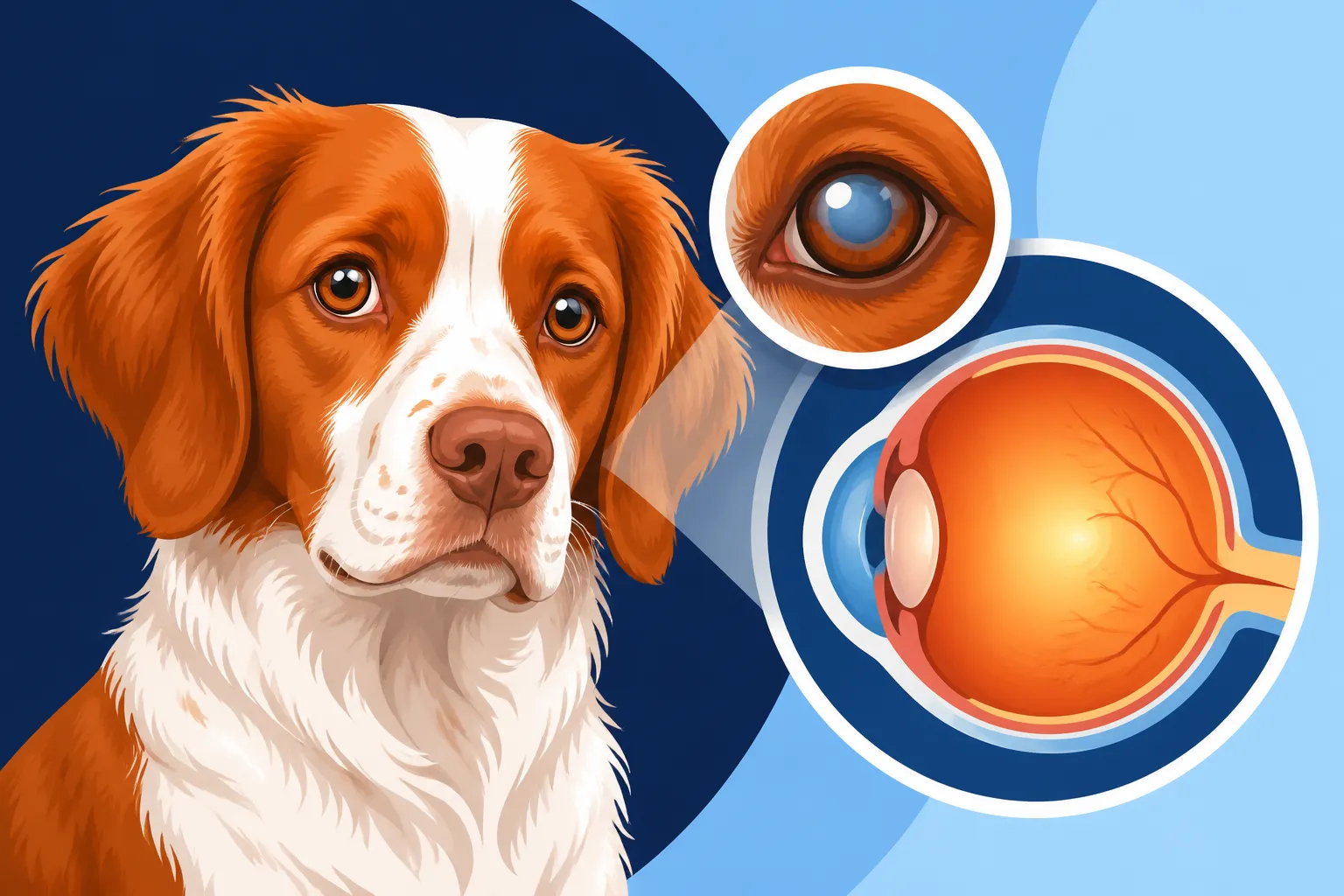
Glaucoma isn't just one condition; it's a group of eye disorders characterized by damage to the optic nerve, often caused by abnormally high pressure inside the eye. Imagine the delicate structures inside your Brittany's eye – the retina, the optic nerve – being slowly or suddenly crushed by an immense internal force. That's what your dog experiences. It's not just about vision loss; it's profoundly painful.
The Silent Thief of Sight
The eye continuously produces a clear fluid called aqueous humor, which nourishes the eye and maintains its shape. This fluid normally drains out of the eye at a balanced rate. Glaucoma occurs when the drainage system malfunctions, causing the fluid to build up. This accumulation leads to increased intraocular pressure (IOP), which then presses on the delicate optic nerve and retina. Think of it like a sink with the faucet running constantly but the drain is partially or completely clogged. The water level, or in this case, the pressure, keeps rising.
For a Brittany, this can be agonizing. The pain is often described as similar to a severe migraine in humans, compounded by the sensation of pressure. Unfortunately, dogs are masters at hiding pain, especially chronic discomfort, which can make early detection a challenge. By the time you notice overt signs, the pressure may have been building for some time, causing irreversible damage to the optic nerve. This delicate nerve is responsible for transmitting visual information from the eye to the brain, and once damaged, it cannot regenerate. This is why prompt intervention is absolutely critical; every hour matters in saving your Brittany's vision.
Why Brittanys Are Particularly Susceptible
While any dog can develop glaucoma, certain breeds, including our spirited Brittanys, have a genetic predisposition, making them far more susceptible to what's known as "primary glaucoma." This isn't something they acquire through injury or illness; it's often inherited. Specifically, Brittanys are prone to primary angle-closure glaucoma. This means the structure of their eye's drainage angle is inherently abnormal or closes prematurely, blocking the outflow of aqueous humor.
The typical age of onset for primary glaucoma in Brittanys can vary, but it often manifests in middle-aged to older dogs, though it can certainly appear earlier. It's generally bilateral, meaning it will eventually affect both eyes, even if only one eye shows signs initially. This genetic link underscores the importance of responsible breeding practices and why reputable breeders are keen on health screenings for What a Brittany Spaniel Breeder Should Have Tested, particularly for conditions that might pass down through generations. While a yearly eye exam is a good idea for any dog, it's particularly crucial for Brittanys to detect subtle changes that might indicate early stages of this devastating disease.
Recognizing the Emergency Signs of Glaucoma
One of the most frustrating aspects of glaucoma is how quickly it can progress and how easily early signs can be missed. Since Brittanys are stoic, by the time they show clear distress, the condition can already be quite advanced. It’s absolutely vital to be vigilant and know what to look for, as this is truly a medical emergency.
Subtle Early Indicators to Watch For
Sometimes, the very first signs of glaucoma are incredibly subtle, often dismissed as allergies or minor irritation. You might notice your Brittany rubbing their eye more than usual, or perhaps blinking excessively. The white of the affected eye might appear slightly redder, or you might see a slight cloudiness develop, especially if you compare it to the other eye in good lighting. Their pupil might seem a little more dilated and less responsive to light than the other eye. You might also observe some tearing or discharge.
Because Brittanys are so active and engaged, a slight decrease in their usual energy or a reluctance to play might also be an early clue, though this is less specific. They might seem a bit withdrawn, or hesitant to go up or down stairs, or bump into furniture on the affected side. If you have an active hunting dog, you might notice a slight hesitancy in dense cover. Any of these subtle changes, especially if they persist for more than a day, warrant a call to your vet. Don't wait until it's obvious; early detection can truly mean the difference between vision and blindness.
Overt and Urgent Symptoms
When glaucoma truly takes hold, the symptoms become much more apparent and alarming, indicating a severe emergency. If you see any of these, drop everything and get to an emergency veterinary clinic immediately.
- Obvious Pain: Your Brittany might be squinting severely, keeping the affected eye closed, or pawing at it relentlessly. They might yelp when you try to examine their face.
- Enlarged or Bulging Eye: The affected eye might appear noticeably larger or bulging compared to the other eye. This is due to the increased internal pressure.
- Cloudy or Bluish Cornea: The clear front surface of the eye (cornea) will often become cloudy, hazy, or take on a bluish tint, making it look dull.
- Dilated, Unresponsive Pupil: The pupil will likely be fully dilated and won't constrict when exposed to light, unlike the other eye.
- Vision Loss: Your Brittany might be bumping into things on the affected side, or show general disorientation. In some cases, rapid onset of blindness can occur within a matter of hours.
- Swollen Eyelids: The eyelids around the affected eye may appear swollen or puffy.
This table provides a quick comparison of primary versus secondary glaucoma in Brittanys:
| Feature | Primary Glaucoma | Secondary Glaucoma |
|---|---|---|
| Cause | Inherited, anatomical defect in drainage angle | Result of another eye disease or injury |
| Typical Onset | Often middle-aged to older Brittanys | Can occur at any age, depending on underlying cause |
| Progression | Usually rapid, often affects both eyes eventually | Variable, depends on underlying cause; can be rapid |
| Pain Level | Severe, urgent | Severe, urgent |
| Breed Predisposition | High in Brittanys due to genetic factors | Not breed-specific, but underlying causes might be |
| Treatment Focus | Managing IOP, preserving vision (challenging) | Treating underlying cause, managing IOP |
Recognizing these severe signs for Glaucoma in a Brittany Spaniel is paramount. This is not a "wait and see" situation. Seek immediate veterinary attention to give your Brittany the best chance.
The Emergency Vet Visit and Initial Treatment
When your Brittany presents with symptoms of glaucoma, time is literally vision. Every minute counts. Getting to an emergency vet clinic or a veterinary ophthalmologist as quickly as possible is your absolute priority. Don't delay, even if it's the middle of the night.
What to Expect at the Clinic
Once you arrive at the emergency clinic, the veterinary team will immediately assess your Brittany. The most crucial diagnostic tool for glaucoma is a tonometry reading, which measures the intraocular pressure (IOP) of the eye. This is a quick, painless procedure involving a special instrument (often a TonoPen or iCare Tonometer) gently touching the surface of your dog's eye. A normal IOP range for dogs is typically between 10-25 mmHg. Readings significantly higher than this confirm a glaucoma diagnosis.
In addition to tonometry, the vet will perform a thorough eye exam, checking pupil response, looking for corneal edema, assessing the retina, and examining the drainage angle (gonioscopy) if possible, which can help differentiate between primary and secondary glaucoma. They'll also check your Brittany's general health, which is important, especially if anesthesia might be considered later for more advanced procedures. Be prepared to share your Brittany's medical history, any recent injuries, or other health concerns. The cost of emergency care, especially if surgery is needed, can be daunting, but having a good pet insurance plan like those offered by Healthy Paws can truly be a lifesaver in these situations.
Immediate Medical Interventions
The primary goal of initial emergency treatment is to rapidly reduce the intraocular pressure and alleviate pain. This often involves a combination of medications:
- Topical Medications: Eye drops are typically administered directly into the affected eye. These can include:
- Prostaglandin Analogues (e.g., latanoprost, travoprost): These are potent medications that dramatically increase the outflow of aqueous humor, often providing rapid and significant pressure reduction. They are usually the first line of defense in primary angle-closure glaucoma.
- Carbonic Anhydrase Inhibitors (e.g., dorzolamide, brinzolamide): These drops reduce the production of aqueous humor.
- Beta-blockers (e.g., timolol): These also help reduce fluid production.
- Oral Medications: In severe cases, systemic medications may be given to help reduce pressure throughout the body, which can indirectly lower eye pressure. Osmotic diuretics like mannitol are sometimes used intravenously in critical situations to rapidly draw fluid out of the eye.
- Pain Relief: Analgesics will be given to manage your Brittany's severe pain, which is crucial for their comfort and well-being.
Your vet might also prescribe anti-inflammatory drops to reduce any accompanying inflammation. They will monitor your Brittany's IOP frequently to ensure the medications are working. If the pressure doesn't come down sufficiently with medical management, or if the vision is already severely compromised, further discussions about surgical interventions will be necessary.
Treatment Options and Long-Term Management
Once the immediate crisis of high intraocular pressure is under control, the focus shifts to long-term management to prevent recurrence and preserve as much vision as possible. For Brittanys, especially with primary angle-closure glaucoma, this often means a multifaceted approach combining medication and potentially surgery.
Medical Management at Home
After the emergency visit, your Brittany will likely be sent home with a regimen of eye drops and possibly oral medications. Consistency is absolutely key here. You'll need to administer these drops several times a day, often for the rest of their life. This can be challenging for both you and your dog, especially if they are in pain or uncomfortable, but it's non-negotiable for managing the condition. Creating a routine, using positive reinforcement, and having a second person help can make the process smoother.
Regular follow-up visits with a veterinary ophthalmologist will be crucial. They will monitor your Brittany's IOP, assess their vision, and adjust medications as needed. The goal is to keep the pressure within a normal, healthy range to prevent further damage to the optic nerve. Even with the best care, the financial strain of managing a chronic condition like glaucoma can be substantial. This is where pet insurance, like a plan from Healthy Paws, can make a real difference in allowing you to provide the best possible care without undue stress. Remember that for many Brittanys, primary glaucoma will eventually affect the second eye, so often, prophylactic treatment (medication given to the "good" eye) is recommended to delay its onset. You may also want to discuss How Often a Brittany's Eyes Should Be Certified with your vet, especially if one eye is affected.
Surgical Interventions
When medical management isn't enough to control the intraocular pressure or to save vision, surgical options become necessary. These procedures can be broadly categorized into those aimed at preserving vision and those focused on pain relief when vision is already lost.
Vision-Sparing Surgeries:
- Gonioimplantation (or shunt surgery): A tiny drainage device (shunt or valve) is surgically implanted into the eye to create an alternative pathway for aqueous humor to drain, thereby reducing pressure. This is often combined with cryotherapy or laser cyclophotocoagulation.
- Cyclophotocoagulation (CPC): This procedure uses a laser (either transscleral, applied externally, or endolaser, applied internally) to selectively destroy some of the cells in the ciliary body that produce aqueous humor. The goal is to reduce fluid production, thus lowering IOP.
These vision-sparing surgeries are complex and best performed by a board-certified veterinary ophthalmologist. Success rates vary, and often, lifelong medical management with drops is still required afterward. It's important to weigh the potential benefits against the risks, including the possibility of complications. If your Brittany is elderly, you'll want to discuss how Caring for an Old Brittany and Whether a Brittany Tolerates Anesthesia might factor into the decision.
Pain-Relieving Surgeries (for eyes with irreversible blindness):
- Enucleation: This is the surgical removal of the affected eye. While it sounds drastic, it is often the most effective way to eliminate chronic pain from an irreversibly blind, glaucomatous eye. Most dogs adapt remarkably well to living with one eye or even no eyes, and their quality of life improves significantly once the pain is gone.
- Intraocular Prosthesis (Evisceration with IOL implantation): In this procedure, the internal contents of the eye are removed, and a silicone prosthetic sphere is implanted into the scleral shell. This allows the eye to retain a natural appearance while eliminating the source of pain. However, it's not always suitable for every case, particularly if the eye is severely inflamed or infected.
- Intravitreal Gentamicin Injection: For dogs with no hope of vision, a chemical injection into the eye can destroy the fluid-producing cells, effectively "drying up" the eye and reducing pressure. This is less invasive than surgery but can have side effects and may not be permanent.
Deciding on surgery is a very personal and often heartbreaking choice. It requires careful consideration of your Brittany's overall health, prognosis, and your financial capacity. For long-term management, remember that ongoing medication and potential surgical aftercare can add up, and this is where a reliable insurance provider like Healthy Paws can offer significant support.
Living with a Glaucoma Diagnosis
Receiving a glaucoma diagnosis for your Brittany is undoubtedly overwhelming and scary. It's a challenging journey, but with dedication and informed decisions, you can ensure your beloved companion continues to live a full and comfortable life, even if their vision is compromised.
Adapting to Vision Loss
If your Brittany loses vision in one or both eyes due to glaucoma, they will need time and help to adapt. Dogs are incredibly resilient and rely heavily on their other senses – smell and hearing – which often become heightened to compensate for vision loss.
Here are some ways you can help your Brittany adjust:
- Maintain a Consistent Environment: Avoid rearranging furniture or leaving obstacles in pathways. Keep their food and water bowls, bed, and toys in the same spots.
- Establish Verbal Cues: Use clear verbal cues for common actions like "step up," "watch out," "stop," or "find your bed."
- Safety First: Supervise them closely outdoors, especially in unfamiliar environments. Keep them on a leash or in a securely fenced yard. Consider child gates to block off stairs or dangerous areas inside.
- Sensory Enrichment: Engage their other senses with scent games, puzzle toys, and plenty of verbal praise and gentle touch.
- Consider a Halo Device: For dogs with total blindness, a "halo" vest can help them navigate by bumping into objects before their head does, protecting them from bumps and bruises.
- Routine and Predictability: A consistent daily schedule helps reduce anxiety and builds confidence.
While the thought of your active, bird-finding Brittany losing their sight is heartbreaking, remember that dogs live very much in the present. Once the pain is managed, most adapt with remarkable grace. Their love for you and their joy in life remains. Whether an Aging Brittany Still Wants to Hunt is a question many owners face, and while hunting may no longer be an option with severe vision loss, other forms of enrichment and activity can certainly continue.
Emotional and Financial Considerations
The emotional toll of managing a serious, chronic illness like glaucoma in your Brittany can be immense. It's okay to feel sad, frustrated, or overwhelmed. Seek support from your veterinary team, online forums for owners of blind dogs, or friends and family. Knowing that you are doing everything you can for your dog's comfort and well-being is paramount.
Financially, glaucoma treatment can be very expensive. Emergency visits, specialized eye drops, oral medications, and potential surgeries can quickly add up. For example, a single bottle of specialty eye drops can cost over $50, and some dogs need multiple types. Surgical options can range from a few thousand dollars for a shunt to several thousand for enucleation and prosthesis. This is precisely why considering pet insurance from reputable providers like Healthy Paws before a crisis hits is so important. Pet insurance can significantly alleviate the financial burden, allowing you to focus on your Brittany's care without the added stress of overwhelming bills. When exploring treatment options, discuss all costs with your vet and consider how pet insurance might ease the financial burden. Being prepared for these costs is a realistic part of owning a Brittany, especially as they get older and may encounter more health challenges. What a Brittany's Final Illness Costs is a tough but necessary conversation to consider for long-term planning, and managing chronic conditions throughout their The Twelve to Fourteen Years a Brittany Gets is part of the commitment we make to our beloved companions.
Preventative Measures and Regular Eye Care
While primary glaucoma in Brittanys can’t always be prevented due to its genetic nature, proactive measures and diligent regular eye care can significantly improve outcomes, potentially delaying onset or allowing for earlier, less damaging intervention.
The Importance of Regular Veterinary Check-ups
Even if your Brittany seems perfectly healthy, routine veterinary check-ups are fundamental. During their annual How Often a Brittany Needs a Wellness Exam, your veterinarian performs a comprehensive physical, including a basic eye examination. While a general vet might not perform tonometry routinely, they can spot early indicators like corneal changes, subtle redness, or differences in pupil size between the eyes. If anything looks suspicious, they can refer you to a veterinary ophthalmologist who specializes in eye health.
For breeds like the Brittany, which are predisposed to conditions like glaucoma and Retinal Dysplasia in a Brittany Spaniel, an ophthalmologist might recommend baseline tonometry readings and regular specialized eye exams, perhaps starting in middle age. This creates a record of your dog's normal eye pressure, making it easier to detect deviations early. Remember, a Brittany might be one of The Brittany Is One of the Healthiest Sporting Breeds, but that doesn't mean they're immune to serious health conditions. Being proactive about eye health is just as important as ensuring their What a Brittany's Yearly Bloodwork Should Cover or managing their diet and exercise.
Monitoring Your Brittany's Eyes at Home
You are your Brittany's first line of defense. Get into the habit of regularly inspecting your dog's eyes at home. This doesn't need to be an intensive examination; just a quick, gentle look can reveal a lot.
Here’s what to check for:
- Clarity: The cornea (the clear front part of the eye) should be clear, not cloudy or hazy.
- Pupil Size and Symmetry: Both pupils should be roughly the same size and respond equally to light (constrict in bright light, dilate in dim light).
- Redness or Swelling: The whites of the eyes (sclera) should be white, with minimal redness. Eyelids should not be swollen or puffy.
- Discharge: A small amount of clear discharge is normal, but excessive tearing, thick discharge, or any colored discharge (yellow, green) is a concern.
- Behavioral Changes: Pay attention if your Brittany is squinting, rubbing their eyes, blinking excessively, or showing any signs of pain or discomfort around their face.
Make these checks a part of your daily routine – perhaps while you’re petting them, or when they’re relaxing beside you. This familiarity will help you notice even the most subtle changes quickly. If you observe anything unusual, don't hesitate to contact your vet. Early intervention is critical for glaucoma, as it is for other serious eye conditions like Cataracts in a Brittany Spaniel. It’s much better to be overly cautious than to regret waiting.
Disclaimer
The information provided in this article is for educational purposes only and is not a substitute for professional veterinary medical advice. Always consult with a qualified veterinarian or veterinary ophthalmologist for any health concerns or before making any decisions related to your Brittany's health and treatment.