Cataracts in a Brittany Spaniel
It’s a heart-wrenching moment for any Brittany owner when you notice something isn’t quite right with your spirited companion's eyes. Our Brittanys are known for their keen eyesight and boundless energy, always scanning the horizon for the next bird or adventure. So, when those bright, intelligent eyes start to look a little cloudy, or your dog begins to hesitate on familiar stairs, it’s natural to feel a knot of anxiety. This guide is here to walk you through everything you need to know about cataracts in Brittany Spaniels, from understanding what they are to managing life with a visually impaired dog, offering realistic, empathetic advice every step of the way.
What Exactly Are Cataracts in Brittany Spaniels?
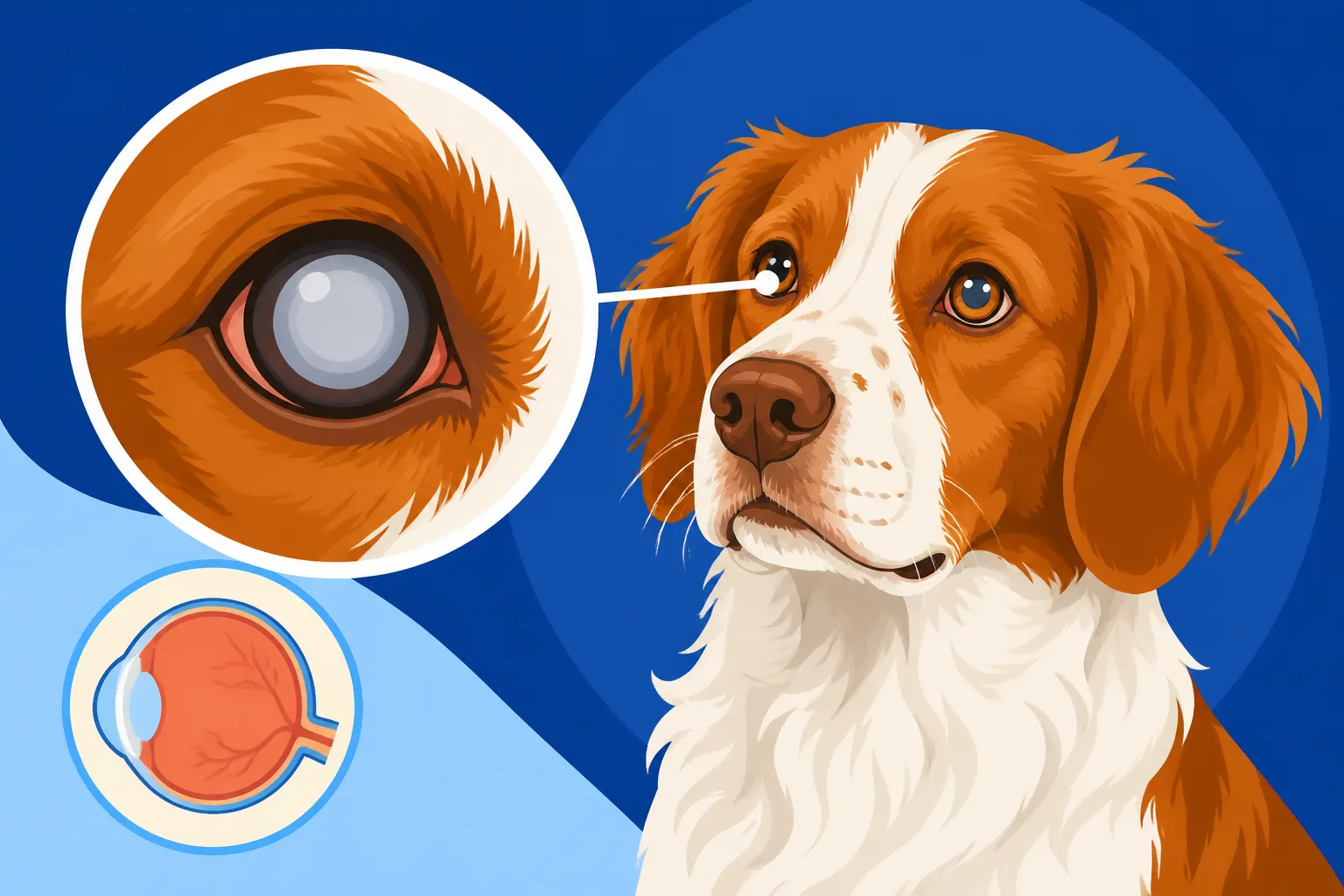
When we talk about cataracts, we're referring to an opacity or clouding of the eye's lens. Think of the lens in your Brittany's eye like the lens in a camera – it's supposed to be perfectly clear, allowing light to pass through and focus sharply on the retina at the back of the eye. When a cataract forms, proteins within the lens clump together, making it opaque and preventing light from reaching the retina effectively. This results in blurred vision, and in severe cases, complete blindness. It's not just a superficial cloudiness; it's a structural change within the eye itself that profoundly impacts your dog's ability to see the world.
Understanding How Cataracts Form
Cataracts in Brittanys, like in other breeds, can form for several reasons. Genetic predisposition is a big one, meaning some Brittanys are simply born with the unlucky genetic lottery that makes them more prone to developing cataracts, often at a younger age. This is particularly concerning for breeders and prospective puppy owners, highlighting the importance of understanding the health history of breeding lines. Beyond genetics, cataracts can also be a secondary issue, arising from other health problems such as diabetes mellitus. When a dog has diabetes, the excess glucose in its system gets converted into sorbitol within the lens, which draws water into the lens, causing swelling and subsequent clouding. Trauma to the eye, inflammation, or even nutritional deficiencies in very young puppies can also lead to cataracts, although these are less common causes in adult Brittanys. Environmental factors, while not direct causes, can sometimes exacerbate or contribute to the progression of existing cataracts.
Distinguishing Cataracts from Normal Aging Eye Changes
One of the most common anxieties for Brittany owners is confusing a true cataract with another age-related change called lenticular sclerosis, sometimes referred to as nuclear sclerosis. As our Brittanys get older, usually past the age of six or seven, the lens fibers naturally become more dense and compact in the center. This gives the pupil a hazy, bluish-grey appearance, almost like a faint smoke cloud. The good news is that lenticular sclerosis typically causes very minimal vision impairment, if any at all. It's a normal, benign part of aging, much like how human eyes might need reading glasses as we get older.
A true cataract, on the other hand, presents as a denser, whiter, or more crystalline opacity. While lenticular sclerosis looks like a general haze, cataracts often appear as distinct white spots, streaks, or a complete milky white cloud, significantly blocking light. If you shine a light into your Brittany's eye, with lenticular sclerosis, you can usually still see clearly through the lens to the retina. With a cataract, that view is often obstructed. It's a critical distinction because the implications for your dog's vision and potential treatment options are vastly different. When you bring your Brittany in for its annual check-up, especially as they age, be sure to ask your vet about these differences. Early and regular eye checks are paramount, as discussed in Whether a Brittany Needs a Yearly Eye Exam.
Recognizing the Signs of Cataracts in Your Brittany
Our Brittanys are masters of adaptation, and they often try to hide discomfort or vision changes, especially if they're still driven by their hunting instincts. This can make recognizing the early signs of cataracts a real challenge for even the most observant owner. However, knowing what to look for can make all the difference in catching the condition early and exploring treatment options.
Subtle Early Indicators to Watch For
In the initial stages, cataracts might be tiny, affecting only a small portion of the lens, and your Brittany might compensate beautifully. You might notice very subtle behavioral shifts first. Perhaps they're a little more hesitant to jump onto the couch or navigate stairs in dim light. They might start bumping into familiar furniture only at dusk or dawn, times when ambient light is lower and their impaired vision becomes more noticeable. Their once impeccable tracking of a thrown toy might falter slightly, or they might seem to misjudge distances when fetching.
Physically, the earliest sign is often a slight haziness or a faint white spot appearing in the pupil. It might be so subtle that you only catch it in specific lighting conditions or at a certain angle. Look at your Brittany's eyes head-on, then from the side. Sometimes, the cloudiness is more apparent when light hits it just right. The pupil, which should be a clear, dark window, might start reflecting light differently, appearing duller or having an odd sheen. Pay attention to changes in their play, their confidence, and their willingness to engage in activities they once loved. Remember, our Brittanys are incredibly active and intelligent, and any change in their enthusiasm or agility could be a subtle clue that something is amiss.
How Cataracts Progress and Impact Daily Life
As cataracts mature, they become larger and denser, progressively obscuring more of the lens and further diminishing your Brittany's vision. What started as a small cloud can grow to cover the entire lens, leading to significant visual impairment and, eventually, total blindness. For a breed like the Brittany, whose life revolves around exploring, hunting, and seeing the world, this progression can be devastating to witness.
A Brittany with advanced cataracts might become much more cautious, moving slower, or bumping into things frequently even in well-lit environments. They might be startled more easily by sudden movements or noises because they can't see what's happening around them. Their confidence in new environments will plummet, and they might stick closer to you, relying on your presence and voice. Imagine a bird dog, bred to scan fields and pinpoint game, suddenly unable to see the world clearly. It's heartbreaking to think of them losing their ability to do what they love. Their enthusiasm for hunting, fetching, and even navigating their own backyard can diminish significantly. For some owners, seeing their once vibrant dog struggle can bring on immense guilt and frustration, wondering if there was anything more they could have done. Issues like Retinal Dysplasia in a Brittany Spaniel or Glaucoma in a Brittany Spaniel can also lead to vision loss, making a proper diagnosis crucial.
Diagnosis and Treatment Options for Brittany Cataracts
Once you suspect cataracts, the next step is a trip to the vet. This isn't a problem you can self-diagnose or treat at home; professional intervention is essential for an accurate assessment and to discuss the best path forward for your Brittany.
The Veterinary Examination and Specialized Diagnostics
Your regular veterinarian will perform an initial eye exam, looking for the tell-tale cloudiness. However, to truly understand the extent and type of cataract, and to rule out other eye conditions, they will likely recommend a referral to a veterinary ophthalmologist. These specialists have advanced equipment and expertise specifically for canine eye health.
During a specialized exam, the ophthalmologist will use a slit-lamp biomicroscope, which allows them to see the lens in great detail, assessing the cataract's size, location, and density. They might also perform an ophthalmoscopy to examine the retina at the back of the eye. If surgery is being considered, a crucial test is an electroretinography (ERG). This test measures the electrical activity of the retina to ensure it's healthy and functional. If the retina isn't working properly, cataract surgery to remove the cloudy lens won't restore vision, making the procedure pointless. They will also check for any signs of inflammation or other underlying conditions that might complicate surgery. Understanding the full picture is vital before making any decisions, especially considering that the overall costs over its lifetime (What a Brittany Costs Over Its Lifetime) can be substantial.
Surgical Intervention: When It's Recommended and What to Expect
For many Brittanys with significant vision impairment due to cataracts, surgical removal of the lens is the most effective treatment. The procedure, called phacoemulsification, is very similar to cataract surgery in humans. It involves using high-frequency ultrasound to break up the cloudy lens, which is then suctioned out. In most cases, an artificial intraocular lens (IOL) is then implanted to restore proper focus.
Surgery is typically recommended when cataracts are significantly impacting your Brittany's quality of life or are rapidly progressing towards blindness. The best outcomes are often seen when surgery is performed before the cataracts become hypermature, as this can lead to inflammation and make the procedure more complicated. This is why early detection is so important.
The decision for surgery involves several considerations:
- Cost: Cataract surgery is a specialized procedure and can be expensive, often ranging from $3,000 to $6,000 per eye, depending on your location and the specific veterinary ophthalmologist. This is where pet insurance, like a plan from Healthy Paws, can be incredibly beneficial, potentially covering a significant portion of the cost.
- Pre-surgical Evaluation: As mentioned, a thorough pre-surgical work-up, including the ERG, blood tests, and an overall health assessment, is critical to ensure your Brittany is a good candidate for anesthesia and has a healthy retina.
- Recovery: Post-operative care is intensive, involving a strict regimen of eye drops, restricted activity, and frequent follow-up visits. This commitment is crucial for a successful outcome and to prevent complications like inflammation or glaucoma.
- Success Rate: While generally high, success rates can vary. Most dogs regain functional vision, but not always 20/20. Some Brittanys may still need a little extra guidance in very dim light or unfamiliar places.
It's a big decision, but for many active Brittanys, restoring their vision can give them a new lease on life, allowing them to return to their beloved activities.
Non-Surgical Management and Supportive Care
While surgery offers the best chance for restoring vision, it's not always an option or the right choice for every Brittany. Some dogs may not be good candidates due to other health issues, advanced age, or if the cataracts are not significantly affecting their quality of life. For these Brittanys, non-surgical management focuses on supportive care and adapting their environment.
Unfortunately, there are no oral medications or eye drops that can dissolve or reverse existing cataracts. Any product claiming to do so should be viewed with extreme skepticism. However, if there's an underlying cause like diabetes, managing that condition aggressively can sometimes slow the progression of cataracts, though it won't reverse them. Anti-inflammatory eye drops may be prescribed if the cataracts are causing secondary inflammation within the eye.
Supportive care for a Brittany with cataracts involves being proactive about their safety and well-being. This might mean keeping furniture in consistent locations, using baby gates to block off stairs, and creating a safe, familiar routine. While pet insurance such as Healthy Paws might not cover non-surgical "treatments" for cataracts, it’s worth noting that many plans do cover the diagnosis of such conditions and any related complications, which can still be a financial relief. Regular check-ups, like those outlined in What a Brittany's Yearly Eye Certification Costs, are still important to monitor the eyes for any secondary complications.
Living with a Brittany Spaniel with Cataracts
Finding out your Brittany has cataracts can be disheartening, especially when vision loss impacts their vibrant personality. But a visually impaired Brittany can still lead a full, happy life with the right adjustments and a lot of love and patience from you.
Adapting Your Home Environment for a Visually Impaired Brittany
The key to helping a Brittany with cataracts is consistency and safety. They thrive on routine and predictability, which becomes even more critical when their sight diminishes.
- Maintain Consistency: Keep furniture and belongings in the same places. Avoid rearranging your home frequently. If you do make a change, guide your dog around the new layout several times, helping them map it out.
- Safe Navigation: Use baby gates to block off dangerous areas like staircases or access to swimming pools if you have one. Consider soft covers for sharp furniture corners. Lay down rugs or runners on slippery floors to provide better traction and tactile cues.
- Scent Markers: Believe it or not, scent can be a powerful tool. You can place a unique, dog-safe scent (like a dab of vanilla extract or a specific essential oil on a cotton ball) near food bowls, water dishes, or the entrance to their bed. Your Brittany’s incredible nose, discussed in the context of How a Brittany Hides Pain, will help them navigate.
- Verbal Cues: Start using consistent verbal cues for everything: "step up," "step down," "wait," "left," "right." Your voice will become their guiding light.
- Lighting: Ensure good, consistent lighting throughout the home, especially in areas where they eat, sleep, and play. Avoid sudden changes in light and shadow, which can be disorienting.
Remember, your Brittany trusts you implicitly. Creating a safe and predictable environment reduces their anxiety and boosts their confidence, allowing them to navigate their world more easily.
Maintaining Quality of Life and Mental Stimulation
A Brittany's zest for life doesn't vanish with their eyesight; it just needs a little redirection. Maintaining their quality of life and providing mental stimulation is crucial.
- Engage Other Senses: Since vision is compromised, focus on engaging their other powerful senses. Scent work is fantastic for Brittanys. Hide treats around the house and encourage them to "find it." Use puzzle toys that dispense food or treats when manipulated.
- Consistent Routines: Stick to a predictable daily schedule for feeding, walks, and playtime. This reduces stress and helps them anticipate what's next.
- Leashed Walks: While off-leash romps might need to be adjusted to very safe, enclosed areas, regular leashed walks are still important for physical exercise and mental engagement. Allow them to sniff and explore the world through their nose. Talk to them constantly, letting them know where you are and what's coming.
- Safe Outdoor Play: Designate a secure, fenced area in your yard for off-leash time. Keep it free of obstacles and make sure the boundaries are well-defined. Continue playing fetch with noisy toys or retrieve items that have a strong scent.
- Affection and Comfort: More than ever, your Brittany needs your reassurance. Spend extra time cuddling, grooming, and offering gentle massages. Your touch and voice are incredibly comforting.
- Socialization: Don't isolate your visually impaired Brittany. Continue to introduce them to familiar, calm friends (both human and canine) in controlled environments. Let people know your dog can't see well so they approach gently.
It’s important to remember that a visually impaired Brittany isn't a broken Brittany. They still have so much love to give and joy to experience. With your understanding and adaptation, they can continue to be wonderful companions, even into their senior years, as we often discuss in Caring for a Brittany Past Ten and in the context of What Changes in an Aging Brittany.
| Feature | Cataract | Lenticular (Nuclear) Sclerosis |
|---|---|---|
| Appearance | Opaque, milky white, crystalline cloud, distinct spots | Hazy, bluish-grey, smoky, uniform density in lens center |
| Location | Can be anywhere in the lens, can cover entire lens | Primarily central nucleus of the lens |
| Vision Impact | Significant impairment to total blindness | Minimal to no vision impairment |
| Progression | Can be rapid or slow, progressive | Very slow, age-related, non-progressive (minor changes) |
| Light Passage | Blocks light from reaching retina | Allows light to pass through, though slightly diffused |
| Age of Onset | Can be any age (genetic, diabetic, traumatic) | Typically seen in dogs over 6-7 years old |
| Treatment | Surgical removal (phacoemulsification) for vision restoration | No treatment needed as vision is largely unaffected |
| Underlying Causes | Genetics, diabetes, trauma, inflammation, toxins | Normal aging process |
This table helps illustrate the key differences between these two conditions, which are often confused.
Disclaimer
This article is intended for informational purposes only and does not constitute veterinary medical advice. Always consult with a qualified veterinarian or veterinary ophthalmologist for any health concerns or before making any decisions about your Brittany Spaniel's medical care.