When a Brittany’s Hips Should Be X Rayed
One of the most concerning things a Brittany owner can face is the worry about their dog's health, especially when it comes to potential skeletal issues like hip dysplasia. It’s disheartening to think your active, bird-crazy companion might be suffering in silence or limited by their physical well-being. This comprehensive guide is here to walk you through the ins and outs of hip X-rays for your beloved Brittany, explaining exactly when, why, and how these crucial evaluations should be done to ensure a long, happy, and pain-free life in the field and at home.
Why Hip X-rays are Crucial for Brittanys
When you bring a Brittany into your life, whether as a dedicated hunting partner or a cherished family member, you're investing in a dog known for its athleticism and boundless energy. These dogs are built to run, point, and retrieve, spending hours traversing varied terrain. The thought of them developing a condition that compromises this very essence of their being is enough to keep any owner up at night. This is precisely why hip X-rays aren't just a recommendation for Brittanys; they're a cornerstone of responsible ownership and breeding.
Understanding Hip Dysplasia in Brittanys
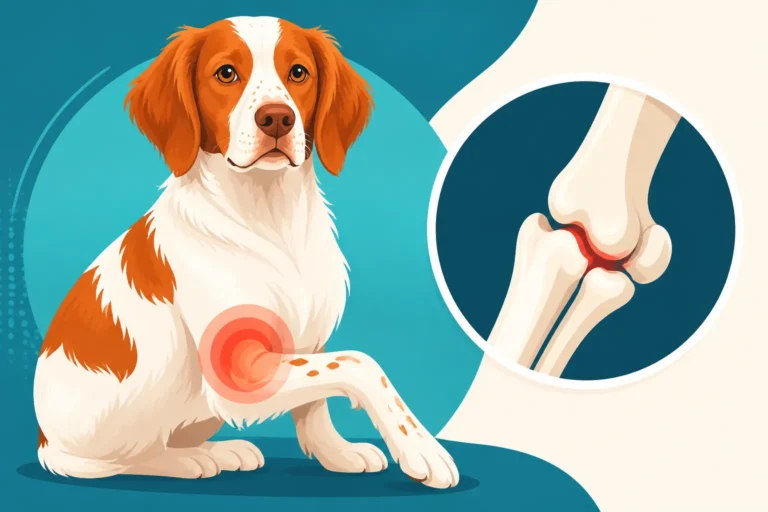
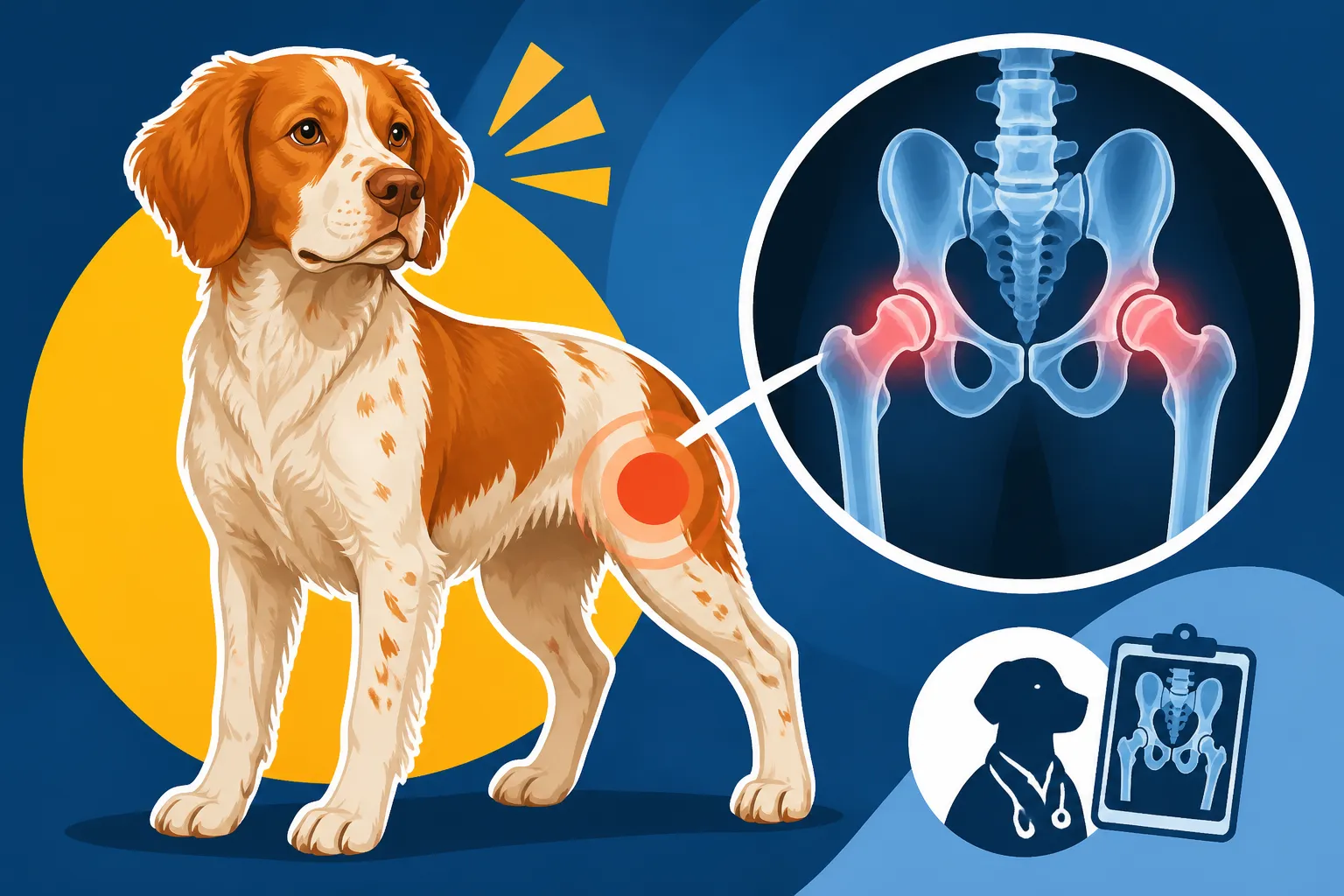
Hip dysplasia is a polygenic trait, meaning it's influenced by multiple genes, but environmental factors also play a significant role. In simple terms, it's a condition where the hip joint doesn't form correctly. Instead of fitting snugly, the ball (femoral head) and socket (acetabulum) rub and grind, leading to pain, lameness, and ultimately, degenerative joint disease or osteoarthritis. For a breed as active as the Brittany, this can be devastating. Imagine trying to run through a field with constant pain in your hips – it's unimaginable, yet many dogs suffer in silence. Recognizing the signs a Brittany's hips hurt can be tricky, as they are stoic dogs, often hiding discomfort until it's quite advanced.
The Brittany is generally considered one of the healthier sporting breeds, but hip dysplasia, unfortunately, remains a concern within the breed. While we've seen immense progress thanks to diligent breeders, it's still something every owner needs to be aware of. The statistics can be eye-opening, and understanding how common hip dysplasia is in Brittany Spaniels helps underscore the importance of screening. It's not about being alarmist, but about being proactive.
The Impact on a Working Dog's Life
For Brittanys bred to hunt, sound hips aren't just a nice-to-have; they're a necessity. A dog with dysplastic hips will struggle to perform in the field. They might tire quickly, show reluctance to jump or retrieve, or exhibit a change in gait, sometimes described as a "bunny hop." This isn't just about their hunting career; it's about their quality of life. A Brittany that can't run freely and comfortably isn't a happy Brittany.
Even if your Brittany is primarily a family pet, the impact of hip dysplasia is profound. Simple joys like a romp in the park, a game of fetch, or even climbing stairs can become painful ordeals. Early detection through X-rays allows for timely interventions, whether through lifestyle adjustments, medication, or in some cases, surgery. Being informed and proactive is the best way to support your dog's athletic capabilities and overall well-being throughout its entire life. For those involved in breeding, understanding what a Brittany Spaniel breeder should have tested is paramount to improving the breed's health lineage.
Optimal Timing for Initial Hip X-rays
The question of when to X-ray your Brittany's hips is one that often causes confusion among new and even experienced owners. There isn't a single, universally agreed-upon age for all X-rays, as different screening methods have different optimal windows. However, there are established guidelines, particularly for official certifications, that are crucial to follow.
Official Certification at Two Years of Age
For official hip certifications through organizations like the Orthopedic Foundation for Animals (OFA), the consensus is clear: a Brittany must be at least 24 months (two years) of age to receive a permanent OFA certification number. This timing is rooted in scientific understanding of canine skeletal development. Before two years old, a dog's growth plates are still closing, and their hip joints are still maturing. An X-ray taken too early might not accurately reflect the final conformation of the joint, potentially leading to misleading results.
Many breeders will actually require a clause in their contracts stating that you must wait until your dog is two years old for its official hip certification. This is a testament to the fact that the two-year mark is considered the gold standard for final assessment. Imagine getting a "passing" grade at 18 months only for the hips to develop issues later due to continued growth – it highlights why a Brittany OFA Hip Certification waits until two. This ensures the most accurate and reliable assessment for breeding purposes and for providing owners with a solid understanding of their dog's long-term hip health.
Early Screening Options and Their Purpose
While two years is the standard for official OFA certification, there are scenarios where earlier hip X-rays might be recommended, particularly for a different type of screening called PennHIP. PennHIP can be performed on dogs as young as 16 weeks (four months) of age. The purpose of early screening with PennHIP is different from OFA. PennHIP evaluates hip laxity – how loose the hip joint is – which is considered a strong predictor of whether a dog will develop hip dysplasia later in life.
If you have a Brittany puppy and are concerned, or if you plan to breed and want the earliest possible indicators, discussing PennHIP with your veterinarian is a smart move. Early screening can provide valuable information, allowing you to make informed decisions about exercise routines, diet, and potential future breeding plans much sooner. However, it's important to remember that an early PennHIP result doesn't replace the need for an OFA certification at two years if that's your chosen path for official breeding clearance, or if you just want that gold standard evaluation. Both methods offer distinct but valuable insights into your Brittany's hip health. You can learn more about what PennHIP tells a Brittany owner to understand its specific benefits.
Understanding OFA and PennHIP
When it comes to assessing your Brittany's hips, you'll hear two main names: OFA and PennHIP. Both are respected methods for evaluating hip health, but they approach the assessment from different angles and have distinct requirements and benefits. Understanding these differences is key to making an informed decision about your dog's care.
The Orthopedic Foundation for Animals OFA Certification
The OFA method involves taking a single, standardized X-ray of your dog's hips with the dog positioned on its back, hind legs extended and rotated inward. This position is crucial for consistency across evaluations. The X-rays are then sent to the OFA, where three independent, board-certified veterinary radiologists review them. They assess various anatomical features of the hip joint, looking for signs of hip dysplasia. The hips are graded on a seven-point scale: Excellent, Good, Fair (all considered passing), Borderline, Mild, Moderate, and Severe (the latter three indicating dysplasia).
The strength of OFA lies in its long-standing history and its large database of recorded results, which gives us a good picture of what the OFA records show about Brittany hips over time. Many breeders use OFA as their primary screening tool, and it's a widely recognized standard in the breeding community. The main drawback for some owners is the age requirement; the official certification cannot be given until the dog is two years old, which can feel like a long wait if you have concerns about a younger dog. However, this delay is precisely what makes the two-year certification so reliable for assessing mature hip conformation.
PennHIP's Focus on Joint Laxity
PennHIP, developed at the University of Pennsylvania, takes a different approach. Instead of relying on a single X-ray position, PennHIP requires three distinct radiographs: a standard view similar to OFA, and two specialized views that measure hip joint laxity (looseness). These specific views involve a device that gently pushes the femoral heads out of the hip sockets to measure how much displacement occurs. The results are expressed as a "distraction index" (DI), a numerical measurement of hip laxity, where lower numbers indicate tighter hips.
The primary advantage of PennHIP is its ability to be performed much earlier – as young as 16 weeks – and its focus on quantifying hip laxity, which is a strong predictive indicator for future development of osteoarthritis secondary to hip dysplasia. This allows breeders and owners to gain insight into a puppy's hip health potential long before the OFA's two-year mark. PennHIP results are also directly comparable to other dogs within the breed, giving a percentile ranking. While the procedure requires specific training and certification for veterinarians, many clinics now offer it. For owners who want the most comprehensive and early assessment possible, PennHIP offers a powerful tool.
Comparative Table: OFA vs. PennHIP
Here's a quick comparison of these two vital hip screening methods:
| Feature | OFA (Orthopedic Foundation for Animals) | PennHIP (University of Pennsylvania Hip Improvement Program) |
|---|---|---|
| Minimum Age for Eval | 24 months (official permanent certification) | 16 weeks |
| Primary Assessment | Qualitative evaluation of hip conformation and signs of DJD | Quantitative measurement of hip laxity |
| Number of Radiographs | 1 standard view | 3 specialized views |
| Technique | Extended leg view, often requiring sedation | Distraction, compression, and extended views; sedation required |
| Results Reporting | Grades (Excellent, Good, Fair, Borderline, Dysplastic) | Distraction Index (DI) with breed percentile ranking |
| Veterinarian Cert. | Any licensed vet can take X-rays; interpretation by OFA radiologists | Requires specific PennHIP certified veterinarian |
| Focus | Breeding soundness, mature hip conformation | Early prediction of hip dysplasia risk, hip laxity |
Both OFA and PennHIP have their merits, and some breeders even choose to utilize both to get the most comprehensive picture of their Brittany's hip health. The choice often comes down to personal preference, breeding goals, and the advice of your veterinarian.
Situations Requiring Earlier or Additional X-rays
While the standard two-year mark for OFA certification is widely accepted for healthy Brittanys without apparent issues, there are specific circumstances where your veterinarian might recommend hip X-rays earlier or suggest additional imaging beyond routine screening. These situations usually arise from observable symptoms or specific concerns about a dog's development or comfort.
When Your Brittany Shows Signs of Discomfort
If your Brittany, regardless of age, starts exhibiting symptoms that suggest hip pain or mobility issues, it's absolutely crucial to seek veterinary attention immediately. These signs can be subtle at first, especially in a resilient and high-drive breed like the Brittany. Watch for a reluctance to jump, difficulty getting up after resting, a stiff or "bunny-hopping" gait, limping, decreased activity, or even an unusual aggressiveness when touched around the hips. Puppies might show reluctance to play or a general awkwardness in their hindquarters.
In such cases, your veterinarian will likely recommend X-rays to diagnose the underlying cause. This isn't for official certification but for medical diagnosis and treatment planning. The goal is to identify the problem, whether it's hip dysplasia, an injury, or another orthopedic condition, so that appropriate care can begin. Catching these issues early can significantly improve your dog's prognosis and quality of life. Even if your Brittany is young, waiting until two years old when they are clearly in pain is not an option; immediate diagnostic X-rays are necessary. Remember, pain medication or anti-inflammatories might mask symptoms, but they don't solve the root problem, which is why imaging is vital.
Pre-Purchase Puppy Screening and Breeder Concerns
For prospective puppy owners, understanding the value of early screening for the parents is paramount. While you typically won't X-ray a puppy you're considering buying, a responsible breeder will have performed hip certifications on both the sire and dam of the litter. This is where the results of OFA and PennHIP on the parent dogs become incredibly important.
However, sometimes a breeder might offer early X-rays or a PennHIP evaluation on a puppy from a litter, especially if there's a history of hip issues in a distant line or if they simply want to provide the most comprehensive health information possible to buyers. If you are offered this, it's an opportunity to gain early insight. While not a guarantee, a good PennHIP score on a young puppy can offer some peace of mind. Conversely, if you're selecting a puppy and have specific concerns about its gait or development, it’s worth discussing with the breeder and your vet whether an early diagnostic X-ray is warranted before purchase, even if it means extra cost. Always remember to ask for official documentation of the parents' hip scores, and don't hesitate to contact the registering bodies to verify.
Preparing Your Brittany for Hip X-rays
Getting your Brittany ready for hip X-rays is more involved than just showing up at the vet's office. Proper preparation ensures clear, diagnostic images, which are essential for an accurate evaluation. It also minimizes stress for your dog and can help avoid the need for repeat procedures.
The Role of Sedation or Anesthesia
For hip X-rays, particularly for official certifications like OFA or PennHIP, your Brittany will almost certainly need to be sedated or placed under light anesthesia. This isn't just to keep them still; it's critical for proper positioning. To get a truly diagnostic image, the dog must be perfectly aligned, with hips symmetrical and legs extended precisely. Even the most well-behaved Brittany can't hold these exact positions conscious, and any tension in their muscles could alter the joint alignment and lead to an inaccurate assessment.
Your veterinarian will discuss the best sedation or anesthesia protocol for your dog, taking into account their age, general health, and any pre-existing conditions. It's common practice to perform pre-anesthetic bloodwork to ensure your Brittany is a good candidate for sedation. This might involve a fasting period before the appointment, typically withholding food for 8-12 hours, though water is usually fine up until a few hours before. Don't be alarmed by the need for sedation; it’s a standard and safe procedure when done under veterinary supervision, prioritizing both image quality and your dog's comfort.
Choosing the Right Veterinary Clinic
Not all veterinary clinics are equally equipped or experienced in performing official hip X-rays. For OFA certification, any licensed veterinarian can take the radiographs, but the quality of these images is paramount. Poor positioning or under-penetrated X-rays can lead to an uncertifiable result, meaning you'll have to repeat the process and the associated costs and sedation. For PennHIP, it's even more specialized: the veterinarian must be certified by PennHIP to perform the procedure. This certification ensures they have undergone specific training in the unique positioning and imaging techniques required.
When choosing a clinic, don't hesitate to ask about their experience with OFA or PennHIP submissions. Inquire about the number of X-rays they perform annually for these certifications and their success rate in getting clear, certifiable images on the first attempt. A clinic with digital radiography capabilities can also be a plus, as it often produces higher quality images and allows for easier submission. Discussing these details upfront will help ensure your Brittany gets the best possible imaging, saving you time, money, and stress in the long run. If your dog is covered by pet insurance like Healthy Paws, it's also a good idea to check their policy regarding diagnostic imaging and sedation costs. Understanding what a Brittany's hip radiographs cost is a good step in preparation.
Interpreting the Results and Next Steps
Once your Brittany's hip X-rays are taken and submitted, the waiting game begins. Understanding what the results mean and what steps to take next is crucial for managing your dog's long-term health, whether they're destined for the field or simply a beloved family companion.
Understanding OFA Grades and PennHIP DI
For OFA, the results will come back as one of the seven grades: Excellent, Good, Fair (passing), Borderline, Mild, Moderate, or Severe (dysplastic). If your Brittany receives an Excellent, Good, or Fair rating, congratulations! These results indicate normal hip conformation for their breed, and you'll receive an official OFA certification number. This is wonderful news, especially if you plan to breed, as it contributes positively to the genetic health of future generations. If the result is Borderline, it means there are minor changes that prevent a clear pass or fail, and OFA often recommends re-X-raying in 6-12 months. Mild, Moderate, or Severe diagnoses indicate hip dysplasia, and these dogs should not be bred.
PennHIP results are given as a Distraction Index (DI), a number typically ranging from 0 to 1, where 0 indicates no laxity and 1 indicates maximum laxity. This DI is then compared to the DIs of other Brittanys in the PennHIP database, giving you a percentile ranking. For example, a DI of 0.35 might be in the 90th percentile, meaning 90% of Brittanys have tighter hips. Generally, DIs below 0.3 are considered to have minimal risk for hip dysplasia, while higher numbers indicate greater laxity and thus a higher risk. Your PennHIP certified veterinarian will walk you through these results and explain what they mean for your individual dog.
Managing Hip Dysplasia
If your Brittany receives a diagnosis of hip dysplasia, whether from OFA or PennHIP, it's certainly upsetting, but it's not the end of the world. There are many strategies to manage the condition and ensure your dog maintains a good quality of life. The management approach will depend on the severity of the dysplasia, your dog's age, and its activity level.
Conservative management often involves a combination of strategies:
- Weight Management: Keeping your Brittany at an ideal weight is perhaps the most important thing you can do to reduce stress on their joints. Even a few extra pounds can make a significant difference.
- Controlled Exercise: While activity is important, high-impact activities like jumping, sudden starts and stops, or long, strenuous runs on hard surfaces might need to be modified. Swimming, leash walks, and gentle hikes can be excellent alternatives. Remember, whether a working Brittany wears its joints out depends on how you manage their activity.
- Medication and Supplements: Your vet might prescribe anti-inflammatory drugs (NSAIDs) for pain management, or recommend joint supplements like glucosamine and chondroitin, or even Omega-3 fatty acids, to support joint health.
- Physical Therapy: Canine physical therapy, including hydrotherapy, massage, and therapeutic exercises, can strengthen supporting muscles and improve mobility.
In more severe cases, or when conservative management isn't enough, surgical options might be considered. These range from juvenile pubic symphysiodesis (JPS) for young puppies, to triple pelvic osteotomy (TPO) for younger dogs, or total hip replacement (THR) for adult dogs. These are significant decisions, and your veterinarian will guide you through the pros and cons of each, including what hip surgery costs on a Brittany. Many pet insurance providers, such as Healthy Paws, offer coverage for hip dysplasia treatments, so checking your policy is always a good idea. Regardless of the diagnosis, a proactive and informed approach will help your Brittany live its best life, whether they get to enjoy the full The Twelve to Fourteen Years a Brittany Gets or need some extra support along the way.
Disclaimer
The information provided in this guide is for general informational purposes only and does not constitute veterinary medical advice. Always consult with a qualified veterinarian for any health concerns or before making any decisions about your Brittany's medical care. Individual outcomes may vary.