When the First Brittany Was Recorded
Many of us who adore the Brittany Spaniel often wonder about their history, especially when they first truly emerged as a recognizable breed. It can be frustrating to trace the exact lineage of such an ancient-feeling breed, as historical records for working dogs, especially those of the common folk, weren't always meticulously kept. This guide delves into the earliest recorded instances and mentions of what we now recognize as the Brittany Spaniel, exploring its humble beginnings and gradual rise to official recognition.
The Murky Origins of a Beloved Breed
Brittany: A Region and Its Dogs
The story of the Brittany, or Epagneul Breton as it's known in its homeland, truly begins in the rugged, windswept region of Brittany in northwestern France. This isn't a tale of royal kennels or aristocratic breeding programs, at least not initially. Instead, it's a story deeply rooted in the lives of peasants, farmers, and poachers who needed a capable, efficient hunting companion to put food on the table. The region itself, with its dense gorse, thorny hedgerows, and abundant game birds, naturally selected for a certain type of dog — one that was tough enough to navigate the terrain but small enough to be manageable and efficient. Imagine a dog that could work tirelessly all day and then curl up by the fire in a small cottage, a true working partner. This practical necessity, rather than aesthetic ideals, shaped the foundational traits of the breed.
These dogs weren't given fancy names or pedigrees. They were simply "the local bird dogs" or "Breton spaniels" because of their geographical origin and their broad resemblance to other spaniel-type dogs common across Europe. Their existence was primarily oral history, passed down from one hunter to the next, focused on their abilities rather than their appearance. It's a testament to their enduring utility that they persisted for centuries this way, evolving organically to suit the demanding environment and the needs of their human partners. The exact details of their earliest presence are lost to time, but the spirit of a compact, driven bird dog, perfectly adapted to its home territory, certainly was alive and well in the region. You might be interested in learning more about The Brittany Comes From the Northwest Corner of France.
The Hunter's Companion of Old
For centuries before any formal records, these proto-Brittanys were vital to the survival and sustenance of their owners. They weren't just pets; they were integral members of the hunting party, essential for finding and retrieving game. Picture a subsistence farmer trying to feed his family – a good bird dog wasn't a luxury, it was a necessity. These dogs were likely "generalists," capable of flushing and retrieving, but over time, their innate pointing instincts became more refined. This natural pointing ability, combined with their biddable nature, made them invaluable for both legal hunting and, let's be honest, a bit of clandestine foraging that often occurred to put a meal on the table.
The breed's development was a slow, practical evolution, shaped by necessity. The smaller size, agility, and strong nose of these dogs made them perfectly suited for the often-dense cover of Brittany, allowing them to slip through bushes and undergrowth where larger dogs might struggle. They had to be intelligent and quick learners, able to adapt to various hunting situations and the subtle cues of their handlers. The focus was on performance, not paperwork. So, while we don't have birth certificates from the 16th century, the consistent description of a certain type of bird dog in the region points strongly to the presence of the Brittany's ancestors, performing the exact duties they excel at today. It truly highlights Whether the Brittany Was Bred to Hunt Without a Gun.
The Artistic Proof: Early Depictions of the Brittany Type
Early European Art and Proto-Brittanys
While written records might be scarce, visual evidence often provides tantalizing clues to the existence of dog types long before formal breed recognition. Throughout European art history, particularly from the 17th and 18th centuries, we see various depictions of pointing and flushing dogs that bear a striking resemblance to the Brittany we know today. These paintings and tapestries often show hunting scenes, with dogs posed in a classic pointing stance or retrieving game. While we can't definitively label them "Brittanys," they certainly illustrate the presence of small, active, spaniel-like dogs with distinct markings and a clear aptitude for bird work.
It's fascinating to look at these historical pieces and imagine these dogs as the direct ancestors of our modern Brittanys. The artists were simply capturing what they saw – the working dogs of their time. These weren't idealized or stylized representations; they were often realistic portrayals of dogs performing their duties in the field. The distinctive orange and white or liver and white coats, the intelligent eyes, and the compact build found in some of these older works resonate strongly with the Brittany's appearance. It speaks to a consistent type emerging long before formal clubs and registries existed, a type that was clearly effective and desirable for hunters. The reference post Which Seventeenth Century Painting Shows a Brittany Type Dog further elaborates on this.
Notable Mentions: The Pontou Painting
One of the most frequently cited early visual "records" of the Brittany type comes from the mid-19th century, specifically around the year 1850. This is the famous painting often referred to as the "Pontou painting," depicting a liver and white dog, short-tailed, pointing partridge. This image is significant because it's so strikingly similar to a modern Brittany, providing a tangible link to the past. The painting suggests that by this time, a distinct and recognizable type of dog was established in the region of Brittany, possessing the key characteristics that would later define the breed.
This painting is more than just a pretty picture; it's a historical snapshot. It shows us a dog with the physical attributes and, importantly, the characteristic stance of a pointer, specifically adapted to the terrain and game birds of Brittany. It helps bridge the gap between anecdotal evidence and the later formalization of the breed. It demonstrates that the core essence of the Brittany – its look and its working style – was already deeply ingrained in the local dog population before any breed standard was ever penned. This artistic representation gives us a clearer vision of What Happened at Pontou in the 1850s and the dogs that roamed the fields of France at that time.
From Peasant's Dog to Pedigreed Pointer: The Brittany's Formal Recognition
The First Official Breed Standard
The transition from a regionally recognized hunting companion to a formally registered breed is a fascinating journey. While dogs fitting the Brittany description existed for centuries, the first official steps toward standardizing the breed didn't occur until the very beginning of the 20th century. The year 1907 is widely acknowledged as a pivotal moment, with the first Brittany being registered in France. Following this, in 1908, the first breed standard was officially adopted in France. This document was a critical milestone, moving the Brittany from a general "type" to a defined breed with specific physical and temperamental characteristics.
This initial standard, though it has seen revisions over the years, laid down the blueprint for the Brittany. It described the ideal size, coat color, ear set, and, crucially, the desired working temperament. It was an effort by a group of dedicated enthusiasts and hunters to preserve the qualities that made these dogs so exceptional in the field. This wasn't about reinventing the wheel, but rather codifying the traits that had naturally evolved over generations of working dogs. It represented a collective decision to celebrate and protect a dog that had proven its worth countless times over. Understanding When the Brittany Standard Was Written in France is key to appreciating its development.
The Role of Local Clubs and Enthusiasts
The formal recognition of the Brittany wasn't just a top-down decree; it was very much a grassroots effort driven by passionate local hunters and dog fanciers in Brittany. These individuals saw the unique qualities of their regional dogs and feared that without a formal standard and club, the distinct type might be lost through indiscriminate breeding. They understood that the Brittany's intelligence, biddability, and unparalleled bird sense were attributes worth preserving.
The founding of the French Brittany Club (Club de l'Epagneul Breton) in 1907 played an indispensable role. This club brought together breeders and hunters who shared a common vision. They organized field trials, conformation shows, and worked diligently to promote ethical breeding practices aimed at maintaining the breed's working prowess and health. Their dedication ensured that the Brittany evolved thoughtfully, preserving its heritage as a supreme bird dog. These early clubs were the custodians of the breed, ensuring its legacy for future generations of hunters and dog lovers.
Tracing the Breed's Ancestry: What We Know About Its Bloodlines
English Setters and Pointers in the Mix
While the Brittany's roots are firmly in France, the notion that its development was purely isolated is probably too simplistic. Historical accounts and breed lore suggest that English hunting dogs played a role in shaping the modern Brittany. Specifically, English Setters and Pointers, brought over by British sportsmen hunting in the French countryside in the 19th century, are often cited as contributors to the Brittany's gene pool. It's plausible that these larger, more refined gun dogs interbred with the local "spaniel" type dogs, introducing new bloodlines that enhanced existing traits or even brought new ones, like a stronger, more consistent point.
Imagine a wealthy English hunter bringing his prized English Setter to France for a season. It's not hard to picture accidental matings occurring with the local working dogs. These crosses might have produced offspring that combined the hardiness and adaptability of the local dogs with the refined bird sense and style of the English breeds. This blending would have contributed to the distinct pointing style of the Brittany we recognize today, especially its incredible range and stamina. This theory of external influence helps explain Which Breeds Went Into the Brittany and suggests a fascinating historical interplay between different hunting cultures. The topic of Whether an English Setter Is in the Brittany is often debated, highlighting the complexity of breed origins.
The Theory of Selective Breeding
Beyond accidental matings, conscious selective breeding played a crucial role once the idea of a distinct "Brittany" type began to solidify. Hunters, being practical people, would have kept puppies from litters that displayed superior hunting instincts – a strong nose, a natural point, retrieve to hand, and a biddable temperament. Over generations, favoring these traits would naturally lead to a more consistent and refined hunting dog. This informal selection process, driven by performance in the field, was the bedrock of the breed's development long before formal pedigrees.
Once the French breed club was established and a standard adopted, this selective breeding became more organized. Breeders focused on producing dogs that not only met the physical description but, more importantly, excelled in field trials. This dual emphasis on form and function is a hallmark of the Brittany and explains why it remains such a capable hunting dog. This dedication to purposeful breeding ensured that the Brittany retained its essential working qualities, a tradition that continues to this day. When you're looking for gear or specific performance feeds for your active Brittany, knowing that you can browse a wide selection on sites like Chewy is incredibly helpful.
The Brittany's Journey Across the Atlantic
Arrival in North America
The Brittany's popularity didn't stay confined to France for long. Its reputation as an exceptional bird dog spread, and it wasn't long before dedicated American sportsmen discovered the breed. The first recorded importation of a Brittany to North America occurred in 1931, a significant date that marks the beginning of the breed's history on this continent. These early imports laid the foundation for the American Brittany population, bringing over the bloodlines that would define the breed's development here.
The timing was perfect; American hunters were looking for an adaptable, intelligent bird dog that could work a variety of game birds across diverse landscapes, from the wide-open prairies to dense eastern cover. The Brittany, with its compact size and tireless work ethic, proved to be an ideal fit. These initial dogs were highly prized, and breeders quickly began working to establish the breed in the United States, often maintaining close ties with their French counterparts to ensure the integrity of the bloodlines. This period was crucial for understanding When the Brittany Reached America.
Establishing the American Breed
After its arrival, the Brittany quickly gained traction among American hunters and dog enthusiasts. The American Kennel Club (AKC) officially recognized the breed in 1934, just three years after the first importation. This rapid recognition is a testament to the breed's inherent qualities and the dedication of its early proponents in the United States. Initially, the breed was registered as the "Brittany Spaniel," reflecting its historical categorization, though the "Spaniel" designation would later be dropped.
The establishment of the American Brittany Club further solidified the breed's presence, focusing on developing a distinct American type while preserving the core hunting instincts. Over the decades, slight divergences in preference for field style and conformation developed between the American Brittany and its European cousin, the Epagneul Breton. However, both branches remained true to the breed's heritage as an outstanding pointing dog. This evolution is a key part of When the AKC Recognized the Brittany and later Why the AKC Dropped Spaniel From the Brittany's Name in 1982, a fascinating chapter in the breed's history. When you need to outfit your American Brittany with everything from training collars to quality food, modern retailers like Chewy make it simple to find what you need.
Evolution of Recognition and Terminology
What Epagneul Breton Means
Understanding the breed's original name, "Epagneul Breton," offers significant insight into its historical context. "Epagneul" is a French term that historically referred to spaniel-type dogs, often characterized by their long coats, drop ears, and proficiency in flushing game. "Breton" simply denotes its origin from the Brittany region of France. So, literally, it means "Brittany Spaniel." However, the term "spaniel" in this context is somewhat misleading for modern audiences, as the Brittany’s primary role is that of a pointer, not a flusher in the traditional spaniel sense. This linguistic nuance underscores a historical classification that predates our current, more rigid breed definitions.
This original naming highlights the blend of traits that defined the early dogs. They might have had a spaniel-like appearance, but their pointing instinct was what truly set them apart. The name is a direct link to the breed's French heritage and its functional role. It's why, even today, some purists or those more familiar with European terminology might still refer to them as Epagneul Bretons, respecting the historical roots. If you're looking for breed-specific training guides, you might search for both terms on platforms like Chewy to get a full range of results. You can delve deeper into What Epagneul Breton Means to appreciate this historical context.
The Evolution of "Spaniel" from the Name
The removal of "Spaniel" from the official AKC name in 1982 was a significant, albeit somewhat controversial, step. This change wasn't arbitrary; it was a deliberate move to accurately reflect the breed's primary function as a pointing dog. For years, the term "Brittany Spaniel" caused confusion among the public and even some new hunters, who might mistakenly expect a flushing dog akin to a Cocker or Springer Spaniel. The Brittany, while sharing some physical characteristics with spaniels, hunts in a distinctly different manner, scenting game and then freezing on point to indicate its location to the hunter.
This renaming clarified the breed's identity and its role in the hunting dog world. It emphasized its unique pointing abilities and distinguished it from flushing spaniels. While some traditionalists might still affectionately use the old name, the official change helped solidify the Brittany's position as a versatile pointing breed. It was a formal acknowledgment of what hunters had known for centuries: these dogs point, and they do it magnificently. This decision reflects the breed's true nature, which is beautifully captured in The Brittany Points, It Does Not Flush. Many hunters admire Why the Brittany Hunts Like a Setter.
Characteristics of the Early Recorded Brittanys
Temperament and Working Style
The earliest descriptions and anecdotal records of Brittany-type dogs consistently highlight a few core temperament traits that made them so successful and beloved. Foremost among these was their biddability and intelligence. These were not stubborn, independent hounds; they were cooperative partners, eager to please and quick to learn. This made them ideal for the common man who couldn't afford a professional trainer but relied on a dog that could be trained with patience and understanding. Their keen intelligence meant they could adapt quickly to various hunting scenarios, from open fields to dense brush.
Their working style was characterized by an incredible bird drive and an innate pointing ability. They were tireless in the field, covering ground efficiently but always in tune with their handler. The early dogs were known for their close to medium range, making them perfect for foot hunters navigating varied terrain. This combination of natural talent and willingness to work with their human partner made them legendary in their home region and a favorite among hunters who discovered them. The phrase Why a Brittany Is Called Soft often refers to this sensitive, biddable nature that responds best to positive reinforcement.
Physical Attributes and Appearance
Visually, the early Brittany-type dogs, as depicted in art and described in early accounts, were quite similar to the breed we see today, though perhaps with a bit more variation before formal standards cemented their appearance. They were compact, athletic dogs, built for endurance and agility rather than brute strength. Their coats were typically dense, providing protection from the elements, and their colors commonly included orange and white or liver and white patterns, often with roan or ticking. The natural bobtail, or very short tail, was a notable and practical feature, preventing injuries in dense cover.
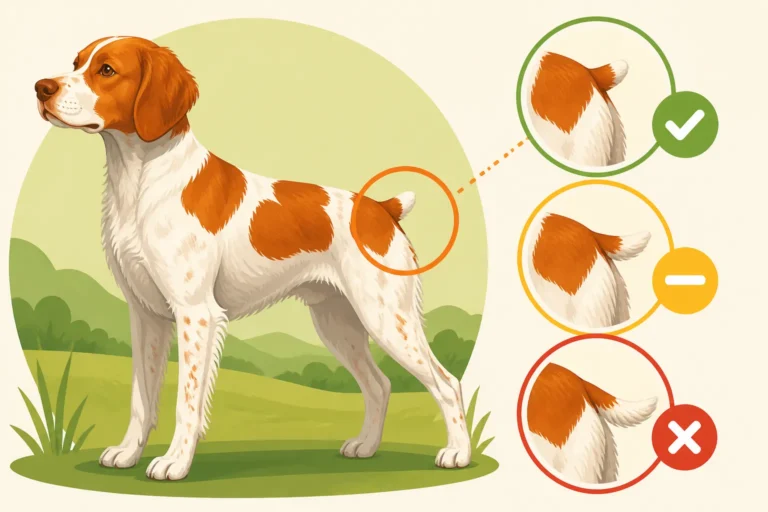
The size was consistently moderate – not too large to be cumbersome in dense undergrowth, but robust enough to handle a full day's hunt. Their expressive, intelligent eyes and soft, floppy ears were also consistent features. These physical traits were not merely aesthetic; they were functional adaptations to their hunting environment. A practical example is the short tail – imagine a long, bushy tail getting constantly snagged in brambles. The emphasis was always on a dog that was fit for purpose, and its appearance evolved to meet those needs. This utility-driven development is what allowed Some Brittanys Are Born Without a Tail to become a recognized and valued trait.
| Historical Period | Type of "Record" | Key Characteristics Noted | Significance for Brittany History |
|---|---|---|---|
| Pre-19th Century | Oral Tradition, Regional Lore | "Local Bird Dog," adaptable hunter, biddable | Evidence of long-standing utility in Brittany region. |
| Mid-19th Century (c.1850) | Art (e.g., Pontou painting) | Liver & white, short-tailed, pointing stance | First clear visual documentation resembling modern Brittany. |
| Early 20th Century (1907-1908) | Official Registrations, Breed Standard | Defined physical traits, pointing instinct, biddable temperament | Formal establishment and recognition of the breed in France. |
| Early 1930s (1931-1934) | Importation Records, AKC Recognition | Arrival in North America, rapid acceptance by hunters | Beginning of the American Brittany's distinct development. |
The history of the Brittany Spaniel is a wonderful blend of natural evolution, artistic documentation, and dedicated human effort. From the unrecorded dogs of French peasants to the formally recognized and beloved pointing breed of today, its journey is a testament to its enduring qualities. We hope this deep dive into when the first Brittany was recorded helps you appreciate the rich heritage behind these magnificent dogs. Finding historical breed information, or even modern gear, for your Brittany is easier than ever through comprehensive resources like Chewy.
Disclaimer
This article is for general informational purposes only and does not constitute professional advice. Laws, prices and regulations vary by location and change over time. Consult a qualified professional for guidance on your specific situation.