Whether an Undocked Brittany Can Be Shown
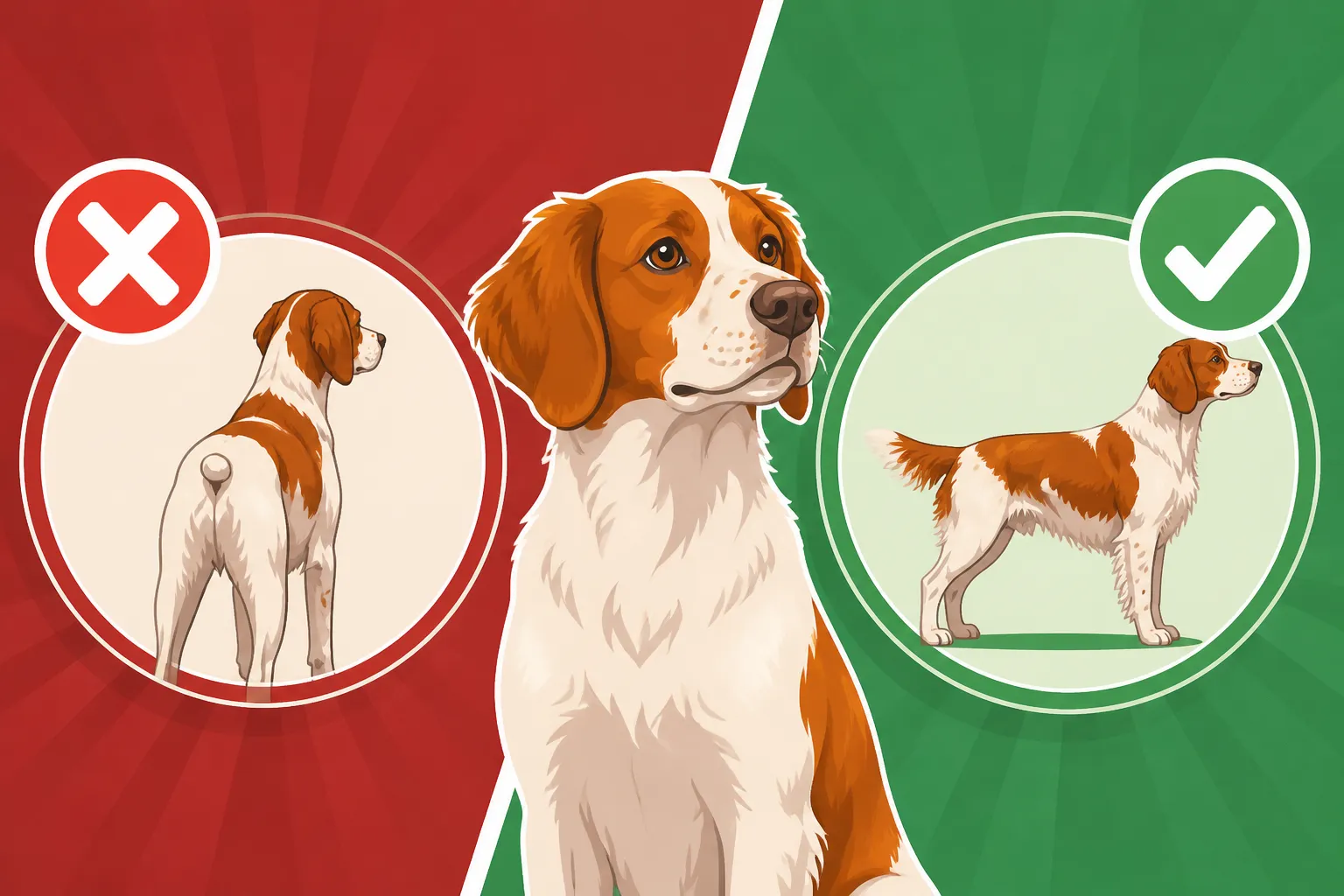
An undocked Brittany can be shown in some settings, but the answer depends on what “undocked” means and which event you have in mind. For American Kennel Club conformation shows, the breed standard sets a strict tail-length limit: a natural tail can qualify if it is no longer than four inches. A longer natural tail is disqualifying in conformation, though that does not automatically rule the dog out of every dog sport.
What “Undocked” Means for a Brittany
A natural bobtail is different from a full-length tail
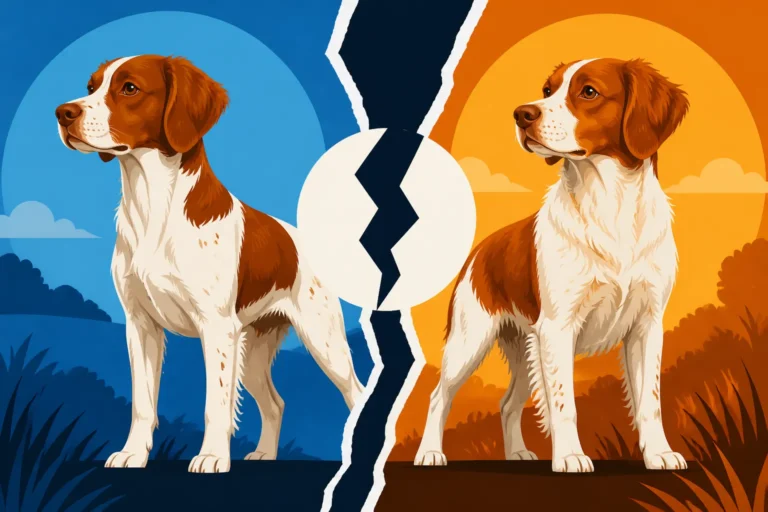
Some Brittanys are born with naturally short tails, while others are born with longer tails that have not been docked. Both dogs are undocked, but that distinction matters in the conformation ring. Under the AKC Brittany standard, the tail may be natural or docked, but it must be no more than four inches long. A natural bobtail that meets that limit can be eligible for conformation; a natural tail longer than four inches is disqualifying under the standard.
If you are choosing a puppy with showing in mind, ask the breeder what tail length is typical in the litter and whether the puppy’s tail is natural or has been docked. A puppy’s tail may be easier to assess as it grows, so don’t rely only on a very early estimate. The breeder may also be able to explain how the puppy’s tail compares with the breed standard and what local show options are available.
The distinction between a short natural tail and a docked one is explored in Why Some Brittanys Are Born Tailless and Whether a Brittany's Tail Is Docked. Those topics can help you understand why Brittanys may look quite different at the rear even when they belong to the same breed.
The four-inch rule applies to AKC conformation
For AKC conformation, tail length is not simply a preference or a grooming detail. The Brittany standard says the tail must be no more than four inches, whether natural or docked. A tail longer than that is listed as a disqualification. In practical terms, an undocked Brittany with a full-length tail should not be entered in an AKC conformation class expecting the judge to overlook it.
That rule is specific to conformation judging, where dogs are evaluated against the breed standard. It does not mean a longer-tailed Brittany is unhealthy, less capable, or less deserving of a home. It also does not mean the dog cannot participate in other kinds of organized activities. The standard describes how a Brittany is judged in the show ring; it is not a verdict on the dog’s character or abilities.
If a dog’s tail is close to the limit, ask an experienced Brittany breeder or conformation mentor to help you understand how the standard is applied. Don’t try to shorten, shape, or otherwise alter a natural tail to make it appear compliant. The tail should be presented honestly, and questions about eligibility are best addressed before paying entry fees or traveling to a show.
Which Shows and Events May Be Open to an Undocked Brittany
Conformation shows judge the breed standard
At a conformation show, the judge compares each dog with the written standard for its breed. For a Brittany, tail length is one part of that evaluation, and a tail longer than four inches is a disqualification under the AKC standard. So if your Brittany has a full natural tail, the key issue is not that the tail is undocked; it is that its length exceeds the standard’s limit.
A Brittany with a naturally short tail may still be eligible if it meets the standard and the dog satisfies the other show requirements. Eligibility also depends on the event’s rules and the dog’s registration status. If you are unsure, contact the show organizer or the relevant registry before entering. That simple check is much less frustrating than arriving at a show and discovering that your dog cannot compete in the class you selected.
People sometimes confuse the breed-standard question with whether a docked tail must have a particular appearance. For background, How Long a Docked Brittany Tail Should Be discusses the docked-tail question, while Whether a Long Tailed Brittany Is Penalized focuses on how a longer tail relates to conformation eligibility.
Other dog sports are not the same as conformation
A longer-tailed Brittany may still be able to take part in activities such as obedience, rally, agility, scent work, or hunting-related events, depending on the rules of the organization and the specific competition. These events generally assess performance in the activity rather than whether the dog matches every detail of its breed standard. Still, it is sensible to confirm the rules for the event you want to enter instead of assuming that every registry handles eligibility identically.
This difference can be a relief for owners who hear “disqualified” and assume it means their dog is barred from all competition. In this context, disqualification refers to conformation under the applicable breed standard. It does not automatically apply across every sport or venue.
If your main goal is to work your Brittany in the field, hunt tests, or another performance activity, ask the event organizer what is required. A dog’s ability and enjoyment can matter far more to that experience than whether its tail meets conformation length limits. The broader role of the breed in different activities is covered in Whether a Brittany Is a Versatile Breed.
| Setting | What the tail rule means | What to check |
|---|---|---|
| AKC conformation | The tail must be no more than four inches, natural or docked; longer tails are disqualifying | Confirm the dog’s eligibility before entering |
| Other conformation events | Standards and rules may differ by registry or country | Read the event’s current breed standard and entry rules |
| Performance events | A conformation tail disqualification does not automatically bar participation | Check the specific sport and organization’s rules |
| Casual training or field work | The conformation standard does not determine whether a dog can work or train | Focus on the dog’s health, training, and suitability for the activity |
How to Decide Whether Showing Is a Good Fit
Ask the breeder and event organizers early
If you are considering a Brittany puppy for the show ring, bring up tail length before choosing a puppy. Ask whether the puppy is naturally bobtailed or has a longer natural tail, and whether the breeder thinks the dog may meet the conformation standard. A responsible breeder should be willing to discuss the question plainly rather than promising a show career without knowing whether the puppy is eligible.
If you already have an adult dog, ask a knowledgeable Brittany exhibitor or show mentor to look at the dog and help you interpret the standard. You can also contact the organization running the event. Be specific: ask whether the dog can enter conformation with its natural tail length, and ask separately about performance events. Those are different questions, and separating them tends to get a clearer answer.
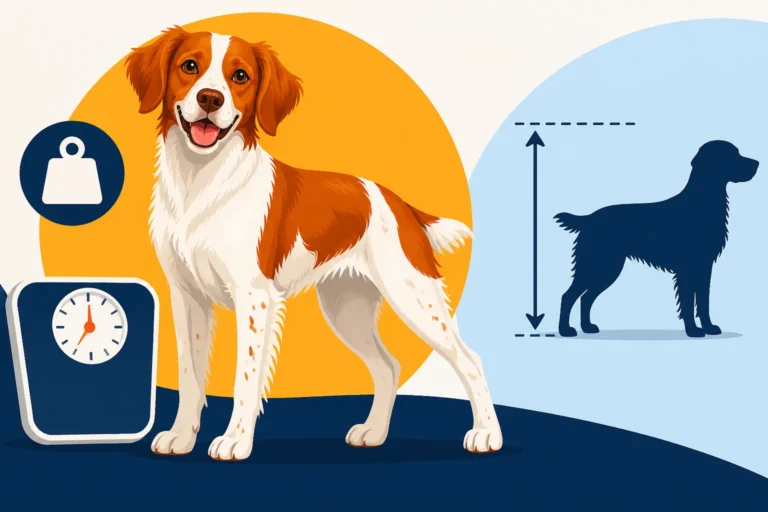
Tail shape and length are only part of the picture in conformation. A show prospect is assessed as a whole dog, including structure, movement, coat, and overall breed type. For a wider introduction to the breed’s proportions, What a Brittany Weighs and How Tall It Stands provides helpful context. And if you are comparing a naturally short tail with a docked one, remember that Whether a Brittany's Tail Affects Its Balance addresses a separate question from show eligibility.
Prepare the dog without overdoing grooming
A Brittany’s coat is not usually presented with elaborate styling, but a clean, comfortable dog makes a better impression in any setting. Get the dog used to being handled calmly, including having its paws, ears, and tail area examined. Keep nails at a practical length, brush out loose coat and tangles, and make sure the dog can stand and move comfortably. These basics are useful whether the dog is going to a conformation event or a training day.
For routine grooming supplies, some owners browse retailers such as Chewy for brushes, combs, and dog-safe cleanup products. Choose tools suited to your dog’s coat and temperament rather than buying a large collection of show-specific items. If you are unsure what is appropriate, ask your breeder or groomer first. Chewy may be one place to compare basic grooming options, but product labels and suitability matter more than the retailer.
Before an event, keep the routine familiar. A last-minute bath, unfamiliar grooming product, or long session of brushing can make a sensitive dog uncomfortable. If you shop at Chewy or another retailer for grooming basics, check that any product is intended for dogs and avoid putting cleaners or styling products near the eyes or inside the ears unless directed by a veterinarian. The goal is a clean, relaxed Brittany—not a dog whose coat or skin has been irritated by a new product.
Common Questions About Undocked Brittanys
Does an undocked Brittany have to be a natural bobtail to show?
No. “Undocked” only means the tail has not been docked. For AKC conformation, the important measurement is whether the tail is no more than four inches. A naturally short tail can meet the standard, and a tail that has not been docked can also meet it if it is within the limit. A full-length natural tail exceeding four inches is disqualifying in AKC conformation.
Can a Brittany with a long natural tail compete in field or performance events?
Possibly. The conformation disqualification does not automatically exclude the dog from performance activities. Rules can vary by organization and event, so check the specific competition’s requirements. A long natural tail does not, by itself, determine whether a Brittany can train, hunt, or enjoy an activity.
Should I choose a puppy based on tail length alone?
No. If conformation showing is important to you, tail length is a practical eligibility question to discuss with the breeder, but it is only one part of choosing a dog. Consider temperament, health, structure, energy level, and whether the puppy’s likely adult needs fit your household. If showing is not your goal, a tail that falls outside the conformation standard need not change what you value about the dog.
The simplest way to avoid confusion is to identify your goal first. For AKC conformation, the four-inch limit matters. For other dog sports and everyday life, ask about the rules and needs of that specific activity. An undocked Brittany can be a wonderful companion and working dog even when its natural tail makes it ineligible for a particular conformation ring.
Disclaimer
This article is for general informational purposes only and does not constitute professional advice. Laws, prices and regulations vary by location and change over time. Consult a qualified professional for guidance on your specific situation.