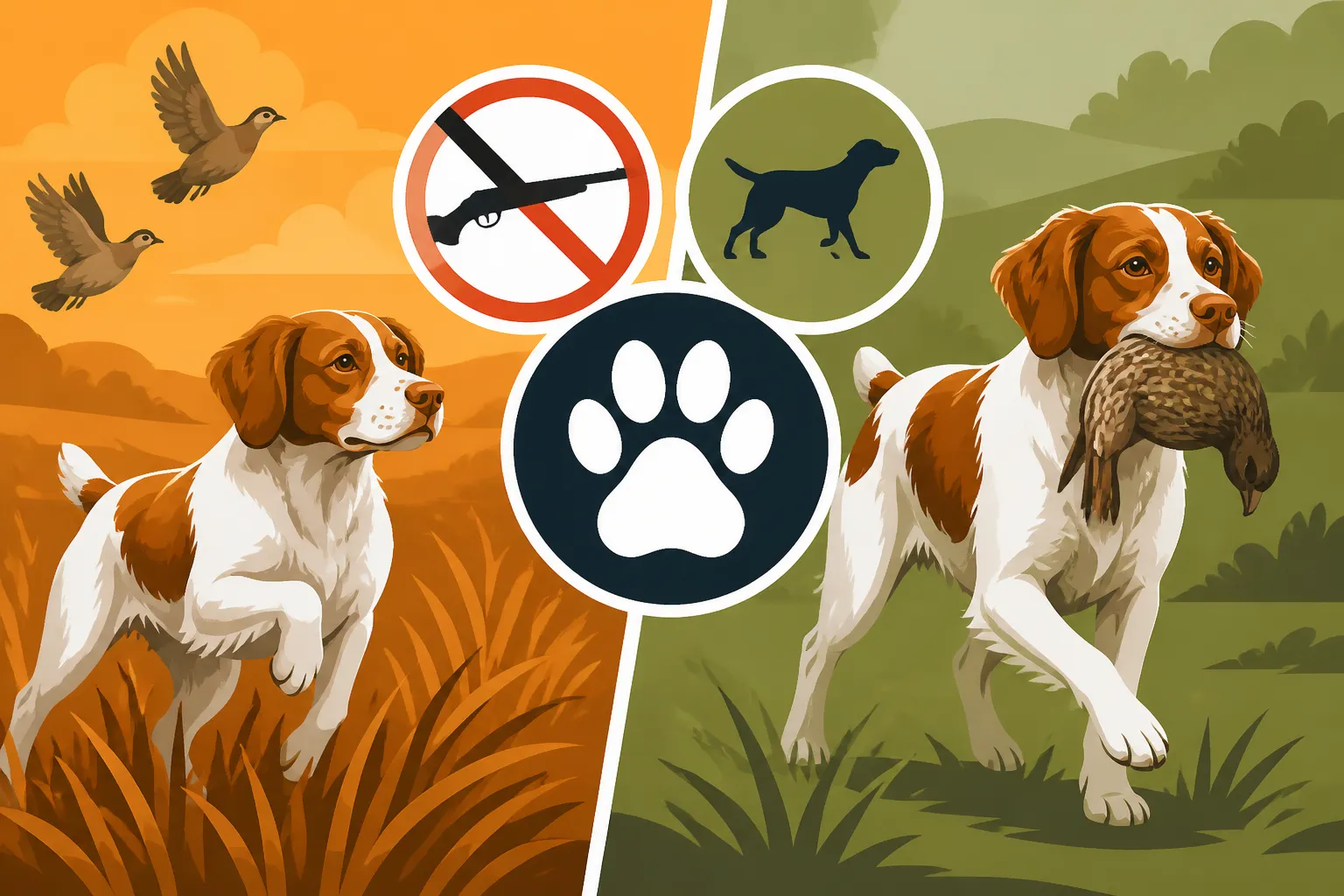
Whether the Brittany Was Bred to Hunt Without a Gun
It’s a fascinating question that many of us who share our lives with a Brittany sometimes ponder: was this incredible breed always meant to hunt alongside a gun, or did their origins predate the firearm as we know it? The truth is, the Brittany's deep-seated instincts for finding and pointing game stretch back much further than the invention of the modern shotgun, linking them to a rich history of human-canine partnership in the field. This guide dives into the ancestral methods that shaped the Brittany's unique abilities.
The Brittany's Ancestral Hunting Role Before Firearms
Before the crack of a shotgun became synonymous with bird hunting, people relied on different, often more intimate, methods to put food on the table. In regions like Brittany, France, where our beloved dogs originated, the landscape was ripe with small game birds like partridge, quail, and woodcock. Hunters, often peasants, didn't have access to expensive firearms, or firearms hadn't even been developed yet in their current form. Instead, they employed cunning, nets, and sometimes even falcons to secure their quarry.
Imagine walking through dense cover, trying to locate a well-hidden covey of birds. It's a task that's incredibly difficult for a human alone. This is where the early ancestors of the Brittany truly shone. Their keen nose, agility, and natural instinct to point were invaluable. Instead of flushing the birds, which would simply send them flying away to be lost, these dogs would freeze, indicating the precise location of the game. This allowed the hunter to approach quietly and deploy a net over the unsuspecting birds or send a raptor to capture them. The dogs were an extension of the hunter's senses, a silent partner in a delicate dance of survival. The value of a dog that could hold still, rather than give chase, was immeasurable.
The Evolution of the Brittany's Pointing Instinct
The very essence of the "pointing" breed lies in this pre-gun era. The act of pointing, or "setting," as it was sometimes called, wasn't just a learned trick; it was a survival mechanism that benefited both dog and human. A dog that pointed ensured a successful catch, which in turn meant more food for the hunter and, by extension, for the dog itself. Over generations, these traits were naturally selected and refined. The dogs that had the strongest pointing instinct, the best noses, and the most biddable temperaments were the ones most valued and therefore most likely to be bred.
The term "Epagneul Breton," which is the breed's name in France, gives us a clue to their historical role. "Epagneul" is thought to derive from the Old French verb "s'espaignir," meaning to lie down or crouch. This describes the classic "setter" or "spaniel" style of pointing where the dog would drop or crouch low to the ground to keep from disturbing the birds, allowing the net to be thrown over both dog and birds. This crouching behavior minimized the dog's profile, making it easier to conceal them under a net without startling the game. What the Brittany Was Bred to Hunt was deeply intertwined with these early, subtle hunting techniques. It wasn't about a booming shot, but a silent, precise capture.
Why a Brittany Points and Not Flushes
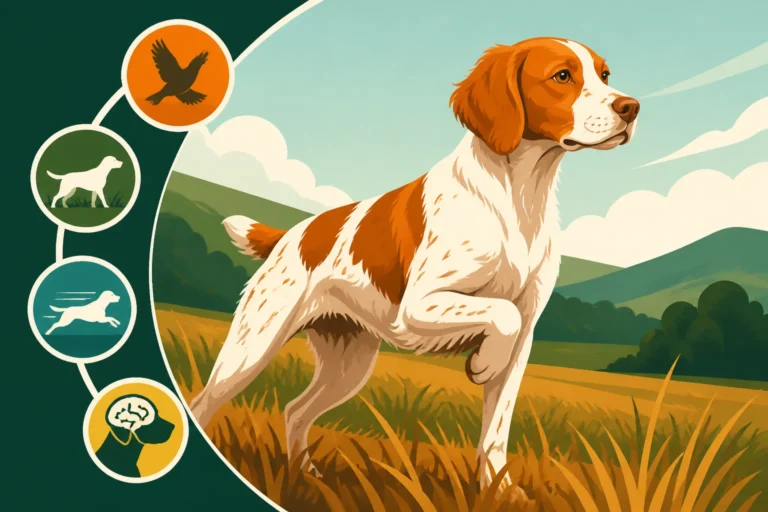
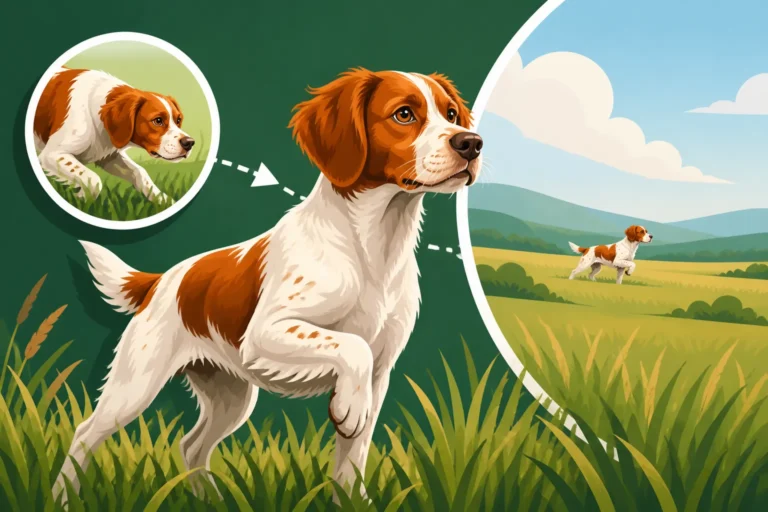
The Brittany's strong pointing instinct is a direct legacy of this past. Unlike flushing dogs, which are bred to push birds into the air, a pointer's job is to locate and hold the birds. This means they track scent, pinpoint the game, and then freeze in a distinctive stance, often with one front paw lifted, body rigid, and nose directed towards the birds. This intense focus signals to the hunter exactly where the birds are hiding.
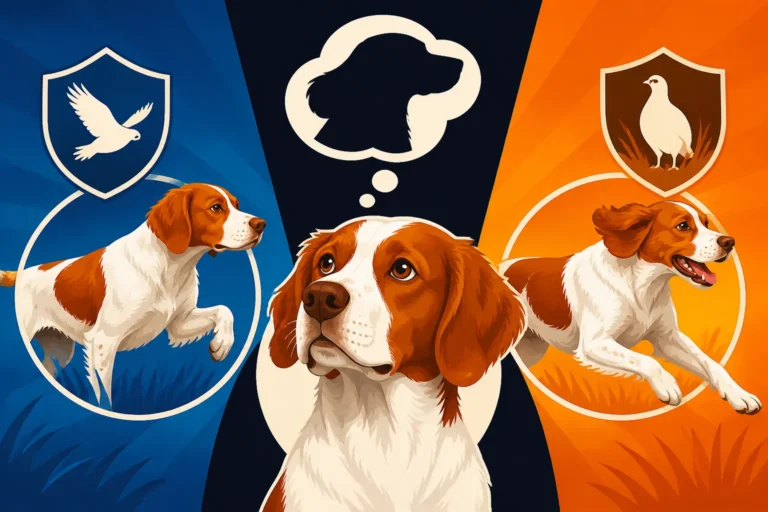
This behavior, still so prevalent in our modern Brittanys, wasn't just charming; it was critical for the success of pre-gun hunting. If the dog flushed the birds, they would simply fly off, rendering the net or falcon useless. The quiet, almost reverent, act of pointing ensured the birds remained on the ground, vulnerable to the hunter's approach. This also explains why The Brittany Points, It Does Not Flush is such a defining characteristic of the breed, a trait that was refined over centuries before gunpowder changed the face of hunting forever.
The Transition to Gun Hunting and the Brittany's Adaptability
As firearms became more sophisticated and accessible, hunting methods naturally evolved. The ability to shoot birds on the wing meant that hunters no longer needed to net their quarry. However, the pointing dog's role remained incredibly important, simply shifting from holding for a net to holding for the shot. The inherent value of a dog that could locate birds and then remain steady while the hunter walked in and took the shot became the new gold standard.
The Brittany, with its keen intelligence and biddable nature, adapted beautifully to this new paradigm. Their soft temperament meant they were generally less prone to being "gun shy" if introduced properly, and their eagerness to please made them highly trainable. While many breeds were developing specific roles, the Brittany maintained its versatility. It could still point, marking the location, and then, after the shot, it could retrieve the downed bird, often with a naturally soft mouth, minimizing damage to the game.
Retaining Core Instincts While Adapting
Even with the advent of firearms, the fundamental skills bred into the Brittany remained. The excellent nose, the wide range, the intense point, and the desire to work with their human partner were all assets that seamlessly transitioned to gun hunting. The key difference was the expectation of "steadiness." While an ancient Epagneul might have crawled forward to allow a net to be thrown, the gun dog needed to remain rock-solid on point until released, often even remaining steady through the shot and fall.
This adaptability speaks volumes about the breed's inherent intelligence and the wisdom of the early breeders who prioritized these core hunting instincts. It's a testament to their deep connection to their work that even today, a well-bred Brittany will instinctively point, often without any formal training in that specific act. They come hardwired with centuries of ancestral knowledge, ready to work alongside their human, regardless of the tools at hand. Whether a Brittany Was a Poacher's Dog might lend credence to the idea of resourceful, quiet hunting methods being passed down.
Modern Implications of the Brittany's Historical Roots
Understanding the Brittany's history as a pre-gun hunting dog offers incredible insight into their temperament, training needs, and why they excel in the field today. It helps us appreciate their natural instincts and how best to nurture them.
For starters, their deep-seated desire to work with a human is paramount. These weren't dogs bred to operate independently; they were bred for partnership. This explains why they are often described as "velcro dogs," preferring to be close to their people, and why positive, reward-based training methods resonate so well with them. They thrive on collaboration, not harsh correction. How Sensitive a Brittany Is to Correction or What Happens When You Shout at a Brittany can be better understood through this historical lens of partnership.
Training a Modern Brittany with Ancient Instincts
When we train our Brittanys today, we're building upon those ancient foundations. We don't have to teach them to point; we teach them how to refine that point, how to be steady, and how to retrieve reliably. The raw material is already there, etched into their genetic code.
Here's a look at how those historical needs translate into modern training and care:
| Historical Need (Pre-Gun Era) | Modern Implication / Training Focus |
|---|---|
| Locate game without flushing | Strong natural point, excellent scenting ability, focus on steadying. |
| Work in close partnership with human | Highly biddable, eager to please, thrives on positive reinforcement. |
| Remain undetected by game (crouching) | Inherently quiet, alert but not noisy. |
| Retrieve undamaged game for the table | Generally soft mouth, good natural retrieving instinct. |
| Agile and able to navigate dense cover | Energetic, athletic, requires ample exercise. |
| Resilient for long days in the field | Good stamina, needs appropriate nutrition and conditioning. |
This table highlights how the breed's fundamental traits, honed over centuries for pre-gun hunting, remain crucial for their success as modern gun dogs and beloved companions. The Brittany Is the Smallest of the Versatile Pointing Breeds because this combination of traits made them incredibly efficient and adaptable in various hunting scenarios, both past and present.
A Dog Designed for Partnership
Ultimately, the Brittany's enduring legacy is that of a cooperative hunter. Whether they were helping a peasant catch a bird with a net centuries ago or assisting a modern hunter with a shotgun today, their core purpose has remained constant: to find, point, and retrieve game in partnership with their human. This deep-rooted desire to connect and collaborate is why they are not only exceptional field dogs but also wonderful family companions. They bring that same eagerness to please and intelligent focus to every aspect of their lives, making them a truly special breed. What a Brittany's Temperament Is Really Like is a direct reflection of these historical partnerships.
So, the next time you see your Brittany freeze on point, remember that you're witnessing an instinct that predates gunpowder, a finely tuned skill passed down through generations to serve a common purpose between human and dog. It's a beautiful connection to the past, alive and thriving in our homes and fields today. How Long a Brittany Lives on Average is a testament to their hardiness, but also to the dedicated care they receive from owners who understand their rich heritage.
Disclaimer
This article is for general informational purposes only and does not constitute professional advice. Laws, prices and regulations vary by location and change over time. Consult a qualified professional for guidance on your specific situation.