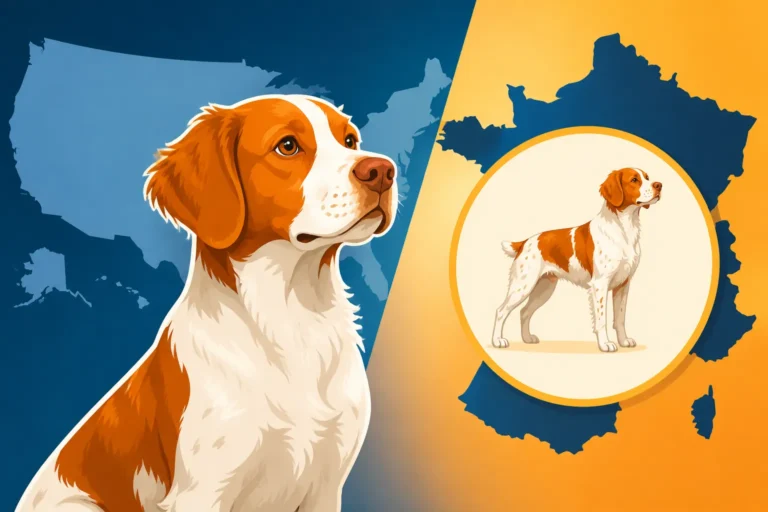
When the AKC Recognized the Brittany
Have you ever wondered about the history behind your agile, bird-crazy Brittany? It's easy to take for granted that our beloved companions are recognized breeds, but every single one has a fascinating journey from regional working dog to official status. This guide will walk you through the pivotal moment when the American Kennel Club formally acknowledged the Brittany, solidifying its place in the hearts of American hunters and families alike.
The Brittany's Humble Beginnings: A French Legacy
Before the Brittany became a recognized breed in the United States, or even in France for that matter, it was simply a highly valued working dog in its homeland. The breed originated in the historical region of Brittany in northwestern France, a place of rolling hills, dense woodlands, and abundant game birds. For centuries, these dogs were not bred to a strict written standard, but rather for their exceptional hunting prowess and affectionate nature. Their story is deeply interwoven with the lives of the local people.
The Dog of the Peasants and Poachers
Imagine the French countryside centuries ago, where landowners guarded their game fiercely, and hunting was often the privilege of the wealthy. The common folk, the farmers and humble villagers, needed dogs that could not only put food on the table but also do it discreetly. This is where the early Brittany-type dogs truly shone. They were intelligent, keen-nosed pointers with an innate ability to find and hold game, primarily woodcock and partridge, without ranging so wide as to alert gamekeepers. They were small enough to be unobtrusive and highly biddable, making them perfect companions for those who might be hunting on the sly or simply needing a reliable provider for their family. This practical utility, far more than any fancy pedigree, was the driving force behind their existence. If you're curious about their origins, you can read more in Where the Brittany Comes From.
These dogs were renowned for their stealth and efficiency. Unlike some larger, flashier hunting breeds favored by the gentry, the Brittany worked close, was easily controlled, and was adept at retrieving downed game without making a fuss. This made them ideal for the poachers and peasants who relied on their dogs for survival. It's a testament to their innate ability and adaptability that they flourished in this environment, earning their keep not through beauty contests but through sheer, undeniable performance in the field. They were truly the working man's best friend, a silent partner in the pursuit of dinner.
Early Crosses and the Birth of a Breed
While the Brittany's roots are ancient, the "breed" as we know it today began to take shape in the mid-19th century. As English sportsmen began visiting Brittany, they brought their own hunting dogs – English Setters and Pointers, primarily. These dogs, with their refined pedigrees and impressive hunting styles, were occasionally bred with the local Brittany-type dogs. This mingling of bloodlines is thought to have introduced new genetic vigor and perhaps refined some of the traits that would become characteristic of the modern Brittany.
These crosses weren't always intentional in the way a modern breeding program is. Often, it was simply a matter of local dogs breeding with visiting ones. However, the resulting offspring often exhibited an exceptional combination of the local dogs' biddability and the English dogs' refined pointing instinct and range. It was from this melting pot that the modern Brittany began to emerge, with its distinctive orange and white (or liver and white) coat and energetic, yet cooperative, hunting style. By the early 20th century, the first formal breed standard was written in France, marking the true beginning of the breed's journey toward global recognition.
Crossing the Atlantic: Brittanys Arrive in America
The Brittany's reputation as a top-notch bird dog eventually spread beyond the borders of France. American hunters, always on the lookout for versatile and effective gun dogs, soon took notice of this compact, eager-to-please breed. The journey across the Atlantic marked a new chapter, one that would see the Brittany gain a strong foothold in the American sporting dog community.
The First Dogs and Dedicated Enthusiasts
It was in the early 20th century that the first Brittanys made their way to American shores. Enthusiastic hunters and dog fanciers were intrigued by the breed's reputation for being an excellent foot-hunting companion, known for its keen nose, stylish point, and retrieve. Unlike some of the larger, wider-ranging pointers, the Brittany was seen as a more manageable and family-friendly option, perfect for walking hunters who wanted a dog that stayed within gun range. These early imports laid the foundation for the breed's presence in the United States. Many of these foundational dogs came from French kennels, carrying with them the traits that had been carefully cultivated for generations.
These pioneers were often individual hunters who fell in love with the breed's combination of performance and personality. They understood that the Brittany was more than just a hunting machine; it was a loyal and affectionate companion. They began to establish small breeding programs, carefully selecting dogs that demonstrated strong hunting abilities and sound temperaments. This dedication was crucial, as it allowed the breed to adapt and thrive in the diverse hunting landscapes of North America. The story of When the Brittany Reached America is one of passionate individuals who saw the potential in this charming French import.
Laying the Groundwork for Recognition
For a breed to gain official recognition from a major kennel club like the AKC, it needs a strong and organized group of dedicated supporters. This meant forming a breed club, establishing a studbook, and consistently demonstrating that the dogs bred true to type, both in appearance and in working ability. The early Brittany enthusiasts in America understood this need. They banded together, sharing knowledge, breeding stock, and their love for the breed.
The formation of the American Brittany Club in 1942 was a monumental step. This club became the central organization responsible for promoting the breed, maintaining records, and advocating for its interests. They worked tirelessly to refine the American standard, often emphasizing the breed's bird-finding capabilities above all else. This organized effort was essential in proving to the American Kennel Club that the Brittany was a legitimate, stable, and valuable breed worthy of official inclusion. Their efforts ensured the breed's future and helped define what an American Brittany would become.
The Road to AKC Acceptance: Formalizing the Breed
Achieving American Kennel Club recognition isn't an overnight process. It requires years of careful breeding, meticulous record-keeping, and demonstrating that a breed meets stringent criteria for consistency, health, and purpose. For the Brittany, this journey was a testament to the dedication of its early American proponents.
Petitioning and Proving the Brittany's Worth
The American Brittany Club, once established, spearheaded the formal petitioning process with the AKC. This involved submitting detailed pedigrees, documenting the breed's history, and showcasing a sufficient number of dogs that consistently met the proposed breed standard. The AKC needed assurance that there was a stable and distinct population of Brittanys in the U.S. that could sustain the breed's future. It wasn't just about good looks; it was about proven hunting ability and temperament, too. The Brittany had to demonstrate its unique qualities as a pointing breed, distinct from other sporting dogs already recognized.
Part of this proving ground included participation in field trials and conformation shows, even if unofficial at first. These events allowed breeders and owners to showcase their dogs' talents and consistency. The Brittany’s natural aptitude for pointing and retrieving, combined with its compact size and friendly disposition, impressed judges and observers. The fact that many of these dogs could perform equally well in the field and present themselves admirably in a show ring was a huge advantage, hinting at the breed's eventual legendary status as a dual champion.
The Official Date of Recognition
After years of dedicated effort, the American Kennel Club officially recognized the Brittany as a breed. This significant milestone occurred in 1934. Initially, it was registered as the "Brittany Spaniel," a name that reflected some of its historical appearance and size, even though its hunting style was distinctly that of a pointing breed, not a flushing spaniel. This recognition opened doors for Brittanys to compete in AKC-sanctioned events, including conformation shows and field trials, which further cemented their place in the American dog world.
The official recognition was a moment of triumph for all the breeders and enthusiasts who had worked tirelessly to bring the Brittany to this point. It meant that the breed now had a formal structure for registration, a defined standard to breed towards, and a clear path for its continued development in the United States. This date also allowed the breed to gain wider exposure, moving from a niche hunter's dog to a more broadly known and appreciated companion.
Why Recognition Mattered: Impact on the Breed in the US
AKC recognition brought with it a host of benefits and, naturally, some challenges. It fundamentally changed the trajectory of the Brittany breed in America, providing a framework for its growth and popularization.
Establishing a Standard and Pedigree System
One of the most immediate and profound impacts of AKC recognition was the establishment of a formal breed standard. This document outlines the ideal physical characteristics, temperament, and working attributes of the Brittany. For breeders, this standard became the blueprint for selection, ensuring consistency and preserving the breed's unique qualities. It allowed for a more structured approach to breeding, moving away from purely informal crosses to deliberate pairings aimed at improving the breed as a whole. This helped maintain the integrity of the breed, ensuring that future generations retained the traits that made Brittanys so special.
Accompanying the standard was the formal pedigree system. The AKC registration provided a verifiable lineage for each recognized Brittany, allowing owners and breeders to trace their dogs' ancestry. This was incredibly valuable for understanding genetic predispositions, tracking desirable traits, and making informed breeding decisions. It also gave buyers confidence in the authenticity and background of their puppies, something that was less certain before official recognition. The ability to verify a dog's heritage through a reputable registry like the AKC was a game-changer for the breed's development.
The Rise of the Brittany as a Sporting Dog
With AKC recognition, the Brittany gained access to a vast network of competitive events. This included AKC Field Trials, Hunt Tests, and Conformation Shows. Participation in these events allowed the Brittany to truly shine and prove its worth against other established sporting breeds. It wasn't long before the breed began to accumulate titles, demonstrating its exceptional versatility and aptitude. The Brittany's performance in both field and show rings quickly earned it a reputation as a powerhouse, proving its dual-purpose capabilities.
The recognition also contributed significantly to the breed's popularity. As more Brittanys earned titles and gained visibility in various competitions, more people became aware of their incredible abilities. Hunters discovered a dog that was not only an outstanding bird dog but also a manageable size and an affectionate family pet. This led to a steady increase in demand for Brittany puppies, solidifying its position as one of America's most beloved pointing breeds. You can learn more about What the Brittany Was Bred to Hunt.
Here's a quick overview of key dates:
| Event | Date | Significance |
|---|---|---|
| First Brittany Recorded (France) | 1890s | Early formal appearance of the breed in its homeland |
| Official French Standard | 1907 | First formal breed standard in France |
| First Brittanys Arrive in USA | Early 1900s | Introduction to American enthusiasts |
| AKC Recognition (as Brittany Spaniel) | 1934 | Official acceptance into the American Kennel Club |
| American Brittany Club Founded | 1942 | Organized effort to promote and protect the breed |
| "Spaniel" Dropped from Name | 1982 | Reflects pointing dog status, not flushing spaniel |
The Name Change Controversy: From Spaniel to Brittany
While the AKC recognized the breed in 1934, its initial name, "Brittany Spaniel," eventually led to a bit of confusion and, ultimately, a significant change. It's a common point of discussion among breed enthusiasts, even today.
Why "Spaniel" Was Part of the Original Name
When the Brittany was first introduced to the wider dog world, particularly outside of France, there was an understandable attempt to categorize it based on its appearance and size. The "spaniel" designation likely stemmed from its relatively compact size, feathered coat, and drop ears, which visually resembled many traditional spaniel breeds like the English Springer Spaniel or Cocker Spaniel. It was a descriptive label, albeit one that didn't fully capture the essence of its working style.
However, anyone who has hunted with a Brittany knows that its working style is distinctly different from a spaniel. Spaniels are traditionally flushing dogs, meaning they're bred to find and flush game birds into the air for the hunter to shoot. The Brittany, on the other hand, is a pointing breed. It will find game, stop, and hold a point, indicating the bird's location until the hunter approaches. This fundamental difference in working style eventually led to discussions about the accuracy of its name. Despite its physical similarities, its soul was that of a pointer. For more on this, check out Whether the Brittany Is a Spaniel at All.
The Rationale Behind the AKC's Decision
The confusion between the Brittany's appearance and its actual function became a growing concern for breed enthusiasts and the American Brittany Club. To clarify its role as a pointing breed and to distinguish it more accurately from flushing spaniels, a movement began to petition the AKC for a name change. The argument was clear: the dog pointed, it did not flush, and its name should reflect that primary function.
In 1982, the American Kennel Club officially dropped "Spaniel" from the breed's name, henceforth recognizing it simply as the "Brittany." This change was a victory for those who felt the original designation misrepresented the breed's true nature as a versatile gun dog. It acknowledged the Brittany's unique place among pointing breeds and helped eliminate any lingering misconceptions. Today, while some older enthusiasts might still occasionally use "Brittany Spaniel" out of habit or affection, the official and widely accepted name in the United States is simply Brittany. The topic of When the AKC Dropped Spaniel From the Brittany's Name is a fascinating piece of breed history.
The Brittany's Enduring Legacy and Future
From its rustic beginnings in the French countryside to its formal recognition and subsequent name change by the AKC, the Brittany's journey has been one of adaptation, dedication, and unwavering performance. This recognition was not just a formality; it was a pivotal moment that truly shaped the breed's development and popularity in the United States.
A Breed Defined by Its Purpose
The story of the Brittany's AKC recognition is a powerful reminder that utility and purpose often drive the development of many sporting breeds. While aesthetics play a role, it was the Brittany's exceptional bird sense, tireless energy, and biddable nature that truly captured the attention of American hunters. This focus on performance ensured that the breed retained its working integrity, even as it gained popularity as a companion dog. It's why, even today, you'll find Brittanys excelling in everything from wild bird hunting to competitive field trials, embodying the spirit of a true versatile gun dog.
It's also why breeders continue to prioritize health and working ability, often referencing older lines and proven performers. While the world of dog breeding can sometimes drift towards aesthetics, the Brittany community has largely stayed true to its roots. Many breeders today strive to produce dogs that can still compete at the highest levels in the field while also being wonderful family members. This commitment to the breed's original purpose is a direct result of the foundational work done by those who first sought and achieved AKC recognition. You can often see the results of this dedication when you find What a Brittany Spaniel Breeder Should Have Tested in their dogs.
The Brittany in Modern America
Today, the Brittany remains a cherished and highly respected breed in the United States. Its reputation as a dual-purpose dog – capable in the field and loving in the home – continues to attract new enthusiasts. Whether you're a seasoned hunter looking for a partner in the uplands or a family seeking an active, intelligent companion, the Brittany consistently delivers. It's often referred to as "the pointing breed you can live with" due to its convenient size and relatively easy-going nature indoors, provided it gets ample exercise.
The legacy of AKC recognition means that the breed continues to thrive under a structured system that encourages responsible breeding and preserves its unique traits. Organizations like the American Brittany Club continue their vital work, overseeing breed health initiatives, promoting ethical breeding practices, and organizing events that showcase the Brittany's talents. When you bring a Brittany into your home, you're not just getting a dog; you're becoming part of a rich history and a vibrant community dedicated to this remarkable breed. The availability of quality food and supplies, even from retailers like Chewy, makes caring for these active dogs more accessible than ever. The continued dedication of owners ensures that the Brittany's future in America remains as bright as its past. If you're wondering how much these wonderful dogs truly cost over their lifespan, consider looking into Fourteen Years of a Brittany, Priced Out.
Disclaimer
This article is for general informational purposes only and does not constitute professional advice. Laws, prices and regulations vary by location and change over time. Consult a qualified professional for guidance on your specific situation.