Whether the Brittany Is Still a Hunter’s Dog
A Brittany may spend the week stretched out on a living-room rug and the weekend quartering a field, which can make it hard to tell whether the breed is still primarily a hunting dog. The answer is yes: Brittanys remain capable, purposeful pointing dogs, though not every one hunts. This guide explains what that means for modern owners, hunters, and anyone choosing a puppy.
The Brittany is still a working pointing dog
What “hunter’s dog” means for a Brittany
The Brittany was developed to find game and point it, holding its position so the hunter can approach. It is not simply a spaniel that flushes birds from cover. A Brittany may use its nose to locate scent, search ahead in a pattern, and freeze or steady when it detects a bird. That instinctive sequence—search, scent, point—is a big part of what people mean when they call the breed a hunting dog.
The Brittany’s size and versatility have helped it remain useful to hunters who walk rather than travel on horseback. In Pennsylvania woodcock coverts, a close-working dog can be practical in tight, brushy terrain. On more open North Dakota grasslands, a dog may range farther to cover ground. The terrain, the birds, the dog’s breeding, and the handler’s expectations all influence how that work looks.
Pointing ability does not mean every Brittany arrives fully trained. A young dog may show interest in birds, point briefly, or chase when a bird flushes. Those early behaviors are not necessarily a finished hunting pattern; they are starting points that need appropriate exposure and patient training. For more on the breed’s role in the field, see The Brittany Points, It Does Not Flush.
How a Brittany hunts in the field
A Brittany typically searches for scent while covering ground, often working back and forth in a pattern rather than moving in a straight line. The exact range varies. Some dogs stay close to a walking hunter; others move out farther and need reliable recall, careful handling, or tracking equipment in dense cover. An individual dog’s breeding and experience matter, but so do the conditions: a bird-rich field may hold a dog’s attention differently from a long stretch of sparse cover.
When the dog catches scent, it may point, standing still with its body oriented toward the source. That moment is exciting, but it is not the whole job. The hunter has to approach safely, understand the dog’s signal, and decide when to move in. Training may also address steadiness, retrieving, and how the dog responds to gunfire. These skills take time, and a Brittany’s natural interest in birds should not be confused with readiness for a full hunting season.
A first-time owner might imagine that a dog will automatically know how to work a particular kind of cover or respond to every command. In practice, a Brittany learning to hunt pheasant fields may need different experience from one being introduced to quail or woodcock. A useful starting point is How a Brittany Finds Its First Bird, followed by gradual, well-managed exposure to game and field situations.
Why some Brittanys hunt and others do not
Breeding preserves potential, not a guaranteed lifestyle
Many Brittanys come from lines selected for field ability, and the breed continues to be valued by upland hunters. But a pedigree cannot guarantee that a particular dog will become a polished hunting companion. Temperament, confidence, health, early socialization, training, and opportunities to encounter birds all play a part. Even dogs with strong instincts need people to teach them how to work with a handler.
The reverse is also true: a Brittany that never hunts can still show behaviors associated with its working background. It may be quick to notice movement, eager to sniff along a trail, or restless when it has not had enough activity. Those traits do not prove that the dog is unhappy without hunting, but they do mean that a quiet home life may need to include thoughtful exercise and enrichment.
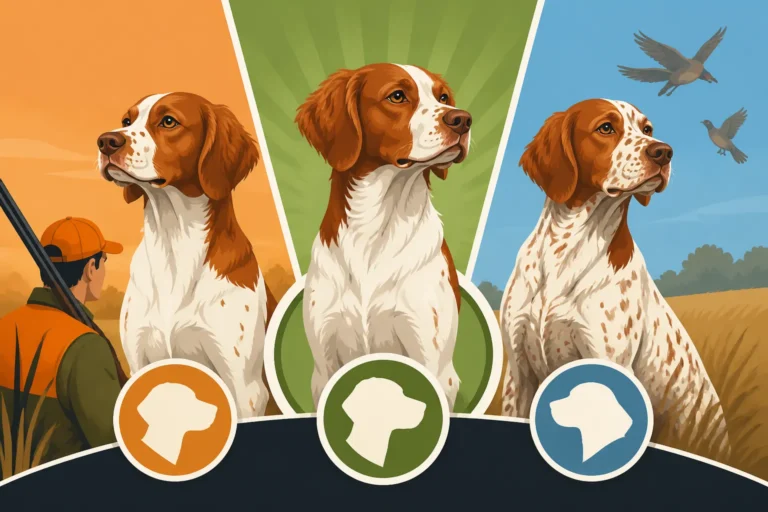
People comparing types of Brittanys may encounter differences in style and range, but labels alone do not tell the full story. Ask a breeder what the parents are like in the field, how they behave at home, and what kind of work their lines tend to suit. American Brittany and Epagneul Breton Went Separate Ways offers context on the distinction, while Whether Show and Field Brittanys Have Split helps frame why “show-bred” and “field-bred” are not simple guarantees of a dog’s future.
The family pet still needs a job of some kind
A Brittany that never sees a hunting field does not necessarily need to become a hunter. It does, however, need regular chances to move, explore, learn, and use its nose. A long walk with time to sniff, retrieve games, scent work, structured training, or activities such as agility can give a dog more than a quick trip around the block. The right routine depends on age, health, fitness, and the individual dog.
This is where expectations matter. A household that wants a dog content with brief walks and long periods alone may struggle with a lively Brittany, whether or not anyone plans to hunt. A household that enjoys outdoor activities and can teach calm indoor habits may find the breed a good fit. For everyday needs, What an Under Exercised Brittany Does at Home describes some common signs that a dog’s activity and mental engagement may not be meeting its needs.
| Brittany’s routine | What it may involve | What the owner should plan for |
|---|---|---|
| Regular hunting | Field work, bird exposure, handling, and post-outing checks | Training, safe field equipment, conditioning, and recovery |
| Occasional hunting | A few outings mixed with ordinary home life | Practice between trips so field skills and fitness do not depend on opening day |
| No hunting | Walks, play, training, and scent-based activities | Enough variety to channel energy and curiosity constructively |
| Puppy or young dog | Short, positive introductions to new places and experiences | Gradual exposure, rest, and age-appropriate activity rather than forced endurance |
What it takes to hunt with a Brittany today
Training should build confidence and control
Hunting training is not just a matter of taking a dog outside and hoping it figures everything out. The dog needs a safe introduction to birds, a useful recall, and experience responding to its handler in the kinds of environments where it will work. Some hunters train their own dogs; others work with a knowledgeable mentor or professional trainer. Whichever route an owner takes, consistency and a good understanding of the dog’s temperament matter.
Gun introduction deserves particular care. A sudden loud sound near a dog that is focused on a bird can create a frightening association, and pushing ahead after a dog shows fear can make the problem worse. Keep early experiences gradual and positive, and seek qualified help if the dog is worried or startled. Introducing a Gun to a Brittany That Spooks Easily explains why this part of training calls for patience rather than shortcuts.
Control does not mean suppressing a dog’s natural drive. It means teaching useful behaviors—such as coming when called, staying steady when appropriate, or checking in—so the dog can work safely with a person. Brittanys are often described as sensitive, and harsh handling can undermine trust as well as learning. A calm approach and short, purposeful sessions are usually more productive than repeating commands in frustration. See The Brittany Is the Softest of the Pointing Breeds for more on the breed’s sensitivity.
Field care is part of the hunting routine
A hunting dog’s work continues after the last field. Check the paws, between the toes, ears, eyes, and coat for cuts, burrs, ticks, and grass awns. A small issue noticed at the truck can be easier to address than one discovered after the dog has been uncomfortable for hours. After wet cover or marsh work, dry the dog and check the ears; a Brittany’s drop ears can stay damp, so routine inspection is especially useful.
Bring water, a towel, a leash or check cord where appropriate, and a basic field first-aid kit. The exact equipment depends on the conditions and local rules. In cover with burrs or foxtails, inspect the coat carefully rather than assuming a quick brush will catch everything. What to Check on a Brittany After Every Outing is a practical companion for building a consistent post-hunt routine.
Chewy can be one place owners look for ordinary supplies such as towels, grooming tools, and containers for carrying water, but check that anything used in the field is suitable for the dog and the conditions. Food and hydration also need attention when a dog is working hard. Chewy may be useful for comparing everyday feeding supplies, while the actual diet should be chosen with the dog’s workload, body condition, and veterinary guidance in mind. If you are assembling a kit, The Gear a Brittany Needs Before Its First Bird covers the broader preparation involved.
How to tell whether hunting fits your Brittany
Watch the dog, not just the breed label
If you already have a Brittany, notice what the dog enjoys and how it responds to new experiences. Does it show sustained interest in scent and birds? Does it recover calmly after surprises? Can it focus on you in an exciting setting? These observations can help you decide whether to explore field work, but they are not a substitute for professional assessment when a dog has marked fear, poor recall, or other safety concerns.
A Brittany does not have to hunt to be a well-loved, fulfilled dog. If hunting is not your interest, you can offer alternatives that give the dog opportunities to explore and learn. Scent games in the yard, a training class, or structured retrieving can add variety without turning every outing into a field-training session. The key is to choose activities that fit the dog’s age, physical condition, and temperament.
If you want to test whether hunting might suit your dog, start with a knowledgeable local club, trainer, or experienced handler who can introduce the basics safely. A calm first exposure is more informative than an overwhelming day in unfamiliar cover. Watch for curiosity and recovery, not just excitement; a dog that is wildly overstimulated may need slower introductions before it can learn.
Choose a dog whose likely needs fit your life
Prospective owners should be honest about the life they can offer. If you hunt regularly and want a dog to accompany you, ask about field experience and the parents’ working style. If you want a companion and do not plan to hunt, ask about energy level, confidence, and the dog’s needs away from the field. A breeder or rescue should be willing to discuss the realities of living with an active sporting dog, not only its appearance or pedigree.
Think through a typical week, not just the weekends you hope to spend outdoors. Who will exercise the dog during busy periods? How will you handle training, travel, and care after an outing? A Brittany may thrive in a hunting home, but it can also adapt to a non-hunting household that provides regular activity and engagement. Whether a Brittany Suits a First Time Owner may help you assess the commitment involved.
Chewy can be a convenient option for routine household and pet-care supplies, but buying equipment cannot replace a suitable daily routine or thoughtful training. If a Brittany’s energy and hunting instincts sound appealing, learn what those traits require before committing. If they sound like more than your household can manage, it is kinder to recognize that early and consider a dog whose needs fit your normal life.
Disclaimer
This article is for general informational purposes only and does not constitute professional advice. Laws, prices and regulations vary by location and change over time. Consult a qualified professional for guidance on your specific situation.