Some Brittanys Are Born Without a Tail
There's a common misconception that all Brittanys have their tails docked, a practice that has been traditional in many hunting breeds for centuries. However, what many people don't realize is that some Brittanys are actually born without a tail at all, or with a significantly shortened one, a fascinating genetic quirk that adds another layer of uniqueness to this beloved pointing breed. This guide dives deep into the phenomenon of the natural bobtail in Brittanys, exploring its genetics, implications, and how it impacts these energetic companions.
The Unique Trait of the Naturally Bobtailed Brittany
When you see a Brittany with a short tail, your first thought might be that it was docked. For many, that's indeed the case. But then you might encounter a pup, or even an adult, whose short tail, or complete absence of one, looks remarkably natural, without the tell-tale signs of a surgical procedure. This is the magic of the natural bobtail. It's a trait that has been present in the breed for generations, long before modern veterinary practices made tail docking a common procedure. It's truly a part of the Brittany's heritage, a testament to the genetic diversity that sometimes surprises us in our canine companions.
Understanding the Natural Bobtail Phenotype
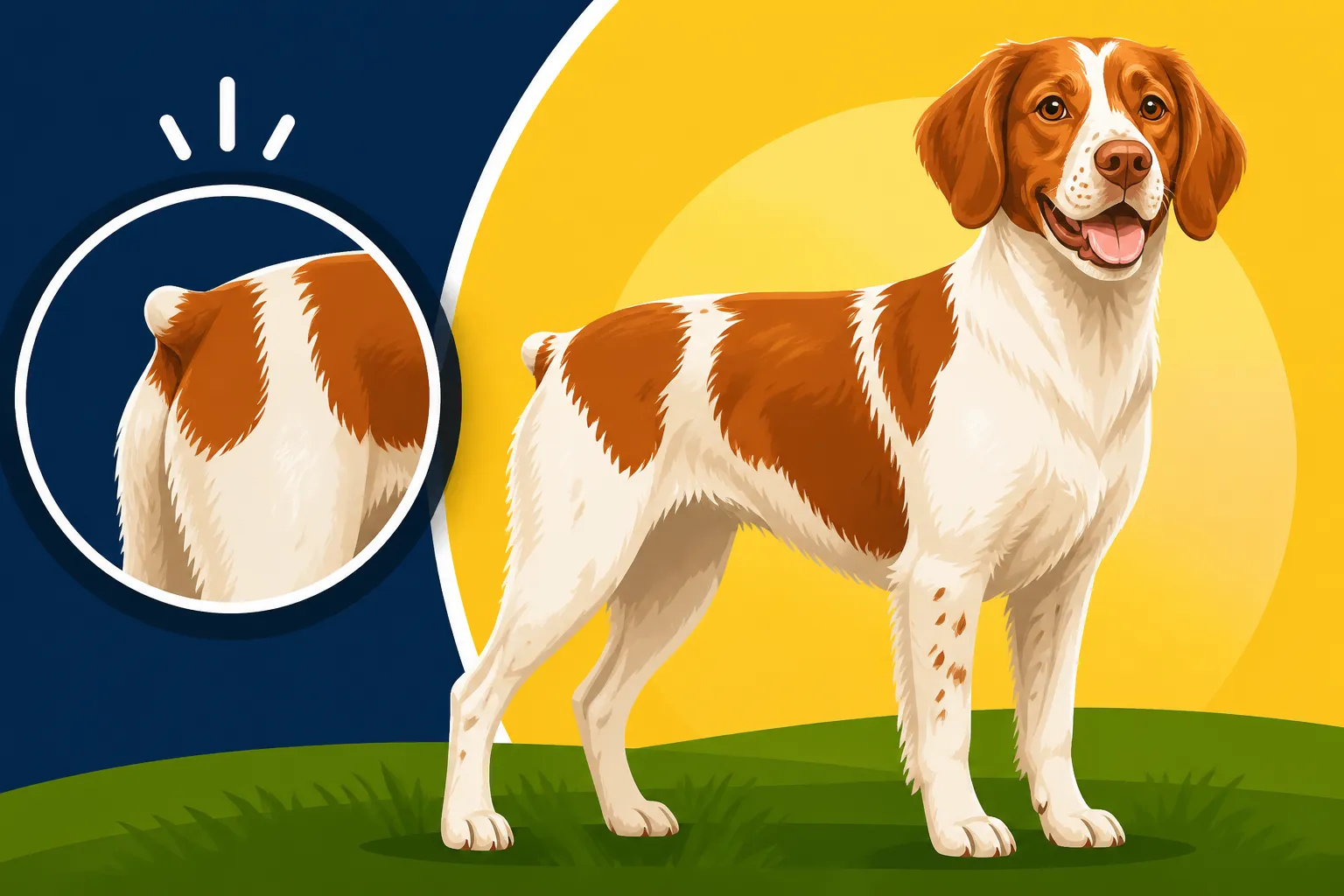
A natural bobtail (NBT) isn't just a "short tail." It can range from a complete absence of a tail (anury) to a stump of varying lengths (brachyury), or even a kinked or slightly malformed tail that is still shorter than a full, undocked tail. Imagine two puppies in the same litter: one has a full, elegant tail that would typically be docked to breed standard length, while its sibling has only a small nub, covered entirely in fur, looking perfectly formed without any human intervention. This variation can be quite striking and often leads to questions about the dog's origin or health. It's simply how they were born, a roll of the genetic dice that makes them stand out from their long-tailed, or conventionally docked, counterparts. This natural variation is what breeders and enthusiasts refer to when discussing NBTs.
The Genetic Basis of the Tailless Trait
The presence of a natural bobtail in Brittanys, and other breeds like the Australian Shepherd or certain Corgis, is linked to a specific gene mutation. It's not a random occurrence or a result of environmental factors. This particular trait is governed by a dominant gene, meaning only one copy of the gene from either parent is needed for the offspring to display the bobtail phenotype. However, it's not quite as simple as that. The genetics involve a gene called the T-box gene, or T-gene, and a specific mutation within it. We'll delve into the specifics of Which Gene Makes a Brittany Tailless in a later section, but for now, understand that it's an inherited characteristic, not something that just happens. Breeders who are aware of this gene can actually test their breeding stock to predict the likelihood of naturally bobtailed puppies appearing in a litter, providing valuable insight into their breeding program.
Historical Observations of Tailless Brittanys
While tail docking has been a long-standing tradition in many hunting breeds, historical records and anecdotal evidence suggest that naturally bobtailed Brittanys have existed for a very long time. Before standardized breed clubs and strict regulations, local populations of dogs often developed unique traits. In the breed's ancestral home in the northwest corner of France, it's believed that short-tailed individuals were present among the dogs used by peasants for hunting. These dogs, which would eventually evolve into the Brittany we know today, were valued for their hunting prowess, and a short tail might have even been seen as advantageous in dense cover. Imagine a local hunter, generations ago, noting that a particular pup in a litter was born with a stubby tail, and finding it perfectly suited for navigating the brush while pursuing game birds. This natural occurrence likely contributed to the acceptance, and perhaps even selection, of short-tailed dogs within the emerging breed type. The original purpose of What the Brittany Was Bred to Hunt didn't depend on tail length, but rather on its ability to find and point birds.
Distinguishing a Natural Bobtail from a Docked Tail
For the uninitiated, it can be really tough to tell the difference between a Brittany born with a short tail and one that had its tail surgically shortened. Many people assume any short-tailed Brittany has been docked, and they wouldn't be entirely wrong, as it's a very common practice. However, understanding the subtle differences can help you appreciate the natural variations within the breed and even identify potential issues or questions to ask a breeder. It’s not just about aesthetics; it speaks to the dog's genetic makeup and, in some cases, the breeder's practices.
Visual Cues and Physical Differences
When a Brittany's tail is docked, especially if done correctly by a veterinarian in the first few days of life, it's usually a very clean cut. The remaining stump, typically about 3-4 inches long according to the breed standard, is often dense with muscle and bone, ending abruptly. Sometimes, if you run your hand over it, you might feel a slight scar or a less natural-feeling blunt end. The fur around a docked tail usually grows normally.
A natural bobtail, however, often looks much softer and more organic. The bone and muscle structure might taper naturally, even if it's very short. There's no surgical scar, and the fur typically grows seamlessly from the dog's rump over the short stub. The end might be rounded, slightly kinked, or simply disappear into the dense fur without a distinct "cut" feel. In some cases, a naturally bobtailed Brittany might have a tail that is slightly crooked or has a fewer number of vertebrae than a full tail, but without any sign of trauma or surgery. It's often very hard to distinguish at a glance, and sometimes only an X-ray can confirm it definitively, especially if the natural bobtail is of a "docked length."
The Ethical and Legal Landscape of Tail Docking
Tail docking is a hot-button issue in the canine world, with strong opinions on both sides. Historically, it was believed to prevent injury in working dogs or even to prevent rabies. Today, proponents often cite tradition, breed aesthetics, or continued belief in injury prevention, especially for active hunting dogs like the Brittany. Opponents, on the other hand, view it as an unnecessary mutilation and a cosmetic procedure that deprives the dog of a vital communication tool. Indeed, some countries have banned or heavily restricted tail docking, considering it animal cruelty.
This shifting ethical and legal landscape means that breeders and owners face different rules depending on where they live. For a naturally bobtailed Brittany, these ethical debates around docking become somewhat moot – the dog was simply born that way. This can be appealing to owners who are uncomfortable with the idea of docking but still prefer the traditional short-tailed look of the Brittany. It's a personal decision for many, but the rising awareness of natural bobtails provides an alternative for those seeking a dog without a full tail, without the need for surgery.
Breeder Transparency and Health Guarantees
When considering a Brittany puppy, especially one with a short tail, open communication with the breeder is absolutely crucial. A reputable breeder should be completely transparent about whether their puppies are naturally bobtailed or if they have had their tails docked. They should be able to explain the lineage of their dogs and whether the NBT gene is present in their lines. Don't be shy about asking direct questions like, "Was this puppy born with this tail length, or was it docked?" A good breeder will welcome these questions and be able to provide clear answers.
Furthermore, they should offer health guarantees that cover any congenital issues, especially if there are concerns about spinal anomalies sometimes associated with the bobtail gene. This level of transparency is a hallmark of responsible breeding. Knowing What a Brittany Breeder Should Have Tested for, beyond just hip and eye clearances, helps you understand the health commitments they've made to their puppies. For example, some breeders may even opt for genetic testing to identify carriers of the NBT gene, allowing them to make informed breeding decisions and educate prospective owners. If a breeder is vague or evasive about a puppy's tail, it might be a red flag.
| Trait Feature | Docked Tail | Natural Bobtail (NBT) |
|---|---|---|
| Appearance | Abrupt, clean cut end; often thicker stump | Seamless fur growth; tapers naturally; may be kinked |
| Feel | Blunt, firm end; possible scar tissue | Soft, natural-feeling; no scar, may be flexible |
| Origin | Surgical procedure (usually at 2-5 days) | Genetic inheritance (born that way) |
| Length | Standardized (e.g., 3-4 inches) | Highly variable (nub to short stump, or absent) |
| Legality | Illegal/restricted in some countries | Always legal, as it's a natural birth trait |
| Breeder Role | Breeder chooses to dock | Breeder manages genetic lines with NBT trait |
The Genetics Behind the Brittany's Natural Bobtail
Understanding the natural bobtail trait goes beyond simply observing a short tail; it delves into the fascinating world of canine genetics. This isn't just a curiosity; it has real implications for breeding programs and the health of the puppies, making it a critical area for responsible Brittany enthusiasts and breeders to grasp. The science behind it helps explain why some Brittanys are born this way and what precautions breeders should take.
The C189G Mutation in the T-Box Gene
The natural bobtail in Brittanys, and indeed in many other dog breeds, is primarily attributed to a specific mutation in the T-box transcription factor gene, often simply called the T-gene or T-box brachyury gene. Specifically, it's a single nucleotide polymorphism, or point mutation, known as C189G. This particular mutation causes a premature stop codon during protein synthesis. Think of it like a recipe where one letter is changed, and suddenly, instead of "bake until golden," it says "bake until golden STOP." The protein that is supposed to regulate tail development gets truncated, leading to an incomplete or absent tail.
This mutation is what gives rise to the natural bobtail phenotype. It's an autosomal dominant trait, meaning a dog only needs one copy of the mutated gene (from either parent) to express the bobtail characteristic. Dogs with two copies of the normal gene have a full tail. Dogs with one copy of the mutated gene have a bobtail. It's a clear genetic marker that can be identified through DNA testing, allowing breeders to make informed decisions about their litters.
Inheritance Patterns: Dominant Trait, Lethal Gene?
As mentioned, the NBT trait is inherited in an autosomal dominant fashion. This means that if a dog inherits even one copy of the mutated T-gene, it will have a bobtail. A full-tailed Brittany will have two normal copies of the gene. A bobtailed Brittany will have one normal and one mutated copy (heterozygous).
Here's where it gets a little more complex and critically important for breeders: while one copy results in a bobtail, two copies of the mutated gene (homozygous for the NBT gene) are generally considered embryonic lethal. This means that embryos inheriting two copies of the bobtail gene typically do not survive past early development. They are reabsorbed, and the litter size may appear smaller.
This has a significant impact on breeding strategies. It means you will never see a true-breeding natural bobtail dog (a dog that passes the bobtail trait to 100% of its offspring, as it would need two copies of the gene). Instead, if you breed two natural bobtail Brittanys together, you'll statistically get:
- 25% full-tailed puppies (two normal copies)
- 50% bobtailed puppies (one normal, one mutated copy)
- 25% embryonic lethal (two mutated copies, resulting in fewer live puppies)
This understanding is vital for responsible breeding and is a key reason why discussions around Whether Two Brittany C3 Carriers Should Be Bred are so important for any genetic condition, including this one.
Breeding Considerations for Natural Bobtails
For Brittany breeders, understanding the genetics of the natural bobtail is paramount for ethical and responsible breeding. Given that the homozygous condition (two copies of the NBT gene) is embryonic lethal, breeders generally avoid breeding two natural bobtailed Brittanys together. The ethical concern here is the potential for early embryonic loss, which can decrease litter size and is seen by many as an undesirable outcome.
Instead, a common and recommended practice for breeders who wish to produce naturally bobtailed puppies (or avoid them entirely) is to breed a natural bobtail Brittany with a full-tailed Brittany. This pairing eliminates the risk of producing homozygous lethal embryos. Such a breeding would statistically produce 50% bobtailed puppies and 50% full-tailed puppies, assuming the bobtailed parent is heterozygous (which all viable NBT dogs are).
Genetic testing is readily available to identify whether a Brittany carries the NBT gene, making it a valuable tool for breeders. This allows them to plan breedings to either produce natural bobtails without the risk of lethal combinations or to completely eliminate the trait from their lines if they prefer. It’s another layer of health screening that adds to a responsible breeder's reputation, alongside other important tests like those for hip and eye health. Knowing What a Brittany Breeder Should Have Tested extends beyond obvious diseases to include structural traits like this one.
Health and Welfare Implications of the Natural Bobtail
While a natural bobtail might seem like a simple cosmetic difference, its genetic origin can sometimes have broader health and welfare implications that responsible owners and breeders need to be aware of. It's not just about what the tail looks like; it's about the underlying development.
Are Tailless Brittanys Healthier or More Prone to Issues?
Generally, a naturally bobtailed Brittany is just as healthy as its full-tailed counterpart. For the vast majority of NBT dogs, the absence or shortness of the tail is merely a physical characteristic with no negative health impact. They lead full, active lives, participate in hunting and field trials, and enjoy being beloved family companions.
However, because the T-box gene plays a role in the development of the vertebral column, there's a theoretical, and sometimes observed, link between the natural bobtail gene and other spinal abnormalities. While rare, some naturally bobtailed dogs across various breeds have been found to have concurrent issues like hemivertebrae (wedge-shaped vertebrae), which can lead to spinal instability or neurological problems. It's important to stress that this is not a common occurrence in Brittanys, and most NBT Brittanys have perfectly healthy spines. But it's a consideration, particularly if a breeder is experiencing higher rates of spinal issues in their NBT litters. A good breeder will monitor for such things and should be able to discuss any concerns they might have about their lines.
Tail Function and Communication Without a Tail
One of the most common concerns people have about tailless dogs is their ability to communicate. After all, a dog's tail is a significant part of its body language, wagging excitedly, tucking in fear, or holding high in confidence. Without a full tail, how do Brittanys express themselves?
The truth is, dogs are incredibly adaptable. While they may lack the full sweep of a long tail, naturally bobtailed Brittanys develop other ways to communicate their feelings. Their entire hindquarters often become more expressive, with a broader "wiggle" to compensate. Their ears, eyes, and overall body posture also take on a more prominent role in conveying their mood. Owners quickly learn to read these subtle cues. For instance, a happy NBT Brittany might exhibit a rapid, full-body wiggle, almost like their whole rear end is wagging.
Functionally, questions sometimes arise about Whether a Brittany's Tail Affects Its Balance in the field. For dogs that navigate challenging terrain, a tail can act as a counterbalance. While a full tail might offer a slight advantage in extremely agile maneuvers, most naturally bobtailed Brittanys adapt remarkably well and are not hindered in their hunting abilities. They can perform just as effectively in cover, pointing birds with the same intensity as their long-tailed peers.
Spinal Development and Associated Concerns
As touched upon, the T-box gene is crucial for normal vertebral column development. The mutation leading to a natural bobtail primarily affects the caudal (tail) vertebrae. In the vast majority of cases, this effect is localized, meaning only the tail is shortened or absent, and the rest of the spine develops normally.
However, very rarely, errors in T-gene expression can lead to more widespread spinal malformations. These could include mild to severe hemivertebrae or other structural abnormalities of the thoracic or lumbar spine. Such conditions can range from asymptomatic to causing significant pain, weakness, or neurological deficits. These severe cases are exceedingly rare in Brittanys, and most NBT dogs are entirely sound.
Responsible breeders are vigilant for any signs of spinal issues in their NBT puppies and will not breed dogs with known spinal problems. If you ever adopt a natural bobtail Brittany and notice any signs of hind limb weakness, difficulty coordinating, or unusual gait, it's always wise to consult your veterinarian for a thorough examination, including potentially spinal imaging. Early detection can lead to better management and quality of life for the dog.
Living with a Naturally Bobtailed Brittany
Whether your Brittany has a long tail, a docked tail, or a natural bobtail, they're all the same enthusiastic, bird-crazy companions at heart. However, owning a natural bobtail does come with a few unique considerations, particularly around communication and grooming, that are good to be aware of. It's often more about how we perceive the difference than how the dog actually experiences it.
Adapting to a Dog Without a Tail for Balance and Expression
The primary adjustment for owners of naturally bobtailed Brittanys often revolves around understanding their dog's non-verbal communication. As we discussed, a full tail is a significant indicator of a dog's mood and intentions. Without that long, expressive flag, owners need to pay closer attention to other cues.
You'll quickly learn to interpret the subtleties of your NBT Brittany's body language. A happy greeting might involve a vigorous hip wiggle, a full-body shimmy, and bright, eager eyes. Fear or submission might manifest as a tucked rear end (even if there's no tail to tuck), averted gaze, and flattened ears. Their vocalizations and facial expressions also become more prominent. For active hunters, it's reassuring to know that these dogs are just as agile and balanced in the field. They adjust their center of gravity naturally, and the lack of a tail rarely impacts their ability to navigate rough terrain or make quick turns while working a bird. If you're using a GPS collar for tracking in the field, like those you can find on Chewy, its placement might need a slight adjustment for comfort if the dog has a very short or absent tail, but generally, it's not an issue.
Grooming and Care Considerations
In terms of daily care, a naturally bobtailed Brittany typically requires the same grooming as any other Brittany. Their beautiful, often wavy, coat still needs regular brushing to prevent mats, especially in the feathering on their legs and ears. For more details on this, you might want to read What a Brittany's Coat Is Like.
However, there's one minor difference related to the tail area. With a full or docked tail, the fur around the base is usually well-defined. For an NBT Brittany, especially one with a very short or absent tail, the fur around the rump might flow more continuously. This can sometimes lead to the hair in that area being slightly denser or prone to collecting debris, especially after a muddy outing. A quick check and brush around the rear end after outdoor adventures can prevent matting. Additionally, some natural bobtails might have a slight indentation or a very short, almost invisible nub. Ensuring this area stays clean and dry is important, just as you would with any dog's hygiene. Overall, it's a minor adaptation to their standard care routine, not a major overhaul.
Training and Communication Adjustments
Training a natural bobtail Brittany is no different than training any other Brittany. They are intelligent, eager-to-please, and highly biddable dogs, renowned for their trainability and soft nature. The Brittany Is the Softest of the Pointing Breeds, meaning they respond best to positive reinforcement and gentle guidance, regardless of their tail length.
However, when it comes to visual cues, owners might need to be a bit more attuned to their dog's overall body language rather than relying solely on tail signals. For example, when teaching commands like "stay" or "heel," you'll observe their focus, posture, and ear set more keenly to gauge their understanding and engagement. This often makes owners more observant of their dog's entire presence, fostering a deeper connection. In the field, their intense point and unwavering focus on birds will be just as evident, tail or no tail. The way they hold their body rigid, head high, and nose into the wind tells the whole story, regardless of what's happening at their rear end. You can still reward them with treats purchased from places like Chewy, just like any other dog.
The Natural Bobtail in the Brittany Breed Standard and Community
The presence of natural bobtails in Brittanys isn't a new phenomenon, but its formal recognition and acceptance within breed standards and the wider dog community have evolved over time. Understanding this context helps to appreciate how these unique individuals fit into the breed's identity.
How Breed Standards Address the Tailless Trait
Breed standards, set by kennel clubs like the American Kennel Club (AKC) and other international organizations, serve as the blueprint for an ideal representative of a breed. For the Brittany, the tail has historically been a distinct characteristic. The AKC standard, for example, states that the tail "should be no more than four inches long," describing it as "either naturally short or docked." This explicit inclusion of "naturally short" is crucial; it means that a naturally bobtailed Brittany, provided its tail length falls within the acceptable range, is in no way penalized in the show ring or considered less "correct" than a docked Brittany.
This differs from some other breeds where a natural bobtail might be considered a fault if the standard strictly calls for a docked tail without mentioning natural shortness. For the Brittany, this demonstrates an acknowledgment of the breed's genetic heritage and the natural occurrence of this trait. It ensures that breeders who produce NBTs, or owners who acquire them, are not at a disadvantage in conformation events. Similarly, in hunting events, the focus is entirely on performance, not tail length, reinforcing the breed's primary purpose. A dog’s field performance, whether it’s a French Brittany or an American one, is paramount.
Acceptance and Preference within the Brittany Community
Within the Brittany community, which includes breeders, hunters, show enthusiasts, and pet owners, the natural bobtail is generally well-accepted. For many, it's simply another variation within the breed, no more or less desirable than a particular coat pattern or shade of orange. Some owners actively seek out naturally bobtailed puppies because they appreciate the natural aspect and avoid the ethical considerations of tail docking. Others might prefer the traditional docked look.
Hunters, in particular, tend to be pragmatic. For them, a Brittany's value lies in its bird-finding ability, stamina, and biddability. Whether a dog has a natural bobtail or a docked tail is largely irrelevant to its performance in the field. What matters is the dog's drive, intelligence, and ability to hold a staunch point. An NBT Brittany will chase birds with the same fervor, check in with its handler as efficiently, and display the same unwavering commitment to the hunt as any other Brittany. In fact, some hunters appreciate one less medical procedure to consider for their pups.
The Future of the Natural Bobtail in Brittanys
The natural bobtail trait is likely to remain a part of the Brittany breed for the foreseeable future. With increased awareness about canine genetics and evolving perspectives on tail docking globally, there might even be a slight increase in breeders specifically selecting for the NBT trait. This offers a way for Brittany owners in countries where tail docking is illegal to still have a short-tailed dog that aligns with the traditional appearance of the breed, without having to contravene local laws or compromise their ethical stance.
Genetic testing for the T-box gene will continue to empower breeders to make informed decisions, whether they aim to maintain the NBT trait in their lines or avoid it. As long as responsible breeding practices are followed – particularly avoiding breeding two NBT dogs together to prevent embryonic lethality – the natural bobtail will continue to be a unique and accepted characteristic among these versatile pointing dogs. It's a reminder that sometimes, nature provides its own solutions, and our beloved companions come to us with charming quirks woven right into their DNA. It highlights that the breed's core traits and abilities remain consistent, no matter its specific physical distinctions, reinforcing why The Brittany Is the Smallest of the Versatile Pointing Breeds and a favorite among many.
Disclaimer
This article is for general informational purposes only and does not constitute professional advice. Laws, prices and regulations vary by location and change over time. Consult a qualified professional for guidance on your specific situation.