How to Shorten a Brittany’s Range
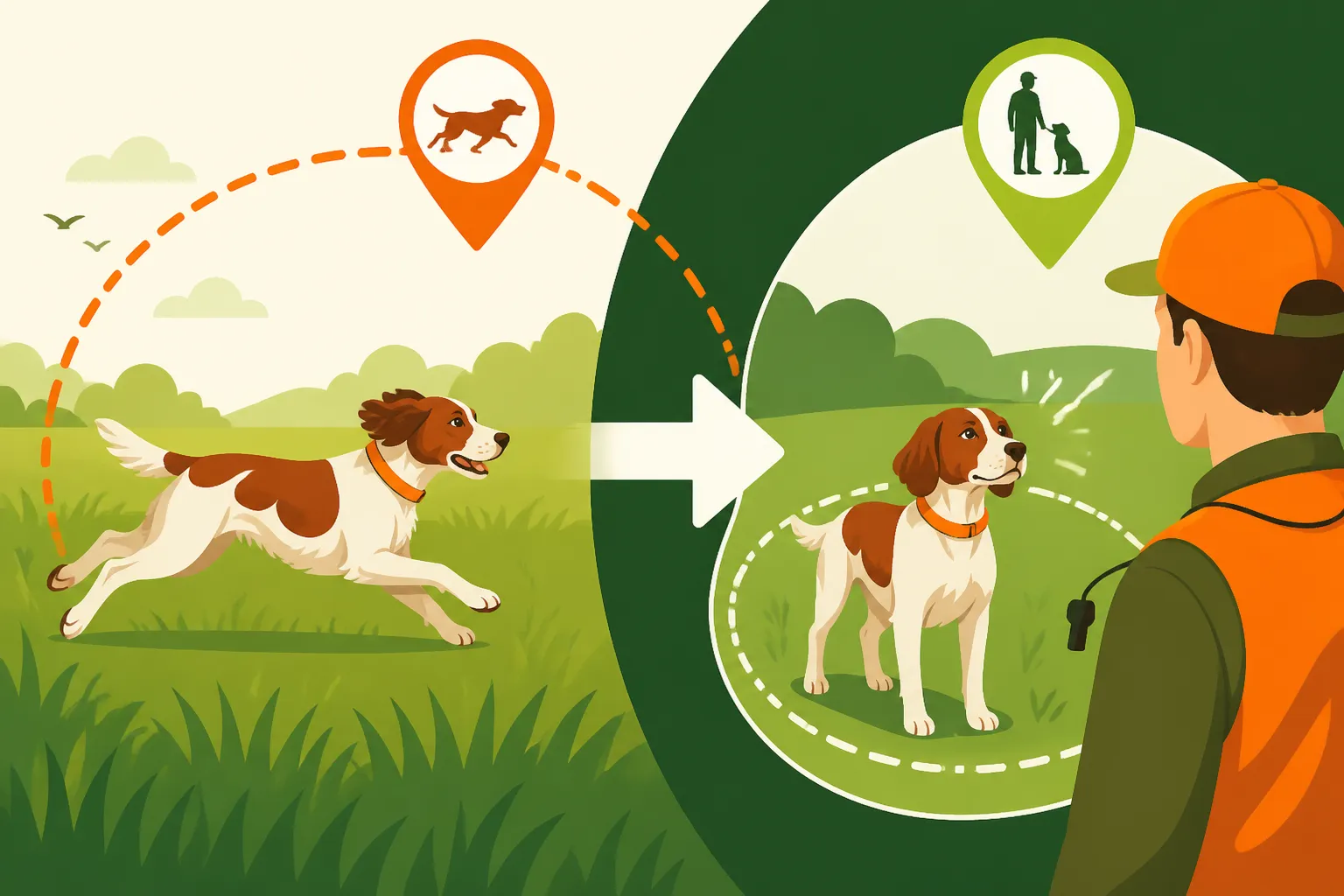
It's a familiar sight for many Brittany owners: you're out in the field, enjoying the fresh air, and your beautiful, energetic Brittany is ranging… well, a little too far. One minute they're quartering diligently, and the next, they're a speck on the horizon, following a scent trail that seems to extend into another county. This tendency to range wide can be a source of real frustration, especially for foot hunters or those navigating dense cover where losing sight of your dog is a genuine concern. This guide is here to walk you through practical, empathetic strategies to help you effectively shorten your Brittany's range, bringing them in closer without stifling their incredible natural drive.
Understanding Your Brittany's Natural Instinct for Range
Before we can even begin to talk about shortening your Brittany's range, it's crucial to understand why they range so widely in the first place. It's not out of defiance or a lack of love; it's deeply ingrained in their genetics and their history as a hunting dog.
The "Big Runner" Instinct: Why Brittanys Range Wide
Let's be honest, the Brittany was bred to find birds. And often, that means covering a lot of ground. Especially with American Brittany lines, there's been a historical preference for dogs that can really stretch out and hunt a large area, making them ideal for covering wide open spaces, perhaps even from horseback. They are incredibly athletic dogs with a powerful nose, and when they get on a scent, that instinct kicks in, driving them forward. This incredible drive is what makes them such effective bird dogs, but it can also be a challenge when you need them to work closer. Many owners feel like they're constantly yelling their dog's name, or worse, spending precious minutes wondering where their four-legged companion has vanished to. It’s a common frustration, and you're certainly not alone in dealing with a dog that loves to explore every inch of available cover. How Far an American Brittany Ranges offers more insight into this characteristic.
This natural inclination to range wide means that simply asking your Brittany to stay closer often isn't enough. They aren't being disobedient; they're simply following a very strong, evolutionarily advantageous instinct to find game. To effectively shorten their range, we need to work with this instinct, not against it, by teaching them when and how to apply their expansive search pattern and when to keep it tighter. It’s about communication and control, ensuring that their boundless energy and scenting ability are channeled in a way that aligns with your hunting style and safety concerns. Without understanding this innate drive, any training attempts might feel like an uphill battle, leading to frustration for both you and your dog.
Communication is Key: The Foundation of Range Control
Before you can even think about specific techniques to shorten range, you absolutely must have a rock-solid foundation of communication with your Brittany. This means an unwavering recall and a clear understanding of basic commands. If your dog doesn't reliably come when called in a low-distraction environment, expecting them to do so when they're 200 yards out on a hot bird scent is simply unrealistic. Every piece of advanced training, including range control, builds upon this core obedience.
Think of it like this: your dog needs to understand that you are the center of their universe, even when the world is full of exciting smells and potential birds. This takes consistent, positive reinforcement training from puppyhood. Enroll in a good obedience class, or utilize online resources that focus on positive training methods. Programs like those offered by BAXTER & Bella can provide structured learning pathways that build excellent communication skills between you and your Brittany, emphasizing engagement and clear cues. A strong "here" or "come" command, practiced daily in various environments, is your most vital tool. Without it, you're trying to control a wide-ranging dog with nothing but hope and a prayer, which is a recipe for stress. How Reliable a Brittany's Recall Is discusses this crucial aspect further.
Foundational Training for Range Management
Once you have that solid communication base, you can start layering in specific tools and techniques designed to teach your Brittany about appropriate range. These tools aren't magic bullets, but consistent application will yield results.
The Check Cord: Your Best Friend for Control
The check cord is arguably the most fundamental tool for teaching range control, especially for a young or headstrong Brittany. It provides a physical connection to your dog while still allowing them a sense of freedom to explore, but within your defined boundaries. It's not a punishment tool; it's a communication device.
Imagine you're in a field, and your Brittany starts to push out too far. With a long check cord (we're talking 30 to 50 feet here, easily found on platforms like Amazon), you can gently, but firmly, bring them back in. The key is consistency. When they hit the end of the cord, give your recall command ("Here!" or a whistle blast) and give a gentle tug to reinforce that command. Praise them lavishly when they respond and come back to you. This teaches them that pushing too far results in being reeled back in, and coming back earns praise. It's a subtle way of defining the "bubble" around you where they should be working. What a Fifty Foot Check Cord Costs a Brittany Owner provides a good overview of this essential piece of gear.
Start in a large, open area with minimal distractions. Let your Brittany investigate, but as soon as they start to hit the end of the cord, use your recall and bring them back in a bit. Don't pull them all the way back to your heel; just shorten their excursion. The goal is to make them aware of the invisible boundary. Over time, as they learn to check in more frequently and stay within a reasonable distance, you'll be able to transition to shorter cords and eventually off-leash work, knowing they understand the expectation of staying close. This also builds upon the "whoa" command, as they learn to stop their forward motion when they encounter the end of the cord and your command. Teaching a Brittany Whoa is a vital complementary skill.
The Whistle: A Consistent Signal for "Here"
While your voice is perfectly fine for close-range commands, a whistle becomes invaluable when your Brittany starts to open up their range. Your voice might carry 50 yards, maybe 100 on a still day, but a whistle cuts through wind and dense cover much more effectively. Plus, the tone of a whistle is always consistent, unlike your voice which can vary depending on your fatigue or frustration levels.
Introducing the whistle is simple but requires consistency. Start by associating the whistle with something positive. Every time you feed your dog, give a short whistle blast. Every time you give a treat, whistle. Soon, the whistle will become a positive signal. Then, when your dog is close to you, give your recall command ("Here!") and a whistle blast simultaneously. When they come, reward them. Gradually, as you use the check cord, use the whistle as your primary recall signal when they start to drift out. A good, solid two-tone whistle is a worthwhile investment. What a Check Cord and Whistle Cost a Brittany Owner will give you an idea of prices.
The key with the whistle is to never use it for anything negative. It should always signal "come to me for something good." If you use it when you're angry or to scold them, you'll dilute its positive association. Always follow through with praise or a small treat when they respond to the whistle, even if they were being a bit stubborn. This consistent, positive reinforcement builds a reliable recall that transcends distance and distractions, giving you a powerful tool for bringing your wide-ranging Brittany back to a manageable working distance.
Advanced Techniques for Shortening Range
Once the basics are solid, you can integrate more nuanced strategies to fine-tune your Brittany's range. These methods leverage their natural instincts and the environment itself.
Using Terrain to Your Advantage
The landscape itself can be a powerful, silent trainer for range control. Instead of always hunting in wide-open fields, where a Brittany's natural inclination is to stretch out, start your training in areas with more varied terrain.
Begin in relatively confined spaces, like a smaller field bordered by timber, or a field with dense hedgerows. These natural barriers physically limit how far your dog can run, subtly teaching them to work closer. As they become accustomed to staying within these boundaries, gradually introduce them to slightly larger, more open areas. The idea is to make the "short range" feel natural and comfortable before asking them to apply it in truly expansive environments. Think of it as incremental exposure, building their understanding and responsiveness step by step. If your dog consistently checks in well in an area with a 50-yard sightline, you can slowly expand that to 75, then 100, while maintaining the expectation that they should still be working for you and not just for themselves.
In dense cover, your Brittany is naturally going to work closer because they rely on you to flush the bird they've pointed. Capitalize on this. Spend more training time in heavier brush where they can't see you at a distance. This reinforces the idea of staying connected to you for success. When you move to more open ground, they should still retain some of that "stay close" mentality learned in the thick stuff. Conversely, be mindful of where you allow them to range widely. If you consistently let them run a quarter-mile ahead in an open pasture, you're reinforcing that behavior. Deliberately choose varied hunting locations to reinforce different range expectations.
The E-Collar: A Tool for Reinforcement, Not Punishment
The e-collar, or electronic collar, is a controversial tool, but when used correctly and humanely, it can be incredibly effective for solidifying range control, especially with a dog as sensitive and intelligent as a Brittany. It is not a substitute for foundational training; it's a reinforcement tool for commands your dog already understands. The goal is to provide a clear, consistent signal at a distance, replicating the gentle tug of a check cord.
Before ever using an e-collar in the field, condition your dog to it in a controlled environment. Start with the lowest possible setting your dog can perceive (the "working level"). Pair the stimulation with a known command, like "here" or "come." For example, give your recall command, press the e-collar button, and praise them when they come. The goal is for the e-collar to become a gentle reminder, not a harsh correction. Many reputable e-collar brands, some available on Amazon, come with detailed instructional videos. It's truly best to seek guidance from a professional gun dog trainer when introducing this tool, as improper use can easily create a gun-shy or collar-wise dog. Whether a Brittany Needs an E Collar and Which E Collar Suits a Brittany delve deeper into this topic.
When used for range control, the e-collar allows you to enforce your recall command or a "whoa" command if your dog is pushing too far or ignoring you. A light stimulation, followed by immediate praise when they respond, teaches them to be more responsive to your commands at a distance. This consistency helps them understand the boundaries of their hunt and keeps them tuned into you, rather than disappearing over the next ridge. Remember, it’s about making the correct choice (staying closer, responding to recall) more appealing and consistent, not punishing them for their natural drive.
Consistent Bird Work and Hunting for the Gun
Ultimately, a Brittany is a bird dog, and the most effective way to teach range control for hunting is through consistent, controlled bird work. Your goal is to teach your dog to "hunt for the gun" – meaning they understand their job is to find birds and hold them within your effective shooting range.
This means putting your dog on birds in a way that allows you to control the situation. Use pigeons or quail in controlled setups initially. When your Brittany points, work your way in and flush the bird. This reinforces the idea that your presence is crucial for the culmination of the hunt. If your dog continually bumps birds or breaks point to chase, it needs to be corrected and re-trained. Consistency here is paramount. Every time your dog breaks, they are reinforcing the habit of ignoring you and chasing. Teaching a Brittany to Hunt for the Gun is a cornerstone of this training.
Work on the "steady to wing" and "steady to shot" commands. This means your Brittany stays on point even when the bird flies, and holds still even when the gun goes off. This discipline directly translates to range control because it teaches them patience and dependence on your actions. If they learn that waiting for you, and not running off, leads to a retrieved bird, they will naturally reduce their wide-ranging tendencies in favor of a closer, more cooperative hunt. Teaching a Brittany Steady to Wing provides more detail on this critical training aspect.
Common Pitfalls and Troubleshooting When Shortening Range
Even with the best intentions and tools, training a Brittany to shorten its range can present challenges. Recognizing common pitfalls and knowing how to troubleshoot them is key to success.
Inconsistency and Lack of Follow-Through
This is, hands down, the number one reason owners struggle with range control. Brittanys are incredibly intelligent and observant dogs. If you allow them to range wide one day, and then try to reel them in the next, they will quickly learn that your commands are optional. Every single outing, whether it's a training session or a casual walk, is an opportunity to reinforce your expectations.
If you don't have the time or energy to actively manage your Brittany's range on a particular day, use a long leash or choose an area where their wide-ranging is naturally curtailed. Never let them practice the behavior you don't want. This means if you give a recall command or a whistle, you must follow through and ensure they come back, even if it means walking out to them and physically bringing them in (and then rewarding them once they're with you). Leaving them to "figure it out" or simply giving up when they ignore you only teaches them that your commands are irrelevant once they've hit a certain distance. Consistency across all family members and all environments is non-negotiable.
Over-correction and Sensitivity
Brittanys are known for being incredibly "soft" dogs. They are eager to please, intelligent, but also very sensitive to harsh corrections. Yelling, aggressive jerks on a leash, or overly strong e-collar stimulation can quickly shut down a Brittany, making them fearful, resentful, or even "collar-wise" (meaning they only respond when the collar is on and active). This will severely damage your relationship and make training much harder. Why a Brittany Is Called Soft explores this temperament trait in detail.
When dealing with a Brittany that is pushing its range, your approach should always be about guidance and reinforcement, not punishment. If you find yourself getting frustrated, take a break. A Brittany will remember a harsh correction for a long time, potentially causing them to avoid you or shut down during future training. Instead of thinking "How do I stop them from doing that?", think "How do I teach them to want to do this?". Positive reinforcement, coupled with consistent, low-level corrections when absolutely necessary (like a gentle tug on the check cord or a mild e-collar stimulation), is the path to success. A Brittany that is confident and trusts its handler is far more likely to work cooperatively than one that fears making a mistake. Understanding What a Brittany Does When It Is Corrected Too Hard is crucial for avoiding these pitfalls.
Knowing When to Seek Professional Help
There's absolutely no shame in admitting you need a little help. Training a wide-ranging bird dog, especially if it's your first time, can be incredibly challenging. If you've tried these methods consistently and are still struggling, or if you're unsure about using tools like an e-collar ethically, seeking a professional gun dog trainer is a wise investment.
A good professional trainer can assess your specific dog, identify gaps in your training, and provide hands-on guidance. They have the experience to troubleshoot issues you might not even realize are problems. They can show you how to properly use equipment, read your dog's body language, and tailor a training plan that works for both of you. This could involve sending your dog away for a few weeks of intensive training, or attending workshops and private lessons with you. While professional training represents a financial commitment, the peace of mind and the strengthened bond with a well-trained dog are often priceless. What a Professional Gun Dog Trainer Charges for a Brittany offers some context on the costs involved.
Remember, the goal isn't to turn your Brittany into a robotic heel-dog. It's to foster a cooperative partnership where their incredible bird sense and athleticism are channeled effectively, making them a joy to hunt with and a safe, reliable companion in any environment.
| Training Method | Primary Benefit for Range Control | Key Tools Needed | Consistency Required | Potential Pitfalls (if misused) |
|---|---|---|---|---|
| Solid Recall | Foundation for all control, safety | Voice, treats, positive reinforcement | Daily | Ignored commands, dog tuning you out |
| Check Cord | Physical boundary, gentle guidance | 30-50 ft cord, buckle collar | High (every use) | Dog learns to pull, handler frustration |
| Whistle Training | Long-distance recall, consistent signal | Whistle, treats | High (every use) | Whistle becomes a negative cue |
| Terrain Utilization | Natural boundaries, gradual exposure | Varied hunting locations | Moderate | Reinforcing wide range in open areas |
| E-Collar | Remote reinforcement, clear communication | E-collar, professional guidance | High (correct use) | Fear, shutting down, collar-wise behavior |
| Controlled Bird Work | Teaches "hunting for the gun," patience | Training birds, bird launchers, gun | High (every session) | Bumping birds, chasing, gun-shyness |
Disclaimer
This article is for general informational purposes only and does not constitute professional advice. Laws, prices and regulations vary by location and change over time. Consult a qualified professional for guidance on your specific situation.