How High a Fence a Brittany Needs
It's a common dilemma for Brittany owners: you love their boundless energy and inquisitive nature, but that same drive can turn them into escape artists, constantly looking for the weak spot in your yard's perimeter. This guide will walk you through everything you need to consider to choose and maintain a fence that truly keeps your energetic Brittany safe and secure, without stifling their adventurous spirit.
Understanding Your Brittany's Drive to Explore
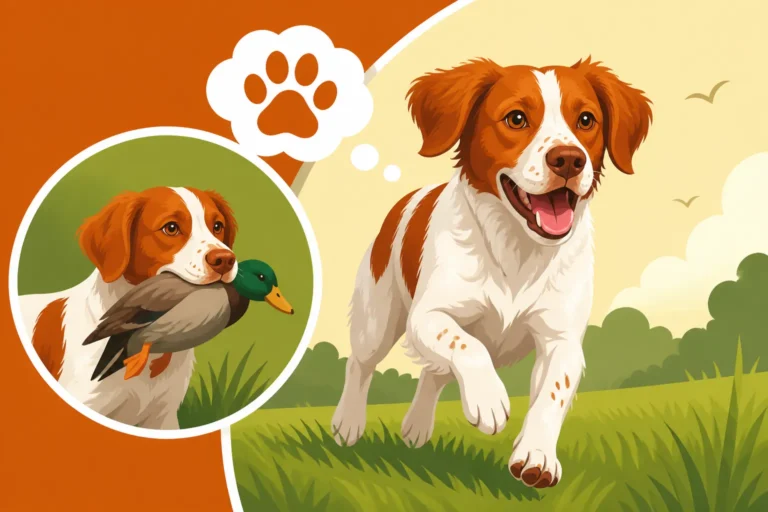
Brittanys are not just pets; they are purpose-bred hunting dogs with an innate desire to explore, scent, and range. Understanding these fundamental traits is crucial when you're trying to figure out how to keep them contained. A simple wooden fence might work for some breeds, but a Brittany often sees it as more of a suggestion than a firm boundary.
The Brittany's Inherent Sporting Instinct
Imagine your Brittany's ancestors, tirelessly quartering fields, following the faintest wisp of a bird's scent. That instinct isn't just something they do when you're out hunting; it's hardwired into their very being. When a squirrel dashes across your lawn, or a tantalizing breeze carries the scent of rabbit from the woods nearby, your Brittany's brain lights up. Their incredible sense of smell and prey drive means they are constantly aware of the world beyond your property lines. This makes them highly motivated to investigate, and if there's a perceived weakness in your fence – a loose board, a gap under the gate, or simply a height they believe they can clear – they will test it. They don't mean to be naughty; they're just being Brittanys! It's why they hold the record for the most dual champions, excelling in both field and show rings; their intelligence and drive are simply unmatched.
Their intelligence also means they're quick learners, not just in training but also in identifying escape routes. They will meticulously test every inch of your fence, looking for leverage points or spots where they can push, dig, or jump. What might seem like a solid barrier to you could be a puzzle waiting to be solved for a bored or stimulated Brittany. You might wonder, An American Brittany Ranges Wide and a French One Stays Close, but even a "close-working" French Brittany will be motivated to explore if the right scent hits its nose.
Energy Levels and Exercise Needs
A tired Brittany is a good Brittany, and an under-exercised Brittany is a highly motivated escape artist. These dogs were bred to work all day in the field, covering miles with their human companions. If their immense energy isn't channeled appropriately through regular, vigorous exercise, it will manifest in other ways, often through destructive behaviors like digging, chewing, and, yes, escaping.
Simply letting them out into a fenced yard for an hour or two isn't enough. They need mental stimulation and physical exertion that goes beyond casual sniffing. Think about long walks, runs, fetch sessions, or even organized dog sports. If your Brittany is constantly pacing the fence line, barking at passersby, or digging holes, it's often a sign that they need more outlets for their energy. A solid exercise routine can significantly reduce their desire to find greener pastures, making your fencing efforts much more effective. Without proper exercise, you might find out What an Under Exercised Brittany Does at Home.
Assessing Fence Height Requirements for a Brittany
When it comes to keeping a Brittany safely contained, there's no single "magic number" for fence height. What works for one dog might be an open invitation for another. You need to consider your individual dog's athleticism and motivations, rather than relying on generic advice.
The "Standard" Fence Height Myth
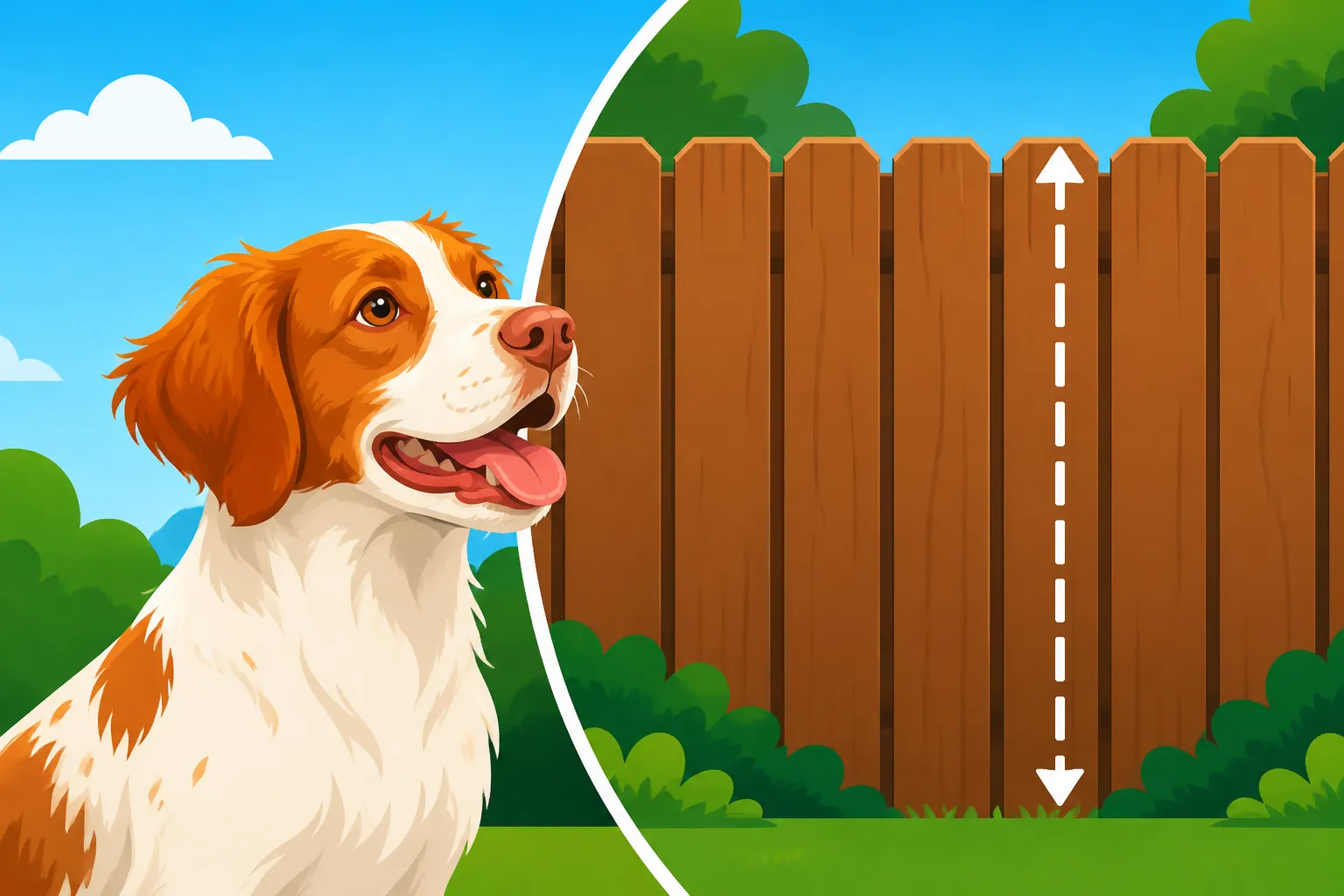
Many sources might suggest a 4-foot or 5-foot fence for a medium-sized dog. For many breeds, this might indeed be sufficient. However, Brittanys are agile, athletic, and surprisingly powerful jumpers for their size. They can easily clear a 4-foot fence if motivated, and a 5-foot fence might still be within reach for a particularly athletic or determined individual. They are also incredibly smart about finding footholds or leveraging objects near the fence. That stack of firewood, the compost bin, or even a sturdy bush close to the fence line can become a launching pad.
It's not just about how high they can jump when standing still; it's about how they can propel themselves over when running, or how they can scale a fence with minimal purchase. Think of them as furry, feathered parkour artists. While their general height and weight (typically 30-40 pounds and 17.5-20.5 inches tall) might suggest a lower fence is adequate, their athleticism defies those numbers. To truly assess, observe your Brittany in the yard. Do they stare intently at birds flying over? Do they launch themselves playfully at the fence when excited? These observations will give you clues about their potential to clear a barrier.
Factors Influencing Your Brittany's Escape Potential
Beyond sheer athleticism, several other factors contribute to a Brittany's likelihood of attempting an escape. It’s a complex interplay, and addressing these underlying issues is just as important as the physical barrier.
- Motivation: Is there a strong motivator just outside the fence? This could be a rabbit trail, a deer scent, another dog passing by, or even the sound of gunfire from a nearby range if your dog isn't desensitized. A Brittany's prey drive is incredibly strong, and they can sometimes "turn off" their pain response if a bird or rabbit is tantalizingly close.
- Training: A dog with a rock-solid recall and strong boundary training (even within a physical fence) is less likely to bolt. If your Brittany isn't reliably coming when called in a distracting environment, they might ignore your pleas from the other side of the fence. Good obedience training, perhaps with resources like BAXTER & Bella, can significantly improve their responsiveness.
- Environment: Do you live next to a dense woodline where wildlife abounds? Is your yard adjacent to a busy road where passing cars are a constant temptation? The surrounding environment provides both stimulation and potential dangers, increasing the stakes of a successful escape.
- Boredom/Anxiety: As mentioned, an under-exercised or mentally unchallenged Brittany will find ways to entertain themselves. This might involve digging under the fence or figuring out how to get over it. Separation anxiety, where a dog becomes distressed when left alone, can also fuel escape attempts as they try to get to their owners. Consider their emotional state as much as their physical abilities. If your Brittany is frequently left alone for long periods, Whether a Brittany Gets Separation Anxiety might be a factor in their escape attempts.
Beyond Height: Comprehensive Fencing Solutions
While height is important, it's only one piece of the puzzle. A truly secure containment system for a Brittany considers their ability to jump over, dig under, and climb through or up a fence.
Physical Fence Types and Minimum Heights
Let's break down common fence types and how they stack up against a Brittany's escape artistry.
- Solid Fences (Wood, Vinyl): These fences offer the advantage of blocking your Brittany's view of external triggers. If they can't see the squirrel, they might be less motivated to go after it. For most Brittanys, a 6-foot solid fence is considered ideal. A 5-foot fence might be adequate for a less athletic or smaller Brittany, but it's really pushing the minimum. Anything less than 5 feet is generally asking for trouble. Ensure there are no horizontal slats on the inside that could serve as toeholds.
- Chain-Link Fences: While strong and durable, chain-link fences can be problematic for climbers. The mesh provides excellent grip for agile paws. If you opt for chain link, you'll need at least 6 feet, and consider adding deterrents like "coyote rollers" or a lean-in at the top to prevent them from scaling it. Also, ensure the bottom is secure against digging.
- Wire/Mesh Fences: Agricultural wire fences, like woven wire or welded wire, can be effective if chosen carefully. The key is the gauge (thickness) and the size of the openings. Avoid large openings that a Brittany could squeeze through or get tangled in. A 5 to 6-foot woven wire fence with smaller openings (e.g., 2×4 inches) can work. You'll need sturdy posts set deep, especially in corners, and regular checks for weak spots.
- No-Climb Fencing: This is often the best choice for active breeds like Brittanys, especially those prone to jumping or climbing. This usually involves a smooth, vertical surface (like certain vinyl or wood panels) or a mesh with very small openings and no horizontal footholds on the inside. For these, a 5 to 6-foot height is a good starting point, combined with anti-digging measures.
Here's a quick comparison of fence types for Brittanys:
| Fence Type | Pros | Cons | Recommended Height | Escape Deterrents Needed |
|---|---|---|---|---|
| Solid (Wood/Vinyl) | Blocks view, aesthetics. | Can be expensive, requires maintenance (wood). | 6 feet | Anti-digging (L-footers) |
| Chain-Link | Durable, relatively affordable. | Climbers can scale, doesn't block view. | 6 feet | Anti-digging, lean-in/coyote rollers on top |
| Woven Wire (Small Mesh) | Good visibility, more affordable than solid. | Less aesthetic, can be climbed if mesh is too large. | 5-6 feet | Anti-digging, regular inspection for weak points |
| No-Climb (Smooth/Small Opening) | Excellent at deterring climbing/jumping. | Can be expensive, some types block view. | 5-6 feet | Anti-digging, ensuring no nearby objects provide leverage |
Preventing Digging and Climbing
A fence is only as good as its weakest link, and for Brittanys, those weaknesses are often at the top and bottom.
- Digging Barriers: Many Brittanys, especially if bored or on a hot scent, are master excavators. To prevent digging, you'll need to extend your fence barrier underground.
- L-Footers: Bury a section of wire mesh (like chicken wire or hardware cloth) horizontally along the inside base of your fence, extending out about 12-18 inches. Secure it to the fence bottom and cover it with soil. When your Brittany tries to dig, they'll hit the buried wire, which is uncomfortable and discouraging.
- Concrete/Gravel Trench: Dig a shallow trench and fill it with concrete or heavy gravel along the fence line. This creates a hard, unyielding barrier.
- Rock Border: Lay large, heavy rocks or pavers along the inside perimeter of the fence line. While not as foolproof as buried wire, it can deter casual digging.
- Climbing Deterrents: For fences that a Brittany might be able to scale, consider these additions:
- Lean-ins/Angle Brackets: Attach an outward-angled section of fencing or wire mesh to the top of your fence. This makes it impossible for the dog to get a grip over the top edge.
- Coyote Rollers: These are freely spinning rollers installed along the top of the fence. When a dog tries to get leverage on the top, the rollers spin, preventing them from getting a grip and pulling themselves over. You can find options for these kinds of solutions on Amazon.
- Clearance: Ensure there are no objects (dog houses, landscaping features, trash cans) close enough to the fence to be used as a step or launchpad.
Remember, a 4-foot fence might only be acceptable for a very low-drive, senior Brittany who is always supervised, and even then, with significant anti-digging and anti-climbing modifications. For the average, energetic Brittany, aiming for higher is always safer.
The Role of Training and Supervision
No matter how tall or secure your fence is, it's never a complete substitute for good training and diligent supervision. A highly motivated Brittany can overcome almost any physical barrier if they have enough time, opportunity, and lack proper guidance.
Teach your Brittany reliable recall from a very young age. This is perhaps the most critical command for any dog, but especially for an athletic, scent-driven breed like a Brittany. If they do manage to get out, a strong recall could be their saving grace. You might even consider working with an online training program like BAXTER & Bella, which provides comprehensive courses that can help you establish solid obedience skills and boundary awareness, even within a fenced yard.
You can also implement "fence training" where you walk the perimeter with your dog, reinforcing that the fence is a boundary. Reward them for staying away from the fence, and redirect any attempts to dig, jump, or climb. Even with a well-trained dog, constant supervision is key. Don't leave your Brittany unattended in the yard for extended periods, especially if they have a history of escape attempts. A bored Brittany is an inventive Brittany, and an unsupervised yard becomes a canvas for their ingenuity. Regular checks of your fence for new weaknesses are also essential – look for dug-out spots, loose posts, or damaged mesh.
Addressing Special Considerations and Alternatives
Sometimes, a traditional physical fence isn't feasible, or you need supplementary measures to ensure your Brittany's safety. It's about finding the right layered approach.
Invisible Fences: Pros, Cons, and Brittany Suitability
Invisible fences, also known as electronic or containment fences, use a buried wire to create a boundary and deliver a static correction (or audible warning) if your dog crosses it. They certainly have their appeal: they are often more affordable than physical fences, don't obstruct views, and can cover large, irregular areas.
However, for a Brittany, they come with significant drawbacks. Their inherent prey drive means that if a rabbit or bird streaks past, many Brittanys will blow right through the static correction, driven by instinct. Once they are on the other side, there's often no deterrent to bring them back across the boundary and through the static correction again. This can lead to a dog that's willing to leave but too afraid to return. Furthermore, invisible fences offer no protection from external threats like stray dogs, wild animals, or people.
For these reasons, most experienced Brittany owners and trainers would advise against relying solely on an invisible fence for primary containment. They can be a supplemental tool for a very well-trained dog with low prey drive, or to reinforce boundaries within a physical fence, but they are absolutely not a substitute for a secure, physical barrier for this breed. They do not prevent a motivated Brittany from escaping, nor do they protect them from dangers outside the property. You might wonder Whether a Brittany Needs an E Collar at All, and while some trainers use them for field work, for simple containment, a physical fence is far superior.
Portable Enclosures and Runs
For situations where a permanent fence isn't possible, or for temporary containment needs (e.g., camping, visiting friends), portable enclosures and secure kennel runs can be valuable.
- Heavy-Duty Exercise Pens: Look for tall, sturdy metal pens that can be configured into various shapes. Ensure they are tall enough (at least 48 inches, preferably 60 inches for a determined jumper) and have stakes to anchor them to the ground. For added security, especially if leaving your Brittany unattended for short periods, consider models with a secure top. You can find many robust options on Amazon.
- Secure Kennel Runs: These are permanent or semi-permanent outdoor structures, usually made of chain link or welded wire, with a secure roof and often a concrete or gravel base. A good kennel run can provide a safe space for your Brittany when you can't actively supervise them in a larger yard. Ensure the gauge of the wire is strong enough to prevent bending or breaking, and the latches are secure. These are often used by hunters for temporary outdoor housing.
- Crates: While not an outdoor solution, never underestimate the power of a good crate for indoor containment when you can't supervise. Crate training is a valuable skill for any dog owner, and a Brittany should see their crate as a safe, comfortable den.
These options are best used for supervised outdoor time or temporary housing, not as a primary, all-day solution. Your Brittany still needs plenty of exercise and interaction.
The Ultimate Goal: A Secure and Happy Brittany
Ultimately, deciding how high a fence your Brittany needs is about more than just measurements; it's about creating a safe, stimulating, and secure environment that respects their natural instincts while keeping them protected. A well-chosen, properly installed fence, combined with consistent training and ample exercise, forms the cornerstone of this environment.
By understanding your Brittany's temperament, anticipating their urges to explore, and investing in a robust containment system, you're not just preventing escapes – you're fostering a relationship built on trust and ensuring your adventurous companion can thrive safely by your side. Remember to regularly inspect your fence for any weak spots, particularly after heavy weather or if your Brittany has been exhibiting new escape-oriented behaviors. Providing plenty of mental and physical stimulation, as discussed in How Much Exercise a Brittany Needs Off Season, is also key to a content dog who doesn't feel the need to roam. The goal is a Brittany that feels secure and content within their boundaries, not one that is constantly looking for a way out.
Disclaimer
This article is for general informational purposes only and does not constitute professional advice. Laws, prices and regulations vary by location and change over time. Consult a qualified professional for guidance on your specific situation.