Teaching a Brittany Whoa
That boundless energy, the sheer joy your Brittany finds in ranging and pointing, is exactly what makes them such incredible hunting partners. But it's also the very thing that can make teaching them to freeze on command feel like an uphill battle. You’re not alone if you've felt that frustration when your enthusiastic bird dog breaks point or charges ahead, risking safety or a perfect shot opportunity. This comprehensive guide is here to break down the crucial "whoa" command, helping you transform your high-drive Brittany into a reliably steady, safe, and effective companion in the field and at home.
Understanding Why "Whoa" Is Non-Negotiable for Your Brittany
When we talk about training a Brittany, especially for field work, the "whoa" command often stands as one of the most critical. It’s not just a fancy trick for the bird dog elite; it's a foundational skill that directly impacts your dog's safety, your effectiveness as a hunter, and the overall harmony of your partnership. Without a rock-solid "whoa," your Brittany's incredible natural instincts can sometimes work against you, leading to bumped birds, dangerous situations, or simply a less controlled hunting experience.
The Critical Difference Between "Stop" and "Whoa"
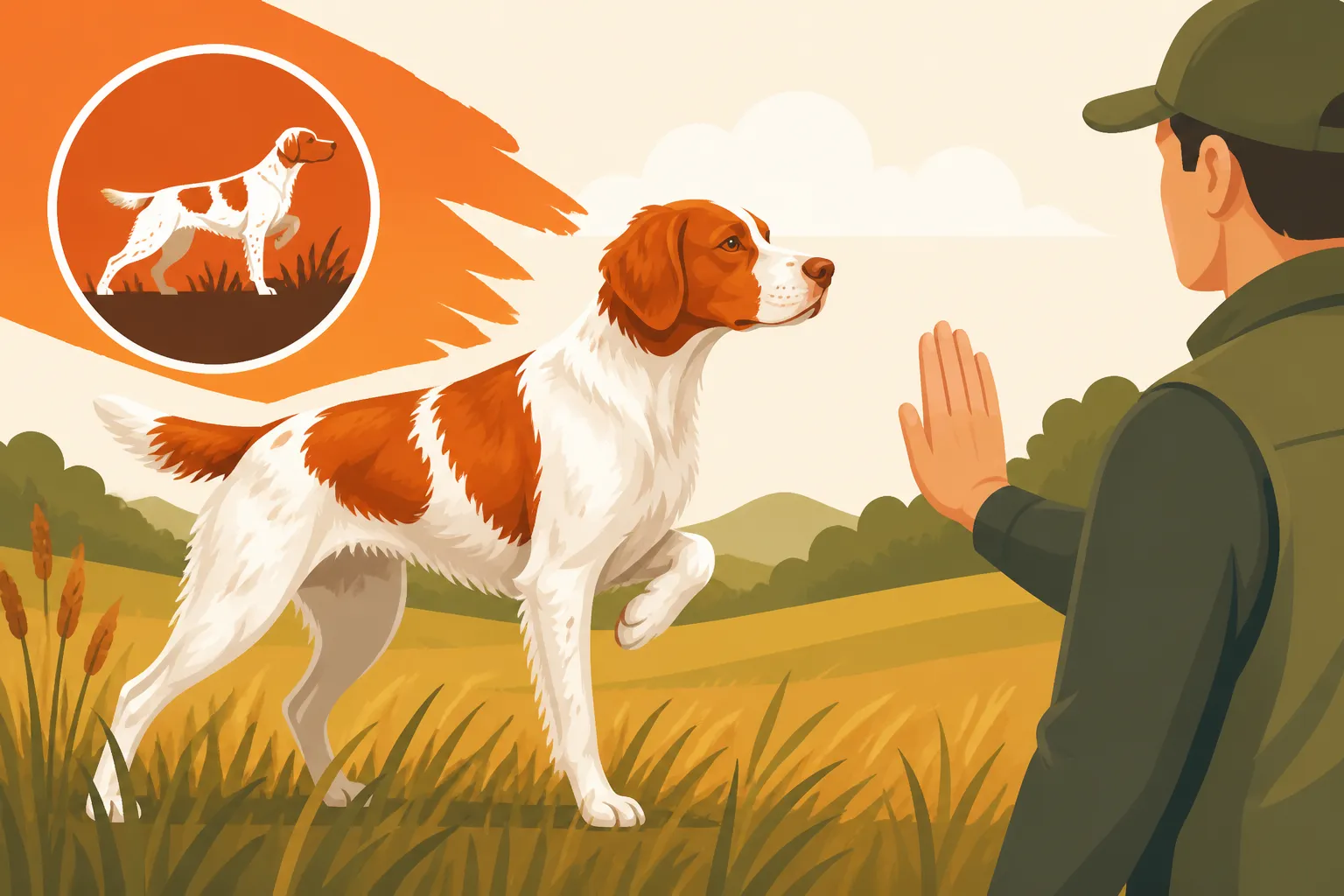
It’s easy to think of "whoa" as just another way to say "stop," but for a bird dog, these two commands are worlds apart. A regular "stop" might mean your Brittany halts, sits, or even lies down, breaking its focus or moving off the bird. "Whoa," on the other hand, means something far more specific and demanding: it means to freeze in place, standing completely still, maintaining focus on the bird, and waiting for further instruction. This stillness needs to be absolute, whether your dog is standing tall on point, halfway through a retrieve, or about to dash across a road.
Imagine your Brittany, nose to the wind, locked up on point. Without "whoa," that intense focus might translate into a slow creep forward, a slight shuffle, or even an accidental flush of the bird before you can even get in position. A reliable "whoa" allows you to approach, flush the bird on your terms, and then have your dog remain steady through the shot and fall. It's about channeling that raw instinct into controlled, elegant field work, turning potential chaos into a symphony of cooperation between you and your dog.
Safety on the Hunt and Beyond
Beyond the intricacies of bird work, "whoa" is a paramount safety command. Our Brittanys, with their boundless energy and prey drive, can sometimes put themselves in precarious situations if not given a clear command to stop and hold. Think of a scenario where you're hunting near a road, or perhaps in an area with hidden drop-offs or thick, thorny patches. A well-executed "whoa" can instantly halt your dog's progress, preventing them from bolting into traffic or blindly charging into danger.
I’ve heard countless stories, and experienced a few myself, where a timely "whoa" saved a dog from a potentially serious accident. Whether it's stopping them from venturing too far into dense cover where you might lose them, or preventing a run-in with another hunter's dog, this command provides an invaluable layer of control. Our dogs are family, and their safety is always paramount. A strong "whoa" helps minimize risks, especially when your Brittany is caught up in the excitement of a scent or a flush. It’s also crucial for mitigating The Injuries a Brittany Picks Up in the Field.
Elevating Your Brittany's Field Prowess and Partnership
Ultimately, teaching a reliable "whoa" is about enhancing your Brittany's natural abilities and strengthening the bond you share. A dog that understands and respects "whoa" is a more confident and effective hunter because they know their role and trust your guidance. It allows them to maintain focus on the task at hand – finding and pointing birds – without the distraction of trying to anticipate your next move or self-direct the flush.
This command transforms your Brittany from just a bird-finding machine into a true partner. It shows them that waiting for your signal leads to the desired outcome (the flush, the shot, the retrieve), building a deeply ingrained understanding and respect. When your Brittany freezes on point, eyes gleaming, tail quivering, waiting patiently for you to walk in and command the flush, it's a thing of beauty. It's the culmination of instinct, training, and trust, creating those unforgettable moments in the field that all Brittany owners cherish. This level of communication makes them incredibly biddable and a joy to hunt with.
Building the Bedrock: Pre-Whoa Training Essentials
Before you even utter the word "whoa," there are fundamental obedience skills that your Brittany needs to have locked down. Think of it like building a house: you wouldn't start framing the walls before pouring a solid foundation. These preparatory steps aren't just about good manners; they instill the patience, focus, and responsiveness that are absolutely crucial for learning the more advanced "whoa" command. Rushing this stage will only lead to frustration for both you and your energetic Brittany.
Mastering Foundational Obedience Commands
The journey to a reliable "whoa" starts with the basics: "sit," "stay," and a solid recall. These commands teach your Brittany impulse control – the ability to resist their natural urges and respond to your voice. A dog that can reliably "sit" and "stay" for increasing durations, even with mild distractions, is already developing the mental discipline required for "whoa." This is especially true for What a Brittany's Temperament Is Really Like, as they are intelligent and eager to please, but also full of energy.
Practice "sit" and "stay" in various environments, gradually increasing the distance between you and your dog, and the length of time they hold the position. Reward heavily for success. Equally important is a rock-solid recall, meaning your Brittany comes back to you promptly and enthusiastically every single time you call them. If your dog won't reliably come when called, it's going to be incredibly difficult to get them to "whoa" when they're ranging away from you. A reliable recall, in particular How Reliable a Brittany's Recall Is, provides the essential safety net when working your dog off-leash, and it builds the habit of checking in with you, which is key to eventual "whoa" success.
The Check Cord: Your First Step Towards Control
Once your Brittany has a good grasp of basic commands, it's time to introduce the check cord. This isn't just a long leash; it's a vital training tool for teaching "whoa" and establishing control at a distance without force. A check cord is typically a thin, lightweight rope, anywhere from 20 to 50 feet long, that you attach to your dog's regular training collar. Its purpose is to provide a gentle, consistent means of guiding and stopping your dog, allowing you to physically reinforce the "whoa" command as they learn it.
When choosing a check cord, consider a lighter material that won't weigh your dog down or get tangled easily. Many reliable options are available on online marketplaces like Amazon. Introduce the check cord during regular walks in a safe, open area, letting your dog drag it initially. Get them used to the feeling of it. Then, start picking it up and using it to guide them, stopping them gently with a slight upward pressure on the collar and a verbal "whoa" before immediately releasing the pressure and praising. The goal here is positive association – the check cord is a tool for communication and guidance, not punishment.
Introducing the Whoa Post Concept
One of the most effective ways to introduce the concept of "whoa" – absolute stillness – is through what's often called the "whoa post" method. This involves using a stationary object, like a fence post, a sturdy tree, or even a heavy stake driven into the ground, to literally hold your Brittany in place while you teach them to be steady. The whoa post removes the variable of your dog moving, allowing them to focus solely on holding a position without forward momentum.
Start by attaching your Brittany to the whoa post using their check cord, ensuring they can stand comfortably but cannot move forward or backward much. Give the "whoa" command, and then, using a lead or even just your hand, apply gentle, upward pressure on their training collar. The moment your dog stands still, even for a second, release the pressure and praise them lavishly. The key is consistency and short, positive sessions. Repeat this process, gradually increasing the duration of stillness before releasing. Don't push them too far too fast; remember that How Long a Brittany's Training Session Should Be is crucial for maintaining focus and enthusiasm. This exercise teaches them that "whoa" means "don't move," and that holding still results in praise and a positive outcome.
From Static to Dynamic: Teaching "Whoa" with Movement
Once your Brittany understands the static concept of "whoa" and can hold still while tethered, it's time to bring movement into the equation. This is where the command truly starts to translate into real-world application, progressing from a stationary exercise to a dynamic one that mimics the flow of a hunt. This phase requires patience and consistency, as your dog's natural urge to move forward will be at odds with the command.
Practicing "Whoa" on the Move with the Check Cord
Now that your Brittany is comfortable with the check cord and understands what "whoa" means when standing still, we'll combine these two elements. Start in an open, distraction-free area. Walk your Brittany on the check cord, allowing them to range a bit ahead of you. Periodically, give a clear, firm "whoa" command. As you say "whoa," simultaneously apply a gentle, upward tug on the check cord to stop their forward momentum. The instant they cease moving and plant their feet, release the pressure and offer immediate verbal praise like "Good whoa!" or "Yes!"
The goal here is for the dog to associate the sound of "whoa" with the physical sensation of stopping and holding still. Walk around your dog, maintaining eye contact, ensuring they remain frozen in place. If they shuffle or try to move, a quick, gentle reminder with the check cord and a repeated "whoa" should bring them back to attention. Start with very short durations of holding "whoa" and gradually extend the time as your Brittany gains understanding and confidence. Remember, the check cord is an extension of your arm, guiding them, not yanking them.
Adding Mild Distractions to the Mix
Once your Brittany is reliably "whoa-ing" while walking on the check cord in a quiet environment, it's time to slowly introduce distractions. This is a critical step because real-world hunting situations are rarely free of interesting sights, sounds, and smells. Start with very mild, distant distractions – perhaps another person walking far away, or a faint, non-threatening sound. The moment your dog's attention wavers, or they consider moving towards the distraction, use your "whoa" command and a gentle check cord correction to re-establish steadiness.
As your dog becomes more proficient, you can gradually increase the level of distraction. This might involve walking past a distant parked car, having someone walk a calm, leashed dog at a considerable distance, or even just working in an area with more natural scents. The key is to set your Brittany up for success, not failure. Don't introduce an overwhelming distraction too soon. If they consistently break "whoa" in the face of a distraction, scale back to an easier scenario. The idea is to build their confidence that they can hold "whoa" no matter what is going on around them.
Troubleshooting Common "Whoa" Hurdles: Creeping and Breaking
Brittanys are highly driven dogs, and it's completely normal for them to test boundaries or struggle with absolute stillness, especially when their instincts are screaming "go!" Two common challenges you'll face during this stage are "creeping" and "breaking point." Creeping occurs when your dog slowly inches forward while on point or attempting to hold "whoa." Breaking point, or simply "breaking," is when they completely abandon the "whoa" command and charge forward, often towards a bird.
For creeping, the solution is consistent, immediate correction. The moment you see that subtle forward movement, issue a sharp "whoa" and apply a gentle but firm upward tug on the check cord. Guide them back to their original position if necessary. For breaking, the response needs to be just as swift: a firm "whoa," a decisive stop with the check cord, and then physically return your dog to the exact spot where they broke. This might mean walking them back 10, 20, or even 50 yards to reset. It’s tedious, but absolutely necessary. Never punish your dog for making a mistake, but always correct the behavior. Praise the moment they comply. This teaches them that breaking point or creeping will always result in being brought back and the exercise being restarted, while holding "whoa" earns immediate praise.
Integrating Birds and Real-World Scenarios
This is where the rubber meets the road! For a Brittany, the ultimate test of "whoa" comes with the introduction of birds. Their instinct to chase and retrieve is incredibly strong, and channeling that drive into steady, controlled behavior around live game is the hallmark of a well-trained bird dog. This phase requires careful, controlled setups to ensure your Brittany learns correctly without developing bad habits.
Controlled Introductions to Live Birds
Before moving to the field, it's crucial to introduce live birds in a highly controlled environment. Using pigeons or quail in a bird launcher is an excellent way to do this. Start with your Brittany on the check cord, at a distance from the launcher. Release a bird, letting it fly away, without your dog giving chase. The point here is to let them see and smell the bird, but understand that they are not to move. Gradually, you can move closer, always maintaining the check cord.
Once your Brittany shows good steadiness with birds flying away, you can begin to have them point a bird that is stationary. Place a bird (wing-clipped or in a trap) in the field. Walk your Brittany on the check cord until they scent and point the bird. Give the "whoa" command as they lock up. While they are on point, flush the bird from the trap. Your Brittany must hold "whoa" through the flush. If they creep or break, immediately correct with the check cord and reset. Patience here is paramount. You might find resources on How to Start a Brittany on Pigeons helpful during this stage. Remember that our goal is not to suppress their retrieve drive, but to control it.
Steadiness: From Wing to Shot to Fall
The progression of "whoa" in bird work moves through several key stages, each building on the last to create a truly steady dog.
First is steady to wing: Your Brittany must hold its point as the bird flushes, not moving an inch. This shows incredible discipline, as every instinct tells them to chase. This is a critical step, as discussed in Teaching a Brittany Steady to Wing.
Next comes steady to shot: Once your dog is steady to wing, you introduce the sound of the gun. As the bird flushes and you fire a blank pistol or a light shotgun load, your Brittany must remain completely still, unfazed by the noise. Teaching a Brittany Steady to Shot is a detailed process that often involves starting with distant, quiet shots and gradually increasing proximity and volume.
Finally, there's steady to fall: After the shot, if the bird is brought down, your Brittany must remain steady until you give the command for the retrieve. This prevents them from self-retrieving or rushing in, which can be dangerous if another bird flushes or if the fallen bird is still alive. The dog learns to trust that you will send them for the retrieve at the appropriate time.
Each of these steps requires repetition, consistent reinforcement, and sometimes, going back a step if your dog shows signs of faltering. The ultimate goal is a dog that is a true partner, waiting for your commands through every phase of the hunt.
Transitioning to Unassisted "Whoa" in the Field
After countless repetitions on the check cord and in controlled bird scenarios, the goal is to transition your Brittany to reliable "whoa" without the physical tether. This is where you gradually lighten your reliance on the check cord, eventually removing it altogether. Start by letting your Brittany drag the check cord during training sessions. This way, you still have the option to step on it or quickly grab it if they hesitate or break.
As they become more reliable, practice in increasingly open and wilder terrain. Introduce more varied cover, different bird species, and natural distractions. The true test of an unassisted "whoa" is when your Brittany locks up on a wild bird, sometimes hundreds of yards away, and holds steady until you arrive, flush, and shoot. This takes immense trust and a deep understanding between you and your dog. You'll want to ensure they aren't Whether a Brittany Should Chase Early On, but rather wait for your command. It's a journey, not a destination, and continuous reinforcement, even with an experienced dog, is always beneficial.
Refining "Whoa" and Long-Term Maintenance
Teaching "whoa" is not a one-and-done process. Like any skill, it requires ongoing practice and reinforcement to keep it sharp, especially for a high-energy, intelligent breed like the Brittany. As you and your dog gain experience together, you'll encounter new situations and challenges that will test the reliability of their "whoa." This final stage focuses on polishing the command and ensuring it remains a rock-solid, reliable tool throughout your Brittany's hunting career.
The Role of E-Collars in Advanced Reinforcement
For many experienced handlers, an e-collar becomes an invaluable tool for refining and maintaining "whoa" at a distance. It's crucial to understand that an e-collar is never for teaching the initial command or for punishment. Instead, it's used for reinforcement – a way to apply gentle, consistent pressure from afar, mirroring the check cord pressure your dog learned in the early stages. The e-collar simply extends your reach and ensures compliance when your dog is out of physical range. Many resources, including those from organizations like BAXTER & Bella (known for comprehensive puppy and obedience training, which provides a strong foundation for advanced work), can guide you in responsible e-collar use.
When introducing an e-collar for "whoa," start with very low levels of stimulation that your dog can barely perceive. Pair the e-collar's momentary stimulation with your verbal "whoa" command, just as you did with the check cord. The dog learns that the slight sensation means "stop and hold still." The moment they comply, release the stimulation and offer verbal praise. Consistency in pairing the command with the stimulation is key. It's also wise to consult a professional gun dog trainer to ensure proper e-collar conditioning, as misuse can easily create negative associations. While the specific costs will vary, understanding What an E Collar Costs a Brittany Owner might be helpful. Also, consider Whether a Brittany Needs an E Collar at All for your specific training goals.
Practicing in Diverse, Challenging Environments
A truly reliable "whoa" works everywhere, not just in your familiar training field. To achieve this, you need to expose your Brittany to a wide variety of environments, gradually increasing the complexity and number of distractions. Practice "whoa" in dense cover, where scenting conditions are different and visibility is low. Work in fields with different bird species, varying wind conditions, and even near water. The more varied the situations your Brittany successfully navigates while holding "whoa," the more generalized and ingrained the command becomes.
Consider practicing with other hunting dogs, but only once your Brittany's "whoa" is solid. The excitement of another dog pointing or flushing can be an enormous distraction, but if your dog can hold "whoa" through that, it's a testament to their training. Introduce natural field sounds, distant gunshots (from other hunters, not just your own), and even the presence of non-game animals. Each successful "whoa" in a new or challenging scenario builds your dog's confidence and solidifies their understanding that "whoa" means "stop and hold" no matter what is happening.
Consistency is King: Maintaining a Reliable "Whoa"
Ultimately, maintaining a reliable "whoa" comes down to one word: consistency. Even a highly trained Brittany will become sloppy or forgetful if the command isn't regularly reinforced. This means using "whoa" not just during dedicated training sessions, but whenever appropriate in everyday life – stopping at a curb, pausing before entering a doorway, or even just asking them to "whoa" briefly in the yard. Every time you ask for and receive a correct "whoa," you reinforce its meaning and importance.
It also means being consistent in your expectations. Don't let your Brittany get away with creeping one day and then correct them strictly the next. Be clear, fair, and unwavering in your demands. Remember to always end training sessions on a positive note, with your Brittany successfully completing the command and receiving lavish praise. A reliable "whoa" is one of the most rewarding commands you can teach your Brittany, providing both safety and unparalleled enjoyment in the field for many years to come.
Training Tools for the "Whoa" Command
Understanding which tools can assist you in teaching the "whoa" command is just as important as knowing the techniques. Each tool serves a specific purpose, contributing to different stages of your Brittany's learning curve. Using them correctly and in sequence can make the process smoother and more effective for both of you.
| Training Tool | Primary Purpose for "Whoa" | Key Benefit | Considerations |
|---|---|---|---|
| Check Cord | Physical control, guiding stillness, preventing breaking | Builds initial understanding, safe distance control before off-leash | Requires active handler participation; can tangle in heavy cover |
| Whoa Post | Static steadiness, teaching concept of holding position | Reinforces mental discipline without movement from the dog | Limited to fixed location; not suitable for dynamic training |
| Bird Launcher | Controlled bird exposure, steady to wing/shot practice | Mimics real hunting scenarios, builds drive while maintaining control | Requires birds and open space; an investment in equipment and birds |
| E-Collar | Reinforcing "whoa" at a distance, advanced conditioning | Precision, long-distance communication and consistent reinforcement | Requires careful introduction, professional guidance; potential for misuse |
| Praise & Treats | Motivation, positive reinforcement for desired behavior | Builds enthusiasm and strong association with successful "whoa" | Can be distracting if overused or timed incorrectly; less effective at distance |
| Whistle | Long-distance auditory cue for "whoa" (or recall) | Highly effective across distances and in distracting environments | Requires dog to be conditioned to the whistle command specifically |
Disclaimer
This article is for general informational purposes only and does not constitute professional advice. Laws, prices and regulations vary by location and change over time. Consult a qualified professional for guidance on your specific situation.