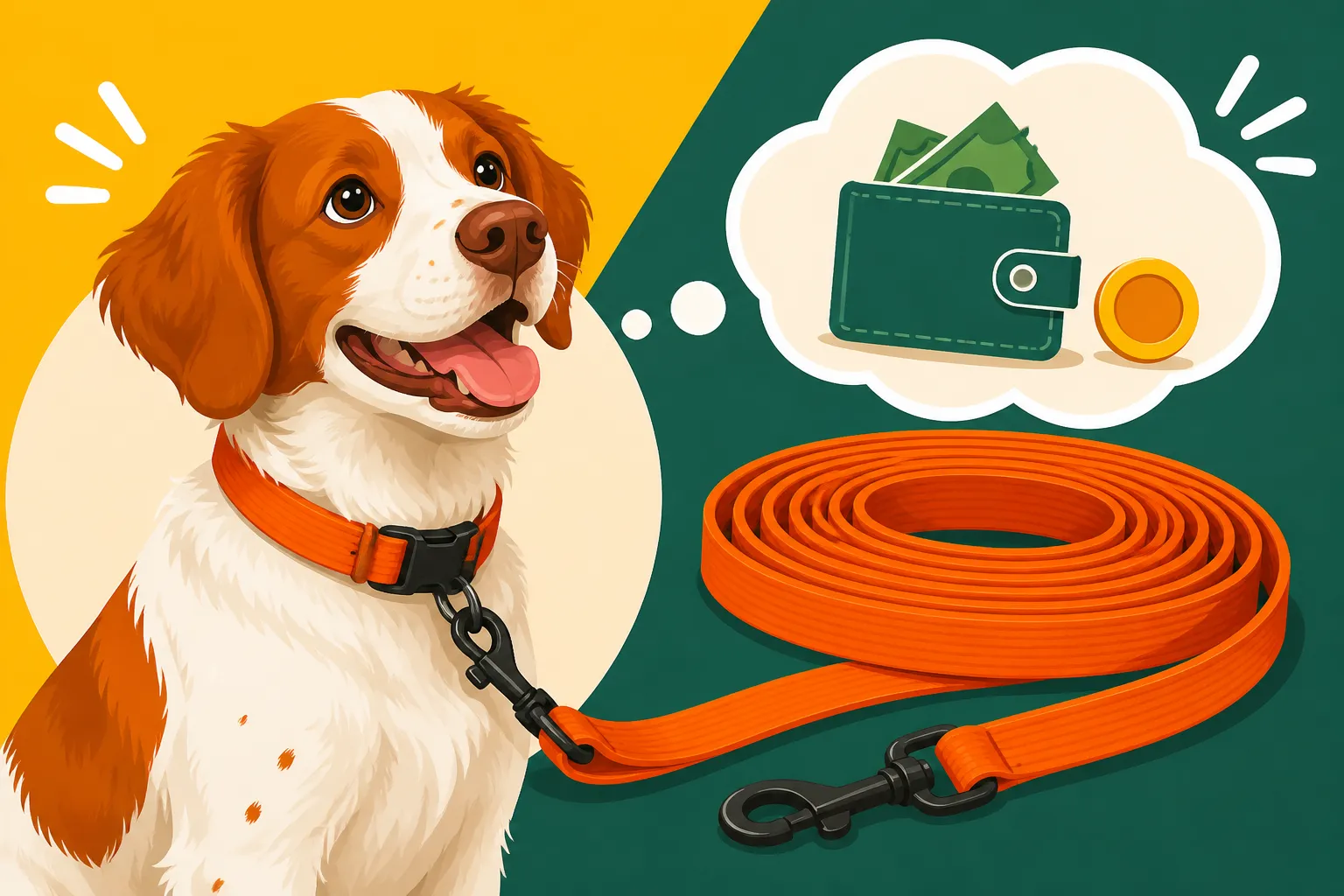
What a Fifty Foot Check Cord Costs a Brittany Owner
Bringing a new Brittany into your life is an incredible adventure, full of boundless energy and intelligence, but let's be honest, the costs can start to pile up faster than you anticipated. Beyond the initial puppy price, there's gear for training, and one item that often raises questions, especially regarding its length and durability for a dynamic hunting dog, is the check cord. This guide will walk you through everything you need to know about the cost and value of a fifty-foot check cord for your Brittany, ensuring you make an informed decision without breaking the bank.
The Indispensable Role of a Check Cord in Brittany Training
For any Brittany owner, especially those with hunting aspirations, a check cord isn't just an accessory; it's a foundational piece of training equipment. Unlike a standard leash, a check cord offers a longer line of communication and control, allowing your Brittany to explore and develop its natural instincts while remaining safely connected to you. It's truly a game-changer for building reliable behaviors that are crucial for a happy, well-adjusted gun dog.
Why Fifty Feet is the Sweet Spot for a Brittany
You might wonder, why fifty feet? Why not twenty, or even a hundred? For a Brittany, known for its energetic and enthusiastic ranging in the field, fifty feet strikes a perfect balance. It's long enough to allow your dog to stretch out, make independent decisions about scent and cover, and really start to understand the concept of "hunting for the gun." This length provides enough freedom to stimulate their innate bird drive without letting them get completely out of your control, which can be a real challenge with a breed as eager to please—and to run—as a Brittany.
Think about it: a shorter cord, say 20 or 30 feet, might be fine for initial puppy training in a small yard, but it quickly becomes restrictive once your Brittany gains confidence and speed. On the other hand, a cord much longer than fifty feet can become unwieldy. It's prone to tangling, dragging, and becoming a tripping hazard for both you and your dog. Imagine trying to untangle a hundred-foot rope after your Brittany has made a few circles in thick cover! The fifty-foot length helps you gradually introduce concepts like honoring a point, working scent, and developing a pattern in the field, all while maintaining a crucial safety net. This is particularly vital when you're working on basic commands in a more open environment, preventing your eager pup from bolting. Many trainers find this length ideal for teaching critical skills without overwhelming either the dog or the handler. You might even find yourself reaching for it when working on How Long a Brittany's Training Session Should Be to ensure productive, focused time.
Beyond Basic Obedience: Advanced Applications
A fifty-foot check cord extends its utility far beyond basic "sit" and "stay." It's an invaluable tool for proofing your Brittany's recall, especially when they're tempted by exciting bird scent or a distant squirrel. You can practice calling them back, and if they hesitate, a gentle tug on the cord reinforces the command. This controlled exposure to distractions, with the safety of the long line, is essential for building a rock-solid recall, which is paramount for a hunting dog.
Furthermore, a check cord is instrumental in teaching "whoa," a command that stops your dog dead in its tracks, crucial for steadiness to wing and shot. You can let your Brittany range, find a bird, and then, as they hit point, use the cord to reinforce the "whoa" command, preventing them from flushing prematurely. This allows you to walk up, flush the bird yourself, and build that vital patience and control. For an energetic breed, this controlled practice can prevent many frustrating moments in the field. It’s also a key step when you're trying to figure out How to Shorten a Brittany's Range without stifling their natural drive. It gives you that physical connection when you’re asking for more disciplined work, and it’s a safer alternative in many situations than simply relying on an e-collar, especially for a sensitive Brittany.
Understanding Check Cord Materials and Durability
The "cost" of a check cord isn't just the price tag; it's also about its longevity and how well it stands up to the rigors of Brittany life. You're not buying a decorative rope; you're investing in a tool that will be dragged through mud, water, thorny brush, and probably chewed on a time or two. The material and construction are huge factors in how long it lasts and, ultimately, how much value you get from it.
Material Matters: Nylon vs. Cotton vs. Biothane
When you start looking at check cords, you'll quickly notice a few common materials, each with its own pros and cons, particularly for a Brittany:
- Nylon: This is probably the most common and often the most affordable option. Nylon cords are generally strong and resistant to rot and mildew. However, they can absorb water, becoming heavy and cumbersome, especially on a rainy day or if your Brittany loves to splash through puddles. They can also get tangled easily and might cause rope burn on your hands if your dog makes a sudden dash. Many everyday training leads, readily available from retailers like Chewy, are made of nylon.
- Cotton: Cotton cords are softer on the hands and generally less prone to rope burn. They're also often quite affordable. The downside for a Brittany that's out in the field is that cotton absorbs a lot of water, becoming incredibly heavy and taking a long time to dry. It also tends to pick up burrs and debris like a magnet, and can fray or rot over time if not properly cared for.
- Biothane: Ah, Biothane! This is often considered the gold standard for working dog equipment, and for good reason. Biothane is a polyester webbing with a PVC coating, making it incredibly durable, waterproof, odor-proof, and easy to clean. It won't absorb water, so it stays lightweight in wet conditions, and it's much less likely to snag or tangle. While often more expensive upfront, its superior durability and low maintenance can make it more cost-effective in the long run. For a Brittany that's constantly encountering wet grass, muddy fields, and thorny cover, a Biothane cord is a wise investment, resisting the wear and tear that can quickly degrade other materials.
Hardware and Construction: What to Look For
Beyond the cord material itself, pay close attention to the hardware and overall construction.
- Snaps: Look for sturdy, brass or stainless steel snaps. These materials resist rust and corrosion, which is crucial if your Brittany will be working in wet environments or spending time in salt marshes. Cheap pot metal snaps can break unexpectedly, leaving your dog unrestrained at the worst possible moment. A swivel snap is also preferable, as it helps prevent the cord from twisting and tangling.
- Stitching/Rivets: Examine how the snap is attached to the cord. Reinforced stitching or strong, rust-resistant rivets are essential. Weak attachment points are often the first to fail, especially with a strong-pulling Brittany.
- Handle: Some check cords come with a handle loop, while others are just a plain cord. A handle can be convenient for quickly grabbing and securing your dog, but it can also get snagged on brush. Many experienced handlers prefer a cord without a handle to avoid snags, opting instead to gather the cord as needed. Consider your hunting environment and personal preference here. A well-constructed cord should feel robust and reliable in your hands, giving you confidence when your Brittany makes a powerful dash.
The Actual "Cost" of a Check Cord
When we talk about "what a fifty-foot check cord costs a Brittany owner," it's not just a single number. It's a range influenced by material, brand, quality, and where you buy it. And then there are the less obvious, but equally important, costs of maintenance and potential replacement.
Price Ranges and Factors Affecting Them
You'll find a wide spectrum of prices for check cords.
- Entry-Level Options: These are typically made of basic nylon or cotton and can be found at general pet stores or large online retailers like Chewy. They might be suitable for very light use or for someone just testing the waters with a check cord. The cost is generally on the lower end, but so is the expected lifespan and durability.
- Mid-Range Choices: These often feature better quality nylon, possibly with some weather-resistant coatings, or a basic Biothane option. You might find these at specialty dog supply stores, outdoor outfitters, or dedicated gun dog supply websites. They offer a good balance of durability and affordability for regular training.
- Premium Selections: High-quality Biothane cords, often from specialized manufacturers focusing on hunting dog gear, fall into this category. These are built to withstand heavy, continuous use in harsh environments. While the initial outlay is higher, the investment often pays off in terms of longevity, reliability, and ease of use, making them a favorite among serious hunters and trainers.
| Feature / Type | Entry-Level (Nylon/Cotton) | Mid-Range (Better Nylon/Basic Biothane) | Premium (High-Quality Biothane) |
|---|---|---|---|
| Material | Standard nylon or cotton | Heavy-duty nylon, basic coated webbing (Biothane-like) | True Biothane (PVC/TPU coated webbing) |
| Durability | Fair; prone to tangling, water absorption, wear | Good; more resistant to abrasion and weather | Excellent; waterproof, odor-proof, highly durable |
| Maintenance | Requires regular cleaning, can retain odors | Easier to clean, less odor retention | Very easy to clean, wipe-and-go |
| Weight (Wet) | Heavy and cumbersome when wet | Moderate; somewhat water-resistant | Stays lightweight |
| Snagging/Tangle | Prone to tangling and picking up debris | Less prone to tangling | Very low snagging, minimal tangling |
| Hand Feel | Can cause rope burn, less comfortable when wet | Decent, some rope burn possible | Smooth, comfortable, no rope burn |
| Snap Hardware | Basic metal, may rust | Durable metal, often brass or plated steel | Stainless steel or solid brass, heavy-duty swivels |
| Overall Value | Lower initial cost, higher long-term replacement risk | Good balance of cost and performance | Higher initial cost, excellent long-term value, fewer replacements |
Always check the product description for details on materials and hardware. Don't be shy about reading reviews from other Brittany owners to gauge real-world performance. Websites like Chewy offer a wide array of choices, allowing you to compare features and read customer feedback extensively.
The Hidden Costs: Replacement and Maintenance
The actual dollar amount on the tag isn't the whole story. Consider the cost of replacing a cheap cord every season because it's frayed, absorbed too much water, or simply fell apart. A premium Biothane cord, while more expensive initially, might last for many years, effectively reducing your cost per year of ownership. This long-term thinking applies to many aspects of Brittany ownership, including gear like What an E Collar Costs a Brittany Owner or even What a Brittany's Field Water Setup Costs.
Maintenance is another "cost." A cotton cord might require scrubbing, drying, and untangling after every few uses. A Biothane cord, on the other hand, often just needs a quick wipe down with a damp cloth, saving you time and effort. If you're out hunting regularly, that saved time is a valuable commodity. Also, consider potential repairs. A quality cord with robust hardware is less likely to need mending or cause a sudden safety issue. Investing in durable equipment helps ensure your training progresses smoothly and safely, which is invaluable.
Maximizing Your Check Cord Investment
Choosing the right check cord is just the first step. To truly get the most out of your investment and ensure it serves your Brittany well for years to come, proper care and knowing when to replace it are key. After all, a reliable cord is a cornerstone of effective training, helping you teach everything from basic recall to Teaching a Brittany Steady to Wing.
Making Your Cord Last
Taking a few simple steps can significantly extend the life of your check cord, regardless of its material:
- Cleanliness is Key: After every outing, especially if your Brittany has dragged it through mud, water, or dense cover, take a moment to clean your cord. For nylon and cotton, this might mean a rinse and thorough drying to prevent mildew and odors. For Biothane, a quick wipe with a damp cloth is usually all it takes. Removing dirt and debris prevents abrasive particles from wearing down the material over time.
- Proper Storage: Don't just toss your cord in a messy pile in the garage. Coil it neatly and hang it up, or store it in a designated bin. This prevents tangles, reduces stress on the material, and keeps it away from pests or chewing hazards. A well-organized cord is also less likely to be forgotten when you're rushing out the door for a training session or a hunt.
- Inspect Regularly: Before and after each use, give your check cord a quick once-over. Check the snap for signs of rust or wear, inspect the stitching or rivets for any loosening, and look for fraying or cuts in the cord itself. Catching small issues early can prevent a major failure later. This routine inspection is a crucial habit for any gun dog owner.
- Avoid Excessive Force: While check cords are strong, repeatedly snapping or jerking on the line with extreme force can put undue stress on the material and hardware. Train your Brittany with consistent, clear communication, relying on gentle guidance rather than brute strength. This not only preserves your equipment but also fosters a stronger bond with your sensitive Brittany.
When to Upgrade or Replace Your Check Cord
Even the best-cared-for check cord won't last forever. Knowing when to replace it is crucial for safety and effective training.
- Visible Wear and Tear: Any significant fraying, deep cuts, or thinning of the cord material means it's time for a replacement. A compromised cord can snap under pressure, potentially putting your Brittany in a dangerous situation.
- Damaged Hardware: If the snap is bent, rusted, sticky, or no longer closes securely, it's a hazard. A faulty snap is an open invitation for your dog to get loose. Don't try to "make do" with a broken snap; safety should always be your top priority.
- Loss of Integrity: If your cord feels brittle, stiff, or otherwise compromised in a way that makes you question its reliability, it's time to retire it. This is especially true for cotton or nylon cords that have been exposed to harsh weather conditions over many seasons.
- Evolving Needs: As your Brittany matures and progresses in training, your needs might change. You might start with a basic nylon cord, but as you delve deeper into field work and need something more durable and easy to maintain for regular use, upgrading to a quality Biothane cord becomes a worthwhile investment. Just like you might re-evaluate What a Brittany's Monthly Food Bill Runs as your dog ages, you should also reassess your equipment needs.
By being mindful of material choices, maintaining your gear, and knowing when to replace it, you ensure that your fifty-foot check cord remains a valuable and safe tool in your Brittany's training journey. It's one of those essential pieces of equipment that can truly make a difference in building a confident, obedient, and capable gun dog. Investing a little more in quality upfront can save you headaches and expenses down the line, freeing you up to focus on enjoying your Brittany's incredible companionship and working ability. For holistic care, remember to factor in overall health costs and even consider pet insurance from providers like Healthy Paws for those unexpected veterinary bills that can pop up. Similarly, ensuring your Brittany gets proper nutrition, perhaps with a high-quality food delivery service like Ollie, complements all your training efforts for a truly well-rounded dog.
Disclaimer
This article is for general informational purposes only and does not constitute professional advice. Laws, prices and regulations vary by location and change over time. Consult a qualified professional for guidance on your specific situation.