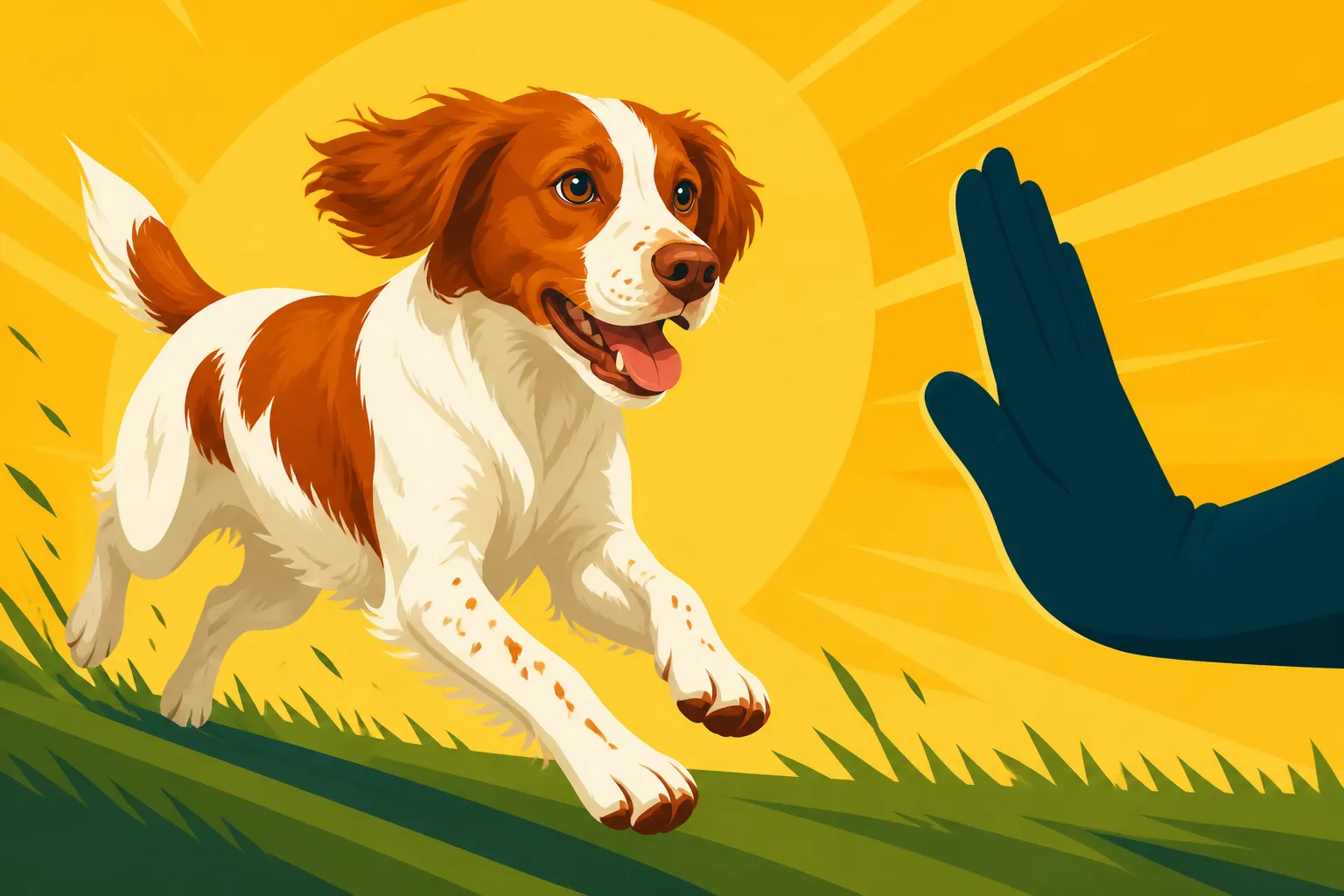
Whoa on a Brittany That Wants to Keep Moving
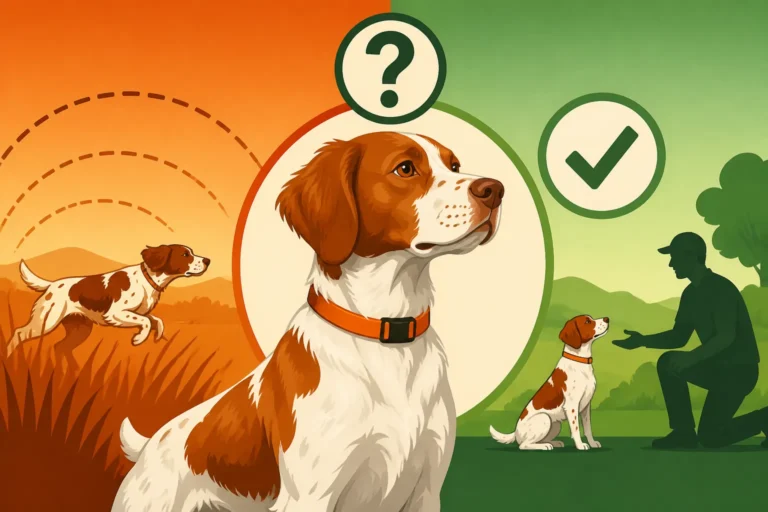
Oh, the "whoa" command! It sounds so simple, a single word, but for a high-drive, eager-to-please Brittany, it can feel like asking them to defy their very nature. Many of us have been there, watching our beautiful bird dog lock up on point, then inch forward, or even break and chase when the flush happens. It's frustrating when their instincts clash with what we're asking them to do. This comprehensive guide is here to walk you through teaching your Brittany the critical "whoa" command, helping them become the steady, reliable gun dog you both aspire to.
Understanding the Brittany's Drive: Why "Whoa" Feels Counter-Intuitive
Before we even begin talking about specific techniques, it’s crucial to understand why "whoa" can be such a challenge for a Brittany. These aren't couch potatoes; they are finely tuned athletes with generations of instinct guiding their every move. Asking them to halt, often mid-action, requires them to override deeply ingrained behaviors. It’s not that they’re stubborn, it’s that their DNA is shouting a different command.
The Brittany's Inherent Bird Drive and Stamina
Brittanys were bred for one primary purpose: to find and point game birds. This means they possess an incredible bird drive that often borders on obsession, coupled with stamina that seems boundless. They can cover immense amounts of ground in a day, tirelessly searching for scent. When that bird scent hits their nose, their entire being focuses on it. Their muscles coil, their eyes fix, and every fiber of their being is ready to spring into action. To then demand they stop and remain stopped, even when the bird is fluttering or flushing, goes directly against this powerful drive. It's like asking a race car to sit still at the starting line when the flag drops.
This deep-seated drive is what makes them such fantastic hunting companions, but it also means that the "whoa" command isn't just a trick; it's a fundamental retraining of their natural impulse. We're not trying to extinguish their drive, but rather to channel it, to teach them control within that drive. The challenge is real, and it’s a testament to your Brittany’s heart that they even attempt it. Many owners struggle with this, feeling like their dog is deliberately ignoring them, but often it's just their intense instincts taking over.
The Instinct to Chase and Range
Another aspect of the Brittany's nature that makes "whoa" tricky is their natural inclination to chase. While they are pointers, the final act of a bird flushing can trigger a chase response, especially in young or unsteadied dogs. They want to get closer, to pin the bird down, to interact with it. This pursuit drive is powerful and rewarding for them, making it difficult to suppress. This is particularly true for American Brittanys, which are often bred to How Far an American Brittany Ranges, covering large areas in their search. French Brittanys, while typically hunting How Close a French Brittany Hunts, still possess that fundamental desire to pursue.
Think about it from your dog's perspective: they've spent all that energy finding the bird, pinpointing its location, and now it's flying away. Their brain is screaming "Go get it!" and we're asking for the exact opposite. This is why "whoa" isn't just about stopping on point, but also about holding steady after the flush, preventing that instinctive dash after a retreating bird. Mastering this requires more than just repetition; it requires teaching them that remaining still is ultimately more rewarding and that the bird is for you, the hunter, not for immediate pursuit.
Softness and Sensitivity in Training
Brittanys are known for being a "soft" breed. They are highly intelligent and eager to please, but they also respond best to gentle, consistent training methods. The Brittany Is the Softest of the Pointing Breeds, meaning harsh corrections or excessive pressure can actually be counterproductive, causing them to shut down, become timid, or even lose their desire to hunt. This sensitivity means your approach to teaching "whoa" needs to be measured, patient, and primarily positive. You can't just bully a Brittany into staying put; you have to teach them to understand and want to comply.
This sensitivity impacts how quickly they learn and how they react to pressure. A Brittany that is yelled at or physically reprimanded for breaking point might associate the "whoa" command with an unpleasant experience, rather than with a desired behavior. Instead of learning to hold steady, they might become hesitant to point at all, or worse, become Signs a Brittany Is Becoming Gun Shy. Finding that delicate balance between firmness and gentleness is key. It's about building trust and clearly communicating expectations without breaking their spirit. They thrive on praise and positive reinforcement, which makes the learning process a partnership rather than a confrontation.
Laying the Foundation: Pre-Whoa Training Essentials
Before you ever utter the word "whoa" in a birdy situation, your Brittany needs a solid foundation in basic obedience. Think of it as building a house; you wouldn't start framing the walls before pouring the slab. These preliminary commands and tools are the bedrock upon which a reliable "whoa" will be built. Skipping these steps often leads to frustration for both you and your dog down the line.
Building a Solid "Sit" and "Stay"
The "sit" and "stay" commands are the absolute prerequisites for teaching "whoa." A dog that can reliably sit and stay in various environments, even with distractions, has already learned the fundamental concept of holding still on command. This teaches them impulse control and that remaining stationary, even when their instincts tell them otherwise, is a rewarding behavior. Start by practicing "sit" and "stay" indoors, in quiet environments, and gradually introduce distractions. Extend the duration of the "stay" and increase the distance you move away from them.
Make "sit" and "stay" fun and rewarding. Use high-value treats and enthusiastic praise. This isn't about breaking their spirit; it's about teaching them that listening to you leads to good things. Once your Brittany can hold a 30-second "stay" with you out of sight, and reliably "sit" on command even when there are interesting things happening around them, you're building the mental discipline they'll need for "whoa." This also reinforces your leadership role, making them more likely to defer to your commands when their instincts kick in. Remember, consistency in these basic commands will pay dividends when you move to more complex tasks.
Importance of a Reliable Recall
A bulletproof recall is non-negotiable for any gun dog, and it's particularly vital when teaching "whoa." Your Brittany is bred to How Far an American Brittany Ranges, and sometimes their enthusiasm can get the better of them. If your dog breaks point or chases a bird, you need to be able to call them back immediately and reliably, without having to chase them down. A strong recall ensures their safety and allows you to correct their behavior without having to physically retrieve them, which can be damaging to the dog's trust and eagerness.
Start recall training early and make it the most rewarding command your Brittany knows. Use an excited tone, special treats, or a favorite toy. Practice in increasingly distracting environments. A long check cord, which we'll discuss next, is an excellent tool for enforcing recall during early stages. Always praise and reward generously when they come, even if it took a moment. This consistent positive reinforcement ensures that coming back to you is always a happy experience. A dog that comes back happily is a dog you can trust to work with you, even when the "whoa" command gets challenging.
Essential Training Tools: Check Cords and Whistles
When it comes to teaching "whoa," you're going to rely heavily on a few key tools. A check cord is your best friend. This is a long rope, often 20 to 50 feet in length, that attaches to your dog's collar. It allows you to maintain control and physically enforce the "whoa" command even when your dog is at a distance. It's a safety line and a communication tool. When your Brittany starts to creep or break point, a gentle tug on the check cord can remind them of the command without you having to shout or chase. You can find quality check cords on platforms like Amazon, often bundled with other training essentials.
A whistle is another indispensable tool. Unlike your voice, a whistle carries further, cuts through wind and cover, and always sounds the same. It prevents your voice from becoming hoarse and ensures your commands are clear and consistent. A specific whistle command for "whoa" (often a series of short blasts or a long sustained blast) can be taught alongside the verbal cue. Remember, What a Check Cord and Whistle Cost a Brittany Owner is a minimal investment for the control and communication it provides. These tools are extensions of your communication, not crutches. They help bridge the gap between your intent and your dog's understanding, especially when dealing with such a driven breed.
Introducing "Whoa" in a Controlled Environment
With the foundation laid, it's time to formally introduce "whoa." The key here is control and consistency. We want your Brittany to understand exactly what the command means before we add the intense distraction of birds or the open field. This phase is about building a strong association between the word "whoa" and the act of stopping and staying put.
The First Steps: Leash Pressure and Verbal Cues
Start indoors or in a quiet, enclosed yard with your Brittany on a regular 6-foot leash and a flat collar. Walk your dog, then abruptly stop and say "Whoa!" in a firm, clear voice. At the same time, apply gentle, upward pressure on the leash. The moment your dog stops and ideally stands still, release the pressure, praise them enthusiastically, and give them a high-value treat. Repeat this process many, many times. The goal is for your dog to associate the word "whoa" with stopping and the cessation of leash pressure.
Don't let them sit or lie down initially; "whoa" means to freeze in position. If they move, gently guide them back to their original spot and repeat the command and leash pressure. The beauty of this method is that it's clear and unambiguous. Your dog quickly learns that stopping and staying still makes the pressure disappear and brings rewards. Keep these early sessions short and positive, around How Long a Brittany's Training Session Should Be, so your Brittany doesn't get bored or frustrated. The more repetitions you get in a low-distraction environment, the stronger the command will become.
Using a Training Table for Initial Lessons
For many Brittany owners, a training table becomes an invaluable tool during this stage. A raised surface, like a sturdy grooming table or even a picnic table, creates a confined space where the dog is less likely to move forward or dart away. This minimizes opportunities for them to make mistakes and allows you to focus solely on the "whoa" command. With your Brittany on the table, again on a short leash, walk them a few steps, then say "Whoa!" and apply gentle upward leash pressure as before. Their natural instinct will be to stop at the edge of the table or to brace themselves, which is exactly what you want.
The training table removes much of the physical temptation to move. There's nowhere to go but to hold still. This method, often championed by traditional gun dog trainers, is highly effective for instilling the initial understanding of "whoa." Reward them heavily for standing still on the table. You can even practice short "stays" on the table with the "whoa" command. This setup allows for very precise corrections and immediate rewards, reinforcing the desired behavior quickly. Once they are rock-solid on the table, you've built a strong mental foundation for the command.
Gradually Increasing Duration and Distraction
Once your Brittany is stopping reliably on "whoa" with leash pressure, both on the ground and ideally on a table, it's time to build duration and introduce mild distractions. Start by asking for longer periods of "whoa" before releasing them. Count to three, then five, then ten. Continue with praise and treats for holding position. Next, gradually introduce distractions. This might mean having someone walk by, dropping a toy (but don't let them get it!), or practicing in an area with some distant activity.
The key is to set them up for success. Don't go from a quiet living room to a bustling park in one jump. Incremental increases in duration and distraction allow your Brittany to generalize the command and understand that "whoa" means stop, no matter what. If they break, calmly reset them to their original spot, give the "whoa" command, and apply gentle leash pressure again. Patience here is paramount. Every successful "whoa" in the face of a new distraction builds confidence in both you and your dog. Remember, even BAXTER & Bella's online training programs emphasize the importance of breaking down complex commands into manageable steps, precisely for this reason.
Transitioning "Whoa" to the Field: From Controlled to Real-World
Now that your Brittany understands "whoa" in a controlled setting, it's time to take it outside, where the real magic (and challenges!) happen. The goal is to transfer that reliable obedience to the exciting, scent-rich environment of the field, preparing them for actual bird work.
Working with a Check Cord in Open Spaces
This is where your long check cord truly shines. Find an open field or a large park with minimal distractions, but not yet any birds. Attach the check cord to your Brittany's flat collar and let them drag it initially, allowing them to get used to the feel. Then, begin walking them on the check cord, letting them range out a bit. As they move, occasionally call out "Whoa!" and simultaneously step on the check cord to stop their forward momentum. The idea is to associate the verbal command with the physical halt.
Practice this repeatedly. As your Brittany gets the hang of it, you'll find you need to step on the cord less and less, as they anticipate the stop. Walk around them while they're "whoa-ed," gently stroke their back, and then release them with a clear command like "Okay" or "Free." This teaches them to hold their position until you release them, which is crucial for steadiness on point. The check cord gives you the security of knowing you can prevent them from breaking the command, allowing you to build their understanding and trust without constant frustration.
Introducing "Whoa" with Live Birds or Bird Wing
This is the moment of truth for many gun dogs. You've taught "whoa," but can they hold it when their ultimate temptation—a bird—is involved? Start with a frozen bird wing on a string, or better yet, a live bird (like a pigeon or quail) in a bird launcher or carefully placed under a bird net. How to Start a Brittany on Pigeons is often the best route for this. Have your Brittany on the check cord. Work them into the wind, letting them catch scent. The moment they lock up on point, calmly walk up, step on the check cord if needed, and give the "Whoa!" command. Praise them softly for holding.
Initially, you might just have them "whoa" for a few seconds on the scent, then calmly lead them away. Gradually, you'll increase the duration. Once they're holding reliably on scent, you can introduce a controlled flush. With your dog on a steady point and you controlling the check cord, flush the bird. The instant your Brittany tries to break, give a firm "Whoa!" and apply check cord pressure to stop them. If they remain steady, heap on the praise. This is incredibly challenging for them, so keep initial sessions short and positive. This step is about teaching self-control in the face of immense temptation.
Dealing with Creeping and Bumping Birds
It's common for a Brittany to "creep" on point, slowly inching forward, or "bump" a bird, causing it to flush prematurely. This is their prey drive overriding the "whoa" command. When you see your dog start to creep, a quick, firm "Whoa!" accompanied by a short, sharp tug on the check cord (often called a "correction") is necessary. The correction should be just enough to get their attention and stop the forward movement, not to punish them harshly. Immediately after the correction, praise them for stopping. The timing of this correction is absolutely vital—it must happen the instant they start to creep.
If your Brittany bumps a bird, resist the urge to yell or get angry. Instead, bring them back calmly to the spot where they broke, reset them, and then work them into another bird, reinforcing the "whoa" command from the beginning. You might need to go back to more controlled scenarios, like using the training table or just the check cord without birds, to reinforce the command. Patience and consistency are your greatest allies here. Every time you correct creeping or bumping effectively, you're teaching your Brittany that staying still is the only acceptable response to the "whoa" command, regardless of how exciting the bird might be.
Troubleshooting Common "Whoa" Challenges
Even with the best intentions and consistent training, you're likely to encounter a few bumps in the road. Brittanys are intelligent, but they're still dogs with powerful instincts. It's how you address these common challenges that will determine your ultimate success.
My Brittany Breaks Point: What Went Wrong?
If your Brittany consistently breaks point and chases, it usually points to a few common issues. First, insufficient foundational training. Did you rush through the "sit," "stay," and initial "whoa" steps in low-distraction environments? Often, owners are eager to get to birds and skip these critical early phases. Go back to basics, use the check cord, and reinforce "whoa" without birds until it's absolutely solid. Second, inconsistent corrections. Were your "whoa" commands always followed by the same pressure and release? Was every attempt to break met with an immediate, clear correction? Inconsistency teaches the dog that sometimes they can get away with it.
Third, overwhelming distractions too soon. Did you introduce live birds too quickly, or in an environment that was too stimulating? This often happens when a Brittany puppy is given When a Brittany Puppy Should Meet Its First Bird without proper training structure. Sometimes, the bird itself might be too close or too active, making it irresistible. You might need to use a calmer bird or one that is securely contained (like under a net) initially. Finally, consider your own energy. Are you getting frustrated? Dogs pick up on our emotions. Remain calm, firm, and patient. If you're feeling overwhelmed, take a break and come back to it later. It's a marathon, not a sprint.
The Dog "Creeps" or "Bumps" Birds
Creeping is a dog slowly inching forward on point. Bumping is when they make contact with the bird, causing it to flush prematurely. Both are a form of breaking point, driven by that intense desire to get closer. To address creeping, your timing must be impeccable. The moment you see any forward movement, a sharp, quick tug on the check cord (coupled with a firm "Whoa!") is needed. The key is to interrupt the behavior as it starts, not after it's fully developed. Some trainers even use a helper to watch the dog's feet and give a signal the instant they move, allowing the handler to correct immediately.
For bumping, prevention is the best cure. If your dog has a history of bumping, increase the distance between them and the bird initially. Use a bird launcher or a remote release device to control the flush. When they bump, immediately give a sharp "Whoa!" correction with the check cord and guide them back to their original point spot. Reset the scenario and try again. Don't let them "win" by chasing the bumped bird. This sends the wrong message. It takes many repetitions for a Brittany to learn that absolute stillness is required, especially when the bird is literally right there.
When "Whoa" Becomes a "Freeze" Instead of a "Stop"
Sometimes, a Brittany might learn "whoa" but interpret it as an absolute freeze that prevents them from moving at all, even when you want them to relocate or follow. This is usually a result of over-correction or an overly rigid training approach. They become hesitant to move or even point, fearing a correction. This is the opposite of what we want; we want a dog that is confidently steady, not paralyzed by fear. If you notice your Brittany is becoming timid or hesitant to engage with birds, you might have been too harsh or inconsistent.
To fix this, go back to positive reinforcement. Make "whoa" a calm, reassuring command. When they "whoa" correctly, reward them heavily. Introduce a clear release command (e.g., "Okay" or "Free") that signals they are allowed to move again. Practice "whoa" then release, then "whoa" then release, frequently. If they are on point and you want them to relocate, use a gentle verbal cue like "Find 'em up" or "Go on" rather than a forceful "Okay" to encourage forward movement on your terms. Rebuild their confidence by making every interaction around "whoa" positive and clear, ensuring they understand it's a temporary hold, not a permanent freeze. This is where How Sensitive a Brittany Is to Correction really comes into play.
Advanced "Whoa" Concepts and Maintaining Steadiness
Once your Brittany is reliably holding "whoa" on point in various field conditions, you can begin to refine the command. This is about taking them from a steady pointer to a truly "finished" gun dog, capable of handling the entire hunting scenario with poise and control.
Steadiness to Wing, Shot, and Fall
This is the ultimate goal for many bird dog owners.
- Steadiness to Wing: Your Brittany holds point when the bird flushes (takes wing). They don't break, creep, or chase. This is achieved through consistent practice with controlled flushes, reinforcing "whoa" with the check cord as described earlier. The dog learns that even when the bird is flying, their job is to remain still.
- Steadiness to Shot: Your Brittany holds point even when the gun fires. This is taught by introducing gun fire gradually and positively during steadiness training. Start with very distant gunshots while your dog is focused on a bird, and slowly bring the gun closer. Never fire a gun too close to a dog that hasn't been desensitized, as it can lead to Signs a Brittany Is Becoming Gun Shy. A Brittany that is rock-solid on "whoa" and comfortable with gun fire will naturally extend their steadiness through the shot.
- Steadiness to Fall: Your Brittany holds point even as the bird falls after being shot. This is the hardest part for most dogs, as the fall of a bird reignites that powerful retrieve drive. You continue to reinforce "whoa" at this critical moment, perhaps even with a slightly firmer check cord reminder. The dog learns that retrieving is your job initially, and they will only retrieve on your command. This takes immense patience and consistency, as you're asking them to deny a very strong natural impulse.
Honoring Another Dog's Point (Backing)
If you plan to hunt with multiple dogs, teaching your Brittany to honor another dog's point (often called "backing") is essential. This means that when one dog goes on point, the other dog stops and "backs" that point, usually by also pointing in the direction of the first dog. This prevents multiple dogs from rushing the same bird and ensures safety in the field. To teach backing, start with your steady Brittany on a check cord. Have another, experienced dog go on point. As your Brittany approaches, give the "Whoa!" command and use the check cord to stop them behind the pointing dog.
Reward them for holding still. Initially, they might not understand why they're stopping, but with repetition, they'll learn to associate the sight of another dog on point with their "whoa" command. Gradually remove the check cord as they become more reliable. This requires them to read the body language of another dog and respond to it, demonstrating a higher level of field intelligence and control. It's a beautiful thing to watch two Brittanys honor each other's points, working as a seamless team in the field.
Integrating "Whoa" into Real Hunting Scenarios
The ultimate test of "whoa" is in a genuine hunting scenario with wild birds. All the training, the check cord work, the bird launchers—it all culminates here. While you might want to ease into this, remember that wild birds behave differently from planted birds. They flush unexpectedly, run more, and the environment is full of new distractions. Start in areas with fewer birds or with a hunting buddy who can help you manage your dog and the situation.
Continue to carry your check cord (even if it's just in your vest for emergencies) and be ready to enforce "whoa" when needed. The goal is for "whoa" to become an automatic, ingrained response, a default behavior when a bird is encountered. Celebrate every successful point and hold. Don't be discouraged by setbacks; real hunting conditions are challenging. Each real-world experience, both good and bad, offers a learning opportunity. Over time, your Brittany will learn that steady control on point ultimately leads to more successful retrieves and a more satisfying hunt for both of you. A finished gun dog is truly a sight to behold, a testament to months, if not years, of dedicated training.
| Training Phase | Environment | Key Tools | Focus | Goal |
|---|---|---|---|---|
| Foundation | Indoors, Quiet Yard | Short Leash, Collar | Sit, Stay, Reliable Recall | Basic obedience, impulse control |
| Introduction | Quiet Yard, Training Table | Short Leash, Flat Collar | Verbal "Whoa," Leash Pressure | Understand "Whoa" means stop and hold |
| Transition to Field | Open Field, Mild Distraction | Long Check Cord, Whistle | "Whoa" at distance, Controlled Flushes | Apply "Whoa" in dynamic outdoor settings |
| Bird Work (Early) | Controlled Bird Fields | Long Check Cord, Bird Launcher | "Whoa" on Scent, Steady to Flush | Hold Point, Resist Creeping/Bumping |
| Advanced Steadiness | Varied Hunting Scenarios | Check Cord (optional), Gun | Steady to Wing, Shot, Fall; Backing | Confident, reliable gun dog in all situations |
Training Philosophy: Patience, Consistency, and Positive Reinforcement
Teaching "whoa" to a Brittany isn't just a series of steps; it's a philosophy built on understanding the breed. Your approach matters just as much as the techniques you use. Remember, you're working with a highly intelligent, sensitive creature whose deepest instincts are often at odds with the command you're asking for.
The Brittany's Sensitivity to Harsh Corrections
As we touched on earlier, Brittanys are notoriously soft. What Happens When You Shout at a Brittany can be detrimental to their training and their relationship with you. They don't respond well to anger, yelling, or heavy-handed physical corrections. Instead of learning what you want, they often learn to avoid conflict, which can manifest as shutting down, losing confidence, or even becoming "hard-mouthed" (reluctant to retrieve softly). This sensitivity means every interaction must be clear, fair, and as positive as possible.
When a correction is necessary (and sometimes it is, especially for breaking point), it should be a quick, firm, and impersonal interruption, immediately followed by the opportunity to do it right and be praised. It's not about punishment, but about redirection. Think of it as a clear "No, that's not what I want" rather than a scolding. Focus on rewarding the correct behavior rather than dwelling on the mistakes. A Brittany that is confident and eager to please will learn "whoa" much more effectively than one that is fearful or confused.
Celebrating Small Victories
Training a gun dog, especially for a complex command like "whoa," is a journey filled with tiny steps forward. There will be days of triumph and days of frustration. It's absolutely crucial to celebrate the small victories along the way. Did your Brittany hold point for an extra second? Did they hesitate before creeping? Did they come back on recall immediately after a small break? These are all successes worth acknowledging with enthusiastic praise, a favorite treat, or a quick game of fetch.
These small celebrations build your dog's confidence and reinforce their desire to work with you. They teach your Brittany that trying hard and listening pays off. Don't wait for perfection to offer rewards. The path to a finished gun dog is paved with these incremental successes. This positive reinforcement keeps your Brittany engaged and happy, making them a willing partner in the training process, rather than a reluctant student. A program like BAXTER & Bella often emphasizes this positive, progressive approach to keep dogs motivated.
When to Seek Professional Guidance
Sometimes, despite your best efforts, you might hit a wall. Your Brittany might not be progressing, or you might feel overwhelmed by a particular challenge. This is when seeking professional guidance is not a failure, but a smart decision. A good professional gun dog trainer has experience with hundreds of dogs, understands breed-specific traits, and can spot nuances in your training or your dog's behavior that you might miss. They can offer an objective perspective and provide tailored solutions.
Don't wait until you're completely frustrated or have created bad habits that are harder to undo. A few sessions with a reputable trainer can often get you back on track, whether it's refining your technique, helping introduce birds, or working through a specific behavioral issue. They can help you understand How Biddable a Brittany Is and tailor the training to your individual dog's personality. Remember, What a Professional Gun Dog Trainer Charges for a Brittany is an investment in a lifetime of enjoyable hunting and companionship with your dog. Investing in professional help means you're investing in the bond with your Brittany and their future success in the field.
Disclaimer
This article is for general informational purposes only and does not constitute professional advice. Laws, prices and regulations vary by location and change over time. Consult a qualified professional for guidance on your specific situation.