The Brittany Is the Softest of the Pointing Breeds
Many new Brittany owners quickly discover that these eager, intelligent dogs are incredibly sensitive creatures, often leading to frustration when traditional "tough" training methods backfire. This guide is dedicated to helping you truly understand the unique temperament of the Brittany, unraveling what it means to be the "softest" of the pointing breeds, and providing compassionate, effective strategies to build a strong, trusting relationship and bring out your Brittany's full potential in the field and at home.
Understanding What "Soft" Really Means for a Brittany
When people say a Brittany is "soft," it's often misunderstood. It doesn't mean they are fragile, weak, or incapable of being a robust hunting partner. Far from it! Brittanys are renowned for their athleticism, drive, and tireless energy in the field. What "soft" truly refers to is their extreme sensitivity to correction, tone of voice, and even subtle changes in your demeanor. They are incredibly tuned into their human partners, often reading your mood and intentions before you even fully articulate them. This sensitivity is a double-edged sword: it makes them wonderfully biddable and eager to please when handled correctly, but it can also make them shut down, become anxious, or even fearful if approached with harshness or inconsistency.
It’s a common scenario: a well-meaning hunter, accustomed to more robust breeds that can handle a stern correction, tries the same approach with their new Brittany. A sharp word, a yank on the lead, or even an overly frustrated tone can cause a Brittany to crumple. They might avert their eyes, cower, or simply stop engaging. This isn't defiance; it's a deep emotional response to perceived disapproval. Many a hunting season has been derailed by a Brittany that lost its confidence after a few too many harsh reprimands. Understanding this inherent trait is the very first step toward a successful partnership. It means adjusting our approach, not expecting the dog to change its fundamental nature.
Beyond Just Sensitivity: A Deep Dive into Brittany Temperament
The Brittany's "softness" is intertwined with several other key temperament traits. They are generally highly intelligent, keen to learn, and possess an almost overwhelming desire to please their handler. This combination is what makes them such fantastic partners when you tap into it positively. They want to do the right thing, and they want to do it for you. Their enthusiasm is boundless, and their energy seems endless, especially as young dogs. However, this same eagerness can sometimes be misinterpreted as stubbornness or hyperactivity if their needs aren't met or their training isn't tailored to their sensitive nature.
For instance, a Brittany might be so excited by a bird flush that they break point, not out of disobedience, but sheer overstimulation. A harsh correction in that moment could teach them that birds equal punishment, rather than teaching them steadiness. Instead, a gentle re-direction and rewarding the desired behavior (holding point) would be far more effective. They thrive on clear communication, positive reinforcement, and consistent, fair expectations. They often follow their people from room to room, eager to be involved in whatever is happening, a testament to their desire for connection. Whether a Brittany Is Clingy Like a Vizsla is a common question, and while they might not reach the clinginess levels of some other breeds, their need for human companionship and affirmation is certainly high.
The Impact of Harshness: Why Traditional Methods Fail
Traditional dog training methods, which often incorporate physical corrections, loud verbal reprimands, or dominance-based tactics, are not just ineffective for Brittanys; they are actively detrimental. A Brittany subjected to such methods is likely to develop a range of behavioral issues, from fear and anxiety to shutting down entirely. They may become withdrawn, lose their natural bird drive, or even develop fear-based aggression in extreme cases. Instead of learning, they learn to avoid. Instead of trusting, they become wary.
Imagine a scenario: you're trying to teach your young Brittany recall, and they get distracted by an interesting scent, taking a moment too long to return. If your immediate response is to shout or physically drag them back, you're not teaching them that coming to you is a good thing. You're teaching them that returning to you can be unpleasant or scary. This negative association can be incredibly difficult to undo with a sensitive breed. Instead, a consistent, rewarding approach to recall, perhaps using a long line for safety and ensuring every return is met with praise and a tasty treat, yields far better, and longer-lasting, results. What Happens When You Shout at a Brittany is rarely positive; it almost always leads to a dog that distrusts rather than learns.
The Foundations of Positive Reinforcement with a Brittany
Given their sensitive nature, positive reinforcement is not just a preferred method for Brittanys; it's practically a requirement. This approach focuses on rewarding desired behaviors, making them more likely to occur again. It builds a foundation of trust, clear communication, and mutual respect between you and your dog. Instead of punishing what you don't want, you are teaching and reinforcing what you do want. This method aligns perfectly with the Brittany's eager-to-please temperament, allowing them to learn without fear or intimidation.
Starting with a positive approach from day one sets the tone for your entire relationship. It transforms training from a chore into a fun, engaging activity that both you and your Brittany look forward to. Think of it as a dialogue rather than a monologue. You're communicating what you'd like them to do, and when they offer that behavior, you're reinforcing it in a way that makes them feel good about their choices. Many new puppy owners find structured online programs beneficial for this, as they provide step-by-step guidance. Programs like those offered by BAXTER & Bella, which emphasize positive, force-free training, can be an excellent resource for establishing this crucial foundation.
Building Trust: Your Brittany as a Partner, Not a Subordinate
For a Brittany, trust is the bedrock of all successful training and partnership. They need to feel secure in your leadership, knowing that you will guide them gently and fairly, without resorting to harshness. When a Brittany trusts you, they are more willing to try new things, push their boundaries slightly in the field, and ultimately, perform at their best. This trust is built through consistency, kindness, and understanding their unique needs. It means being patient when they make mistakes, and celebrating their successes, no matter how small.
Consider a young Brittany experiencing its first loud noises, perhaps during a hunting simulation. If you respond with calm reassurance and positive association, rather than ignoring or forcing them, you build their confidence. If they look to you for guidance and find a steady, supportive presence, they learn that new experiences, even potentially startling ones, are manageable when you're by their side. This partnership mentality extends to every aspect of their life, from daily walks to intense field work. How Sensitive a Brittany Is to Correction highlights why a trusting relationship is paramount; without it, any correction, however mild, can easily erode their spirit.
The Power of Praise and Rewards
Brittanys thrive on praise and positive reinforcement. A simple "Good dog!" delivered with enthusiasm, a gentle scratch behind the ears, or a high-value treat can go a long way in shaping their behavior. These rewards act as powerful motivators, telling your Brittany exactly what they did right and encouraging them to repeat it. It's crucial to understand what your individual Brittany considers rewarding. For some, it might be a squeaky toy; for others, a small piece of cheese. Varying your rewards keeps them engaged and eager to earn their next one.
The timing of your reward is just as important as the reward itself. It needs to be delivered within seconds of the desired behavior so your Brittany clearly understands what they are being praised for. Clicker training, for example, uses a distinct sound as a marker, precisely pinpointing the exact moment of correct behavior, followed immediately by a reward. This clarity is especially beneficial for a highly intelligent breed like the Brittany. You can find excellent clickers and a variety of training treats on platforms like Amazon to support your positive reinforcement journey. This method is incredibly effective in complex behaviors like retrieving or Teaching a Brittany Steady to Wing.
Navigating Common Training Challenges with a Sensitive Dog
Training a Brittany, particularly for field work, comes with its own set of challenges, all compounded by their sensitive nature. Commands that might be straightforward with a tougher breed require a nuanced, patient approach with a Brittany. The goal is always to guide them towards the desired behavior, building their confidence along the way, rather than imposing your will through force. It's a dance of encouragement and gentle shaping.
Introducing the Gun: A Gentle Approach
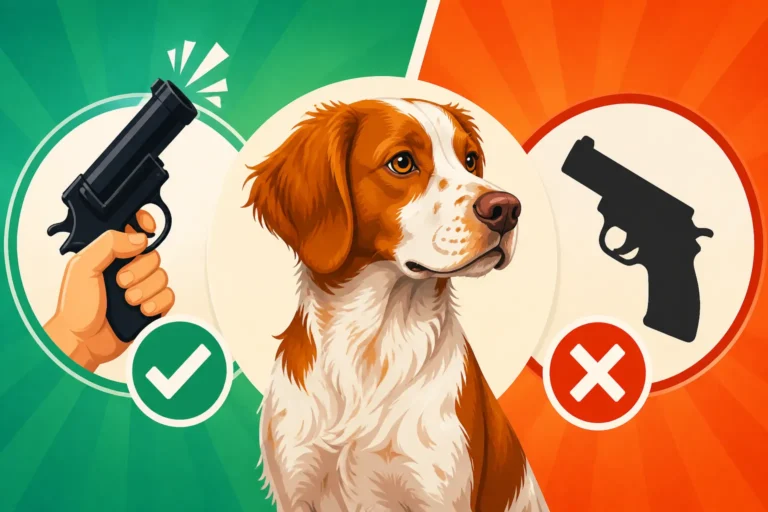
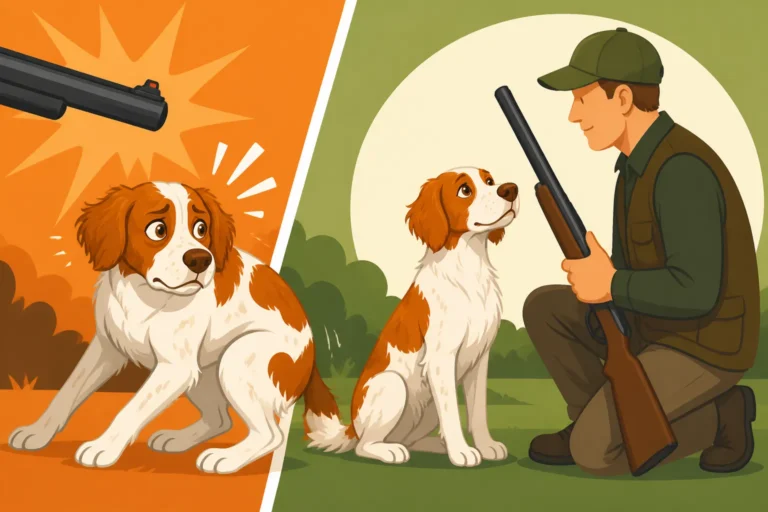
Gun shyness is a very real concern with sensitive breeds, and Brittanys are no exception. Their acute hearing and tendency to startle can make the introduction of gunfire a delicate process. Rushing this step or exposing them to loud noises too early can create a lifetime of fear, completely derailing their potential as a hunting dog. The key is gradual desensitization, starting with very low-level sounds and associating them with positive experiences. How to Introduce a Gun to a Brittany is a process that requires extreme care and patience.
Begin with a starter pistol or even cap guns, fired at a significant distance while your Brittany is engaged in a highly enjoyable activity, like eating their favorite meal or playing fetch. The sound should be barely audible initially. As they remain calm and continue their activity, you can gradually decrease the distance or increase the volume over many, many sessions, always ensuring the sound remains a positive or neutral experience. Never introduce a gun while your Brittany is startled, stressed, or focused on something else negatively. If you see Signs a Brittany Is Becoming Gun Shy, stop immediately and backtrack. This is not a challenge you can push through; you must build confidence.
Mastering "Whoa" Without Breaking Spirit
The "whoa" command is fundamental for a pointing dog, signaling them to freeze in place, often while on point. With a Brittany's natural exuberance and drive, teaching a reliable "whoa" can be challenging, as their instinct is often to keep moving towards the bird. However, applying harsh physical corrections or intimidation to enforce this command can easily dampen their spirit and make them hesitant on point. Instead, a methodical, patient approach is essential.
Start teaching "whoa" on a check cord, gradually introducing it during walks or play, making it a general stop command before associating it with birds. When you introduce birds, use planted birds that stay put, allowing your Brittany to get a solid point. As they lock up, gently step on the check cord while giving the "whoa" command. Reward lavishly for any pause, even a brief one. Gradually increase the duration they hold point before releasing them to retrieve. Consistency and positive reinforcement are key. If you try to force Teaching a Brittany Whoa too quickly, you risk creating a dog that creeps or bumps birds, or worse, loses confidence in its natural pointing ability.
Dealing with Corrections: Timing and Tone Are Everything
Corrections for a Brittany must be minimal, timely, and delivered with a calm, firm, but never angry, tone. Their sensitive nature means they respond much better to subtle cues than to overt punishment. Often, a sharp intake of breath, a low verbal "eh-eh," or a slight change in your body language is enough to get their attention and communicate disapproval. The moment they cease the unwanted behavior, immediately offer praise and redirection to an acceptable activity.
For example, if your Brittany is counter surfing, a brief, calm "no" followed by redirecting them to a chew toy and praising them for taking the toy is far more effective than yelling or swatting. The goal is to interrupt the unwanted behavior and guide them to a better choice, not to instill fear. Long, drawn-out reprimands or dwelling on past mistakes are meaningless to a Brittany and only serve to confuse or distress them. How Long a Brittany Remembers a Bad Session is often longer than you'd think, emphasizing the need for positive interactions.
| Correction Type | Impact on Brittany | Effectiveness | Long-Term Outcome |
|---|---|---|---|
| Harsh Verbal/Physical | Fear, anxiety, shut-down, loss of trust, gun-shyness | Low/Negative | Behavioral problems, reluctance to work, damaged relationship |
| Sharp, Frustrated Tone | Confusion, withdrawal, hesitancy to engage | Low | Reduced enthusiasm, learned helplessness |
| Consistent "No" + Redirection | Understanding, clear boundaries, positive association | High | Desired behavior reinforced, confident learner |
| Clicker + Reward (for desired behavior) | Enthusiastic learning, strong positive association | High | Reliable performance, eager partnership, happy dog |
| Ignored (for attention-seeking) | Teaches that unwanted behavior doesn't pay off | Medium | Reduction of attention-seeking behaviors |
Socialization and Environmental Exposure for a Soft Brittany
A well-socialized Brittany is a confident Brittany. Their sensitive nature means they can be prone to shyness or fear if not properly exposed to a wide variety of sights, sounds, people, and other dogs during their critical developmental periods. However, "socialization" doesn't mean overwhelming them; it means controlled, positive introductions that build their comfort level incrementally. This foundation is crucial for a well-adjusted companion, both at home and in the bustling environment of a hunting camp or field trial.
Early Exposure: Laying the Groundwork for Confidence
The period between 8 and 16 weeks is vital for a Brittany puppy's socialization. During this time, introduce them to as many new, positive experiences as possible. This includes different surfaces (grass, pavement, carpet), various noises (vacuum cleaners, distant traffic, gentle claps), friendly strangers, and vaccinated, well-behaved dogs. Always ensure these experiences are positive, pairing them with treats, praise, and gentle reassurance. Never force an interaction or push a fearful puppy.
For example, when meeting new people, ask them to crouch down, offer a hand for sniffing, and speak in a calm, soft voice. If your puppy approaches, reward them. If they hesitate, let them observe from a distance without pressure. Whether a Brittany Puppy Should Be Socialized Heavily is an emphatic yes, but always with quality over quantity in mind. Puppy classes, such as those that might align with the positive training philosophy of BAXTER & Bella, can provide a safe, structured environment for controlled socialization with other puppies and people, helping to prevent Signs a Brittany Puppy Is Shy from developing into deeper issues.
Managing New Experiences: Preventing Overwhelm
While early exposure is crucial, it's equally important to manage new experiences carefully, especially with a sensitive Brittany. They can easily become overwhelmed by too much stimulation, too many new faces, or too much noise all at once. Pushing a Brittany beyond its comfort zone can lead to fear, anxiety, or even a complete shutdown, making them less likely to engage in similar situations in the future.
When introducing a new environment, such as a busy park or a new hunting ground, start with short visits. Allow your Brittany to observe from a distance, gradually moving closer as they show signs of comfort. Look for subtle cues of stress like yawning, lip licking, tail tucking, or averting their gaze. If you see these signs, back off and give them space. Always end on a positive note, with a successful, calm interaction. Remember, a single negative experience can have a lasting impact on a sensitive dog. Building positive associations takes time and patience, but the payoff is a confident, well-adjusted Brittany.
Living with a Sensitive Brittany: Beyond the Field
The Brittany's sensitive nature doesn't just impact their training; it extends to their daily life and their role as a family companion. While they are phenomenal in the field, they are equally devoted house dogs, requiring mental stimulation, physical exercise, and a calm, consistent home environment to thrive. Understanding their emotional needs off the hunt is just as important as understanding their drive on it.
The Importance of a Calm Home Environment
A Brittany's home should be a sanctuary, a place of peace and predictability. Loud arguments, constant chaos, or inconsistent routines can be highly stressful for these sensitive dogs. They thrive on routine and knowing what to expect. While they are generally adaptable, a stable environment contributes significantly to their overall well-being and confidence. Think of your home as their safe harbor from the sometimes-overwhelming outside world.
Creating quiet spaces for your Brittany, such as a comfortable crate in a low-traffic area or a specific bed, allows them to retreat when they feel overwhelmed. These "safe zones" are especially important in multi-pet households or homes with young children. Teaching children how to interact gently and respectfully with the dog is paramount, as a Brittany will often tolerate more than it enjoys before showing signs of stress. This understanding will help mitigate potential issues and ensure your Brittany remains a happy, well-adjusted member of the family.
Addressing Separation Anxiety and Clinginess
Because Brittanys bond so strongly with their people, they can be prone to separation anxiety or excessive clinginess if not managed carefully. While they might follow you from room to room, enjoying your presence, leaving them alone for extended periods without proper training can lead to destructive behaviors, excessive barking, or distress. Whether a Brittany Is a One Person Dog often depends on their early socialization and how many family members participate in their care and training.
To prevent or address separation anxiety, start with short, planned absences, gradually increasing the duration. Ensure your Brittany has plenty of mental and physical exercise before you leave. Providing engaging chew toys or puzzle feeders can distract them during your absence. Never make a big fuss when you leave or return; keep departures and arrivals calm and low-key. For severe cases, consulting a professional behaviorist is advisable. Training programs like BAXTER & Bella often have modules dedicated to managing separation anxiety and building a dog's confidence when left alone, offering practical strategies for owners.
Advanced Training and Maintaining a Brittany's Drive
Even as your Brittany matures and masters basic commands, their sensitive nature means advanced training and maintaining their drive requires ongoing attention. The goal is to keep them engaged, confident, and eager to work, without ever pushing them past their emotional limits. It’s a fine balance of challenge and support.
Keeping Training Fun and Engaging
For a Brittany, training should always feel like a game, an opportunity to bond and earn your approval. Repetitive, drill-like sessions without enthusiasm or variation can quickly lead to boredom or a loss of interest. Instead, incorporate variety into your training, introducing new challenges, new locations, and different types of rewards. Keep sessions short, especially when learning new concepts, and always end on a positive note.
Consider activities like scent work, which taps into their natural instincts, or agility, which provides both mental and physical stimulation. Even in field training, vary the types of birds, the cover, and the scenarios to keep them sharp and excited. A Brittany that views training as fun will be a more enthusiastic and reliable partner in the long run. Remember, this breed is intelligent and curious; they enjoy problem-solving and showing off their skills, especially when they know it makes you happy.
Recognizing and Respecting Your Brittany's Limits
Understanding when your Brittany needs a break, or when a particular training method is causing stress rather than progress, is paramount. Pushing a sensitive dog past its limits can quickly undo weeks or months of positive training and erode their confidence. This might mean recognizing subtle signs of fatigue, stress, or a lack of engagement, and knowing when to simply call it a day or switch to an easier, more familiar exercise.
For example, if you're working on advanced steadiness in the field, and your Brittany starts creeping or breaking point more frequently, it might not be defiance. It could be a sign of mental fatigue, overstimulation, or a lack of understanding. Instead of escalating corrections, take a step back. Revisit earlier, easier steps, or simply take a break and play a game of fetch. Always prioritize their emotional well-being over hitting a training milestone on a specific timeline. A happy, confident Brittany will ultimately be a better performer than a stressed or fearful one.
When to Seek Professional Help (and how to choose the right trainer)
Sometimes, despite your best efforts, you might encounter behavioral challenges that feel beyond your ability to manage. This is perfectly normal, and there's no shame in seeking professional guidance. For a sensitive breed like the Brittany, choosing the right professional is critical. An inappropriate trainer can do more harm than good, especially if they rely on outdated or harsh methods.
Identifying Red Flags in Training Methods
When searching for a trainer, be wary of anyone who promises quick fixes, uses terms like "dominance" or "alpha," or suggests that your Brittany needs to be "shown who's boss." These are significant red flags for a sensitive breed. Avoid trainers who use physical corrections like leash pops, pinch collars, prong collars, or e-collars as primary training tools, especially without extensive experience with soft breeds and a proven track record of positive reinforcement. A good trainer will focus on teaching you how to communicate effectively with your dog, understanding their body language, and using rewards to shape behavior.
Also, be cautious of trainers who isolate dogs, work exclusively without owners present, or refuse to let you observe training sessions. Transparency is key. You should always feel comfortable with the methods being used and understand the rationale behind them. A responsible trainer will empower you, the owner, to continue the training at home, ensuring long-term success.
Finding a Trainer Who Understands the Brittany's Nature
The best professional help for a Brittany will come from trainers who specialize in positive reinforcement, force-free methods, and ideally, have experience with sensitive sporting breeds. Look for certified professional dog trainers (CPDT-KA) or certified behavior consultants (CBCC-KA) who emphasize building a strong, trusting relationship. Ask about their philosophy and how they handle common Brittany challenges like gun shyness, steadiness, or range.
A good trainer will conduct a thorough assessment of your Brittany's temperament and your specific goals. They will explain their methods clearly and focus on teaching you the skills to continue the training yourself. Don't be afraid to interview several trainers, ask for references, and observe a class or session before committing. The right trainer can be an invaluable partner in unlocking your Brittany's full potential, ensuring a happy, confident, and well-behaved companion for years to come. Whether it's for basic obedience or refining field skills, a positive approach is always the way to go.
Disclaimer
This article is for general informational purposes only and does not constitute professional advice. Laws, prices and regulations vary by location and change over time. Consult a qualified professional for guidance on your specific situation.