How Many Yards an American Brittany Runs Out
One of the most common questions new Brittany owners, or even seasoned hunters considering a Brittany, grapple with is just how far these enthusiastic bird dogs will range out in the field. It's a valid concern because a dog's natural working distance directly impacts your hunting style, the type of cover you can effectively work, and ultimately, your success. This guide is here to demystify the American Brittany's ranging tendencies, explain why they hunt the way they do, and offer practical advice on managing their incredible drive, ensuring you and your Brittany are always a cohesive team.
Understanding the American Brittany's Natural Range
When you think about the American Brittany, picture an engine of pure energy, bred for speed and finding birds across vast open spaces. Their inherent desire to cover ground is not just a personality trait; it's a fundamental part of their genetic makeup, shaped by decades of selective breeding focused on specific hunting scenarios.
The Historical Purpose Behind Their Wide Range
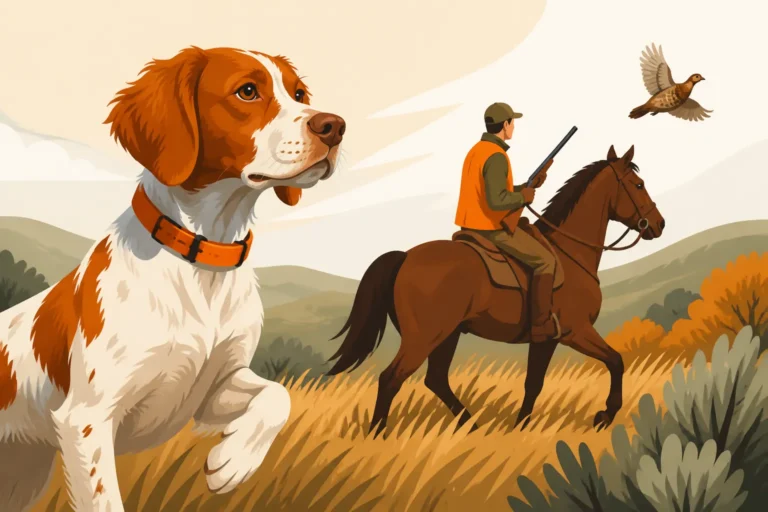
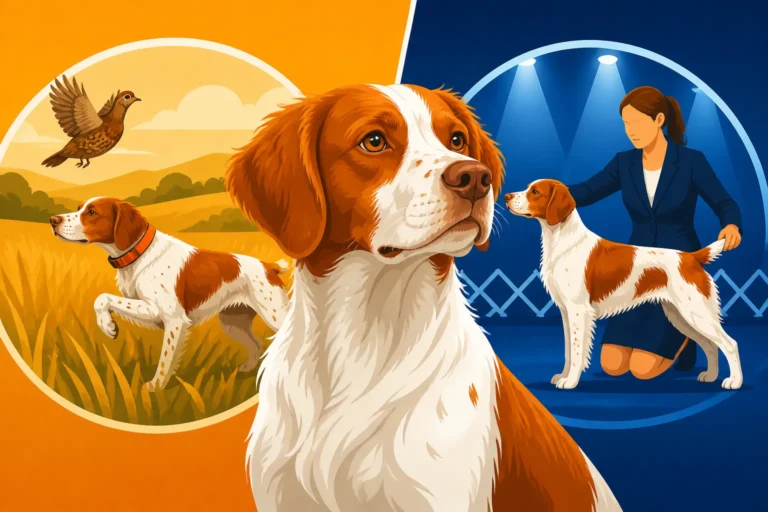
The American Brittany's history is deeply intertwined with American bird hunting traditions, particularly the expansive landscapes of the Midwest and other areas with large fields and lighter cover. Unlike some European pointing breeds that were developed for walking hunters in denser woods, the American Brittany was refined to range out, effectively sweeping large tracts of land to locate game birds like pheasant and quail. This was often done with hunters on horseback, or covering significant ground on foot, needing a dog that could extend far ahead and hold a staunch point until the hunter could arrive.
Think of it this way: if you're trying to find a needle in a haystack, you don't want to meticulously search a tiny corner while the rest remains untouched. You want to cover as much ground as possible, as efficiently as possible. This is precisely what the American Brittany was bred to do. Their genetics tell them to cast wide, to work the wind, and to scent out birds that might be hundreds of yards away. This impressive ground coverage is a hallmark of the breed and what makes them such effective bird dogs in suitable terrain. It's truly a marvel to watch a well-bred American Brittany work, quartering across a field with boundless energy, instinctively knowing how to maximize their search pattern. This inherent drive is a key distinction, often highlighted when comparing it to other types of Brittanys or different pointing breeds, and understanding this foundational purpose helps manage expectations and training approaches.
Factors Influencing a Brittany's Natural Tendency to Range
While genetics provide the blueprint for a wide range, several other factors can significantly influence how far your American Brittany will actually push out in the field. It's not a one-size-fits-all number, and understanding these variables is crucial for effective training and successful hunts.
First and foremost is the individual dog's temperament and energy level. Even within the American Brittany breed, there's variation. Some dogs are simply born with a hotter motor, a stronger desire to explore and cover ground. This isn't necessarily a fault; it's just part of their individual personality. Another major factor is the cover and terrain. In wide-open fields with sparse cover, a Brittany will naturally open up and run wider because there are fewer obstacles to slow them down and the scent cone of a bird can carry further. Conversely, in dense woods or heavy brush, even the widest ranging Brittany will tend to hunt closer, adapting to the environment where a wide cast would be inefficient or impractical.
Wind conditions also play a critical role. A smart Brittany will use the wind to its advantage, often ranging into the wind to pick up scent more effectively. This might mean extending further out on one side of a field than the other. The type of birds you're hunting can also affect range. A Brittany might work closer on tight-holding pheasants in heavy cover, but open up on running quail in open grasslands. Lastly, and perhaps most importantly, is training and experience. A well-trained Brittany learns to check in with the hunter, to adjust its range based on commands, and to understand the boundaries you set. A young, inexperienced dog, however, might just follow its instincts and push the envelope. It's a continuous dance between their natural inclination and your guidance, and that's where the real art of hunting with a Brittany comes in. For a deeper dive into their breed characteristics, you might find An American Brittany Ranges Wide and a French One Stays Close particularly insightful.
Quantifying "How Many Yards" an American Brittany Runs Out
It's tempting to want a hard number, isn't it? "Just tell me, how many yards will my dog run?" The reality is, it's not a fixed measurement like a dog's height or weight, but rather a dynamic range influenced by everything we just discussed. However, we can certainly give you some realistic expectations.
Average Range Expectations for an American Brittany
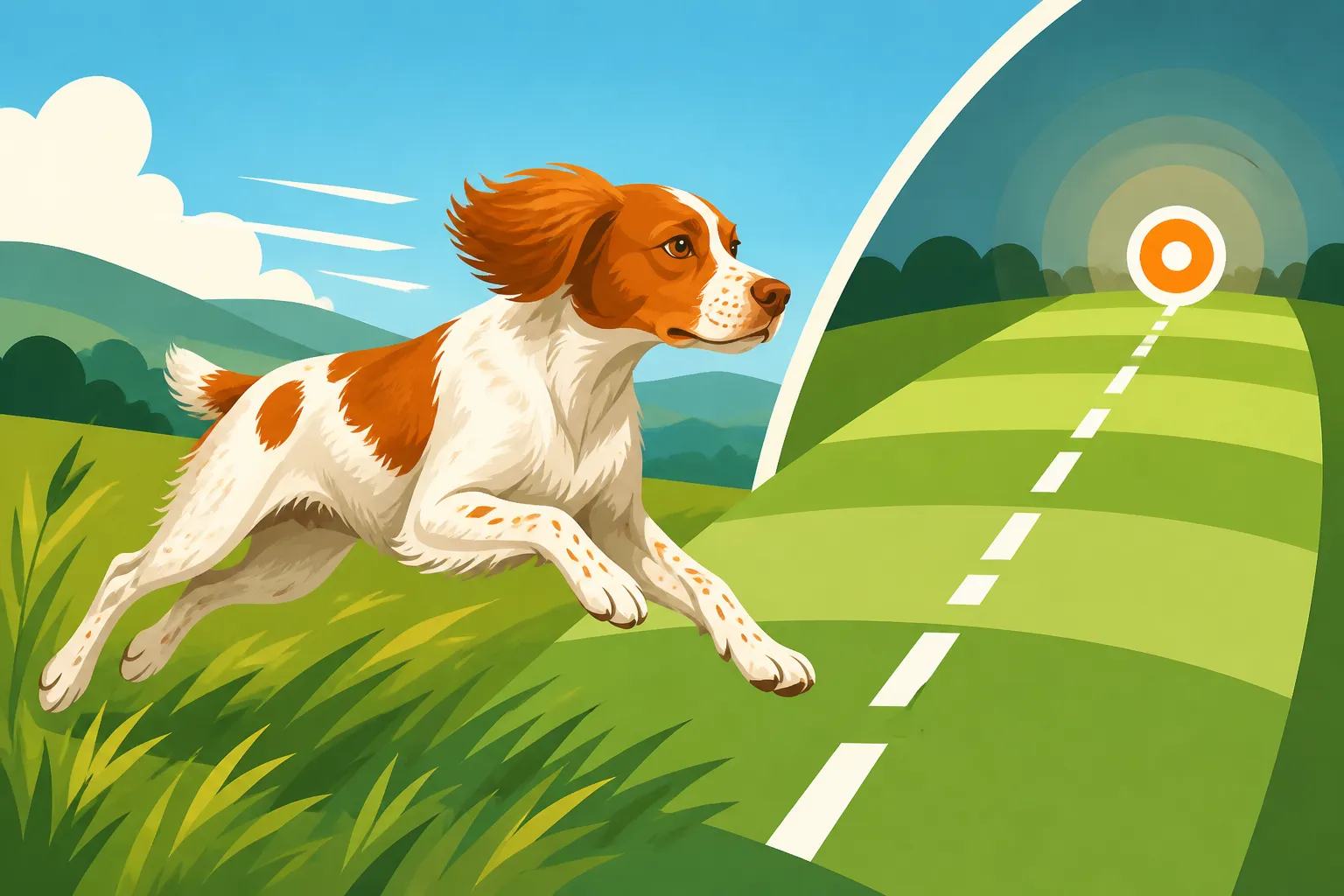
For a well-bred, trained American Brittany working in typical open bird hunting country (think cultivated fields, prairie, or light cover), you can generally expect them to range anywhere from 100 to 400 yards, or even more, depending on the conditions and the individual dog's style. This means they are often out of sight, relying on bells, beeper collars, or GPS tracking collars for the hunter to know their location. They are bred to cover ground quickly, making large sweeps to locate game. When they hit scent, they are expected to stop, point, and hold staunchly until the hunter arrives.
This wide range is a huge advantage for covering vast amounts of ground efficiently. If you're walking a mile-long field, a Brittany that makes 200-yard wide sweeps will cover a tremendous amount of territory much faster than a dog that only works 50 yards out. It's a breed designed for hunters who want to find birds, not just walk with a dog at their heels. They are athletes, covering miles of ground in a day, often at a fast gallop. The key isn't just how far they run out, but how they maintain contact and how staunchly they hold their point once they find a bird. A Brittany might be 300 yards away, but if it's locked on a bird, it's doing its job perfectly, waiting for you to get there. Understanding How Far an American Brittany Ranges helps frame these expectations.
Comparing American vs. French Brittany Range
This is where things get really interesting, and it's a distinction that often trips up new Brittany enthusiasts. While both are incredible bird dogs and share a common ancestry, the American Brittany and the French Brittany (Epagneul Breton) have distinct differences in their preferred working range, largely due to their respective breeding priorities and hunting traditions.
As we've discussed, the American Brittany was developed for those big, open fields. Their range is typically much wider, often 100-400+ yards, prioritizing ground coverage and speed. They are built for those sweeping casts that can quickly locate birds across expansive landscapes, often out of direct line of sight.
The French Brittany, or Epagneul Breton, on the other hand, was traditionally bred for smaller European hunting estates and walking hunters, often in denser cover or more confined spaces. Consequently, their natural range is much closer – typically 30 to 80 yards, sometimes up to 100 yards, but rarely beyond that. They are still energetic and efficient hunters, but they are expected to stay much more in tune with the hunter's pace and location. This means they are almost always within sight, allowing for more direct communication and control.
Here’s a quick comparison to highlight the difference:
| Feature | American Brittany (AKC) | French Brittany (CEB-US / FCI) |
|---|---|---|
| Typical Range | 100 – 400+ yards | 30 – 80 yards (sometimes up to 100) |
| Ideal Terrain | Large, open fields; prairies; lighter cover | Smaller fields; woodlands; dense cover; walking hunts |
| Hunting Style | Wide casts, fast ground coverage, often out of sight | Closer working, methodical, always within sight of the hunter |
| Key Advantage | Efficiently covers vast areas, finds more birds quickly | Stays connected to hunter, easier to manage in tight quarters |
Choosing between these two types often comes down to your personal hunting style and the terrain you frequent. If you primarily hunt expansive properties or enjoy horseback hunting, an American Brittany's wider range is a huge asset. If you're a foot hunter working smaller parcels of land or thick cover, a French Brittany's closer range might be more suitable. It's important to remember that both are exceptional bird dogs, just bred for slightly different applications. For more on this distinction, check out How Close a French Brittany Hunts or How Many Yards a French Brittany Works.
Managing and Adapting Your Brittany's Range
The good news is that while an American Brittany has a natural inclination to range wide, their exceptional biddability means you can influence and manage their working distance. It's not about stifling their natural drive, but rather channeling it effectively so they hunt with you, not just for themselves.
Training Techniques for Adjusting Range
Training is paramount when it comes to refining a Brittany's range. It's a process of clear communication, consistency, and understanding your dog's instincts. You want to foster a partnership where the dog understands that the hunt is a team effort.
One of the foundational techniques is the "check-in" command. From a young age, teach your Brittany to periodically look back at you or return to within a certain distance, especially when they reach the edge of cover or a property line. This can be reinforced with positive praise and a treat or a quick stroke. Using a whistle can be incredibly effective for this, as it carries farther than your voice and has a distinct meaning. A series of short blasts can mean "come back," while a single pip might mean "look to me." This helps create a responsive dog that acknowledges your presence even when ranging wide. You might find more detailed techniques in How to Bring a Wide Running Brittany In.
Another vital aspect is teaching your Brittany to "hunt for the gun." This means they learn that their primary goal isn't just finding birds, but finding birds for you to shoot. This involves patience and repetition, letting them experience success when they point and you come up for the shot. This reinforces that working in conjunction with you leads to the desired outcome. Remember, Brittanys are incredibly intelligent and eager to please, but they need clear guidance. Never shout or punish a dog for ranging wide if it's just following its natural instincts; instead, focus on reinforcing the desired behavior. Tools like a long check cord can be invaluable in the early stages, allowing you to physically guide their range and enforce recall without harsh corrections. The BAXTER & Bella online puppy school, for example, emphasizes positive reinforcement techniques that can be foundational for teaching reliable recall and attention, crucial for range management in any breed.
Tools and Gear for Range Management
In today's hunting world, technology offers some fantastic aids for managing a wide-ranging Brittany. These tools aren't replacements for good training, but they are powerful supplements that enhance safety and control.
GPS Tracking Collars: These are, arguably, the most essential tool for an American Brittany owner. Because your dog will frequently be out of sight, a GPS collar allows you to pinpoint their exact location on a handheld device. Many modern systems also include e-collar functions, allowing for gentle, consistent correction or communication from a distance. Brands like Garmin and SportDOG offer excellent GPS tracking and training collar systems. Being able to see your dog's track on a map lets you understand their working pattern, how they use the wind, and when they've gone on point, even if they're over a hill or deep in cover. This dramatically reduces the anxiety of having a dog out of sight and allows them the freedom to work. Whether a GPS Collar Is Worth It on a Brittany delves deeper into this topic.
Beeper Collars: While somewhat less common with the rise of GPS, beeper collars still have their place. They emit an audible tone, either constantly or when the dog is still (on point), allowing you to hear where your dog is even if you can't see them. This is particularly useful in heavy cover where GPS signals might sometimes be weaker, or as a backup. The sound can be distinctive and easily recognizable, giving you a general idea of their location and behavior. You might wonder Whether a Beeper Collar Changes a Brittany's Range; typically, it doesn't change their desire to range, but it provides you with auditory cues for their location.
Whistles and Check Cords: Don't underestimate the power of simple, reliable tools. A good quality whistle is a hunter's best friend. It provides a consistent, far-carrying signal for recall or direction. A long check cord (20-50 feet) is invaluable during initial training, especially with a young, enthusiastic Brittany. It allows you to let them range a bit while still maintaining physical control, teaching them the boundaries of "come" and "whoa" before they're completely off-leash. You can find excellent check cords and whistles on Amazon, making it easy to equip yourself for effective training.
The Impact of Terrain and Cover on Range
It’s easy to focus on the dog's inherent drive, but the environment itself plays a colossal role in how far your Brittany will actually range on any given day. A smart Brittany adapts its hunting style to the conditions, and as a hunter, you need to understand these nuances.
Imagine your American Brittany in a vast, open stubble field on a breezy day. This is prime territory for their natural wide-ranging style. They will typically extend out significantly, making those broad casts, using the wind to sweep for scent. In this scenario, they might easily be 200-400 yards out, a tiny orange speck on the horizon, or completely out of sight over a slight rise. The lack of physical barriers and the widespread potential for bird scent encourages them to cover maximum ground.
Now, picture that same Brittany in a dense cattail marsh or a thick woodlot with heavy undergrowth. Here, a wide range becomes counterproductive. Visibility is minimal, scent doesn't carry as far, and crashing through thick cover takes immense energy. In these conditions, even the most wide-running American Brittany will naturally shorten its range, often working closer, perhaps 50-100 yards out. They'll be more methodical, quartering closer to you, relying more on body language and frequent visual check-ins. It's not that their genetics change; it's that their intelligence dictates an adaptive hunting strategy. They understand that finding birds efficiently in tight quarters requires a different approach than finding them in wide-open spaces. This adaptability is a testament to the Brittany's versatility, but it also means you need to be aware of how the cover dictates their behavior. Expecting a wide-ranging dog to consistently hug your heels in open country is unrealistic, just as expecting them to disappear for hundreds of yards in a dense forest might mean they're missing birds or getting into trouble. Understanding the type of cover you're hunting in will inform your expectations and how you guide your dog.
Common Challenges and Troubleshooting Range Issues
Even with the best training and gear, you might encounter situations where your Brittany's range isn't quite what you need it to be. It's part of the journey of working with such intelligent and driven animals.
When Your Brittany Ranges Too Wide
A Brittany that ranges too wide can be frustrating, even dangerous, if they're constantly pushing property lines, getting out of earshot, or simply making it impossible for you to keep up. This often happens with young, exuberant dogs who haven't quite learned the boundaries yet, or in very open terrain where their instincts tell them to just go.
The first step is always to revisit the basics: recall and whistle commands. Are they rock solid? Can you blow your whistle and have them immediately change direction or come to you, even when distracted by tempting scent? If not, dedicate consistent, daily training sessions to reinforce these commands. Practice in increasingly distracting environments. Use a long check cord to physically enforce the command if they ignore it, gradually extending the distance. Remember, consistency is key. Every time they listen, they get a reward – whether it's praise, a treat, or a toss of a training dummy.
Consider a GPS tracking and e-collar system if you don't have one. The ability to give a mild, consistent stimulation to reinforce a "whoa" or "here" command from a distance can be incredibly effective. The goal isn't punishment, but communication. The dog learns that the tone or vibration precedes a mild correction if they don't respond, encouraging them to respond to the milder cues first. Also, actively "work" your dog. Don't just let them run wild. Use hand signals and voice commands to guide their quartering pattern. If they start to drift too wide on one side, call them back towards the center of your path. Gradually, they will learn to anticipate your movements and stay within a more reasonable hunting radius. Sometimes, a dog that ranges too wide might also benefit from more off-season exercise to burn off excess energy before hitting the field. For specific advice on training, you might find How to Shorten a Brittany's Range or Whether Range Can Be Trained Out of a Brittany quite helpful.
When Your Brittany Hunts Too Close
While less common for an American Brittany, a dog that hunts too close can also be a challenge, especially if you're trying to cover a lot of ground. This can happen if a dog has been inadvertently over-corrected for ranging, is naturally a bit more tentative, or is hunting in very dense cover where they feel insecure about getting lost.
If your American Brittany is hugging your heels, the first thing to do is encourage them to cast out. Use an encouraging tone, gesture forward, and walk confidently. Sometimes, simply moving briskly forward yourself will prompt them to extend their range. Planting training birds can be a game-changer here. Place a pigeon or quail a good distance ahead (50-100 yards, to start), and send your dog to find it. The thrill of finding a bird and holding point will build their confidence and teach them that good things happen when they extend their search. Repeat this often, gradually increasing the distance.
You also want to make sure you're not inadvertently stifling their natural drive. Avoid constant verbal commands if they're not ranging far. Let them make decisions and explore. Only intervene when necessary. If your dog is soft-tempered, harsh corrections early on can make them hesitant to push out. Focus entirely on positive reinforcement for casting out, for using the wind, and for finding birds. Ensure they have ample opportunity to run and explore off-leash in safe, open areas, which builds confidence and strengthens their natural desire to range. Sometimes, working with a seasoned gun dog trainer can provide insights into your specific dog's behavior and help you unlock their full potential. They can observe subtleties you might miss and suggest tailored approaches to encourage a wider, more productive range. Remember, the American Brittany's heart is in covering ground, and with gentle encouragement, most will gladly embrace their innate nature.
Disclaimer
This article is for general informational purposes only and does not constitute professional advice. Laws, prices and regulations vary by location and change over time. Consult a qualified professional for guidance on your specific situation.