The Brittany Points, It Does Not Flush
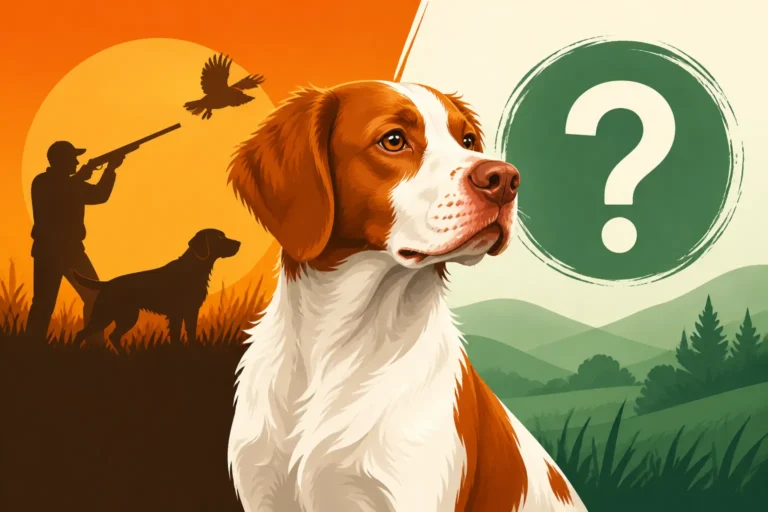
It's a common scene: a new Brittany owner, perhaps coming from a background with flushing spaniels, might be a little confused or even frustrated when their energetic young Brittany doesn't behave like the field dog they expected. Many mistakenly believe that because the word "spaniel" was once in their name, Brittanys are flushing dogs. This guide is here to clear up that widespread misconception and dive deep into the beautiful, inherent pointing instinct that defines this remarkable breed, explaining precisely how they work birds in the field and why understanding this is crucial for every Brittany owner.
Understanding the Brittany's Natural Instinct
When you bring a Brittany into your life, especially if your goal is to hunt with them, understanding their core instinct is paramount. It shapes everything from their earliest training to their seasoned performance in the field. They aren't just a dog that can point; they are a dog that is a pointer at heart.
The Core Difference: Pointing vs. Flushing
Let's get right to the heart of the matter: what does it mean to point versus to flush? A pointer is a dog that, upon scenting game birds, will "lock up"—stop dead in their tracks, often with one foot raised, their body rigid, and their nose directed intensely at the bird's location. They hold this position, indicating to the hunter exactly where the bird is hiding, waiting for the hunter to approach and flush the bird themselves. It’s a moment of frozen intensity, a statue brought to life by scent.
A flushing dog, on the other hand, is bred to actively push birds out of cover. When they scent game, they move in, charging the cover to make the bird take flight, allowing the hunter a shot. Think of a Springer Spaniel or a Cocker Spaniel crashing through brush, eagerly pursuing the scent until the bird bursts into the air. Both styles are effective, but they require entirely different expectations and handler approaches in the field.
For a Brittany, this distinction is absolutely crucial. They are designed to point, to hold that bird, and to wait for you. If you expect them to flush, you're not only asking them to go against their nature, but you're also likely to confuse and frustrate them, potentially leading to a dog that's neither a good pointer nor an effective flusher. Imagine you're walking through a field, and your Brittany suddenly freezes, tail rigid, nose twitching towards a clump of grass. You might be tempted to yell "Get 'em!" expecting them to dive in, but that's not their job. Their job is done; they've found the bird. Now it's your turn to walk in and kick it up.
A History Rooted in Pointing
To truly grasp the Brittany's pointing prowess, we need to look back at their origins. The Brittany Comes From the Northwest Corner of France, specifically the central region of Brittany, where they were developed centuries ago. These dogs were primarily companions to poachers and working-class hunters who hunted on foot. They needed a dog that could find game, hold it silently, and allow the hunter to get within range before the bird took flight. Flushing a bird prematurely would mean a missed opportunity and a wasted day, or worse, alerting landowners to illegal activity.
This selective breeding for a strong pointing instinct became deeply ingrained in the breed's genetics. Unlike many spaniels, which were developed for flushing game and retrieving from dense cover, the Brittany's role was different: a silent partner that located and indicated. This historical context also explains why, despite the "spaniel" having been part of its name in North America for many years, the Brittany is fundamentally distinct from true spaniels. In fact, many people often ask Whether the Brittany Is a Spaniel at All. The simple answer is no; their working style aligns them firmly with the pointing breeds, which is why the "spaniel" was officially dropped from their name by the AKC in 1982. This change reflected a more accurate classification of their field capabilities.
What a Brittany's Point Looks Like in the Field
There's a reason why so many hunters fall in love with the Brittany's pointing style. It's often described as intense, stylish, and incredibly effective. Seeing a well-bred Brittany lock up on a bird is truly a thing of beauty.
The Classic Brittany Point
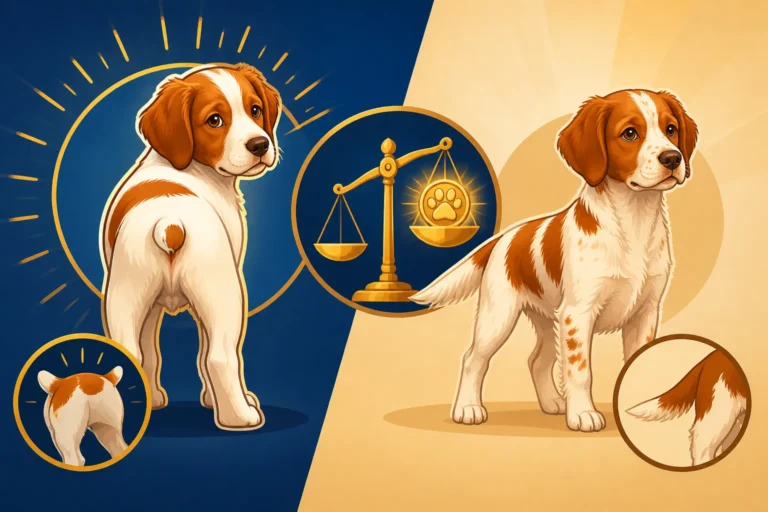
When a Brittany scents a bird, it’s like a switch flips. Their entire body becomes a rigid arrow pointing to the game. Typically, you’ll see them freeze in mid-stride, one front leg often lifted, sometimes with a slight bend, almost as if they're tip-toeing. Their head will be held high, nose precisely aimed, and their eyes fixed intently on the cover. Their tail, which can be bobbed or naturally short, will be held horizontally or slightly above, rigid and quivering with excitement. This is often referred to as a "high tail" or "flag" point, signaling their discovery from a distance.
The intensity of a Brittany’s point is something to behold. They are not merely stopping; they are channeling all their focus, all their energy, into that single spot where the bird is hiding. I've watched Brittanys hold a point so staunchly that you could walk around them, clap your hands, and they wouldn't budge. Their commitment is absolute. For instance, I recall hunting pheasant with my Brittany, Copper, in a thick CRP field. He suddenly went rigid, nose buried deep in a clump of switchgrass, one front paw delicately lifted. His body quivered almost imperceptibly, his whole being focused. We walked in, slowly, quietly, until a rooster pheasant burst skyward exactly where Copper’s nose was pointing. It’s that precision and unwavering focus that makes them such invaluable partners.
The "Creep" and Adjustments on Point
While a staunch, frozen point is the ideal, Brittanys are also intelligent and adaptive hunters. Sometimes, especially with very cagey birds or in challenging wind conditions, you might observe what's known as "creeping" on point. Why a Brittany Creeps on Point occurs when the dog, having initially pointed, slowly and deliberately moves forward, taking small, almost imperceptible steps, often to get closer to the bird, adjust for shifting scent, or simply to increase the intensity of their point. This isn't usually a fault unless it leads to bumping birds; often, it’s a dog being smart, trying to fine-tune their location on the bird.
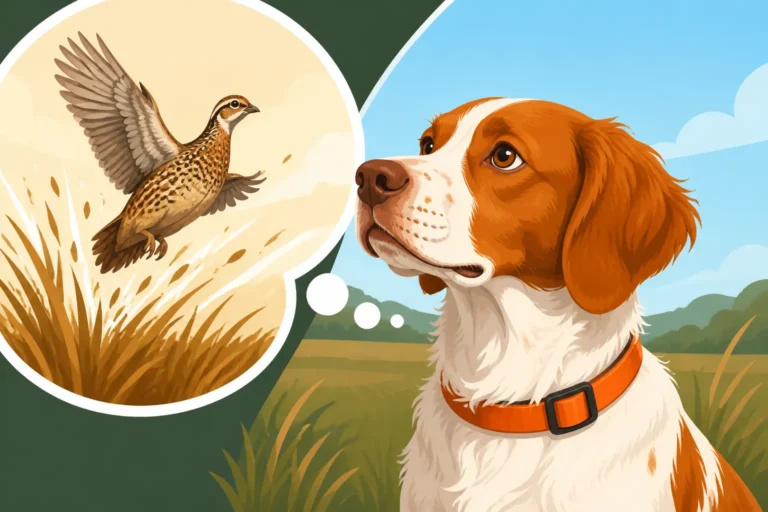
Brittanys are also masters at adjusting their point based on environmental factors. If the wind shifts, they might slightly change their body angle to better intercept the scent cone. If a bird subtly moves beneath cover, a Brittany will often adjust their point with incredible subtlety, sometimes taking a half-step or shifting their head to track the new location. I've seen a Brittany, having pointed a quail in sparse cover, slowly circle a small bush, their nose following the bird's nervous scuttle underneath, until it re-established a rock-solid point on the opposite side. This level of communication and adaptability makes them incredibly effective, but it requires a hunter who is paying attention and knows how to read their dog. They’re constantly working, even when they appear frozen.
Training a Brittany to Enhance its Natural Point
Even with a strong natural instinct, proper training is essential to develop a reliable and effective pointing dog. A Brittany needs guidance to channel their innate abilities into a controlled and productive hunting style.
Early Introduction to Birds
The journey to a reliable pointing Brittany begins early. While some puppies show a flash of point on a butterfly or even a leaf, structured introductions to game birds are key. When a Brittany Puppy Should Meet Its First Bird is a question many new owners ponder. Generally, it's beneficial to introduce them to live birds—even frozen wings on a string—as early as 8-12 weeks, in a positive and low-pressure environment. The goal isn't to demand a perfect point, but to awaken and encourage their natural drive.
Start with something like a pigeon in a remote launcher or held gently. Let the puppy chase, sniff, and get excited. This early exposure builds intense bird drive. As they mature, move to live quail or chukars. How to Start a Brittany on Pigeons is often the preferred method because pigeons are hardy, can be reused, and provide a strong scent. You want to make finding a bird a rewarding experience, associating the scent and sight with pure joy. Gradually, the chasing instinct will give way to the pointing instinct as they realize holding the bird allows them to maintain that thrilling connection. Avoid any harsh corrections at this stage; it's all about building desire and confidence.
Teaching "Whoa" and Steadiness
Once your Brittany consistently shows a strong point, the next critical step is teaching them the "whoa" command. Teaching a Brittany Whoa is foundational for any pointing dog. This command teaches them to stop and hold their position, regardless of what's happening around them. It ensures they don't break point prematurely and rush in, potentially flushing the bird out of shooting range. Start on a "whoa post" or a barrel, teaching them to stand still on command. Progress to walking them on a check cord, stopping them often with the "whoa" command, and gently guiding them back if they move.
The ultimate goal is "steadiness"—steady to wing, steady to shot, and for some, steady to fall. Teaching a Brittany Steady to Wing means they hold their point even when the bird flushes. Teaching a Brittany Steady to Shot means they remain still when the gun fires. And Whether a Brittany Should Be Steady to Fall involves holding position until you send them for the retrieve after the bird drops. This takes patience and repetition. A common scenario where this training becomes evident is when a covey of quail explodes from cover. An untrained Brittany might break, chasing the birds, but a steady Brittany will hold its point, allowing the hunter to take a clean shot, and then wait for the "fetch" command. This control is what truly elevates a Brittany from a bird-finder to an invaluable hunting companion. You can find excellent long check cords and training whistles on sites like Chewy to aid in this process.
Why Flushing a Brittany Is Counterproductive
Given the Brittany's deep-seated pointing instinct, attempting to train them as a flushing dog or encouraging them to break point is not only difficult but ultimately detrimental to their potential as a gundog.
Confusing Natural Instincts
Imagine being born with an innate ability to play the piano, and someone tries to teach you to play the drums using piano lessons. That's a bit like asking a Brittany to flush. Their genetics, their very nature, scream "point!" When you try to force them to flush, you create immense confusion. They're getting mixed signals: their instinct tells them to freeze, but your commands or actions might be urging them forward. This conflict can lead to a dog that's hesitant, unsure, and ultimately ineffective. They might develop anxiety around birds, becoming what some call "bird-shy" – dogs that are so confused or pressured that they avoid engaging with game.
A confused Brittany might start to "creep" excessively, or point half-heartedly, or even just avoid pointing altogether, hoping to avoid the conflicting signals from their handler. This isn't a happy or productive hunting dog. Their natural enthusiasm and drive can be dampened by the internal struggle, making them less enjoyable to hunt with and diminishing their unique abilities. It's a disservice to the breed's heritage and the individual dog's inherent talent.
Impact on Hunting Performance
The practical implications of trying to make a Brittany flush are also significant. A dog that doesn't hold its point consistently means a loss of control in the field. When a bird is flushed too early, it might be out of effective shooting range, or it might fly into a dangerous area. For a hunter walking in on a point, the advantage is knowing exactly where the bird is and being prepared for its flight. If the dog suddenly busts the bird, that element of surprise and control is gone.
Consider a scenario in dense cover. A Brittany carefully works its way through heavy brush, finally locking up on a pheasant. You, the hunter, carefully approach, ready your gun, and then step in to flush the bird, knowing exactly where it will rise from. Now, imagine if the Brittany, instead of holding, suddenly leaps in and flushes the bird wildly, perhaps at your feet, or worse, far out to your left when you were expecting it to go straight ahead. This makes for poor shot opportunities, potentially unsafe conditions, and a generally frustrating hunt. Whether a Working Brittany Wears Its Joints Out is also a concern for dogs that are constantly bumping birds and working excessively hard rather than holding a disciplined point. The whole point of a pointing breed is to facilitate a shot, not complicate it.
The Brittany's Role in a Hunting Partnership
Hunting with a pointing Brittany is a true partnership. It's a dance between dog and hunter, where each plays a vital and complementary role, culminating in the rewarding moment when a bird is brought to hand.
The Hunter's Role After the Point
Once your Brittany locks up on a bird, their job, for that moment, is done. Now, it's your turn. The hunter's role is to approach the dog, carefully read the situation, and then flush the bird. This might mean walking past your dog, circling the cover, or slowly moving towards the specific spot your dog is indicating. You need to be aware of the wind direction, the type of cover, and the likely escape route of the bird. Your approach should be deliberate, ensuring you're in a safe and ready position when the bird takes flight.
The beauty of this partnership is the communication. Your dog tells you where the bird is. You acknowledge that communication by approaching and getting ready. Then, you execute the flush. For example, my Brittany, Daisy, once pointed a woodcock in some tag alders. It was dense. I had to weave my way in, keeping an eye on her intense point. When I got to her, she didn't move an inch, just her eyes begging me to flush the bird. I stepped in front of her, kicked the thick brush, and out popped the woodcock, presenting a clear shot. It's an incredible feeling of teamwork, trusting your dog's nose and instincts completely.
Retrieving After the Shot
While pointing is the Brittany's primary and most defining trait, a good hunting Brittany is often also expected to retrieve the downed bird. Whether a Brittany Retrieves Naturally is a common question, and while many Brittanys have a natural inclination to pick up and carry, a reliable, soft-mouthed retrieve to hand usually requires dedicated training. You don't want a dog that chews on the bird or runs off with it.
Force fetch training, or "conditioned retrieve," ensures your dog will reliably pick up and deliver the bird to your hand, regardless of the conditions. This systematic training teaches the dog to retrieve on command, holding the bird gently and delivering it without hesitation. While it sounds intense, it's done with patience and consistency, ensuring the dog understands the expectation. Many tools can assist with this, such as retrieving dummies or even a "place board" where they learn to deliver the object. You can find a wide array of quality retrieving dummies and training aids at online retailers like Chewy, which can make the process smoother and more enjoyable for both you and your Brittany. A completed retrieve, after a staunch point and a clean shot, truly completes the hunting cycle and showcases the full versatility of this breed.
American vs. French Brittanys and Pointing Style
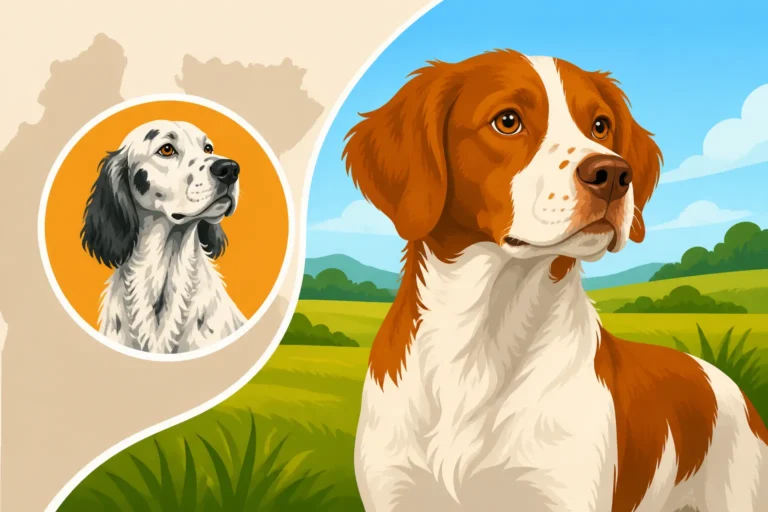
It's important to recognize that while all Brittanys are pointers, there can be subtle differences in their working style depending on their lineage – specifically between American Brittanys and their European cousins, the Epagneul Breton (which is what the French Brittany officially is).
Nuances in Range and Pace
One of the most talked-about distinctions between the American Brittany and the French Brittany (Epagneul Breton) is their range in the field. The American Brittany, largely influenced by open-country hunting traditions in the United States, was often bred to be a wider-ranging dog. How Far an American Brittany Ranges can sometimes be hundreds of yards, making them ideal for covering large tracts of open pheasant or prairie grouse country. This wider range means they often hunt with a faster, more expansive pattern, relying on their exceptional nose to find birds that might be far afield.
The French Brittany, on the other hand, was traditionally developed for hunting smaller game birds like woodcock and partridge in more confined cover, often with a walking hunter. As such, they are typically bred to be closer-working dogs. How Close a French Brittany Hunts is often within 50-100 yards, making them perfect companions for foot hunters in brushy terrain. Their pace tends to be a bit more methodical, meticulously sniffing out every nook and cranny. While both types are undeniably pointers, this difference in preferred range means they might present their point slightly differently and require a different pace from their handler. A French Brittany might be more inclined to work a dense hedgerow slowly, whereas an American Brittany might be expected to hit the distant fenceline before swinging back.
Adaptability in Different Terrain
Despite these general tendencies, both American and French Brittanys are remarkably adaptable. A well-trained Brittany, regardless of its specific lineage, will adjust its search pattern and pointing style to suit the terrain and cover it's working. In thick, dense cover, even a wide-ranging American Brittany will naturally shorten its range and slow its pace, meticulously picking through the brush. Their points in such conditions might be very tight and close-quarters, almost buried in the vegetation, as they attempt to get as close to the bird as possible without bumping it.
Conversely, a French Brittany hunting vast, open fields might naturally extend its range more than it would in tight woods, though typically not to the extent of an American field trial champion. They still use their keen nose to cut through the air, but their inherent tendency is to stay within reasonable communication distance of the hunter. This adaptability is one of the hallmarks of the breed's versatility. Whether it's a tight point in a thick briar patch where only the tip of their tail is visible, or a statuesque point silhouetted against an open field, the Brittany is always working, always adjusting, and always delivering that unmistakable indication of game.
Common Misconceptions and Advice
Even with all the information out there, certain misunderstandings persist, especially for those new to the breed or to hunting with pointing dogs. Addressing these head-on can save a lot of frustration.
"My Brittany Puppy is Flushing!"
One of the most frequent concerns new Brittany owners voice is, "My puppy is just chasing and flushing birds, not pointing!" It's easy to panic and think you have a "defective" pointer. However, this is a very common phase in a young dog's development. Puppies are full of exuberance and curiosity. When they first encounter a bird, the sheer excitement and instinct to chase often overrides the more refined pointing instinct. Think of it as a raw, untamed drive.
It's like a toddler learning to walk; they'll stumble and run wildly before they can gracefully stride. The key is patience and correct exposure. Don't punish the puppy for flushing; instead, manage the situation. Use a long check cord to control their movement, or start with controlled bird introductions in a small, fenced area. With repeated, positive exposure, and as they mature, that chasing drive will gradually be channeled into the pointing behavior. They'll learn that holding the bird in place is actually more rewarding because it maintains that intense connection with the game. This is where consistent, gentle training is far more effective than harsh corrections, which can actually make a dog hesitant. Remember, the instinct is there; it just needs nurturing.
What if My Brittany Doesn't Point?
While the pointing instinct is strong in Brittanys, there are rare instances where a dog may not develop a reliable point. If your older puppy or young adult Brittany, despite consistent and correct exposure, shows absolutely no inclination to point and consistently flushes birds, it's worth evaluating a few factors. First, consider the dog's breeding. Is it from proven hunting lines with a history of strong pointers? Poor breeding, where selection for field traits has been neglected, can sometimes result in weaker instincts. Second, rule out any health issues that might prevent them from focusing or ranging effectively.
If you've done everything by the book and still have concerns, it might be time to seek help from a professional gun dog trainer. Whether a Brittany Needs a Pro to Reach a Title is a valid question, and for foundational issues like a lack of pointing instinct, a professional can offer invaluable insights and specialized techniques. They have the experience to assess individual dogs, identify specific challenges, and implement tailored training programs that might unlock that latent potential. Sometimes, a change in environment or a different training approach is all it takes. While rare, a dog might simply not have the genetic predisposition, but exhaust all training avenues first. Many online stores, like Chewy, also carry a range of books and DVDs on gun dog training that can provide additional guidance and techniques from seasoned professionals.
The Joy of Hunting with a Pointing Brittany
There’s a profound satisfaction that comes from hunting with a pointing Brittany, a unique experience that transcends merely harvesting game. It’s about the connection, the trust, and the beauty of working with an animal perfectly aligned with its purpose.
The Satisfaction of a Well-Executed Point
The moment a Brittany locks into a point is arguably one of the most thrilling experiences in upland hunting. It's a testament to centuries of selective breeding, a culmination of instinct, training, and partnership. Seeing your dog, often far ahead in heavy cover, suddenly freeze, a statue carved from instinct and desire, is an incredible sight. It's their way of saying, "Here it is, partner! Now come and get it!" That silent communication, the intense focus, the quivering body – it builds an anticipation that few other hunting methods can match.
This deep bond isn't just about successful hunts; it's forged in every training session, every walk in the woods, every shared experience. The trust you place in their nose, and their unwavering dedication to finding and holding game for you, creates a connection that is truly special. When the bird flushes precisely where their nose indicated, and you make a clean shot, there’s an immense sense of accomplishment, shared between you and your faithful companion. It's not just a dog doing a job; it's a masterpiece of instinct and training coming together. The Brittany Is the Pointing Breed You Can Live With because they combine this intense field drive with an equally strong desire to be with their people.
More Than Just a Hunter
While the Brittany's pointing ability is undeniably their defining characteristic and what draws many hunters to the breed, it's crucial to remember that they are also incredible companions. They are known for their intelligent, eager-to-please nature, making them highly trainable beyond the field. Their energetic disposition means they thrive on activity, whether it's long walks, retrieving games in the yard, or participating in dog sports like agility or obedience.
Their compact size and affectionate demeanor also make them wonderful house dogs, often curling up at your feet or following you from room to room. What an Under Exercised Brittany Does at Home can be destructive, but a Brittany whose physical and mental needs are met is a calm and loving family member. They truly embody the "versatile gundog" ideal, excelling both as dedicated bird finders and cherished family pets. It's this dual nature – the fierce, focused hunter in the field and the gentle, devoted companion at home – that makes the Brittany such a unique and beloved breed among sporting dog enthusiasts.
Pointing vs. Flushing Breeds: A Quick Overview
To help solidify the understanding, here's a quick comparison of the primary hunting styles.
| Trait | Pointing Breeds (e.g., Brittany, German Shorthaired Pointer, English Setter) | Flushing Breeds (e.g., English Springer Spaniel, Cocker Spaniel, Labrador Retriever) |
|---|---|---|
| Primary Job | Locate game, hold position, indicate location to hunter | Locate game, actively push (flush) birds into the air |
| Field Style | Methodical search, sudden freeze (point), wait for hunter | Energetic, crashing through cover, active pursuit of scent |
| Communication | Body language (point, tail), usually silent | Whining, barking, active movement, often audible |
| Hunter's Role | Approach dog, flush bird, shoot | Walk with dog, shoot as bird flushes |
| Common Game | Quail, Pheasant, Grouse, Partridge, Woodcock | Pheasant, Quail, Grouse, Duck, Geese |
This table clearly illustrates why the Brittany, despite its historical "spaniel" moniker, falls squarely into the pointing category. Understanding this distinction is the first step to truly appreciating and effectively working with this outstanding breed.
Disclaimer
This article is for general informational purposes only and does not constitute professional advice. Laws, prices and regulations vary by location and change over time. Consult a qualified professional for guidance on your specific situation.