Where the First Brittany Cross Was Made
It's quite natural to look at our beloved Brittanys today, with their boundless energy and remarkable bird sense, and wonder how they came to be. Many breed histories are shrouded in the mists of time, making it challenging to pinpoint exact origins, and the Brittany is no exception. This guide will delve into the rich historical tapestry of the Brittany Spaniel, focusing on the pivotal moments and specific locations where early crossbreeding efforts are believed to have shaped the foundation of this incredible pointing breed.
The Elusive Genesis of Early Gun Dog Breeds
When we think about the beginnings of any dog breed, especially one as ancient and purpose-driven as the Brittany, it’s easy to imagine a clear, linear path of development. But the reality is often far more complex and, frankly, a bit messy. Unlike modern breeding, where pedigrees are meticulously recorded and genetic testing is commonplace, the early days of dog development were largely driven by utility and local need. Farmers, hunters, and villagers simply bred dogs that excelled at specific tasks, often without much thought to formal "breed standards" or documentation.
Why Pinpointing Origins Is So Difficult
Imagine trying to trace the precise lineage of a prized hunting dog back several centuries without any written records, photographs, or DNA tests. It's nearly impossible! The dogs that became the Brittany were originally peasant dogs in a remote, rural region of France. They were not owned by aristocracy who might have commissioned portraits or kept detailed studbooks. Their worth was measured in their ability to put food on the table, not in their show ring potential. This informal approach means that much of what we know about their very early history is based on oral traditions, old paintings, and educated speculation. It's a bit like trying to solve a puzzle with half the pieces missing, and the remaining ones are worn and faded.
The Role of Utility Over Pedigree
In those nascent years, a dog's pedigree was less important than its performance. A dog that could find birds, hold a staunch point, and retrieve them gently was invaluable, regardless of its parents' official "breed." This focus on function meant that local dogs with desirable traits were often bred with whatever other working dogs came into the area, whether through trade, travel, or even stray encounters. These were not deliberate, controlled crosses in the way we think of them today but rather opportunistic pairings aimed at reinforcing valuable hunting instincts. This constant, fluid exchange of genes created a dynamic, evolving canine population in the region, rather than a rigidly defined breed.
The Legendary Cross at Pontou
Despite the general ambiguity, certain stories and locations stand out in the Brittany's origin story. One particular legend points to a specific place and time where a pivotal crossbreeding event is said to have occurred, laying the groundwork for the modern Brittany as we know it. This isn't just a charming tale; it's a cornerstone of the breed's historical narrative.
Pontou: The Crossroads of French and English Lineage
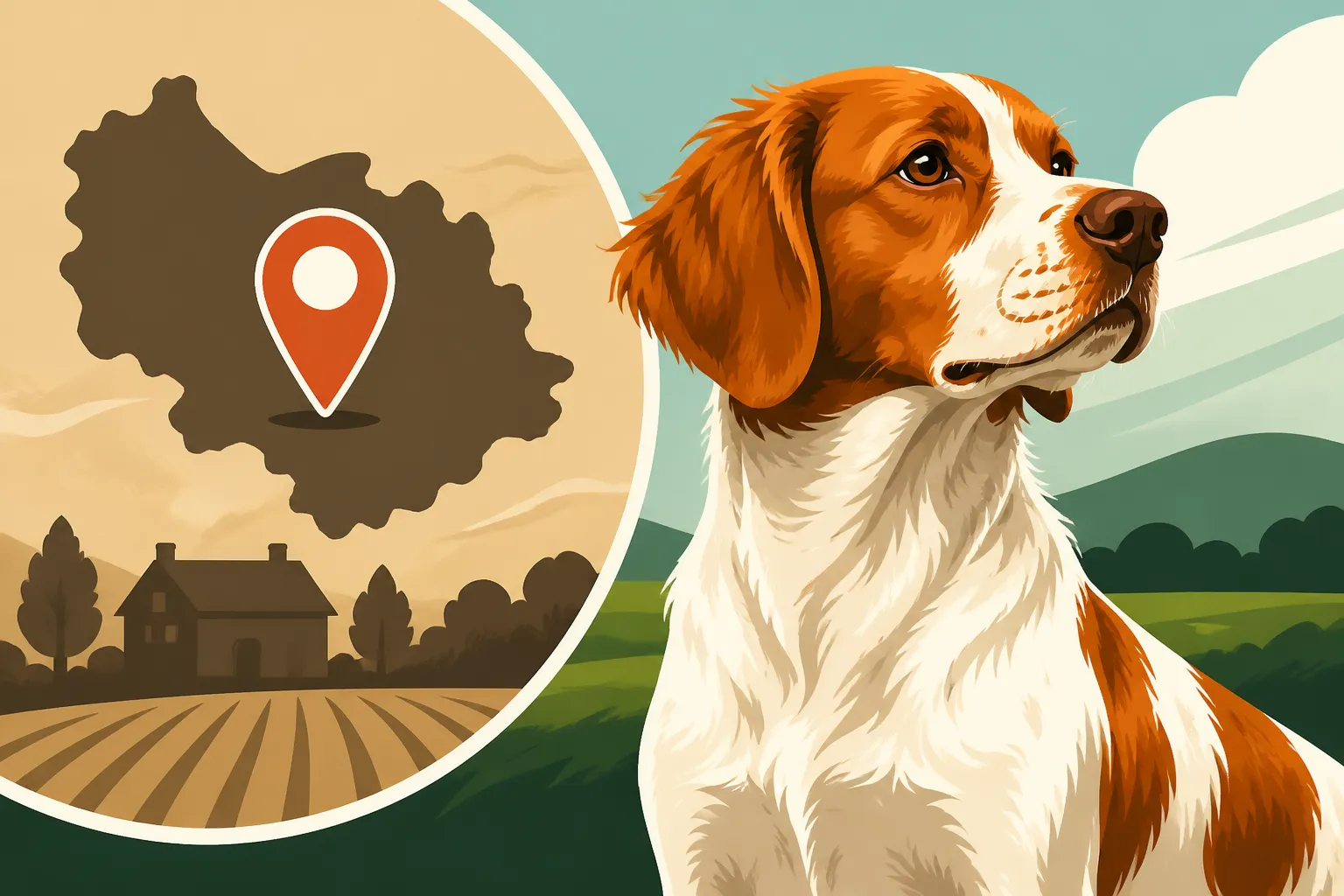
The commonly accepted story places the first significant cross at Pontou, a small commune within the Côtes-d'Armor department of Brittany, France, around the 1850s. At this time, British sportsmen were increasingly visiting the region, drawn by the rich game bird populations. They brought with them their own highly refined hunting dogs, particularly English Setters and English Pointers, breeds known for their exceptional bird-finding abilities and elegant style in the field.
Local French peasants, meanwhile, had their "fawn-colored little hunting dogs with natural bobtails," as they were sometimes described. These dogs were smaller, tougher, and hunted closer to the gun—a perfect fit for the walking hunter or poacher needing to stay discreet. When the British dogs inevitably encountered the native dogs, whether by design or accident, the stage was set for a genetic exchange that would forever alter the local canine population. You can imagine the curiosity of a local farmer, seeing the flashy, wider-ranging English dogs, and perhaps wondering if a touch of that "fancy" blood might enhance his own working stock. This period marks a fascinating intersection of cultures and canine genetics, leading to the development of a dog that combined the best of both worlds. It truly was a unique blending of European hunting traditions.
The Influence of English Setters and Pointers
The infusion of English Setter and Pointer blood into the native Brittany dogs brought several key changes. The English breeds were prized for their wider range, their more stylish and intense points, and often, their biddability for specific training commands. The local dogs, while tenacious and intelligent, might have lacked some of the refined "bird sense" or the systematic hunting patterns of the British imports.
By crossing these lines, the resultant puppies were often a fortuitous blend. They retained the hardy constitution, compact size, and natural bobtail (a trait that still fascinates many, prompting questions like How Many Brittanys Are Born Tailless) of the local stock, but gained an improved nose, a more expansive hunting range, and a more pronounced, "setter-like" point. This cross wasn't about creating a new breed from scratch, but rather about refining and enhancing the existing working qualities of the regional dogs, making them even more effective partners in the field. This blending of traits ultimately contributed to the Brittany's reputation as a versatile pointing breed, capable of adapting to various hunting styles and terrains.
The Emergence of the Modern Brittany's Traits
The crosses made in places like Pontou were crucial in solidifying the traits we associate with the modern Brittany. These early breedings weren't just random events; they were the evolutionary steps that took a local, all-purpose hunting dog and began to sculpt it into the distinctive pointer we recognize today.
Refining the Brittany's Signature Point
One of the most profound impacts of these early crosses was the refinement of the Brittany's pointing instinct. The native dogs undoubtedly pointed, but the influence of breeds like the English Setter likely enhanced the staunchness, style, and intensity of the point. A stronger pointing instinct meant a more reliable hunting partner, one that would "lock up" on game birds rather than bumping them, allowing the hunter to approach for a shot. This was critical for a breed that was being developed by foot hunters who needed their dog to hold game until they could get there. This enhanced pointing ability quickly became a hallmark of the breed, a trait passed down through generations. It's why modern Brittany owners often observe their puppies pointing at butterflies or leaves, a clear echo of this deep-seated instinct. For many, this natural ability is what defines the breed, and understanding its origins helps us appreciate its innate brilliance. Whether a Brittany Points Naturally is a question rooted in this history.
The Developing Brittany Build and Coat
Beyond the working style, these early crosses also contributed to the physical characteristics of the Brittany. While the native dogs were already on the smaller side with natural bobtails, the blending with other sporting breeds helped to solidify a more athletic, medium-sized build that was both agile in dense cover and capable of covering ground effectively. The coat, too, began to settle into the characteristic dense, fine, and slightly wavy texture that provides protection from the elements without being overly heavy or prone to matting. The distinctive colors, like orange and white or liver and white, also became more established during this period. These weren't just aesthetic preferences; they were traits that proved functional in the field, making the dog durable and visible without hindering its movement or ability to work efficiently.
It's fascinating to consider that while today we have endless options for grooming and care supplies from places like Chewy, these early Brittanys relied purely on their natural coats and robust health to survive and thrive in challenging conditions. The evolution of their physical traits was a matter of natural selection guided by the demands of the hunt.
A Legacy Etched in Time
The historical events surrounding places like Pontou aren't just dry facts in a textbook; they are the living legacy that continues to shape our Brittanys. Every time your Brittany locks onto a scent, exhibits its characteristic range, or displays its affectionate nature, you're seeing centuries of intentional and accidental breeding come to life.
From Local Hunter to Global Companion
The small, close-hunting dogs of Brittany, once localized to a specific region of France, began their journey to becoming one of the most popular versatile pointing breeds in the world thanks to these early crosses. The blend of their inherent toughness and keen intelligence with the refined instincts of the English gun dogs created a balanced and adaptable companion. This adaptability allowed the breed to thrive not only in its homeland but also to gain immense popularity in other countries, notably the United States, where it eventually led to the divergence of American Brittany and Epagneul Breton Went Separate Ways.
The formal recognition of the breed, which didn't happen until much later, built upon these foundational crosses, creating a standard that celebrated the unique combination of traits that originated in those rural French fields. These early developments truly cemented the Brittany's reputation as a dog that could excel in hunting while also being a cherished family member.
The Enduring Influence of Those First Crosses
The table below offers a simplified view of how these early crosses, specifically at Pontou, are believed to have influenced the Brittany's development:
| Trait Category | Native Brittany Dog (Pre-1850s) | English Setter/Pointer Influence | Resultant Modern Brittany Trait |
|---|---|---|---|
| Size | Small to Medium | Medium | Medium, Compact Build |
| Range | Close Working | Wider Ranging | Adaptable, Medium to Wide Range |
| Pointing Style | Natural, but less refined | Stylish, Intense, Staunch | Pronounced, Steady Point |
| Retrieve | Variable | Often Natural Retrievers | Often Natural, Soft-Mouthed Retriever |
| Coat | Dense, Medium Length | Longer, Feathered | Dense, Fine, Wavy Feathering |
| Temperament | Hardy, Independent | Biddable, Affectionate | Intelligent, Eager-to-Please, Sensitive |
This historical journey, starting with the simple desire of hunters in the field to improve their dogs, led to a breed that exemplifies versatility. It’s a testament to the power of selective breeding, even when done informally, to create a truly exceptional animal. Understanding What People Get Wrong About the Brittany often starts with appreciating this nuanced history and its development from humble beginnings. The story of Pontou reminds us that our Brittanys are not just pets; they are living pieces of history, carrying the instincts and traits forged in the rugged landscapes of their origins.
Disclaimer
This article is for general informational purposes only and does not constitute professional advice. Laws, prices and regulations vary by location and change over time. Consult a qualified professional for guidance on your specific situation.