Why the AKC Changed the Brittany’s Name
If you've ever found yourself asking for a "Brittany Spaniel" only to be gently corrected with just "Brittany," you're not alone! It's a common point of confusion, and one that often sparks a conversation about the breed's history and its true purpose. This guide is here to unravel that mystery, explaining why the American Kennel Club (AKC) officially dropped "Spaniel" from the Brittany's name and what that change signifies for this remarkable dog.
The Historical Roots: When "Spaniel" Made Sense
To understand why the "Spaniel" was eventually removed, we first need to appreciate why it was there in the first place. The Brittany's journey from the French countryside to American homes and hunting fields is fascinating, and its early classification reflects a particular understanding of its origins and function.
Tracing the Brittany's Ancestry to Continental Europe
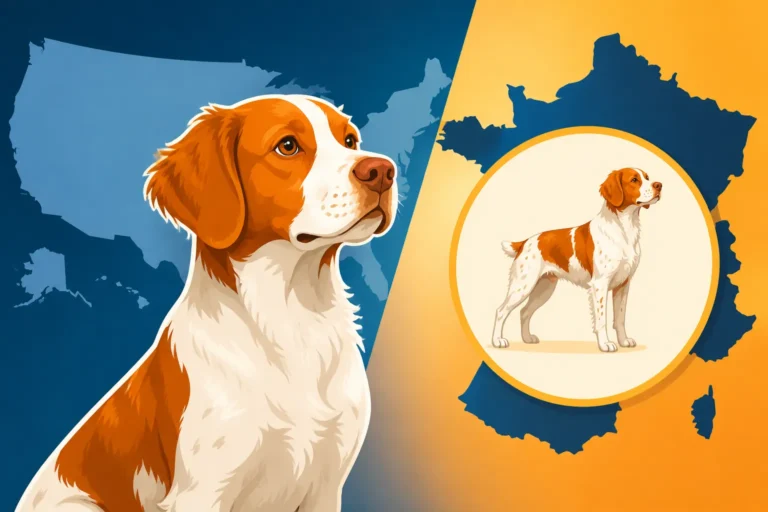
Our beloved Brittany hails from the beautiful, rugged region of Brittany in northwest France. For centuries, these dogs were the companions of poachers and peasants, prized for their keen hunting instincts and ability to work in close quarters. They were versatile, capable of finding, pointing, and retrieving various game birds, often under the cloak of night or in dense cover where a wide-ranging dog would be impractical.
The exact lineage of the Brittany is a bit murky, as is often the case with ancient working breeds that developed informally among rural communities. It's believed they are a mix of local French dogs and perhaps English sporting breeds, possibly setters or early spaniel types, that were brought over by British sportsmen vacationing in France. These early dogs were often smaller, naturally bob-tailed or short-tailed, and possessed an incredible bird sense. Their hunting style, while including a distinct point, might also have involved some flushing, especially when working in thick brambles or undergrowth where game was roused more directly. The term "Epagneul Breton," as they are known in France, translates literally to "Breton Spaniel," solidifying this historical connection in their homeland. The blend of pointing ability with a more compact size and flushing-like action in certain covers naturally led to the "spaniel" designation in early perceptions.
The Early Days in America: An Imported "Spaniel"
When the Brittany first arrived on American shores in the early 20th century, specifically around 1931, it was introduced to a sporting dog world already familiar with various types of spaniels—Cocker Spaniels, Springer Spaniels—known for flushing birds. The breed's physical characteristics, particularly its smaller stature compared to setters and pointers, and its long, hanging ears, somewhat resembled these flushing spaniels. This superficial resemblance, combined with the "Epagneul Breton" translation, likely played a significant role in its initial classification by the American Kennel Club.
The AKC officially recognized the breed in 1934, adopting the name "Brittany Spaniel." For many American hunters, the idea of a smaller, energetic bird dog might have immediately brought to mind the spaniel category. Even though the dog exhibited clear pointing behaviors, the "spaniel" tag stuck, largely due to convention and perhaps a less nuanced understanding of its primary hunting style at the time. This wasn't necessarily a slight, but rather a pragmatic categorization based on existing breed groupings and the visual cues the dog presented. However, as more hunters and enthusiasts began to truly understand and appreciate the Brittany's unique method of working game, the "spaniel" part of the name started to feel less and less accurate.
The Core Contention: Pointing vs. Flushing
The heart of the debate, and ultimately the reason for the name change, lies in the fundamental distinction between how a pointing breed and a flushing spaniel work game birds. This isn't just a semantic argument; it's about the very essence of the dog's purpose and its instinctual behaviors in the field.
What Defines a "Pointing Breed" vs. a "Spaniel"
Let's get down to brass tacks: the difference between a pointer and a flusher is monumental in the bird hunting world. A pointing breed, true to its name, points. When it scents game, it freezes, usually with an intense stare, nose locked onto the scent, tail often rigid or gently waving, indicating the precise location of the hidden bird to the hunter. The dog holds this point, sometimes for minutes, allowing the hunter to approach, prepare, and then flush the bird themselves, taking the shot. The entire interaction is a partnership built on stillness and communication. This style requires immense self-control and a strong "whoa" command, which is why Teaching a Brittany Whoa is so crucial.
Spaniels, on the other hand, are bred to flush game. They systematically quarter an area, actively pushing birds out of cover so the hunter can shoot. Once flushed, the spaniel then retrieves the fallen bird. While incredibly effective and invaluable to their hunting style, it’s a direct and active engagement that contrasts sharply with the pointer's statuesque vigil. Think of a Springer Spaniel crashing through a hedgerow to send pheasants skyward – that’s classic flushing behavior.
The Brittany's Undeniable Pointing Instinct
Despite being saddled with "Spaniel" in its name, the Brittany is, and always has been, a quintessential pointing dog. From the moment a Brittany puppy gets its first whiff of a game bird, that innate instinct to freeze, to honor the scent, and to hold that bird's location is usually undeniable. You'll see a young Brittany, even with minimal training, stop dead in its tracks, nose quivering, eyes fixed, often with one front paw raised delicately, as if petrified by the bird's presence. This is the hallmark of a pointing breed. The Brittany Points, It Does Not Flush with an intensity that rivals many of the larger pointing breeds.
A Brittany's point is a beautiful thing to witness. Imagine hiking through tall prairie grass or navigating a field of corn stubble. Suddenly, your Brittany, who was quartering diligently, locks up. Its body becomes a taut wire, every muscle signaling "BIRDS HERE!" It doesn't charge in; it waits. It waits for you to walk up, often past the dog itself, to kick out the bird. This cooperative hunting style is precisely what differentiates it from a spaniel. If you were looking for a dog to just bust birds out of cover for you, a Brittany wouldn't be your first choice. They're bred for that moment of frozen suspense, that exquisite communication with the hunter. This powerful instinct is one of the many reasons What a Brittany Was Bred to Hunt focuses so heavily on their pointing abilities.
The Drive for Accuracy: The Push for a Name Change
With such a clear discrepancy between the breed's actual function and its official name, it was only a matter of time before dedicated enthusiasts began to push for a change. This wasn't just about semantics; it was about honoring the breed's true identity and ensuring its place in the sporting dog world was accurately reflected.
Breeders and Enthusiasts Advocate for Recognition
The confusion caused by the "Spaniel" moniker became a persistent point of contention for Brittany owners, breeders, and professional trainers. Imagine proudly presenting your magnificent pointing dog, only to have someone ask if it "flushes like a Cocker." It was frustrating. Those deeply involved with the breed knew the Brittany deserved to be recognized for its true capabilities as a pointing dog. The American Brittany Club, the national parent club for the breed, played a pivotal role in spearheading this initiative. They understood that the breed's reputation and understanding among the wider public and within the AKC sporting groups hinged on correct classification.
Breeders, who meticulously selected for strong pointing instincts, felt their work was undermined by a misleading name. They were passionate about educating new owners and the public about the Brittany's true nature. They wanted the name to accurately reflect the breed's heritage and its primary role in the field. This advocacy wasn't just about vanity; it was about ensuring the breed was understood and appreciated for its unique set of skills and temperament. Many new owners, for instance, might purchase a "Brittany Spaniel" expecting a flushing dog, only to find themselves with a dog that holds point staunchly, leading to confusion about its natural abilities. Education was key, and changing the official name was a major step in that educational process.
The Official AKC Decision and Its Impact
After years of persistent advocacy from the American Brittany Club and its members, the American Kennel Club finally conceded to the logical and functional arguments. In 1982, the AKC officially dropped "Spaniel" from the breed's name, henceforth recognizing it simply as "the Brittany." This seemingly small change was a massive victory for the breed's proponents. It was a formal acknowledgment that the Brittany's primary function in the field aligned with pointing breeds, not flushing spaniels. This significant moment is often referred to by long-time enthusiasts, and you can delve more into its history by reading When the AKC Dropped Spaniel From the Brittany's Name.
This decision was not made lightly. The AKC prides itself on maintaining accurate breed standards and classifications. The change affirmed the Brittany's place squarely within the pointing dog category of the Sporting Group, alongside breeds like German Shorthaired Pointers and English Setters, rather than with the flushing spaniels. The impact was immediate and long-lasting, providing clarity for judges in conformation, participants in field trials, and, most importantly, for potential new owners trying to understand what kind of dog they were bringing into their lives. This classification helps articulate The Brittany Is the Smallest of the Versatile Pointing Breeds, highlighting its unique blend of size and skill.
Here's a quick overview of the key differences that drove this change:
| Feature | "Spaniel" (Traditional Implication) | "Brittany" (Actual Breed Trait) |
|---|---|---|
| Primary Action | Flushes game out of cover | Points game, holding position for hunter |
| Hunting Style | Active, direct pursuit, drives birds out | Intense, statuesque, waits for hunter |
| Communication | More independent, less emphasis on "whoa" | Strong cooperation, relies on "whoa" |
| Classification | Typically in Flushing Spaniel group | Clearly in Pointing Breed group |
| Key Trait | Excels at retrieving and flushing | Excels at locating and holding point |
Living with the Legacy: Brittany vs. Brittany Spaniel Today
Even after decades, the old name still pops up, a testament to how deeply ingrained it was for so long. Navigating this lingering terminology can be interesting, especially for new Brittany owners.
The Lingering Confusion and Common Usage
Despite the official change in 1982, you'll still hear people, especially those who grew up before the change or are simply less familiar with breed specifics, refer to them as "Brittany Spaniels." It's often a term of endearment or just old habit, and there's no harm meant by it. I know plenty of folks who've owned these wonderful dogs for decades who still slip into calling them "Brittany Spaniels." It's part of the breed's informal history, a little nod to its past, even if it's technically incorrect by AKC standards now.
However, for newcomers researching the breed, this lingering usage can be a source of genuine confusion. If you're looking for a dog that flushes birds, and you search for "Brittany Spaniel," you might misinterpret the breed's core hunting instinct. Conversely, if you want a pointing dog, and the name "spaniel" throws you off, you might overlook the Brittany entirely! It's why clarity, even in casual conversation, can make a real difference in helping people understand What a Brittany's Temperament Is Really Like and how it operates in the field. Sometimes, even when browsing online pet supply stores like Chewy for breed-specific items, you might still see "Brittany Spaniel" used in some product descriptions or reviews, perpetuating the old term for those unfamiliar with the change.
The Importance of Correct Terminology for Hunters and Enthusiasts
For those truly immersed in the world of Brittanys—breeders, trainers, hunters, and competitive enthusiasts—using the correct name, simply "Brittany," is important. It's about respecting the breed's identity and accurately communicating its purpose. When discussing hunting strategies, for example, knowing you have a pointer fundamentally changes how you approach a field compared to working with a flusher. An American Brittany, for example, typically An American Brittany Ranges Wide and a French One Stays Close, and knowing you have a pointing dog helps you anticipate how it will work that range.
Breed clubs, such as the American Brittany Club and its regional affiliates, universally use "Brittany." This consistent terminology helps reinforce the breed's proper classification and ensures that training methods, health discussions, and performance expectations align with its true nature. It's not about being snobbish, but about precision. When you're talking about a dog that can hold a pheasant for minutes, knowing you're talking about a "Brittany" – a pointer – makes all the difference in understanding its incredible skills. It helps avoid situations where a new owner might expect a different hunting style, only to be surprised by the dog's innate pointing instinct.
More Than Just a Name: What It Means for the Breed's Identity
The removal of "Spaniel" wasn't just a bureaucratic update; it was a profound declaration that solidified the Brittany's identity and celebrated its unique position in the sporting dog world. This shift in nomenclature had tangible benefits for how the breed is perceived and understood.
Solidifying the Brittany's Place Among Pointing Breeds
The official name change firmly cemented the Brittany's status within the pointing breed category of the AKC Sporting Group. This was crucial for its identity in conformation shows and, more importantly, in field events. When judges evaluate a Brittany in the ring, they are looking for the conformation of a versatile pointing dog, not a flushing spaniel. In field trials, the dog's ability to quarter, scent, point, and hold game are the benchmarks of its performance, exactly what you'd expect from a pointer. This clear designation helped standardize judging criteria and training methodologies, allowing the breed to compete and excel alongside other established pointing breeds.
The change meant that the Brittany was no longer an outlier or a source of confusion within the Sporting Group. It was an affirmation of its purpose and abilities. This clarity helps potential owners, especially those new to hunting, understand that Why the Brittany Hunts Like a Setter is due to its pointing style, not its flushing capabilities. When considering what kind of dog you want for the field, knowing that a Brittany is a pointer simplifies your research immensely. You know you're getting a dog with a specific job in mind, and that job is pointing. Even when purchasing training dummies or scent bottles from retailers like Chewy, knowing you're training a pointer helps you select appropriate tools.
The Brittany's Unique Dual Champion Record
One of the most remarkable aspects of the Brittany breed is its unparalleled success in achieving Dual Champion titles. A Dual Champion (DC) is a dog that has earned both an AKC Championship in conformation (beauty pageants, if you will) and an AKC Field Championship (demonstrating superior hunting ability). This is incredibly difficult to achieve, as it requires a dog to embody both the physical perfection of the breed standard and the top-tier hunting prowess. The Brittany holds the record for the most Dual Champions of any AKC breed, by a significant margin. You can read more about this incredible achievement in How Many Dual Champions the Brittany Has.
This extraordinary accomplishment underscores precisely why the "Spaniel" tag was so misleading. A true spaniel, while an excellent hunting dog in its own right, does not compete for a Field Championship as a pointer. The Brittany's ability to consistently excel in field trials as a pointing dog directly contradicted its historical "spaniel" label. The name change, therefore, was not just about correcting a misnomer; it was about honoring the breed's inherent, proven ability to point game and perform at the highest levels in both show and field. It solidified its reputation as a versatile, intelligent, and highly trainable pointing breed, capable of being both a champion in the ring and a master in the field. This dual excellence is a core part of The Brittany Is One of the Healthiest Sporting Breeds philosophy, emphasizing sound body and mind for all tasks.
Understanding this history helps us appreciate why our beloved Brittanys are so special. They are energetic, intelligent, and fiercely loyal partners in the field and at home. They're not spaniels in the traditional sense, but magnificent pointers who will stop your heart with the intensity of their point and fill your home with their joyful, affectionate presence. So next time you hear "Brittany Spaniel," you can gently educate with a smile, knowing the rich history behind the simple, yet powerful, name: Brittany.
Disclaimer
This article is for general informational purposes only and does not constitute professional advice. Laws, prices and regulations vary by location and change over time. Consult a qualified professional for guidance on your specific situation.