The Brittany Is the Smallest of the Versatile Pointing Breeds
One of the most common frustrations for upland hunters and active families alike is finding a dog that can do it all in the field, then fit seamlessly into a busy household. Many pointing breeds are simply too large for smaller homes or vehicles, making them impractical for everyday life. This comprehensive guide will explore why the Brittany stands out as the smallest, yet incredibly capable, versatile pointing breed, and what that means for both its performance and companionship.
Understanding the Versatile Pointing Breed Landscape
Before we dive into the Brittany specifically, it's important to grasp what we mean by "versatile pointing breed" and where the Brittany fits within this diverse group. It's not just about pointing birds; it's about a complete package that many hunters seek.
What Defines a Versatile Pointing Breed?
When hunters talk about a "versatile pointing breed," they're not just looking for a dog that points birds. They're looking for a partner that excels in a variety of tasks both before and after the shot. This typically means a dog that can:
- Point: Locate game birds and indicate their presence by freezing in a characteristic stance. This is the cornerstone.
- Hold Point: Maintain that point steadfastly until the hunter arrives and flushes the bird.
- Retrieve: Fetch downed game, often from land or water, and bring it back to hand. This includes having a "soft mouth" to avoid damaging the bird.
- Track: Follow the scent of wounded game to recover it.
- Be a Companion: Beyond the field, these dogs are expected to be well-behaved, affectionate, and manageable family members.
Breeds like German Shorthaired Pointers, Vizslas, Weimaraners, and of course, the Brittany, are all considered versatile. They are bred to be all-around hunting dogs, capable of handling various types of game and terrain, rather than specializing in just one aspect, like a pure flushing spaniel or a dedicated retriever. This versatility is what makes them so appealing to many hunters who might pursue different birds throughout the season or simply want one dog for all their needs.
The Spectrum of Size in Pointing Breeds
If you line up the popular pointing breeds, you'll quickly notice a significant range in size. On one end, you have the giants like the German Wirehaired Pointer or the larger English Pointers and Setters, often standing well over 24 inches at the shoulder and weighing 60-70 pounds or more. These are powerful, wide-ranging dogs built for covering vast open country, often from horseback. In the middle, you find breeds like the German Shorthaired Pointer or the Vizsla, usually in the 22-25 inch range and weighing 45-65 pounds. These are still substantial dogs, capable of impressive speed and endurance.
Then, at the "smaller" end of this spectrum, you find the Brittany. While they are not tiny dogs by any stretch, they are consistently the smallest of the versatile pointing breeds. This isn't just a slight difference; it's a defining characteristic that impacts everything from their field performance to their daily life with a family. It's a deliberate design, honed over generations, for a specific purpose. You'll find that while some breeds might overlap a little, the Brittany generally sets the lower benchmark for height and weight in this group.
Why Size Matters for a Working Dog
The size of a pointing dog isn't just a cosmetic detail; it has profound implications for how the dog performs in the field and integrates into a hunter's lifestyle. A larger dog might cover more ground faster in open fields, but it can struggle in dense cover. Imagine a large German Shorthaired Pointer trying to push through a thick briar patch – it expends a lot more energy and might get hung up more often than a smaller, more agile dog.
For the foot hunter, a dog that ranges too wide can be a nightmare, requiring constant whistling or a GPS collar to keep track of. A smaller dog, often naturally working closer, is simply easier to keep up with on foot. Furthermore, size affects endurance. While a large dog has powerful strides, a smaller dog's lighter frame can sometimes mean better stamina over a long day, especially in demanding conditions.
Beyond the hunt, size factors into everyday logistics. A large dog requires a bigger crate, more space in the truck or kennel, and eats more food. If you're traveling frequently, hiking, or just living in a more modest home, the difference between a 40-pound dog and a 70-pound dog is significant. This practical aspect is often what draws people to the Brittany – they want the full hunting package without the physical footprint of a giant.
The Brittany's Physical Stature: Small but Mighty
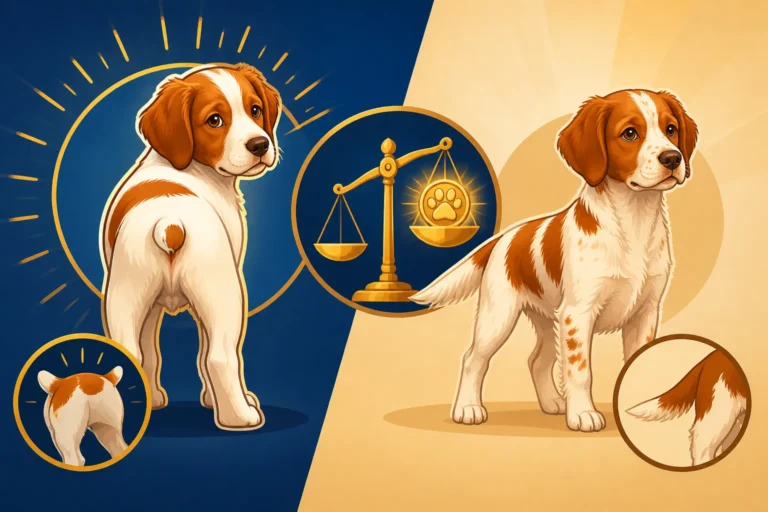
The Brittany's official breed standard truly emphasizes its compact, agile build, a characteristic that makes it perfectly suited for its role as a versatile gun dog and a beloved family member.
Official Breed Standard for Size
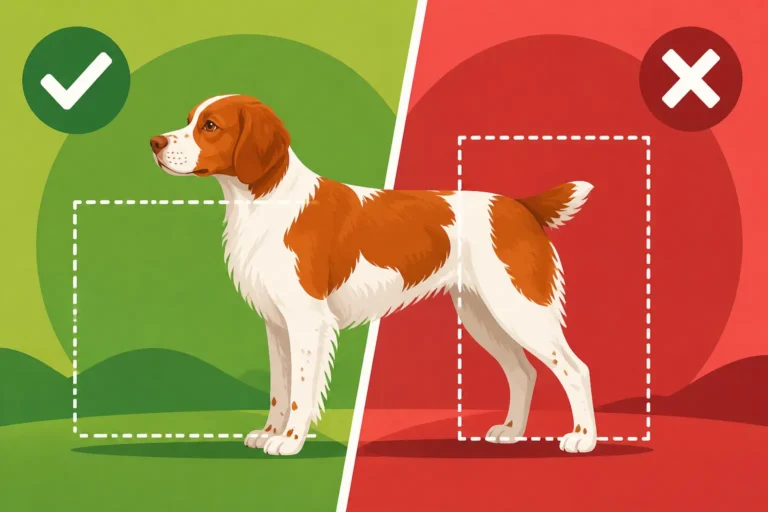
According to the breed standard, a male Brittany should stand between 17.5 and 20.5 inches at the shoulder, while females typically fall within 17.5 to 20.5 inches as well, though sometimes at the lower end. As for weight, a Brittany generally weighs between 30 and 40 pounds. These are not huge dogs by any stretch of the imagination, especially when you consider many other sporting breeds routinely push 60-70 pounds or even more. The standard also calls for a "square" build, meaning their body length should be roughly equal to their height at the shoulder. This contributes to their balanced, agile appearance and quick turns.
This emphasis on a moderate, square build is critical. It means the Brittany isn't a long, lanky dog that struggles with tight turns or dense cover, nor is it a stocky, heavy dog that tires easily. Instead, it's a dog built for efficiency, quick changes in direction, and sustained effort. When you see a well-bred Brittany move, you understand why this particular size and structure are so important to its performance. It's a testament to centuries of breeding for function.
Comparing the Brittany to Larger Pointing Breeds
Let's put the Brittany's size into perspective by comparing it to some of its more sizable counterparts in the versatile pointing breed category.
- German Shorthaired Pointer (GSP): Often 23-25 inches tall and 45-70 pounds. GSPs are powerful, athletic dogs known for their stamina and wide range. They're excellent in open country but can be a handful in thick brush due to their larger frame.
- Vizsla: Typically 21-24 inches tall and 45-65 pounds. Vizslas are elegant, lean dogs known for their incredible speed and deep affection. While agile, their longer legs and somewhat larger size can make dense cover more challenging than for a Brittany.
- English Setter: Usually 24-27 inches tall and 45-80 pounds. English Setters are graceful, often wide-ranging dogs with profuse feathering. Their larger size and coat can make them prone to collecting burrs and struggling in extremely thick undergrowth.
- Pointers (English Pointer): Among the largest, standing 23-28 inches and weighing 45-75 pounds. Pointers are built for speed and endurance over vast distances, often working from horseback. Their sheer size makes them less suitable for the foot hunter in dense cover.
In contrast to these breeds, the Brittany's 17.5-20.5 inch, 30-40 pound frame makes it significantly smaller and more compact. This isn't a flaw; it's a feature. This smaller size allows the Brittany to sneak through gaps in the brush that would force a larger dog to plow through, expending more energy and potentially getting scratched or tangled. For more specific details on their dimensions, you might want to read How Much a Brittany Weighs and How Tall a Brittany Stands.
The Advantages of a Smaller Frame in the Field
The Brittany's smaller size brings a host of advantages, especially for the foot hunter or those who frequently hunt in challenging terrain.
- Agility and Maneuverability: A smaller, more compact dog can turn on a dime, dart through tight spaces, and navigate dense cover with surprising ease. Imagine a thick covert of young pine or a tangled hawthorn patch – a large dog would struggle to penetrate, while a Brittany can often weave through with less effort. This means they can reach birds that larger dogs might miss or simply can't access efficiently.
- Reduced Energy Expenditure: When a dog has to push its way through heavy brush or jump over numerous obstacles, a larger body requires more energy. The Brittany's lighter weight and streamlined build allow it to conserve energy over a long day, meaning it can hunt harder for longer without fatiguing as quickly. This is particularly valuable on multi-day hunts or in demanding conditions.
- Less Wear and Tear: While all hunting dogs are susceptible to injuries, a smaller dog often puts less strain on its joints and muscles when navigating uneven terrain or jumping. Their lighter impact can contribute to greater longevity in the field. This isn't to say Brittanys don't get hurt – they absolutely do, and the dense cover they excel in can be tough on them – but their build is designed for efficient movement.
These advantages collectively make the Brittany an incredibly effective and enjoyable hunting companion, especially for those who appreciate a dog that works efficiently and can handle whatever the landscape throws at them.
Historical Context and Breeding for Efficiency
The Brittany's origins are deeply intertwined with its size and design. It wasn't an accident; it was a deliberate choice by breeders to create a highly efficient, practical hunting dog.
The Brittany's Origins and Purpose
The Brittany breed hails from the Brittany region of France, a diverse landscape of fields, forests, and dense hedgerows. Unlike some of the grander pointing breeds developed for the aristocratic hunts of open plains, the Brittany emerged from the needs of local hunters and even poachers. These were people who hunted on foot, often in varied and challenging terrain, and they needed a dog that could work effectively, quietly, and close by. They weren't riding horses across vast estates; they were navigating thickets and smaller parcels of land.
This practical need shaped the breed from its earliest days. They needed a dog that could locate birds in heavy cover, hold a staunch point, and then retrieve the downed game. Crucially, they also needed a dog that could be a quiet, manageable companion at home, blending into the daily life of a farmer or villager. The concept of The Brittany Is the Smallest of the Versatile Pointing Breeds was a direct response to these specific requirements.
How Size Played a Role in its Development
The smaller size of the Brittany was not an arbitrary trait; it was fundamental to its utility in its native environment.
- Working Close: For a foot hunter in varied terrain, a wide-ranging dog is more of a hindrance than a help. A smaller dog could be trained to work within gun range, naturally staying closer and checking in more frequently. This allowed the hunter to keep track of their dog without needing extensive tracking equipment.
- Navigating Dense Cover: The thick, often thorny undergrowth of the Breton countryside demanded a dog that could penetrate it easily. A larger dog would crash through, making noise and potentially spooking birds. A smaller, agile Brittany could slip through more silently and efficiently, conserving energy and maintaining stealth.
- Ease of Transport and Concealment: For the early hunters and poachers, discreet transport was important. A smaller dog was easier to conceal, easier to carry (if needed), and took up less space in a small cart or on foot. This practicality extended to their home life, where they lived indoors as part of the family rather than in large outdoor kennels.
This deliberate focus on a compact, efficient size created a dog that was perfectly adapted to its original purpose. It wasn't about grandeur or speed across a vast landscape, but about effective, close-quarter hunting with a highly intelligent and biddable companion.
Evolution of the American vs. French Brittany in Size and Range
While the core characteristics of the Brittany—its size, pointing ability, and biddability—remain consistent across the Atlantic, there has been a subtle divergence between the American Brittany and the French Brittany (Epagneul Breton).
- American Brittany: Over decades, American breeders, often catering to hunters working larger tracts of land or participating in horseback field trials, sometimes selected for slightly larger dogs with a tendency to range a bit wider. However, even with this slight drift, the American Brittany remains firmly within the "smallest versatile pointing breed" category when compared to most other pointers and setters. They are still considered moderate in size.
- French Brittany (Epagneul Breton): In France, the breed standard has often emphasized an even more compact dog, with some lines being slightly smaller and typically working at a closer range. These dogs are perfectly suited for the walking hunter in diverse European landscapes.
Despite these minor differences in emphasis, both types maintain the core Brittany characteristics of being a highly efficient, energetic, and intelligent bird dog in a relatively small package. The physical dimensions detailed in How Much a Brittany Weighs and How Tall a Brittany Stands generally hold true for both, though the French lines might often be at the lower end of the weight and height spectrum. The choice between an American or French line often comes down to personal preference for range and subtle aesthetic differences, but neither strays far from the breed's fundamental compact design.
Field Performance: How Small Size Translates to Success
It's easy to assume that a smaller dog might be less capable in the field, but with the Brittany, the opposite is often true. Its size is a significant asset, especially in the types of hunting most popular today.
Navigating Thick Cover and Dense Brush
One of the Brittany's most celebrated strengths, directly attributable to its size, is its ability to effortlessly navigate challenging terrain. Think about hunting grouse in alder thickets, pheasants in cattail marshes, or quail in tangled briar patches. These are places where a larger, heavier dog might struggle, get bogged down, or become exhausted quickly.
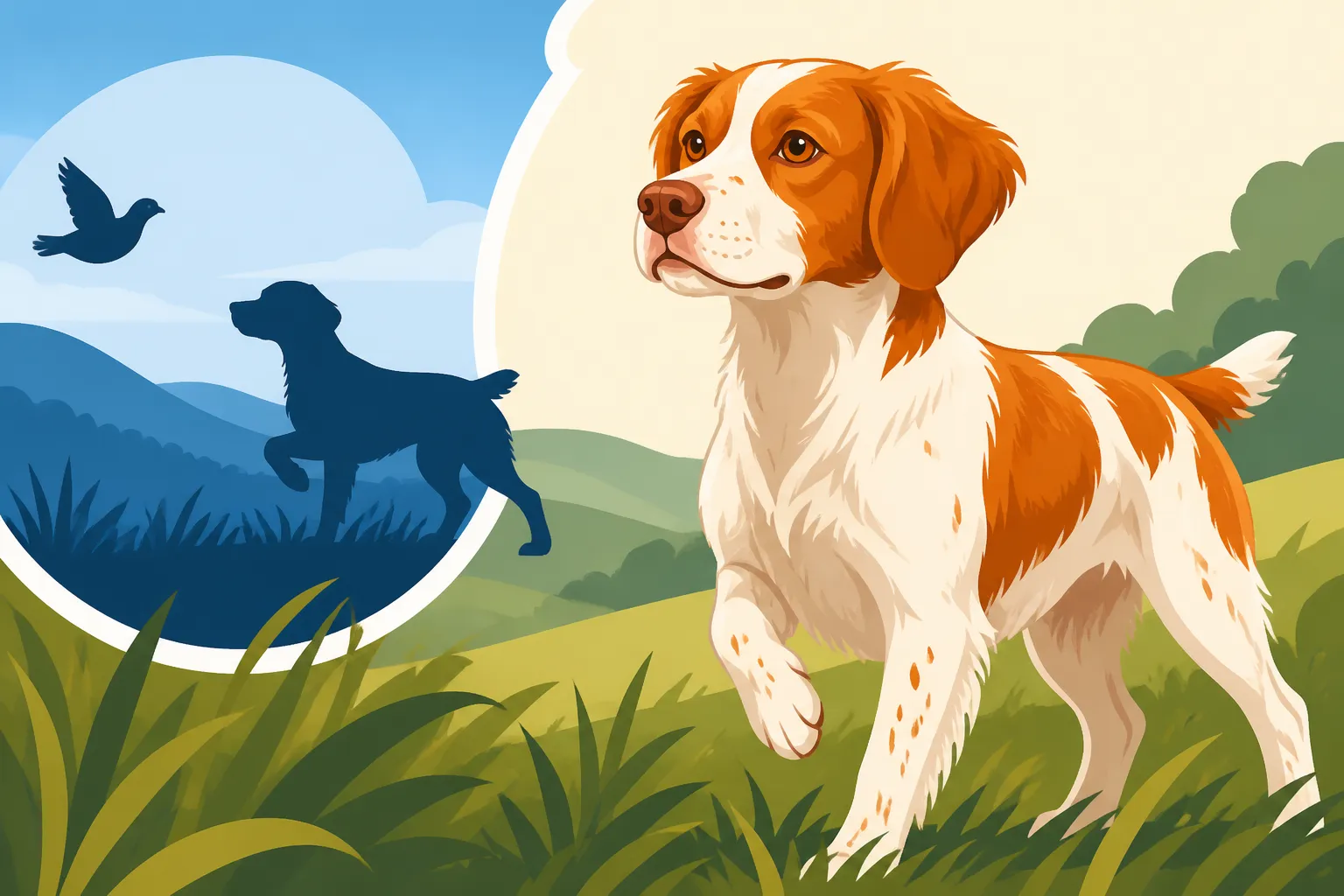
A Brittany, with its compact and agile frame, can slip through these environments with remarkable ease. They can weave around obstacles, duck under low branches, and push through dense undergrowth without expending excessive energy. This isn't just about speed; it's about efficiency. They can get to where the birds are hiding, often reaching spots larger dogs simply can't penetrate without making a ruckus. This ability to work effectively in "birdy" cover often gives them an edge, allowing them to pinpoint game that might otherwise be missed. This translates directly to more successful hunts for the walking hunter.
Endurance and Stamina for All-Day Hunts
Despite their smaller stature, Brittanys are renowned for their incredible endurance and stamina. Don't let their size fool you into thinking they're fragile or easily tired. These dogs are built like little powerhouses, capable of hunting hard from dawn till dusk. Their lighter weight and efficient movement mean they burn less energy per mile compared to a much larger dog trying to navigate the same terrain.
This is a huge advantage for hunters who spend long days in the field, especially in challenging conditions like hilly terrain or deep snow. While a larger dog might start to lag in the afternoon, a well-conditioned Brittany often seems to have an endless supply of energy. This isn't just raw physical power; it's a combination of their genetics, their efficient build, and their sheer desire to hunt. Proper nutrition, like a high-fat performance food, is crucial to sustain this level of activity, as discussed in Whether a Brittany Needs a High Fat Performance Food. They might be small, but they punch well above their weight when it comes to covering ground and maintaining drive.
Retrieving in Challenging Terrain
Retrieving is another area where the Brittany's size proves advantageous, particularly in difficult environments. After the shot, birds often fall into dense cover, water, or over obstacles. A dog needs to be able to quickly and effectively retrieve that game.
A smaller, more agile dog like the Brittany can maneuver more easily through thick brush, over fallen logs, or through shallow water to retrieve a downed bird. They are less likely to get tangled or stuck, and their compact size means they can get into tighter spots where a bird might have fallen. While a large retriever might have more power to break ice or handle huge geese, a Brittany is perfectly capable of retrieving upland game birds (quail, pheasant, grouse) and ducks in typical hunting scenarios. Their strong desire to retrieve, combined with their athletic build, makes them highly effective in this critical phase of the hunt. This versatility truly solidifies their place as an all-around gun dog, not just a pointer.
Living with a Smaller Versatile Hunter
The Brittany's moderate size makes it a highly appealing choice not just for its field capabilities, but also for its ability to integrate seamlessly into family life, especially for those with less sprawling living spaces or active, mobile lifestyles.
The Brittany as a House Dog
For many hunters, their dog isn't just a tool for the field; it's a cherished family member that lives indoors. This is where the Brittany's size really shines. A 30-40 pound dog takes up significantly less space than a 60-70 pound dog. They are easier to manage in smaller homes, apartments, or even RVs. While they absolutely need ample exercise (and we'll get to that!), they tend to curl up compactly once indoors, often right at your feet or on the couch, becoming the ultimate "velcro dog."
Their manageable size also means less impact on furniture, less bulk to navigate around, and generally easier handling in crowded situations. If you've ever tried to walk a large, excited pointer through a busy park or bring one into a pet-friendly establishment, you'll appreciate the difference a smaller, more contained dog makes. They genuinely fit into your life without requiring you to make drastic changes to your home or daily routine. Many owners find their Brittany is quite happy to be a couch potato once their exercise needs are met. If you're wondering Whether a Brittany Can Live in an Apartment, the answer is often yes, with the right commitment to activity.
Travel and Transport Considerations
Anyone who travels with their dogs knows that size is a major factor. A larger dog requires a larger crate, which takes up more space in a vehicle, and potentially more room in a hotel. For air travel, larger dogs often face more restrictions or require larger, more expensive cargo crates.
With a Brittany, these logistical challenges are significantly reduced. Their crates fit more easily into the back of an SUV, truck, or even a smaller car. They're more manageable on leashes in busy travel hubs, and many pet-friendly accommodations are more welcoming to a medium-sized dog than a giant breed. If you're a hunter who trailers your dogs in a dedicated dog box, you can often fit more Brittanys in a standard setup than you could larger pointers, maximizing your hunting party's canine contingent. This ease of transport makes spontaneous trips or long-distance hunting adventures much less of a headache. When it's time to stock up on travel essentials or dog food, sites like Chewy offer a wide array of crates and supplies that fit the Brittany's needs perfectly.
Daily Exercise Needs and Management
Now, let's be clear: being the smallest versatile pointing breed does not mean the Brittany needs less exercise. Far from it! These are highly energetic dogs, bred to run all day in the field. They require a significant amount of physical and mental stimulation to be happy and well-behaved house dogs. However, their smaller size can sometimes make managing that exercise feel a bit easier.
For instance, while a larger dog might need miles of running to truly tire out, a Brittany can often achieve a good workout in a slightly smaller space or with more varied activities like agility, fetch, or retrieving drills. Their agility allows them to get a lot of mileage in a shorter, more intense burst. Still, don't underestimate their drive; an under-exercised Brittany can quickly become a destructive force. If you’re curious about the potential consequences, read What an Under Exercised Brittany Does at Home. The key is consistency and variety in their exercise routine. A quick trip to the dog park or a short walk around the block simply won't cut it for this breed. They need to run, sniff, and explore.
Addressing Misconceptions and Managing Expectations
Because of their smaller size, some people might mistakenly believe Brittanys are less serious as hunting dogs or require less commitment. This couldn't be further from the truth.
Small Does Not Mean Less Drive
This is perhaps the biggest misconception to dispel about the Brittany. Just because they are the smallest of the versatile pointing breeds does not mean they lack an ounce of the drive, intensity, or bird sense of their larger cousins. In fact, many would argue that pound for pound, they possess some of the strongest natural instincts and most relentless hunting drive in the pointing world. They are little firecrackers in the field!
When a Brittany hits cover, they transform into focused, tireless athletes. They carry that intense desire to find birds, point staunchly, and retrieve diligently. Their smaller size often means they can work with incredible speed and agility without sacrificing precision or purpose. They are every bit the serious gun dog, capable of holding their own against any breed in terms of pure hunting prowess. If you're looking for a dog that's all heart and hustle in a compact package, the Brittany delivers. Don't let their charming, affectionate nature at home make you underestimate their field abilities.
Ensuring Proper Nutrition for an Active Smaller Dog
Given their immense energy and high drive, proper nutrition is absolutely critical for a Brittany, especially during hunting season or periods of intense activity. While they may be smaller, their caloric needs can rival or even exceed those of much larger, less active dogs. You can’t just feed them a generic kibble and expect them to perform at their peak.
A working Brittany needs a high-quality, nutrient-dense diet, often one specifically formulated for active or performance dogs. This means higher protein and fat content to fuel their muscles and sustain their energy levels throughout long days in the field. During peak season, their food intake might need to increase significantly. Monitoring their weight and body condition is essential to ensure they're not losing too much weight, a common issue for highly active dogs. A good starting point for dietary research is What a Brittany Eats in a Month or Whether a Working Brittany Needs a Performance Food. Consult with your veterinarian to tailor a feeding plan to your individual dog's activity level and metabolism. High-quality dog food brands are readily available through retailers like Chewy, offering a range of performance-focused options.
Training Considerations for a Sensitive, Agile Breed
The Brittany is known for its intelligence, eagerness to please, and generally biddable nature. However, they are also famously a "soft" breed, meaning they respond best to positive reinforcement and gentle, consistent training methods. Harsh corrections or heavy-handed approaches can easily shut down a Brittany, making them timid or resistant to training. This sensitivity is a hallmark of the breed, as explored in The Brittany Is the Softest of the Pointing Breeds.
Their high intelligence and agility mean they thrive on varied training sessions that keep them engaged. They learn quickly but can also get bored easily if training is repetitive or lacks excitement. Focus on building a strong bond and using reward-based methods for everything from basic obedience to advanced field work. Their natural bird drive is often so strong that it needs to be channeled and refined, rather than forced. With their compact size, they are incredibly athletic and can excel in canine sports like agility or dock diving, which can also be great outlets for their energy when not hunting.
The Brittany's Place in the Pointing World
The Brittany has carved out a unique and highly respected niche in the world of pointing breeds, not despite its size, but often because of it.
Its Unique Niche Among Versatile Breeds
The Brittany truly holds a special place. It’s the Goldilocks of the versatile pointing world for many hunters: not too big, not too small, but just right. It provides the full spectrum of pointing, flushing, and retrieving abilities, wrapped up in a package that is both intensely capable in the field and incredibly adaptable to family life. This combination of robust hunting prowess and manageable size is what defines its niche.
While larger breeds might cover open country faster, and smaller flushing spaniels might be excellent in dense cover, the Brittany excels at being a truly "all-around" gun dog for the foot hunter. They can handle a wide range of cover types, adapt to different game birds, and remain within a reasonable range without constant correction. They offer the best of both worlds for those who want a serious hunting partner that can also be a devoted, easy-to-live-with companion. Their What a Brittany's Temperament Is Really Like is a big part of this success.
Longevity and Health Considerations
Generally speaking, smaller to medium-sized dog breeds often enjoy longer lifespans than their giant counterparts. This holds true for the Brittany, which typically lives The Twelve to Fourteen Years a Brittany Gets. While genetics and individual care play a huge role, their moderate size can contribute to less strain on joints and organs compared to very large breeds. This potential for a longer, healthier life means more years of companionship and hunting memories.
However, like all breeds, Brittanys are prone to certain health issues, and responsible breeding practices are crucial. Hip dysplasia, epilepsy, and certain eye conditions are some concerns that breeders should screen for. While their smaller size might reduce the severity of certain orthopedic issues compared to a massive dog, it doesn't eliminate them. It's important to work with a reputable breeder who conducts all recommended health clearances. For example, What Hip Screening Did for the Brittany Spaniel highlights the importance of health testing.
Why Many Hunters Choose the Smallest Option
Ultimately, many hunters and active families choose the Brittany precisely because it is the smallest of the versatile pointing breeds. The reasons are practical, emotional, and often deeply personal.
- Practicality: Easier to transport, requires less space, generally eats less (though still a lot for its size!). This makes it an ideal choice for hunters who travel, live in smaller spaces, or simply prefer a more manageable dog size.
- Companionship: Their affectionate, intelligent, and biddable nature, combined with their moderate size, makes them exceptional house dogs. They crave human interaction and are often referred to as "velcro dogs," wanting to be wherever their people are.
- Performance: They don't sacrifice an ounce of hunting ability for their size. They are driven, natural pointers and retrievers capable of handling demanding field conditions. Many hunters find that the Brittany's efficiency in varied cover and its close-working nature perfectly suit their hunting style.
- Versatility: The ability to excel in multiple aspects of the hunt—pointing, retrieving, and tracking—all in a compact package that easily transitions to a loving family pet, makes the Brittany an incredibly attractive choice for a wide range of people.
The Brittany proves that when it comes to a versatile hunting partner and family companion, big things truly do come in small packages. It’s a testament to thoughtful breeding and a deep understanding of what makes an effective and beloved canine partner.
| Feature | Brittany Spaniel | German Shorthaired Pointer | Vizsla | English Setter |
|---|---|---|---|---|
| Height (inches) | 17.5 – 20.5 | 23 – 25 | 21 – 24 | 24 – 27 |
| Weight (pounds) | 30 – 40 | 45 – 70 | 45 – 65 | 45 – 80 |
| Build | Compact, Square, Agile | Muscular, Powerful | Lean, Athletic | Graceful, Elegant |
| Range (Typical) | Moderate to Close | Medium to Wide | Medium to Wide | Wide |
| Cover Type | Excellent in Dense | Good in Open/Medium | Good in Open/Medium | Good in Open |
| Home Suitability | Excellent (Moderate Size) | Good (Requires Space) | Good (Requires Space) | Good (Requires Space) |
Disclaimer
This article is for general informational purposes only and does not constitute professional advice. Laws, prices and regulations vary by location and change over time. Consult a qualified professional for guidance on your specific situation.