What a Liver and White Brittany Looks Like
A liver and white Brittany is a Brittany with rich brown coloring and white markings, but the pattern can look very different from dog to dog. One may have broad brown patches; another may be mostly white with fine brown speckling. This guide explains the coat, the details that distinguish liver from orange, and what color can—and cannot—tell you about the dog.
What liver and white means on a Brittany
Liver is the color of the pigment, not just the coat
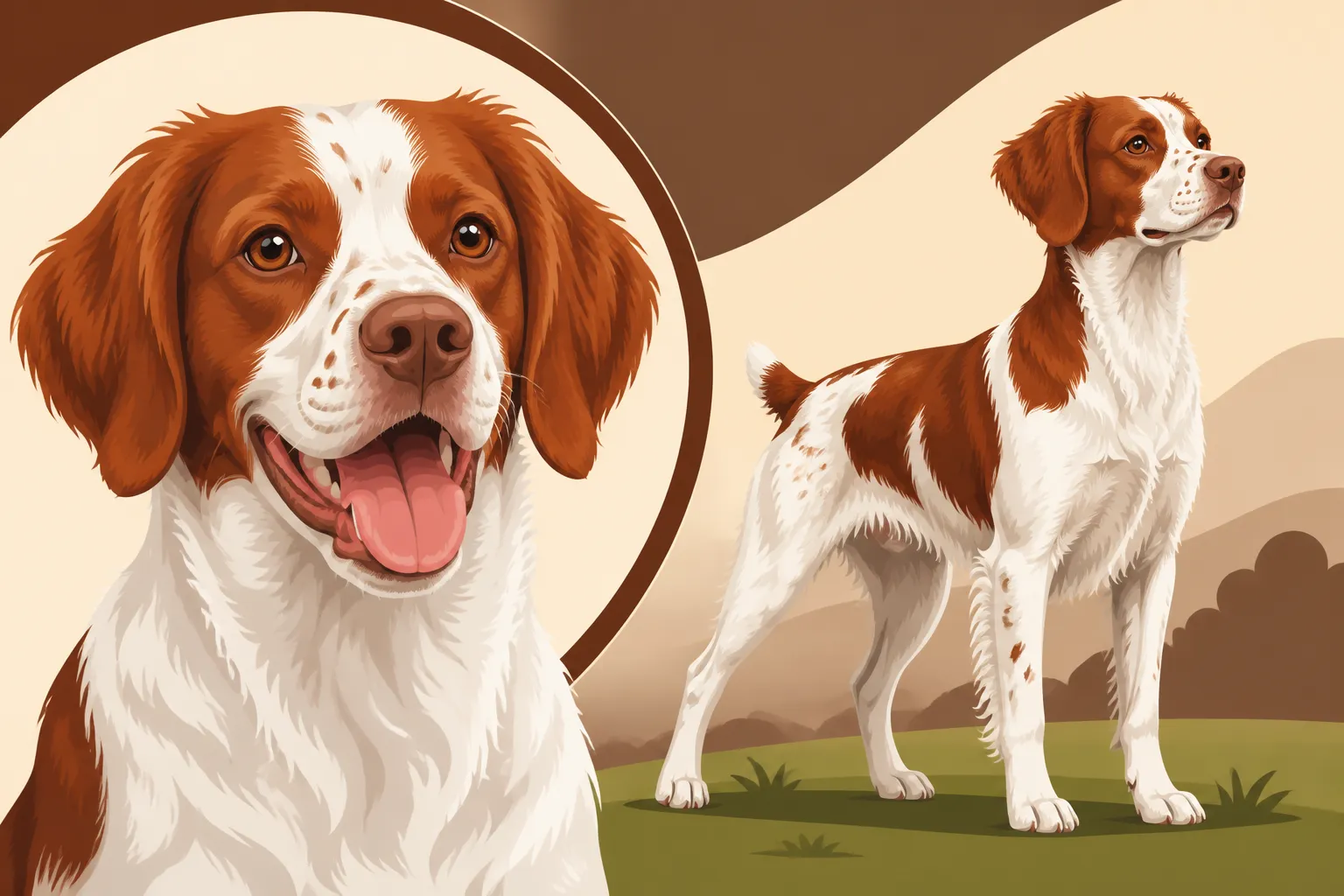
“Liver” describes a warm brown shade, often compared with chocolate or reddish brown. On a liver and white Brittany, that color appears in patches, ticking, or both against white areas. The brown can look deeper or lighter depending on the dog’s coat, lighting, and how much white is mixed through it.
The word also refers to pigment beyond the coat. A liver Brittany generally has brown pigment on the nose, lips, and eye rims rather than the dark, nearly black pigment typical of an orange and white dog. The shades may not match exactly: a coat can look dark brown while the nose appears a softer brown, for example.
That pigment is one of the most useful clues when you are trying to tell liver from orange in a photograph. Photos can distort color, especially in warm indoor light or strong sunshine. If the coat looks rust-colored but the nose and eye rims are brown, the dog may still be liver.
The white areas can be broad or finely marked
There is no single arrangement of brown and white that defines the liver and white pattern. A Brittany might have a mostly brown head with a white blaze, a large brown patch over its back, or an extensively white coat with brown markings on the ears and body. The amount of each color varies, even among related dogs.
Small brown flecks scattered through a white area are called ticking. When the flecks are dense, the white can look softly speckled or roaned from a short distance. In a close-up, individual hairs and spots may be easier to distinguish. Ticking can become more noticeable as the coat develops, so a puppy’s markings may not look quite like its adult coat.
| Feature | What you may see on a liver and white Brittany |
|---|---|
| Main coat colors | Brown and white in varying proportions |
| Brown shade | Often chocolate, chestnut, or reddish brown |
| Nose and facial pigment | Typically brown rather than black |
| Pattern | Large patches, ticking, or a mix of both |
| White areas | May be clear white or finely speckled |
| Individual appearance | Markings and color balance vary from dog to dog |
For a broader overview of the breed’s coat colors and patterns, see Orange, Liver and the Colors a Brittany Comes In. The key point is that “liver and white” names a color combination, not one exact pattern.
How to recognize a liver and white Brittany
Check the nose and facial pigment as well as the coat
A brown coat patch by itself is not always enough to identify a dog’s color reliably. Look at the nose, lips, and eye rims too. Brown pigment in these areas supports the liver identification, while black pigment is more commonly associated with orange-colored dogs.
This is especially helpful when a dog’s coat looks reddish in sunlight. A liver patch can take on a coppery cast in bright light, and camera settings can make brown appear orange. If you are comparing two dogs in person, look at them in natural, indirect light and consider the coat and pigment together.
Eye color can vary, so it is not a dependable shortcut on its own. Some liver and white Brittanys have lighter amber-toned eyes, while others have darker eyes. The overall face, including nose and eye-rim pigment, is more informative than eye color alone.
Learn the difference between liver and orange
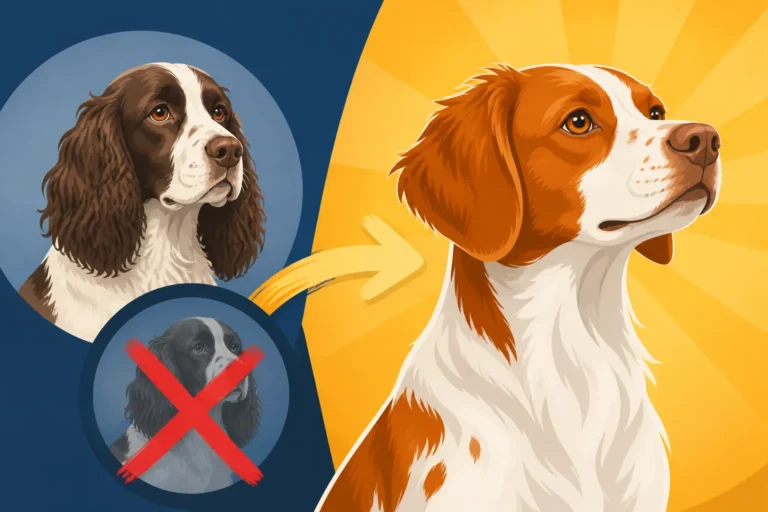
Orange and liver can seem similar in casual pictures, particularly when the dog has a warm-toned coat or the photo has a golden color cast. Orange markings usually read as orange, rust, or reddish-orange, while liver markings tend to look brown. The distinction is also reflected in pigment: orange Brittanys commonly have darker, black-looking noses, while liver Brittanys generally have brown noses.
A quick comparison is useful, but it is not a substitute for seeing the dog clearly. A very pale liver marking may appear tan, and a deep orange marking may look almost brown in shadow. If you are looking at a puppy listing, ask for clear photographs of the nose, face, and coat in daylight rather than relying on one heavily edited image.
For a direct comparison with the other familiar two-color pattern, see What an Orange and White Brittany Looks Like. The coat may catch your eye first, but pigment often helps settle the question when the shade is ambiguous.
Expect variation in coat texture and feathering
Color is only part of the visual picture. Brittanys have coats that can be relatively flat or show a gentle wave, and many have longer feathering on the ears, chest, legs, and underside of the tail. The amount and texture of feathering differ between dogs. A young dog’s coat may also look less developed than an adult’s.
The brown and white markings can extend through the feathering, making the ears or lower legs look especially striking. Long hair may blur the edge of a patch, while shorter hair on the face makes the markings easier to see. Coat condition, seasonal shedding, and grooming can change how prominent the pattern appears without changing the dog’s underlying color.
For more on texture and coat development, see Whether a Brittany's Coat Is Flat or Wavy. For overall proportions, including the breed’s height and weight, see What a Brittany Weighs and How Tall It Stands.
What a liver and white Brittany does not tell you
Color does not predict hunting ability or temperament
A liver and white coat is a color description, not a promise about a dog’s personality, energy level, trainability, or field ability. Two Brittanys with nearly identical markings may have very different temperaments and working styles. Those traits are shaped by many factors, including inherited tendencies, early experiences, training, and the individual dog.
If you are choosing a puppy, it is more useful to ask about the parents’ health, temperament, and working or companion traits than to select based on coat pattern alone. Watch how the puppy responds to people and its environment, and ask the breeder what they have observed about the litter. Color may be part of your preference, but it cannot tell you whether a particular dog will suit your household or hunting plans.
The same is true in the field. Liver markings do not indicate how wide a dog will range, how naturally it points, or how it handles birds. For more on the relationship between appearance and working traits, see Whether Color Says Anything About a Brittany's Hunting.
Color does not identify a separate kind of Brittany
Liver and white is one accepted color combination in the breed; it does not, by itself, mean the dog belongs to a separate breed or has a different type of coat care. Brittanys can show a range of colors and patterns, and dogs within the breed may look quite different while sharing the same basic breed identity.
You may also see liver and white dogs with noticeable ticking, or with markings that appear mostly solid from a distance. These variations do not automatically indicate a different line or a different level of quality. If registration, pedigree, or show eligibility matters to you, confirm the details with the breeder and relevant breed organization rather than drawing conclusions from color alone.
Color names can also be used loosely in advertisements. A listing might call a dog “brown and white” or “chocolate and white” when describing what many people would call liver and white. When the exact classification matters, ask the breeder how the dog is recorded and request photographs that show the markings and pigment clearly.
Color alone does not establish health
A liver and white pattern is not, by itself, evidence that a Brittany is healthier or less healthy than another color. A photograph cannot show whether a puppy has had appropriate veterinary care or whether the parents have relevant health screening. Those are separate questions to ask before bringing a dog home.
A responsible conversation with a breeder should cover the parents’ health history, available screening records, and the care the puppies have received. You can also ask what documentation will come with the puppy and whether the breeder can explain the results in plain language. A coat color may be easy to see; the health information that matters most requires records and discussion.
If you are considering a puppy, What People Get Wrong About the Brittany offers useful context on common assumptions about the breed. Keep color in perspective: it describes appearance, while health and behavior call for their own careful evaluation.
How a liver and white coat changes as a Brittany grows
Puppy markings may look different with maturity
A puppy’s coat can be shorter and softer than the adult coat, so patches and ticking may appear sharper or less developed at first. As the coat grows, longer feathering can change the outline of a marking. Ticking may also become easier to notice as the coat fills in, particularly in white areas.
This does not mean every puppy will undergo a dramatic color change. Many dogs retain the same broad pattern they had as young puppies, while the overall impression shifts as the coat lengthens or the white areas become more speckled. A puppy photographed in shade may also appear darker than the same dog outdoors.
If you are comparing puppy photographs with pictures of adult relatives, remember that lighting, coat condition, and camera exposure can create misleading differences. For more detail on how markings may develop, see Whether a Brittany's Color Changes as It Grows.
Grooming can make the pattern easier to see
Regular brushing helps keep feathering from tangling and gives you a clearer view of the coat. Burrs, dried mud, and loose hair can make a white area look darker or obscure the edges of brown patches. After an outing, a quick coat check is practical for comfort as well as appearance, especially around the ears, legs, and feathering.
A bath is not needed every time the dog gets a little dusty, but rinsing off mud or debris when appropriate can help the natural colors show clearly. Use grooming products intended for dogs and follow their directions. If the coat becomes matted or you are unsure how to manage feathering, ask a groomer or veterinarian for advice suited to your dog.
Ultimately, no two liver and white Brittanys have to look exactly alike. The combination may be bold and patchy, delicate and speckled, or somewhere between. Brown pigment, white areas, and the individual arrangement of markings together create the look that makes each dog distinctive.
Disclaimer
This article is for general informational purposes only and does not constitute professional advice. Laws, prices and regulations vary by location and change over time. Consult a qualified professional for guidance on your specific situation.