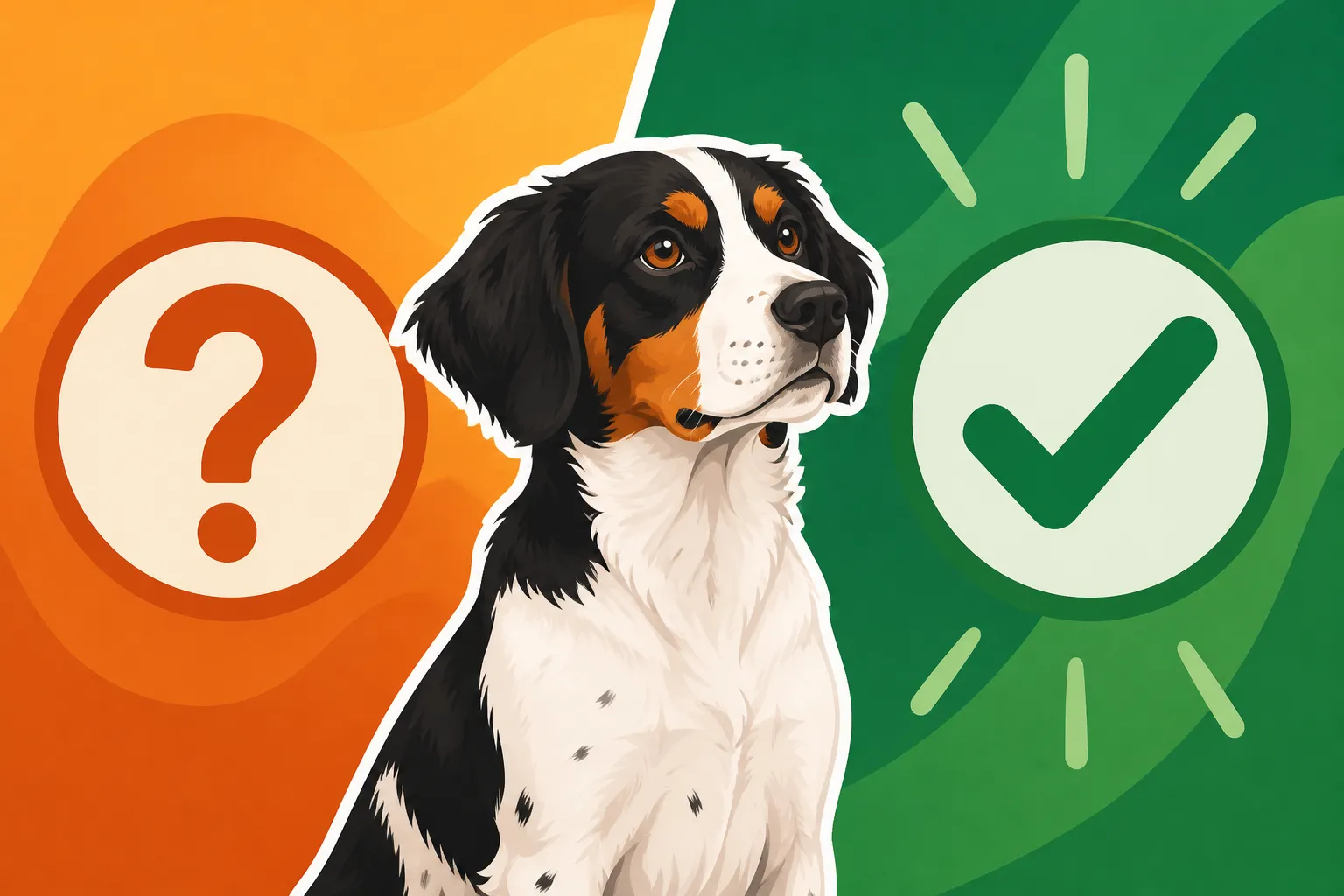
Whether a Tricolor Brittany Is Standard
A tricolor Brittany can make people pause at a show or when looking at puppy photos: is that orange on a liver-and-white dog allowed, or does it mean the dog is outside the breed standard? In the American Kennel Club standard, tricolor is permitted in liver-and-white Brittanys when the orange appears in specified markings. Here’s how to recognize it and what the color does—and does not—mean.
What a tricolor Brittany looks like
The three colors are liver, white, and orange
A tricolor Brittany has a liver-and-white base coat with orange markings. “Liver” is the breed term for a brown shade, which may look warm brown, chocolate, or darker depending on the dog and the light. White areas may be clear or show ticking and roan, so two dogs with the same basic colors can look quite different.
The orange markings are what distinguish a tricolor from a typical liver-and-white Brittany. They may appear around the eyebrows and cheeks, inside the ears, under the tail, and on the lower legs. The distribution and amount can vary, so one dog may show more visible orange than another.
It can be tricky to judge color from a single photograph. Warm indoor lighting can make liver look nearly black, while sunlight can bring out reddish tones. Puppies may also have markings that are subtle at first glance. If you are evaluating a puppy, ask the breeder how the color is recorded and look at the dog in natural light rather than relying on a heavily edited image.
Tricolor is not the same as ticking or roan
Ticking means small flecks of color within white areas. Roan describes a more blended appearance, with colored hairs mixed through the white coat. Both patterns can appear in Brittanys, and they can make the coat look busier than a simple patchwork of solid liver and white.
Neither ticking nor roan automatically makes a Brittany tricolor. A liver-and-white dog with scattered liver flecks in the white areas is still liver and white if it does not have the distinct orange markings associated with the tricolor pattern. Conversely, a Brittany with liver-and-white patches and orange on the face or legs may be described as tricolor even if its white areas are mostly clear.
If you are comparing photos, first identify the main coat colors, then look for orange in the typical marking areas. That approach is more useful than trying to label every tiny fleck. For a broader look at the recognized patterns, see Which Colors a Brittany Comes In and Whether a Tricolor Brittany Is Standard.
The color does not change the dog’s breed identity
A tricolor Brittany is still a Brittany. The color does not make the dog a different breed, a mix, or a special working variety. Coat color alone also does not tell you whether a puppy will be bold, close-working, easy to train, or especially talented on birds.
That last point matters when choosing a puppy. It is easy to focus on an unusual or striking coat and overlook the things that shape life with the dog: health testing, temperament, the parents’ working or companion traits, and whether the breeder’s goals fit yours. A color description can help you understand what you are seeing, but it is not a substitute for asking about the puppy’s background.
The relationship between coat pattern and hunting ability is often misunderstood. A distinctive marking may stand out in a litter photo, but it does not predict bird drive or trainability. For more on what the breed’s colors do and do not indicate, read Whether Color Says Anything About a Brittany's Hunting.
Is a tricolor Brittany within the breed standard
The American standard permits a particular tricolor pattern
Under the American Kennel Club Brittany standard, the accepted base colors are orange and white or liver and white, with clear or roan patterns. Tricolor is permitted in liver-and-white dogs when orange markings are present in the described areas. In other words, a properly patterned tricolor is not automatically a fault simply because it has three colors.
The important distinction is that “tricolor” does not mean any combination of three colors. The standard describes a particular arrangement: liver and white, with orange markings. A dog with a different combination may be described casually as tricolor by an owner, but that informal label does not determine whether the dog meets a show standard.
If you plan to show a Brittany, use the official standard and ask an experienced breeder or conformation mentor to assess the individual dog. A photo or a seller’s color description cannot settle every detail, especially when markings are faint or the coat is roaned. The standard is a guide to appearance, not a guarantee of show success.
Standards can differ between registries and countries
Breed standards are not universal documents. The rules used by one registry or country may differ from those used by another, including how colors are listed or judged. This can matter if you are comparing American Brittanys with Epagneul Bretons bred under a different system, or if you are considering entering a dog in events outside the United States.
For that reason, check the standard that applies to the registry and event you care about. Don’t assume a color described as acceptable in one setting will be treated identically everywhere. A breeder should be able to tell you how the dog is registered and which standard applies to its show eligibility.
The broader differences between American and French Brittany types are covered in How a French Brittany Differs From an American One and Whether a French Brittany Is a Separate Breed. Those distinctions involve more than coat color, and the relevant registry rules should be checked separately.
Accepted color and show quality are not the same thing
A tricolor pattern being permitted does not mean every tricolor Brittany is automatically a show-quality dog. Conformation judging considers the whole dog, including structure, movement, proportions, coat, and overall conformity to the applicable standard. Color is one aspect of the picture, not the whole evaluation.
The same distinction applies in reverse: a Brittany may be a wonderful companion or hunting partner without being a strong conformation prospect. Most families do not need a show-ring evaluation to decide whether a puppy is a good fit. They do need honest information about health, temperament, and the breeder’s priorities.
If you are buying a puppy, ask the breeder to explain how they describe the coat and whether they expect the dog to be eligible for the events you have in mind. The answer should be clear and practical, not a promise that an attractive marking guarantees a title.
How to tell tricolor apart from similar Brittany patterns
Compare the main coat color before focusing on markings
Start by deciding whether the base coat is orange and white or liver and white. A liver-and-white Brittany often has brown patches, brown ticking, or roaning. Then look for separate orange markings on the face, ears, legs, or beneath the tail. That combination is the pattern generally meant by “tricolor” under the American standard.
Orange can be subtle, especially where it blends into a light brown-looking area or appears in a small patch. If you are unsure, compare several views of the dog: the face, the sides, the legs, and the underside of the tail. A breeder familiar with the litter can often clarify whether the markings are being recorded as tricolor or simply described informally.
| What you see | Common description | What to check |
|---|---|---|
| Orange patches on a white base | Orange and white | Whether the pattern is clear or roan |
| Liver patches on a white base | Liver and white | Whether the white areas are clear, ticked, or roan |
| Liver and white with orange markings | Tricolor | Whether the orange appears in the pattern described by the applicable standard |
| Small colored flecks in white areas | Ticking | Flecks alone do not make the dog tricolor |
| Mixed colored hairs through white areas | Roan | Roaning is a coat pattern, not an extra color by itself |
The table is a visual aid rather than a formal judging tool. Lighting, coat length, and the individual dog’s markings can all affect what you see. When the label matters for registration or competition, confirm it with the breeder or the relevant registry.
Do not confuse a dark-looking coat with black
Some liver coats look very dark in shade or in photographs, and that can lead people to wonder whether a Brittany is black. Look at the coat in natural light and ask the breeder how the color is recorded. A dark brown liver coat can appear nearly black in a low-quality image, but that does not make it a black Brittany.
Color rules vary across standards, so it is especially important not to rely on an online caption or a casual description when registry eligibility matters. For a closer look at the subject, see Whether an American Brittany Can Be Black and Whether a Black Brittany Is Standard.
If you are simply choosing a family dog, the practical priority is not to diagnose a coat shade from a photograph. Ask for accurate registration details, health records, and information about the parents. A responsible breeder should be comfortable explaining the puppy’s color without presenting it as evidence of superior quality.
What tricolor means for ownership
Coat color does not call for special care
Tricolor Brittanys do not need a different grooming routine simply because they have orange markings. Their needs depend more on coat texture, feathering, activity, and the conditions they encounter. A dog that runs through burrs, grass seeds, mud, or wet cover needs a careful check after an outing regardless of color.
Pay attention to the feathering on the legs and ears, where debris can tangle or hide against the coat. Brush gently, inspect the skin, and remove burrs before they tighten. If you are building a basic grooming kit, a comb and suitable brush can be found through retailers such as Chewy; choose tools for the dog’s coat and comfort rather than for a particular color pattern.
The coat can also make small skin problems harder to notice, particularly when feathering is thick or the dog has roan areas. A routine check is more useful than trying to judge skin health by coat color. For grooming details, The Feathering on a Brittany's Legs and Ears explains where tangles and debris commonly collect.
Choose supplies for the dog, not the coat pattern
A tricolor puppy does not need a special shampoo, food, or supplement because of its markings. Select products based on age, skin condition, activity, and veterinary guidance. If you are comparing brushes or combs, Chewy may be one place to review options, but the key is choosing a tool that works gently through the dog’s feathering without pulling.
For active Brittanys, post-outing checks often matter more than elaborate grooming. Look between the toes, around the ears, under the collar, and through the leg feathering. A simple comb kept with the leash or field gear can make it easier to spot burrs and seeds before they cause irritation. Some owners keep grooming basics at home and a smaller kit in the vehicle; Chewy carries everyday pet-care supplies that can be compared against your needs.
There is no need to use products marketed specifically for “tricolor” coats unless a veterinarian or groomer identifies a particular reason. Color-enhancing products do not make a dog more standard, and they are not a substitute for routine care. If the coat or skin changes suddenly, or your dog is scratching persistently, seek veterinary advice rather than trying several products in succession.
Put health and temperament ahead of unusual markings
A striking tricolor pattern can be memorable, but it should not distract from the questions that matter when choosing a Brittany. Ask about the parents’ health screening, the puppy’s socialization, and the breeder’s plans for matching each puppy with a suitable home. If you are interested in hunting, ask about the parents’ field ability and how the breeder evaluates young dogs; color is not a reliable shortcut.
When reviewing breeder information, focus on documentation rather than broad claims. The article What a Brittany Breeder Should Have Tested offers a useful starting point for understanding health screening, and Which Questions to Ask a Brittany Breeder can help you prepare for a conversation. A breeder should welcome thoughtful questions and explain what is known about the puppy without suggesting that a rare-looking coat is more valuable by itself.
Ultimately, tricolor describes a coat pattern, not a personality or performance rating. If a Brittany’s markings appeal to you, enjoy them—but choose the individual dog for the qualities that will shape your life together.
Disclaimer
This article is for general informational purposes only and does not constitute professional advice. Laws, prices and regulations vary by location and change over time. Consult a qualified professional for guidance on your specific situation.