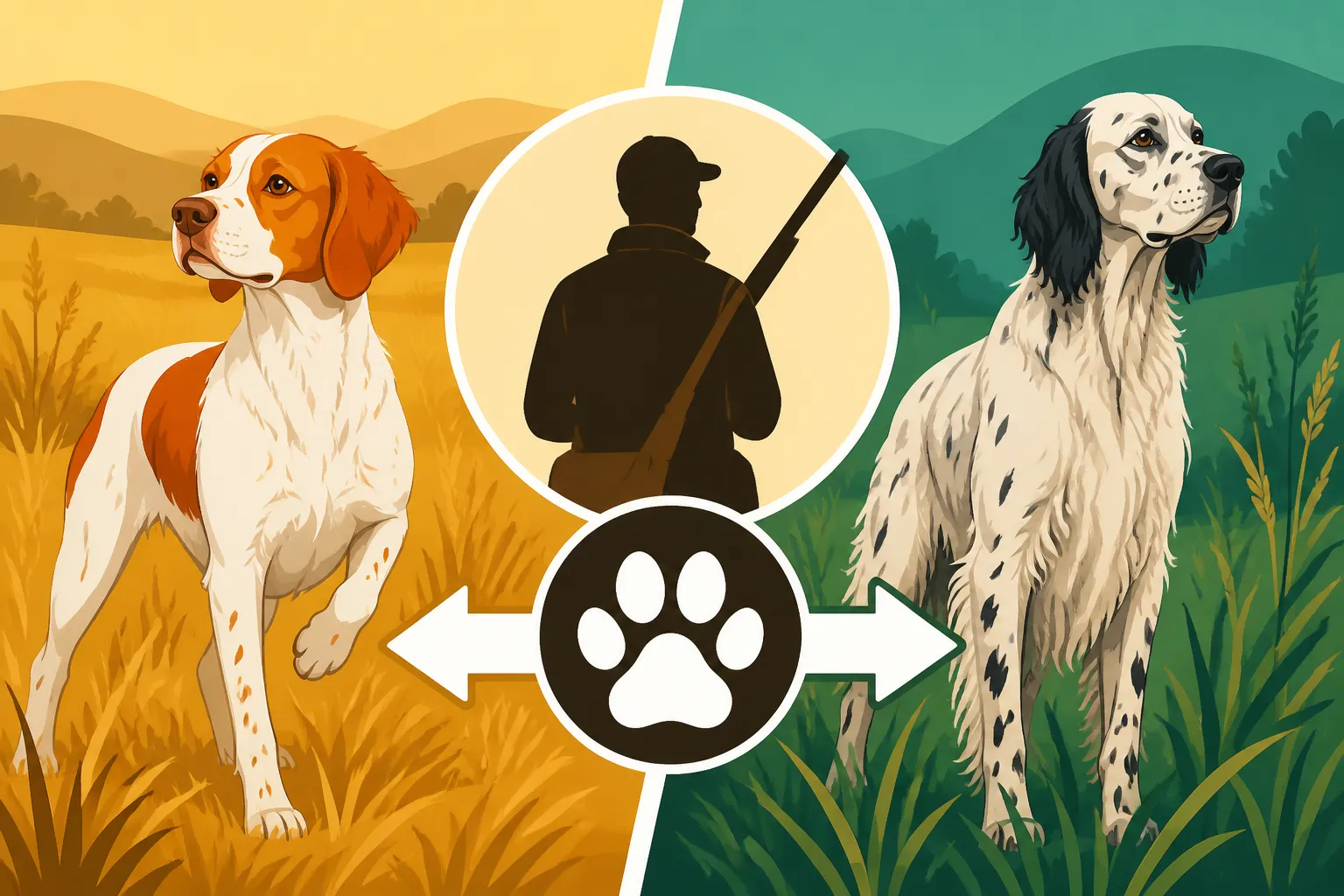
Whether a Brittany or a Setter Suits a Walking Hunter
Choosing between a Brittany and a Setter for a walking hunt is not just a question of size. The right fit depends on how far you want your dog to range, the cover you hunt, your pace, and the kind of training you enjoy. This guide compares their strengths and trade-offs so you can picture each breed beside you in the field.
How Brittanys and Setters Hunt on Foot
Range depends on the dog and its breeding
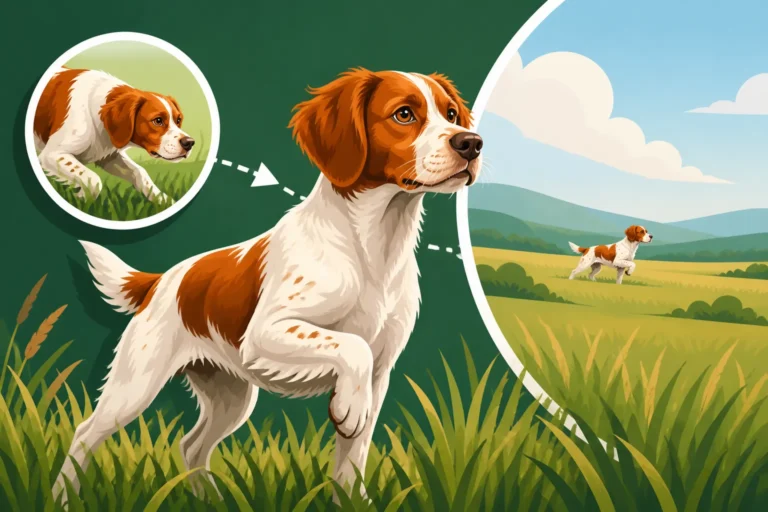
A Brittany is a compact pointing dog, but compact does not automatically mean close-working. Some American Brittanys range far ahead, while others naturally check in more often and work within comfortable gun range. Breeding, individual temperament, training, cover, wind, and the dog’s experience all affect how a Brittany hunts. A dog that searches too wide for one person may be just right for a hunter who walks quickly across open ground.
Setters vary just as much. English Setters from field-trial lines may cover a great deal of ground, while dogs bred for foot hunting can work at a more manageable distance. Gordon Setters and Irish Setters bring their own differences in size, style, and breeding priorities; “Setter” does not describe one uniform field range. Ask about the parents’ actual hunting habits rather than relying on breed stereotypes.
For a walking hunter, the practical question is whether the dog searches at a pace and distance you can manage. If you prefer a dog that checks in naturally while you move through brush, look for evidence of that behavior in the line and the individual. If you enjoy covering open country and can keep track of a dog working farther out, a wider-ranging dog may suit you. More detail on one side of the comparison is in How Far an American Brittany Ranges and How Close a French Brittany Hunts.
Size can change the feel of a day in the field
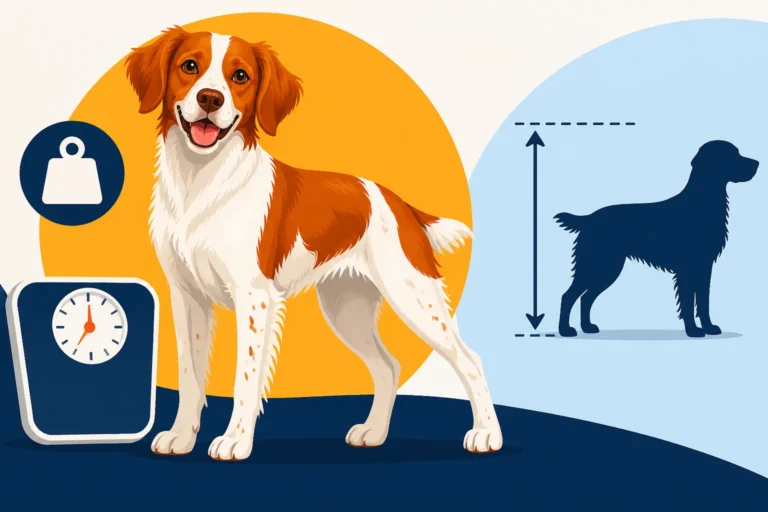
A Brittany is generally the smaller, lighter companion. That can make it easier to lift into a vehicle, handle at the end of a long day, or guide through tight cover. When you are walking through tangled edges or frequently changing direction, a compact dog may feel convenient. The Brittany is also The Brittany Is the Smallest of the Versatile Pointing Breeds, though individual dogs still differ in build and stamina.
Setters are often larger, but their size is not a verdict on how well they can hunt on foot. A fit, well-conditioned Setter can cover ground efficiently, and a thoughtful dog may be comfortable moving at a walking hunter’s pace. The difference is more noticeable in everyday handling: lifting a muddy dog into a truck, fitting a crate, or managing a dog that is excited to head out can take more effort when the dog is bigger.
Neither breed should be chosen on body size alone. A smaller dog can range wide and run hard; a larger dog can hunt methodically and stay connected. If you have mobility limitations, hunt alone, or expect to handle the dog in difficult terrain, meet adult dogs of the lines you are considering. A quick conversation with a breeder is useful, but watching dogs work—and seeing how they behave when the hunt is over—is even more revealing.
Pointing style and cooperation matter as much as range
Both Brittanys and Setters are pointing dogs. They search for game and point to indicate its location, rather than being selected primarily to flush birds from cover. Their style can look different from dog to dog: one may work close to the ground and move quickly through brush, while another uses a more sweeping search and holds a point farther out.
For someone walking, the useful question is not simply which breed points more impressively. It is whether the dog’s search pattern lets you get to the point in time, move safely through cover, and make decisions about the bird. A dog that finds birds but consistently gets beyond your comfort zone may require more training or a different handling approach. If you are new to pointing dogs, How a Brittany Finds Its First Bird offers useful context on what early bird work can look like.
The best field partner is not always the dog with the biggest range or the flashiest point. A dog that hunts with purpose, responds to its handler, and stays steady enough for the way you hunt can make an ordinary walk feel rewarding. Consider the whole working relationship, including recall and cooperation, rather than judging by a short demonstration in a field.
Matching the Breed to Your Hunting Ground and Pace
Thick cover and smaller hunting areas
In brushy cover, narrow strips, and smaller parcels, a close-working dog can be easier to follow and handle. A Brittany may be a convenient fit because of its compact size, but do not assume every Brittany will naturally keep close. Some will need deliberate training to adapt their range to a walking hunter, and some may be better suited to larger expanses.
A Setter can work in thick cover too. What matters is whether the dog’s pace and range match the terrain. In a small patch with limited visibility, a dog that disappears quickly into cover may be frustrating, regardless of breed. Ask to see how the parents hunt in terrain similar to yours, and ask whether they have experience with foot hunters rather than only horseback or large-field work.
Think about your own pace as well. If you walk slowly, stop often, or hunt with a companion who needs a steady pace, seek a dog that naturally checks back and is comfortable working methodically. Range can be shaped through training, but it is easier to build on a dog’s natural tendencies than to continually fight them. For help with that training question, see How to Bring a Wide Running Brittany In.
Open ground and longer walks
On broad fields or open country, a dog that searches farther can help cover ground efficiently. Some Brittanys and some Setters are bred and trained for that style. A walking hunter may enjoy a dog that ranges with confidence, but it still needs to remain findable and responsive. A wide-running dog is not automatically more useful if you cannot keep track of it or reach a point in time.
The terrain also changes what “too far” means. A dog working across open ground may remain visible at a distance that would be difficult in dense cover. Wind direction, vegetation, contours, and the location of likely bird habitat all affect how a dog searches. The same dog may appear close in one setting and much wider in another.
Before choosing, describe your typical day to a breeder or experienced handler: how many hours you walk, how much cover you face, whether you hunt alone, and how far you are comfortable letting a dog work. If possible, watch the candidate dog in a field rather than relying on a short walk on a lead. Look for purposeful searching and voluntary check-ins, not just speed.
A practical comparison for walking hunters
The table below is a starting point, not a guarantee about every dog. Individual temperament, working lines, conditioning, and training can outweigh broad breed tendencies.
| What to consider | Brittany | Setter |
|---|---|---|
| Typical build | More compact and lighter to handle | Often larger, with a longer-legged outline |
| Field range | Varies widely; some are close, others range far | Varies widely by breed, line, and training |
| Tight cover | Compact size can be handy, but range still matters | Can work well if the dog’s range suits the cover |
| Open ground | Some lines cover ground with considerable drive | Some lines are bred to range widely and search expansively |
| Daily handling | Often easier to lift and accommodate because of size | Larger size may require more space and physical handling |
| Best selection question | Does this dog naturally check in at a useful distance? | Is this line suited to foot hunting and your preferred range? |
A table cannot tell you which dog will feel right beside you. Watch working adults, ask specific questions, and be honest about your own experience. The phrase “good hunting dog” can mean very different things to a horseback trial handler and to a person who walks a small property with a single dog.
Training, Conditioning, and Everyday Life
Training a dog to hunt within your comfort zone
Training can improve communication and help a dog adjust its search pattern, but it is not a magic switch that erases inherited tendencies. Start with reliable engagement and recall in low-distraction settings, then gradually practice around more exciting environments. Keep sessions short enough that the dog can succeed, and avoid turning every outing into a correction-heavy struggle.
For a wide-ranging dog, work on check-ins and responsiveness before expecting it to hunt close in heavy cover. A check cord can help in safe training situations, but it is not a substitute for a practiced recall or good judgment in the field. If range is a major concern, ask an experienced pointing-dog trainer to observe your dog and help you set realistic goals. The principles involved are discussed in How to Bring a Wide Running Brittany In, but they apply to the broader challenge of managing a dog that works beyond your preferred distance.
Training style matters. A sensitive dog may shut down if handled harshly, while inconsistent rules can make any dog less dependable. Give clear, calm feedback and reward the behavior you want to see. If your dog is learning to hunt with you, build experience in manageable conditions rather than expecting a young dog to perform like a seasoned partner on its first long outing.
Conditioning for a full day on foot
A dog that looks athletic at home may still be unprepared for a demanding hunting day. Build fitness gradually before the season, increasing the length and intensity of walks over time. Pay attention to recovery, paw condition, and how readily the dog settles after exercise. A sudden leap from short neighborhood walks to hours in rough cover can leave either breed sore or exhausted.
Terrain and weather shape conditioning needs. Sandy ground, rocky trails, steep slopes, and dense vegetation place different demands on a dog’s body and feet. Warm weather calls for extra caution, shade, rest, and water; the dog’s enthusiasm is not a reliable measure of how well it is tolerating heat. A useful plan should take your dog’s age, health, and current fitness into account. See Conditioning a Brittany Before the Season Opens for a focused look at preparing a Brittany for field work.
After an outing, check paws, ears, eyes, coat, and the areas where burrs or grass seeds can hide. If you are assembling a field-care kit or replacing routine supplies, a general pet retailer such as Chewy may help you compare available options; choose items appropriate for your dog and ask your veterinarian about medical products. The checklist in What to Check on a Brittany After Every Outing can help make that post-hunt routine more consistent.
The dog at home between hunts
A walking hunter still lives with the dog on non-hunting days. Both breeds need exercise, companionship, and training, but their needs are shaped by the individual dog and its working background. A dog with a strong drive to search may become restless if its routine offers little activity or engagement. Regular walks, play, scent games, and short training sessions can help provide structure outside the season.
Consider household fit, not just field performance. A larger Setter may need more room for transport and resting comfortably, while a Brittany’s smaller size does not mean it is a low-energy choice. If you have children or other pets, introductions and supervision matter more than assumptions about the breed. For a closer look at family life with a Brittany, read How a Brittany Behaves With Children.
Field equipment also affects daily logistics. You will need a safe way to transport the dog, suitable identification, water, and basic care supplies. If you are comparing travel beds, leads, or other everyday dog gear, Chewy is one place owners may use to browse options, but check fit and suitability rather than buying based on a breed label alone. A third mention makes sense here because choosing the right equipment is a common practical challenge, not because one retailer is essential.
How to Choose Between a Brittany and a Setter
Watch dogs that resemble the life you want
Meet more than one dog if you can. Watch an adult Brittany and an adult Setter work in the kind of terrain you actually hunt, ideally with a handler who walks rather than rides. Notice whether the dog checks in, how it responds when called, and how easily it settles when the action stops. A brief visit with an excited puppy tells you much less about mature field range.
Ask breeders or owners specific questions. How far do the parents typically work? Do they hunt with foot hunters? How do they behave in thick cover? Are they comfortable in the house? What kind of training helped them become reliable? Clear answers grounded in experience are more useful than a promise that a dog will “hunt close” or “be easy to handle.”
You can also ask to see health information and discuss the parents’ working ability. Breed choice is only one part of getting a sound, suitable hunting partner. The comparison How a Brittany Differs From a German Shorthaired Pointer is not about Setters, but it illustrates a useful general principle: compare real traits and purpose, not just a breed’s reputation or silhouette.
Be honest about your preferences and constraints
Choose a Brittany if you are drawn to a compact, energetic pointing dog and can find a line whose range and working style match your walking pace. Its size can make transport and handling more convenient, but you should still expect a capable, active hunting dog that needs training and regular exercise.
Choose a Setter if you prefer that breed’s build and style, and you can identify a line that fits the way you hunt. Some Setters are well suited to working on foot; others may be bred for a broader search than you want. The important step is to evaluate the individual and its background rather than assuming that all Setters range farther or all Brittanys stay closer.
There is no universally better choice for a walking hunter. The right match is the dog whose natural range, stamina, temperament, and training needs make your kind of day in the field enjoyable. If you can describe your terrain, pace, and expectations clearly—and watch suitable adult dogs in action—you will be in a much better position to choose a partner you can trust and enjoy for years.
Disclaimer
This article is for general informational purposes only and does not constitute professional advice. Laws, prices and regulations vary by location and change over time. Consult a qualified professional for guidance on your specific situation.