How to Bring a Wide Running Brittany In
One of the most common frustrations for a Brittany owner, especially a new one, is watching their energetic, bird-driven companion disappear over the horizon. You whistle, you call, and all you get back is the distant jingle of a bell disappearing into the next county. It's disheartening, and frankly, a bit terrifying when you think about all the things that can happen to a dog out of sight. This guide is all about tackling that exact problem: understanding why your Brittany runs wide and, more importantly, providing practical strategies, tools, and training advice to teach your enthusiastic hunter to stay within a reasonable range and consistently respond to your calls.
Understanding the Brittany's Natural Tendency to Range
Let's face it, your Brittany isn't trying to ignore you out of spite; they're simply doing what generations of selective breeding have hardwired them to do. They're bred to find birds, and for many lines, finding birds means covering a lot of ground.
The Historical Context of Wide Ranging
The Brittany's ancestors were developed in France to be versatile gun dogs, capable of hunting a variety of game birds over diverse terrain. Originally, they were often used by foot hunters, but as hunting styles evolved, so did the dogs. In some parts of the world, especially in the development of the American Brittany, the emphasis shifted towards a dog that could cover vast prairies and open fields, making a wide-ranging, big-running dog a desirable trait for efficiency. Imagine trying to cover hundreds of acres of pheasant fields with a dog that works only twenty yards out – it just wouldn't be effective. This historical pressure shaped the breed's instinct to cast out and thoroughly search an area, often well beyond what a casual foot hunter might prefer. This incredible drive to seek and find birds is what makes them such effective hunting partners, but it also presents a training challenge for owners who prefer a closer working dog.
American vs. French Brittany Range Differences
It's a common topic of discussion among Brittany enthusiasts: the perceived difference in range between American Brittanys and their French cousins, the Epagneul Breton. Generally, American Brittanys are often bred for a bigger, faster, and wider-ranging search pattern, suited for the expansive fields and horseback trials common in parts of North America. They're designed to cover ground quickly and efficiently, often pushing out to 100-200 yards or more, checking in intermittently. An American Brittany Ranges Wide and a French One Stays Close is a concept deeply ingrained in their respective breed standards and breeding philosophies.
On the other hand, the Epagneul Breton, or French Brittany, is traditionally bred to work in closer proximity to the foot hunter, often in denser cover or smaller European hunting grounds. Their range is typically much shorter, perhaps 40-80 yards, with more frequent checks back to the handler. While these are generalizations and individual dogs within both types can vary, understanding this inherent difference is crucial when you select a puppy or if you're trying to adjust the range of your existing dog. Knowing your dog's genetic predisposition helps you set realistic expectations and tailor your training approach. If you have an American Brittany from strong field trial lines, trying to make them work at 30 yards will be an uphill battle against deeply ingrained instincts, whereas a French Brittany might be more naturally inclined to that closer work.
Why Your Brittany Loves to Run Big
Beyond historical breeding, there are several reasons why your individual Brittany might embrace a wide-ranging style. First and foremost, it's their bird drive. Brittanys are intense bird dogs, and their entire world revolves around finding scent. The more ground they cover, the higher their chances of encountering bird scent, which is the ultimate reward for them. They literally get a dopamine hit from finding birds.
Secondly, many Brittanys possess a high degree of independence. While they are affectionate and loyal companions, in the field, they often operate with a "find the birds first, ask questions later" mentality. They trust their noses and their instincts, and sometimes, those instincts tell them to go that way, even if "that way" is out of sight. They're confident hunters, and this confidence can manifest as a desire to explore broadly. Lastly, lack of consistent early training or insufficient off-leash exercise can exacerbate this tendency. If a young Brittany learns that running wide has no immediate negative consequence and often leads to the thrill of a find, they'll continue and even expand that behavior. How Far an American Brittany Ranges can be truly impressive, but it needs management from day one.
Early Training Foundations for Recall and Control
Bringing in a wide-running Brittany isn't about breaking their spirit; it's about channeling their incredible drive and intelligence into a partnership. This starts with a rock-solid foundation in obedience and communication.
The Importance of Puppy Socialization and Basic Obedience
The journey to a well-controlled, biddable Brittany begins long before they ever see a bird or step into a hunting field. Puppyhood is a critical window for socialization and foundational obedience. Exposing your Brittany puppy to a wide variety of sights, sounds, people, and other dogs in a positive way builds confidence and helps them learn to respond to you in distracting environments. Enrolling in a puppy class or even BAXTER & Bella's online puppy program can be incredibly beneficial. These experiences help establish you as the benevolent leader and teach your puppy that good things happen when they pay attention to you.
Basic obedience commands like "sit," "stay," and "here" (or "come") are non-negotiable. Practice these commands frequently, in short, positive sessions, building up duration and distraction. Remember, The Brittany Is the Softest of the Pointing Breeds, meaning harsh corrections can easily damage their confidence and willingness to work with you. Focus on positive reinforcement, making obeying you the most rewarding choice. A well-socialized and obedient puppy is much more likely to develop into an adult dog that respects boundaries and responds reliably, even when their bird drive kicks in.
Building a Rock-Solid Recall from Day One
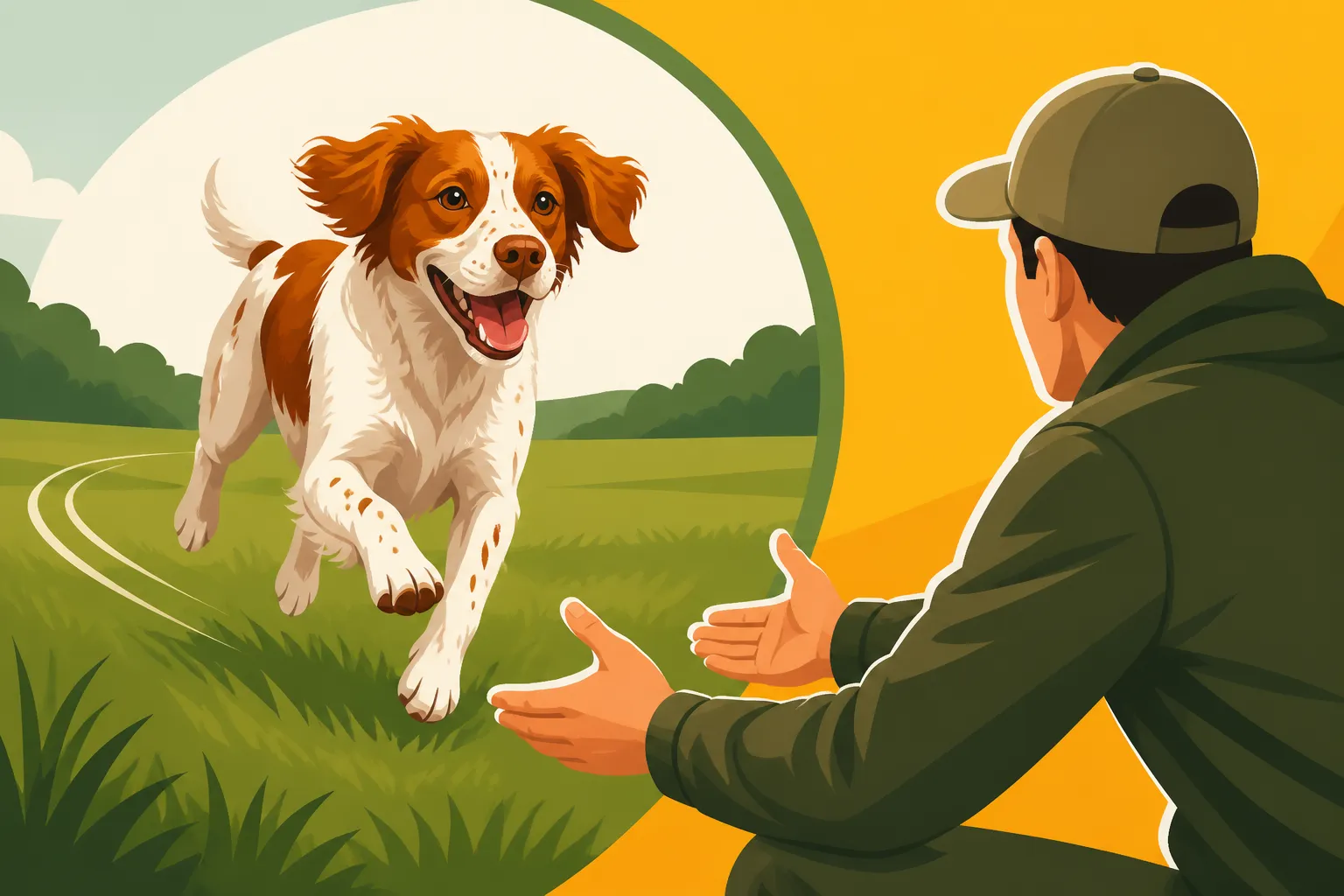
A reliable recall is the single most important command for any wide-running breed, especially a Brittany. Without it, you are at the mercy of their instincts. Start recall training indoors in a distraction-free environment. Use a happy, excited tone and a unique recall word or whistle. When your puppy comes, reward them lavishly with high-value treats and praise. Never call your dog to you for punishment; recall should always be a positive experience.
As your puppy masters recall indoors, gradually introduce more distractions and move to a fenced yard, then to a long line or check cord in a safe, open area. Practice calling them when they are engaged in something interesting, like sniffing a bush or playing with a toy. This teaches them that coming to you is more rewarding than whatever they're doing. Many professional trainers recommend practicing recall dozens of times a day in various scenarios. Consistency is paramount. The goal is for your Brittany to reflexively turn and come to you the moment they hear your call, regardless of what tantalizing scent just wafted past their nose.
The Check Cord as a Communication Tool
For a wide-running Brittany, the check cord is an invaluable training tool, acting as a physical extension of your command and allowing you to enforce recall even when your dog's focus is elsewhere. A check cord is essentially a long leash, typically 20 to 50 feet, that drags behind your dog. It's not meant to be held constantly, but rather to be stepped on or picked up when needed to reinforce a command or prevent your dog from ranging too far. You can find excellent check cords on Amazon, ranging in length and material.
Start by letting your Brittany drag the check cord in a safe, open area. When you give your recall command, if they hesitate, gently step on the cord or pick it up to reel them in, simultaneously giving the command again. The key is to make the connection between the command and the action. Once they respond correctly, release the tension and reward them. The check cord teaches your Brittany that your verbal commands will be followed, and it allows you to interrupt unwanted wide-ranging behavior before it becomes ingrained. It's a bridge to off-leash reliability, giving you control without having to shout or constantly chase after them. It’s also crucial for Teaching a Brittany Whoa.
Tools and Techniques for Managing Range in the Field
Once your Brittany has a solid foundation, you can start introducing tools and techniques designed specifically for managing their natural drive to cover ground.
Utilizing Beeper and GPS Collars
When your Brittany is out of sight, two crucial tools can become your best friends: beeper collars and GPS collars. A beeper collar emits an audible tone, helping you locate your dog when they're in dense cover or beyond your line of sight. Some models offer different tones to indicate if the dog is moving or on point. This audible feedback helps you know where your dog is and whether they're working effectively, reducing the urge for them to run even wider because they feel "lost" from you. What a Beeper Collar Costs a Brittany Owner varies greatly by features and quality.
A GPS collar takes this a step further, providing real-time location tracking on a handheld device or smartphone app. This is invaluable, not just for knowing where your dog is, but also for understanding their range and pattern of search. You can see exactly how far out they're casting and if they're consistently running too wide. Many GPS units also integrate e-collar functions, allowing for remote correction if needed. The peace of mind a GPS collar provides is immense, especially if you hunt in vast, unfamiliar territory. Both types of collars help you develop a sense of your dog's working style and intervene proactively rather than reactively. Knowing How Often a Brittany Should Check In can also be managed and understood better with these tools.
E-Collar Training for Consistent Reinforcement
The electronic collar, or e-collar, is a highly effective tool for reinforcing commands at a distance, particularly for a wide-ranging Brittany, when used correctly. It's not a shortcut, nor is it a punishment device; it's a communication tool. Whether a Brittany Needs an E Collar is a common question, and for a dog with a strong prey drive and a tendency to range, it can be essential for safety and control. The goal is to condition your Brittany to understand that the low-level stimulation from the e-collar means "pay attention" or "come to me," much like a tap on the shoulder.
E-collar training should always start at the lowest possible working level – barely perceptible to the dog – and be introduced in a controlled environment, paired with known commands like "come." The dog should already understand the command verbally before the e-collar is introduced. For example, you give the "come" command, simultaneously give a light e-collar stimulation, and when the dog turns toward you, immediately release the stimulation and reward them. Over time, the e-collar becomes a powerful tool for extending your voice, allowing you to stop a wide cast, enforce a recall, or steady a point from a distance. Proper e-collar training usually requires guidance from an experienced professional or a reputable training program.
Adjusting Your Hunting Style to Your Brittany's Range
Sometimes, bringing in a wide-running Brittany isn't just about changing the dog; it's about adjusting your own approach. If you have an American Brittany bred for horseback trials, expecting them to stay within 30 yards while you stroll leisurely through an open field might be unrealistic. Consider how your pace and movement influence your dog. If you move slowly or hesitate, your Brittany might naturally cast wider, assuming you need more ground covered.
Try varying your pace, moving briskly when you want them to keep up, and slowing down strategically. Work with the wind, allowing your dog to hunt into it and quarter, which naturally keeps them within scent range and often closer. Teaching a Brittany to Hunt for the Gun means training them to search for birds where you are, anticipating your movement and working cooperatively. If your dog consistently ranges wide in open country, try hunting areas with more cover initially. The natural boundaries of woods, hedgerows, or thick brush can physically limit their range and encourage them to work closer. As they build confidence and proficiency in closer work, you can gradually introduce them back into more open areas, always reinforcing good habits.
| Method | Description | Best For | Pros | Cons |
|---|---|---|---|---|
| Verbal Recall | Using a distinct vocal command or whistle. | Foundation, consistent reinforcement. | Builds strong bond, always available. | Effectiveness diminishes with distance/distraction. |
| Check Cord | Long line dragged behind dog, used for physical enforcement of commands. | Early training, developing consistency, safety. | Immediate feedback, allows gentle correction without confrontation. | Can get tangled, requires open space, not suitable for dense cover. |
| Beeper Collar | Emits audible sound to locate dog; some indicate point. | Locating dog in heavy cover, understanding movement. | Helps handler keep track, audible cue for dog location. | Doesn't provide control, can be noisy, limited range. |
| GPS Collar | Provides real-time location tracking on a handheld device. | Safety in unknown terrain, understanding range patterns, data logging. | Pinpoints exact location, can integrate e-collar, invaluable for safety. | Cost, battery life, requires line of sight for satellite. |
| E-Collar | Remote electronic stimulation to reinforce commands at a distance. | Extending verbal commands, reinforcing recall/whoa at range. | Effective over distance, subtle communication, powerful safety tool. | Requires careful, proper training; misuse can damage dog. |
| Changing Terrain | Hunting in dense cover or areas with natural boundaries. | Encouraging closer work naturally. | Uses environment to reinforce desired behavior, less direct pressure. | Limits hunting opportunities to certain areas, temporary solution. |
| Varying Pace | Adjusting handler's speed to influence dog's range. | Keeping dog engaged, encouraging check-ins. | Dynamic interaction, makes dog more aware of handler. | Requires handler to be mindful, may not suit all hunting scenarios. |
Common Challenges and Troubleshooting a Wide Runner
Even with the best intentions and tools, managing a wide-running Brittany presents its unique set of challenges. It's about problem-solving and persistence.
When Your Brittany Ignores Your Calls
There are few things more frustrating than calling your Brittany repeatedly, only to watch them continue their determined search, tail flagging in the distance. When your Brittany ignores your calls, it's often not defiance, but rather intense focus on what they perceive as their primary job: finding birds. Their prey drive simply overpowers their training in that moment.
To troubleshoot this, first, evaluate the distractions. Are you asking for recall when they're actively on a hot scent? If so, you're setting them up to fail. Go back to basics in less distracting environments. Secondly, assess the reward. Is coming to you truly more rewarding than ignoring you? High-value treats, exciting toys, or enthusiastic praise should be immediate and significant when they do come. Third, consistency and consequence. If your dog learns that they can ignore your call without consequence, they will. This is where a check cord or e-collar becomes crucial. If they don't respond to the verbal command, the physical reinforcement must follow immediately. This isn't about punishment; it's about communicating that the command is non-negotiable.
Preventing and Addressing the "Run-Off" Behavior
The "run-off" is every bird dog owner's nightmare: your Brittany, perhaps having just pointed or flushed a bird, decides to keep going, disappearing completely. This can happen for several reasons: perhaps they're chasing a cripple, following a strong scent line from a running bird, or simply caught up in the excitement and losing their connection to you. To prevent it, teach "whoa" thoroughly. Your Brittany needs to be steady to wing and shot, meaning they stay put even when a bird flushes or a shot is fired. This is a crucial command that teaches control in high-excitement situations.
If a run-off does occur, resist the urge to chase them immediately. Chasing often just encourages them to run further, turning it into a game. Instead, try to circle around them, using your knowledge of terrain and wind direction to get ahead. Use your beeper or GPS collar to track them and get closer. When you do re-establish contact, calmly and firmly bring them back. Once you have them, reinforce the recall. If the run-off is a recurring problem, it means you need to go back to more controlled training environments, possibly even a long line, to rebuild their understanding that you dictate the pace and direction of the hunt. This might even require consulting a professional trainer. Whether Sending a Brittany Away to Train Is Worth It can be a valuable option for persistent issues.
Maintaining Control in Dense Cover and New Territory
Brittanys are masters of navigating dense cover, but this also means they can disappear from sight in an instant. In such environments, maintaining control becomes even more challenging. The beeper collar is your primary tool here, allowing you to track their movement and locate them when on point. Listen carefully to the tone changes – is it a steady "on point" signal, or are they still moving?
In new territory, a Brittany's natural curiosity and desire to explore can amplify their wide-ranging tendencies. Before letting them loose in an unfamiliar area, spend some time walking the perimeter with them on a leash or a long line to establish boundaries. If possible, start them in an area with less distracting cover. Over time, as they learn the general layout and understand your expectations, you can gradually allow them more freedom. Always carry a GPS collar in new or dense areas; it's an absolute lifesaver. Ensure you frequently use your recall command, even when they're working well within range, just to reinforce that constant connection and communication.
Advanced Strategies for Developing a Closer-Working Brittany
If your Brittany already has solid foundational skills, you can introduce more advanced strategies to fine-tune their range and make them an even more intuitive hunting partner.
Patterning and Quartering Drills
A well-trained Brittany doesn't just run aimlessly; they pattern the field, systematically searching for scent. The ideal pattern for a foot hunter is often a quartering pattern, where the dog runs back and forth in front of the hunter, covering the ground thoroughly while staying within reasonable range. To teach this, start in a field with light cover and minimal distractions. Walk in a straight line, and as your dog starts to range, use a verbal command (like "over" or a whistle blast) and a hand signal to direct them to swing back across your front. As they comply, reward them.
Initially, you might need the help of a check cord or e-collar to enforce the swing. Over time, your Brittany will learn to anticipate your movement and the direction of the wind, naturally working that quartering pattern. The key is consistency in your movement and commands. If you constantly change direction or are inconsistent with your signals, your dog will become confused and may revert to wider, less efficient searching. This is about teaching your Brittany to hunt with you, not just for themselves.
Focus and Handler Awareness Exercises
Many wide-running Brittanys are so focused on birds that they inadvertently tune out their handler. Improving focus and handler awareness is crucial for bringing them in closer. Practice drills that require your Brittany to look at you and respond to subtle cues. One simple exercise is the "look at me" command, where you reward them every time they make eye contact.
Another effective strategy is to occasionally hide from your dog when they range too wide. When they realize you're gone, they'll usually double back to find you. When they do, reward them for checking in. This teaches them that you are the constant in their hunting world, and they need to keep tabs on your location. You can also incorporate "stop-to-flush" drills, where you stop walking abruptly, and your dog learns to stop with you, looking back for direction. These exercises build a stronger connection and teach your Brittany to be more attuned to your presence and commands, even when bird scent is heavy. Programs like BAXTER & Bella often incorporate these types of focus-building exercises.
Consistency is Key: Practice Makes Permanent
There's no magic bullet for bringing in a wide-running Brittany. It all comes down to consistency. Every single outing, whether it's a training session in the park or a full day of hunting, is an opportunity to reinforce desired behaviors. If you allow your Brittany to run wide without consequence sometimes, but try to rein them in other times, you'll create confusion and undermine your efforts.
Consistency means always enforcing your recall, always working on their pattern, and always rewarding correct behavior. How Long a Brittany's Training Session Should Be is often short and positive, but regular. It also means being consistent with your commands and expectations. If you use an e-collar, use it consistently and correctly. If you use a whistle, use the same whistle commands every time. Don't expect your Brittany to magically change their habits overnight; it's a gradual process of shaping behavior through continuous reinforcement. The more consistent you are, the faster your Brittany will understand what's expected of them and become the close-working, responsive partner you desire.
The Lifelong Commitment to Control and Connection
Training a Brittany to work within a reasonable range isn't a one-and-done deal; it's a commitment that evolves throughout their lives, requiring ongoing reinforcement and a deep understanding of your dog.
Off-Season Reinforcement and Everyday Habits
Just because hunting season is over doesn't mean training stops. In fact, the off-season is the perfect time to reinforce all those crucial commands and habits without the intense distractions of live birds. How Much Exercise a Brittany Needs Off Season is still substantial, so those daily walks and runs provide ample opportunities to practice recall, heeling, and checking in.
Use a long line in open areas to allow your Brittany to stretch their legs while you maintain control. Continue practicing recall with distractions like squirrels or other dogs. Incorporate obedience into your everyday life – make your Brittany sit before meals, wait at doors, and maintain a heel on walks. These seemingly small acts of obedience build a foundation of respect and responsiveness that carries over into the field. If your Brittany learns that your commands are consistently important at home, they're far more likely to respect them when the stakes are higher. Don't let their manners slip in the off-season, or you'll be starting from scratch every time hunting season rolls around.
Recognizing When Professional Help is Needed
Despite your best efforts, some Brittanys present unique challenges that are best addressed by a professional. If your Brittany consistently ignores your commands, exhibits extreme gun shyness, or if you simply feel overwhelmed by their drive, don't hesitate to seek expert help. A good professional gun dog trainer has years of experience working with breeds like the Brittany and can offer personalized strategies, identify underlying issues, and provide hands-on guidance.
They can assess your dog's individual temperament and drive, pinpointing exactly where the breakdown in communication is happening. Sometimes, it's a matter of refining your own handling skills; other times, the dog may benefit from intensive training in a controlled environment. A professional can also introduce specific drills and scenarios that you might not be able to replicate on your own. Investing in professional training isn't a sign of failure; it's a smart investment in your dog's potential and your long-term enjoyment of your hunting partnership. Before committing, ask for references and observe training sessions to ensure their methods align with your philosophy.
Celebrating the Balance of Freedom and Control
Ultimately, bringing in a wide-running Brittany is about finding a harmonious balance. You want your Brittany to express their incredible natural instincts and bird-finding ability, but you also need them to be a safe, controlled, and cooperative partner. It's a dance between allowing them freedom to hunt and ensuring they understand your boundaries.
A Brittany that works within reasonable range, checks in frequently, and responds reliably to commands is a joy to hunt with. You can trust them in the field, knowing they'll return to you. This balance means less stress for you and more effective, enjoyable hunts for both of you. It's about respecting their drive while guiding it. Celebrate every small victory – every prompt recall, every closer cast, every focused point. The journey to a perfectly patterned Brittany is ongoing, but the rewards of a truly connected hunting partner are immeasurable.
Disclaimer
This article is for general informational purposes only and does not constitute professional advice. Laws, prices and regulations vary by location and change over time. Consult a qualified professional for guidance on your specific situation.