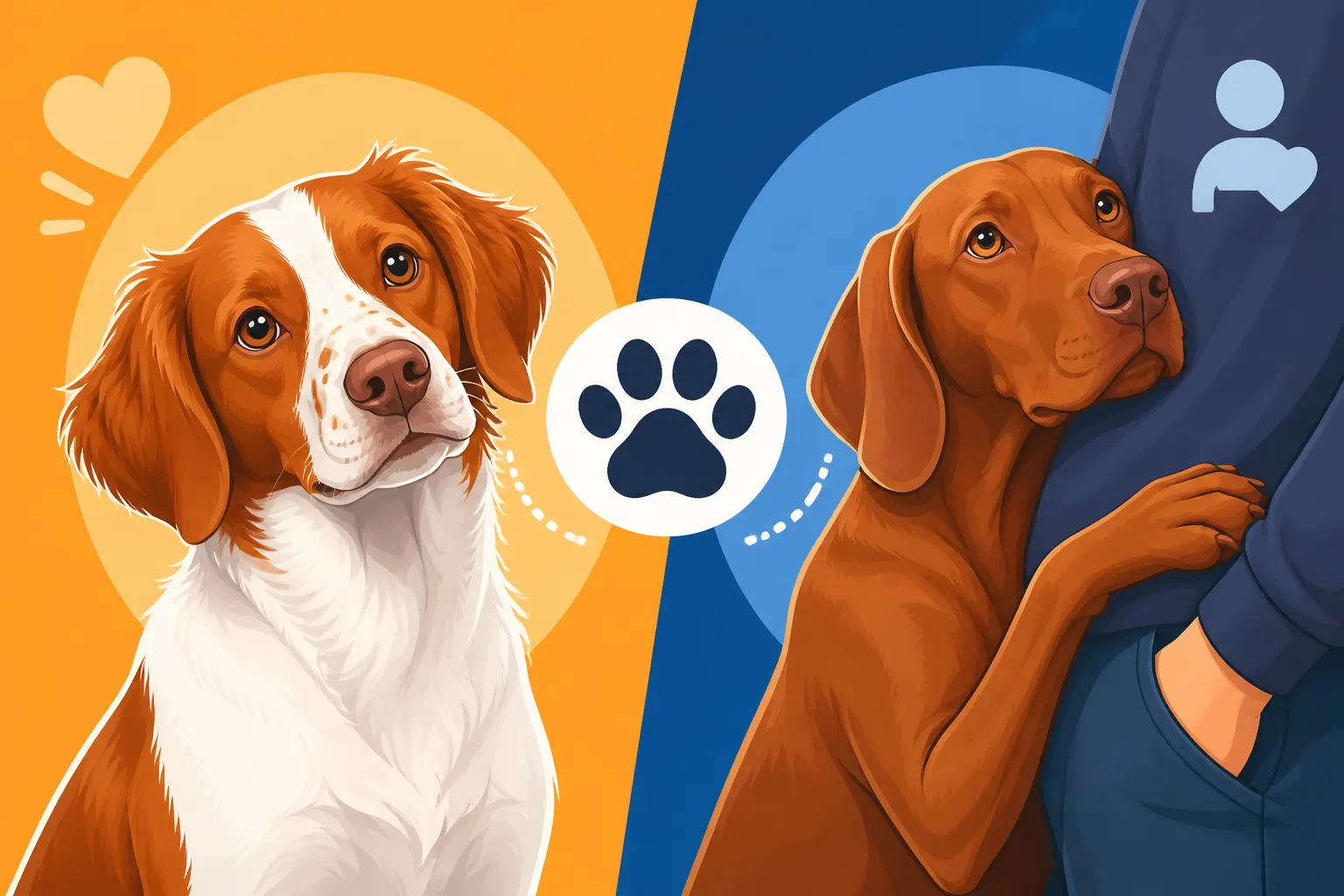
Whether a Brittany Is Clingy Like a Vizsla
It’s a common question among prospective dog owners, especially those who've encountered the famously attached Vizsla: "Is a Brittany going to be as clingy?" The image of a "Velcro dog," constantly glued to your side, can be a lot for some lifestyles, and it’s wise to understand if the Brittany fits that mold before bringing one home. This guide will dive deep into the Brittany's affectionate nature, comparing it to the reputation of the Vizsla and helping you understand what to expect.
Understanding the Brittany's Temperament and Affection
Brittanys are truly wonderful dogs, known for their vibrant energy, keen intelligence, and, yes, their deep affection for their human families. But that affection manifests differently than some other breeds. They were bred to be close working partners in the field, which means they thrive on interaction and being part of the action, but it doesn't always mean they need to be physically touching you at all times.
The Brittany's Inherent Sociability
The Brittany's entire history is built around partnership. They weren't just tools in the field; they were valued members of the family, sharing homes with their owners rather than living in kennels. This lineage has gifted them with an inherent sociability that makes them wonderful companions. They want to be involved in whatever you're doing, whether it's cooking dinner, watching TV, or simply moving from one room to another. You'll often find your Brittany setting up shop in the same room as you, maybe curled up on their dog bed or stretched out on the cool floor, just content to be in your presence. It’s a quiet form of companionship for many, a comfortable co-existence where they know you're there, and you know they're there. This is a big part of What a Brittany's Temperament Is Really Like.
However, this desire for proximity isn't usually an incessant demand for physical contact. While they absolutely adore a good snuggle session and will happily lean into you for pets, they're often quite content with just being near. Think of it less as a shadow that must be pressed against you and more like a faithful friend who enjoys sharing the same space, occasionally checking in with a nudge or a lick.
The Working Dog vs. the Companion
It’s crucial to remember that the Brittany is, first and foremost, a working gun dog. This means they possess an incredible drive to be active and to have a purpose. Their desire to be "with" you often stems from a longing to do something with you. If they're not getting enough physical exercise or mental stimulation, this pent-up energy can sometimes be misinterpreted as clinginess. A bored Brittany might follow you around more persistently, or try to initiate play more frequently, simply because they're looking for an outlet.
When they are engaged in purposeful activity, whether it's a long walk, a training session, or a romp in the park, they tend to be more relaxed and independent when indoors. Their affection then becomes a calm, satisfied presence rather than a restless demand for attention. They truly are a breed that needs a job, even if that job is just being your active companion on daily adventures. Neglecting this need can lead to all sorts of behaviors, some of which might appear like unhealthy attachment. You can learn more about how their needs translate to home life in What an Under Exercised Brittany Does at Home.
Independence in the Field, Devotion at Home
One of the beautiful paradoxes of the Brittany is their blend of independence and devotion. In the field, a well-trained Brittany will quarter with purpose, using their incredible nose to find birds, sometimes ranging out of sight for short periods, confident in their ability to work. They are smart, capable dogs who can think for themselves. But the moment the hunt is over, or you step back into your home, that independent working dog transforms back into a loving, devoted family member, eager for affection and ready to relax by your side.
This balance is a testament to their versatility. They aren't so dependent that they can't function without you, yet they aren't so aloof that they don't care about your presence. They offer the best of both worlds: a self-sufficient hunter when needed and a loyal, affectionate companion when the day's work is done. It's why many describe them as The Brittany Is the Pointing Breed You Can Live With.
Comparing Brittanys to the "Velcro Dog" Reputation of Vizslas
When people ask if a Brittany is "clingy like a Vizsla," they're often picturing a dog that absolutely must be touching them at all times, following them to every single room, and perhaps even struggling with being left alone. Let's break down what that "clingy" reputation actually means and how Brittanys typically measure up.
What "Clingy" Truly Means for a Dog
The term "Velcro dog" often used for Vizslas, accurately describes a dog that maintains constant physical contact or very close proximity to its owner. This can involve:
- Constant physical touch: Always leaning, sitting on laps, or pressing against their human.
- Following everywhere: From room to room, even to the bathroom, making it difficult to have personal space. Whether a Brittany Follows You Room to Room is a topic many Brittany owners wonder about.
- Intense gaze: Frequently staring at their owner, anticipating their next move.
- Distress when separated: Showing signs of anxiety, whining, pacing, or destructive behavior if the owner even leaves the room for a short time, let alone the house. This can escalate to Whether a Brittany Gets Separation Anxiety.
- Difficulty self-settling: Struggling to relax or entertain themselves unless their owner is actively engaging with them.
While affectionate, this level of attachment can be overwhelming for some owners, and it certainly requires a specific kind of commitment to manage.
Where Brittanys and Vizslas Diverge
Here's where the Brittany generally differentiates itself from the quintessential "Velcro dog":
- Physical Contact: While Brittanys are undeniably affectionate and love to snuggle, they typically don't demand constant physical contact in the same way some Vizslas do. They are happy to be near you, perhaps lying at your feet, on their own bed in the same room, or even in an adjacent room if they can still hear you. They'll come over for pets and lean in, but they often have an "off switch" for sustained physical contact that many Vizslas lack. They appreciate affection, but also their own personal space.
- Following Habits: A Brittany will absolutely follow you around the house, especially if you're headed to the kitchen or outside. They love to be involved. However, it's usually less intense than a Vizsla's constant shadow. You might find your Brittany settles down in the living room while you're in the kitchen, rather than planting themselves directly under your feet. They are very much a part of the family, but they don't necessarily feel the need to be your literal appendage. How Affectionate a Brittany Is varies, but generally, it's more about presence than constant touch.
- Independence: As discussed, Brittanys have a strong independent streak, particularly when working. They are confident explorers and hunters. This means they are often better equipped to entertain themselves for periods, whether with a favorite chew toy (like something durable you can find on Amazon) or just a nap, without constantly seeking human interaction, provided their needs for exercise and mental stimulation are met.
In essence, a Brittany wants to be with you and do things with you. A Vizsla often wants to be on you or touching you. It's a subtle but significant difference in how their affection is expressed.
Signs a Brittany is Showing Excessive Attachment (and what to do)
If your Brittany is exhibiting what feels like excessive clinginess – constant whining, destructive behavior when left alone, panicking when you leave the room, or an inability to settle unless touching you – it's often a symptom of an unmet need rather than an inherent breed trait.
Here are some common reasons and solutions:
- Lack of Exercise and Mental Stimulation: This is the most frequent culprit. A Brittany with pent-up energy will seek an outlet, and if a productive one isn't available, they might channel that energy into constant demands for attention, which can seem clingy.
- Solution: Increase their daily exercise. This means more than a quick walk around the block. Think long runs, fetch sessions, or off-leash exploration in a safe area. Incorporate mental games like puzzle toys or obedience training sessions.
- Inconsistent Training or Lack of Boundaries: If a Brittany hasn't learned to be comfortable on their own or if boundaries aren't consistently enforced, they might not understand that it's okay for you to have your own space.
- Solution: Work on "place" command training, teaching them to settle on their bed. Practice short, positive departures and returns, gradually increasing the duration you're out of sight. A good structured training program can be invaluable, and resources like BAXTER & Bella offer comprehensive online guidance that can help you establish clear expectations and build your Brittany's confidence.
- Early Socialization Deficiencies: A puppy who wasn't properly socialized or had negative experiences can sometimes become overly reliant on their owner for comfort and security.
- Solution: Continue positive socialization experiences, building confidence with new people, places, and sounds. Consider enrolling in Whether a Brittany Needs Puppy Class to help them develop confidence and independence.
- Underlying Anxiety: In some cases, extreme clinginess can point to generalized anxiety or separation anxiety.
- Solution: Consult with your veterinarian or a certified professional dog trainer/behaviorist. They can help identify the root cause and develop a tailored behavior modification plan, which might include medication in severe cases.
It's important to address these issues proactively to ensure your Brittany grows into a well-adjusted, confident companion.
Factors Influencing a Brittany's Clinginess
While the Brittany breed as a whole isn't typically considered a "Velcro dog," individual dogs can certainly exhibit more or less clinginess. Several factors contribute to how attached a particular Brittany might become to its owner.
Training and Socialization
Just like with any dog, early experiences, training, and socialization play a huge role in shaping a Brittany's personality and their relationship with their human family.
- Early Socialization: A Brittany puppy that is well-socialized from a young age – exposed to a variety of sights, sounds, people, and other dogs in a positive way – tends to grow into a more confident and independent adult. They learn that the world isn't a scary place and that they don't need to rely solely on their owner for security. Conversely, a puppy that's isolated or has negative early experiences might become more anxious and, consequently, more clingy. This is why addressing Whether a Brittany Puppy Should Be Socialized Heavily is so important.
- Consistent Training: Training isn't just about teaching commands; it's about building communication and trust. A well-trained Brittany understands boundaries and learns to self-settle. Commands like "place" or "stay" can teach a dog to be calm and content in a designated area, even when you're nearby. This prevents them from feeling the constant need to be directly underfoot. Effective training, even just a few short sessions a day, helps to fulfill their intellectual needs and reinforce a healthy bond. How Long a Brittany's Training Session Should Be suggests that short, frequent sessions are best.
Exercise and Mental Stimulation
We've touched on this before, but it bears repeating: a tired Brittany is a good Brittany. These dogs were bred for endurance and a sharp mind. If they don't get enough physical exercise and mental stimulation, that excess energy and intelligence will find an outlet, often in ways you don't appreciate.
- Physical Activity: Brittanys need a significant amount of exercise. This isn't just about letting them out in the yard; it's about structured activity that burns off their abundant energy. Running, hiking, long walks, fetching, swimming – these are all excellent ways to keep a Brittany physically satisfied. Without it, they might shadow you relentlessly, nudge you for attention, or become destructive, all of which can appear as clinginess. Think about How Much Exercise a Brittany Needs Off Season and apply it year-round.
- Mental Engagement: Beyond physical exertion, Brittanys thrive on mental challenges. Puzzle toys, scent work, obedience training, trick training, or even advanced gun dog training keep their minds active. A dog that is mentally stimulated is less likely to be bored and seeking constant attention. Brands like BAXTER & Bella offer excellent online training programs that incorporate mental stimulation, helping to build a well-rounded and confident dog. Toys from Amazon, particularly interactive ones, can also be a great way to keep them engaged.
Individual Personality Differences
While breed characteristics give us a general idea, every dog is an individual. Just like people, Brittanys have their own unique personalities and quirks.
- Genetics: Some individual Brittanys might simply be predisposed to being more affectionate or "softer" than others due to their genetic makeup. A puppy from a line known for being particularly cuddly might indeed be more prone to seeking physical closeness.
- Litter Dynamics: Experiences within their litter during the first few weeks can also shape a puppy's confidence and attachment style.
- Owner's Lifestyle: An owner who encourages constant closeness will likely have a more clingy Brittany than one who gently fosters independence. Your own habits and responses to their bids for attention will influence their behavior. For example, if you consistently reward every demand for attention, you'll naturally reinforce that behavior.
Understanding these factors allows you to proactively shape your Brittany's behavior and ensure their "clinginess" remains within a healthy, manageable, and enjoyable range.
Living with a Brittany's Affectionate Nature
So, if a Brittany isn't quite the "Velcro dog" a Vizsla is often described as, how do they fit into family life? It's about appreciating their desire for connection while fostering their natural independence.
Embracing Their Desire for Proximity
The good news is that most Brittany owners absolutely adore their dog's affectionate nature. They might not be constantly draped over you, but they will be your faithful companions, often choosing to be in the same room, resting at your feet, or curled up nearby. They'll greet you with enthusiasm, follow you from the kitchen to the living room, and happily accept all the belly rubs and ear scratches you're willing to give.
This kind of companionship is incredibly enriching. It means you always have a friend nearby, a warm presence that makes a house feel like a home. They crave connection and integration into your daily life. They truly are Whether a Brittany Is a One Person Dog or a family dog, they bond deeply with their humans. Embrace their nudges for attention, their leaning into your leg, and their contented sighs when they're simply near you. It's a testament to the strong bond you share.
Fostering Healthy Independence
While it's wonderful to have an affectionate dog, it's also important for their well-being, and yours, that they can cope with being alone. Fostering healthy independence in your Brittany is key.
- Crate Training: A crate can be an invaluable tool. It provides a safe, secure den for your Brittany and helps them learn to be content on their own for periods. Introduce it positively, making it a comfortable space with soft bedding and perhaps a long-lasting chew toy (again, Amazon has a huge selection of durable chews that can keep them occupied).
- "Go to your place" Command: Teach your Brittany a "place" command, where they learn to go to their bed or mat and stay there calmly, even when you're moving around. This helps them understand that they don't always need to be by your side.
- Gradual Departures: Practice leaving your Brittany alone for short periods, starting with just a few minutes, and gradually increasing the time. Make your departures and arrivals low-key, without excessive fanfare, to avoid creating anxiety. Ensure they have had ample exercise before you leave.
- Enrichment When Alone: Provide engaging toys when you leave. A frozen Kong stuffed with peanut butter or plain yogurt can keep them happily occupied for a while.
By teaching them to be confident and comfortable on their own, you ensure that their affection comes from a place of love, not anxiety.
Providing Ample Engagement
A mentally and physically fulfilled Brittany is a well-behaved and happily affectionate Brittany. This means committing to their needs for engagement.
- Daily Exercise: As mentioned, this is non-negotiable. Whether it's daily runs, intense fetch sessions, or long hikes, Brittanys need to burn off their abundant energy. Two hours a day is often a good baseline, though individual needs vary.
- Consistent Training: Regular training sessions, even short ones, provide mental stimulation and reinforce your bond. Consider advanced obedience, trick training, or even dabbling in dog sports like agility or scent work. The BAXTER & Bella online puppy school offers lifetime access to a wealth of training resources, which can be fantastic for keeping your Brittany engaged and learning throughout their life.
- Interactive Play: Engage in games of fetch, tug, or hide-and-seek around the house. These activities satisfy their prey drive and keep their minds sharp.
- Purposeful Activities: If you're a hunter, getting your Brittany into the field or participating in hunt tests like those offered by the AKC or NAVHDA will tap into their inherent instincts and provide immense satisfaction.
When a Brittany's needs are consistently met, their natural affection shines through as a calm, devoted presence, rather than a demanding, "velcro-like" attachment. You get to enjoy all the love without the potential downsides of excessive clinginess.
Disclaimer
This article is for general informational purposes only and does not constitute professional advice. Laws, prices and regulations vary by location and change over time. Consult a qualified professional for guidance on your specific situation.