How Often a Brittany Should Check In
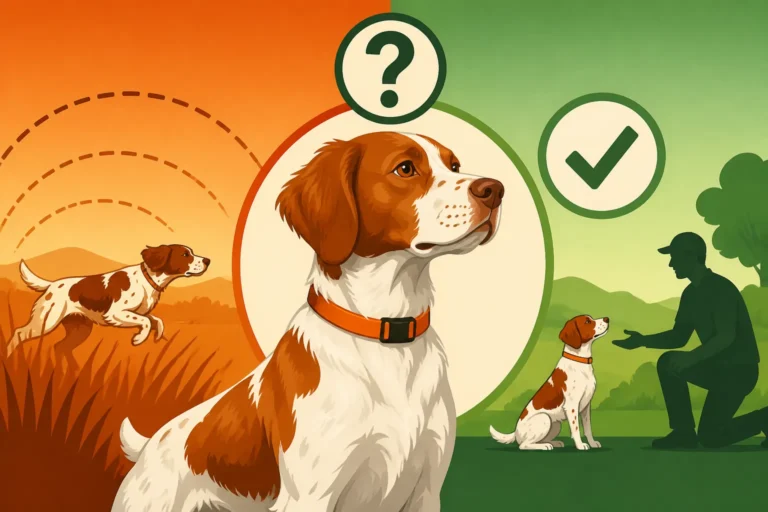
One of the most common anxieties for Brittany owners, especially those new to the breed, is that moment when your beloved bird dog seems to vanish into thin air, utterly consumed by a scent or a bird. The heart-stopping question echoes: where are they, and are they ever coming back? This guide will dive deep into understanding your Brittany's natural instincts, the factors that influence their attention to you in the field, and how you can train for and maintain reliable check-ins to keep both you and your dog safe and connected.
The Brittany's Inherent Drive to Explore and What That Means for Check-Ins
Brittanys are, at their core, passionate hunting machines. They were bred for generations to cover ground, find birds, and point with intensity. This incredible drive, while thrilling to witness, is also why figuring out how often a Brittany should check in can feel like a moving target. It's not that they don't love you; it's that their genetic programming is powerful.
The Instinct to Range and Hunt Independently
Think about it from your Brittany's perspective. Their nose is incredible, their prey drive is sky-high, and the thrill of discovery is paramount. When they hit a scent cone, or catch a whiff of a pheasant holding tight in heavy cover, their world narrows to that singular, intoxicating mission. This isn't disobedience; it's instinct. They're doing what they were born to do. This strong independent streak means that just because they're out of sight doesn't mean they're deliberately ignoring you; often, they're simply focused on the task at paw. Understanding this deep-seated drive is the first step in managing your expectations and implementing effective training. You're not fighting against bad behavior, but working with a powerful natural inclination.
Different Strokes: American vs. French Brittany Range
While both American Brittanys and Epagneul Bretons (French Brittanys) share that intense bird drive, there are distinct differences in their preferred working range that directly impact how often they're likely to check in. American Brittanys, historically bred for open prairies and horseback hunting, tend to cover a lot more ground. They are known for their expansive casts, often ranging 100-200 yards or even more, before circling back or checking the wind. If you're hunting vast, open spaces, this wide range is a huge asset, but it also means a longer time between natural check-ins. You might find yourself peering into the distance, wondering where your orange-and-white blur has gone. How Far an American Brittany Ranges offers more insight into this characteristic.
French Brittanys, on the other hand, were traditionally developed for foot hunters in more varied, often denser European cover. They typically work much closer to the gun, usually within 50-75 yards. This means they are inherently more likely to stay within your line of sight and naturally check in more frequently, as their hunting style dictates a tighter connection. If you're a walking hunter or working small parcels of land, a French Brittany's closer range can feel more manageable, and you'll likely experience fewer "where did they go?" moments. How Close a French Brittany Hunts delves deeper into this breed characteristic. Neither is "better," but knowing your dog's lineage can significantly inform your expectations regarding check-in frequency.
Deciding the "Right" Check-In Frequency in the Field
There isn't a hard and fast rule for how often a Brittany should check in, because it's highly dependent on a multitude of factors. What's appropriate for one dog in one environment might be completely inadequate for another. The key is to be attuned to your specific dog, the hunting conditions, and your training goals.
Variables That Dictate How Often Your Brittany Should Check In
Several elements play a crucial role in determining an ideal check-in rhythm. Ignoring these can lead to frustration for both you and your dog, or worse, a lost dog.
- Cover Density: In dense cover like thick cattails, heavy briars, or tall prairie grass, your Brittany is going to be out of sight more often. Here, a check-in every few minutes, or even just hearing the jingle of their bell, is probably sufficient, as they can't cover ground as quickly and are focused on working through the vegetation. In contrast, in wide-open fields with sparse cover, you should expect to see your dog or have them glance back at you more frequently, perhaps every 30 seconds to a minute, depending on their range.
- Wind Conditions: A strong, steady wind can carry scent for long distances, allowing your Brittany to work game far from you. Conversely, a swirling or light wind might mean they need to cover more ground, crisscrossing to pick up scent, which can influence their direction and distance. They should ideally be working into the wind, but sometimes a check-in means confirming their position relative to you and the prevailing breeze.
- Dog's Experience and Training Level: A young, green dog needs more frequent check-ins and guidance than a seasoned veteran. A well-trained, finished gun dog that understands the concept of "hunting for the gun" will have a much more reliable internal compass and a greater sense of where you are, even when out of sight. Teaching a Brittany to Hunt for the Gun is an important concept here. For a developing dog, you might aim for a visual or auditory check-in every 1-2 minutes, slowly extending that as they gain confidence and experience. An experienced dog might stretch that to 5 minutes, as long as they are still working productively and responding to whistle commands.
- Terrain and Obstacles: Hunting along a creek bed, over a ridge, or through varied topography means your dog might disappear from view more frequently. In such cases, check-ins might be more about confirming their safe passage and continued presence rather than just their range. Rivers, roads, or other hazards also necessitate stricter boundaries and more frequent checks.
- Your Hunting Style: Are you a fast-paced walker, or do you move slowly and deliberately? Do you want your dog to cast wide or stay close? Your personal preference and the way you hunt will naturally influence how you expect your dog to work and how often you need them to acknowledge your presence.
Reading Your Brittany's Body Language for Context
Beyond just looking for their physical presence, learning to read your Brittany's subtle cues is invaluable for understanding their focus and intent. A quick glance over their shoulder, a momentary pause to lift their head and scent the air, or a slight change in their tail carriage can all be forms of "checking in" even if they don't come directly to you.
- The Head Turn: A quick pivot of the head, scanning the area where you should be, even if they don't break stride, is a good sign. It shows they're aware of your general position.
- The "Pop-Up": In tall cover, sometimes a Brittany will "pop up" above the vegetation, taking a quick look around before disappearing again. This is a classic visual check-in, confirming their bearings and your location.
- Checking the Wind: You'll see them stop, nose high, taking in the wind. This is crucial for their hunting, but it's also a natural moment for them to orient themselves, and often, they'll simultaneously perform a quick check for your whereabouts.
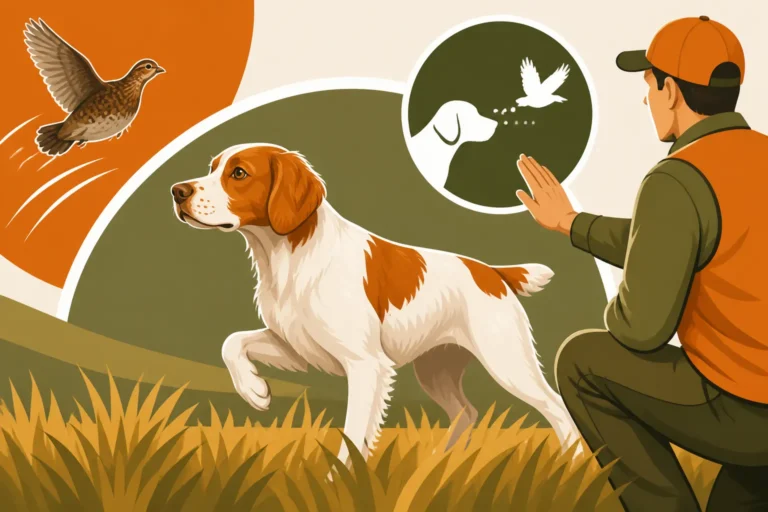
- Responding to Whistle Cues: Even if you can't see them, hearing a prompt response to a whistle command (like a recall or a "hoot" to indicate your location) is a strong indicator that they are still connected and paying attention. If you're consistently blowing the whistle without a response, that's a red flag that your check-in frequency needs to increase, or their attention has waned.
Learning to differentiate between a dog genuinely hunting productively and one that is simply "gone" requires experience. The former is a joy to watch; the latter is a cause for concern.
| Factor | Dense Cover | Open Field | Young Dog | Experienced Dog |
|---|---|---|---|---|
| Visual Check-in | Infrequent | Frequent | Frequent | Moderate |
| Auditory Check-in | Crucial | Useful | Crucial | Useful |
| Whistle Command Response | Expected | Expected | Expected | Expected |
| Typical Interval | 2-5 minutes | 30 seconds-2 minutes | 1-2 minutes | 2-5 minutes |
| Primary Goal | Confirm presence | Confirm location & range | Reinforce bond & direction | Maintain connection & efficiency |
Cultivating a Rock-Solid Check-In: Training and Tools
Reliable check-ins aren't just about hoping your Brittany comes back; they're built on consistent training and leveraging the right tools. Your dog needs to understand that staying connected to you means continued fun and successful hunting.
Building a Foundation of Recall and Attention
The foundation of any good check-in is a bomb-proof recall. If your Brittany won't reliably come when called in a low-distraction environment, they certainly won't when a bird is involved.
- Start Early and Keep it Positive: Begin recall training the moment you bring your puppy home. Use high-value treats and enthusiastic praise. Make coming to you the most rewarding thing they can do. Practice in increasingly distracting environments, gradually moving from your quiet living room to the backyard, then to a park, and finally to a field. BAXTER & Bella offers excellent online puppy and dog training programs that emphasize positive reinforcement and build a strong foundation for recall and attention, which are critical for field work.
- The "Check-In" Command: Beyond a general "come," consider teaching a specific "check-in" command. This could be a distinct whistle pattern or a verbal cue like "where are you?" The goal is that upon hearing it, your Brittany should at least turn and acknowledge you, if not come directly back for a treat and praise. This isn't necessarily a full recall, but a confirmation of their awareness.
- Random Recalls (Even When They're Close): Don't just call your Brittany when they're far away or doing something you don't like. Call them when they're nearby, give them a treat and some praise, then release them to go back to what they were doing. This prevents them from associating "come" only with ending their fun or being in trouble.
- Long Line Practice: Before letting a young Brittany off-leash in the field, practice recall and check-ins on a long line. A 30 to 50-foot check cord from Amazon is an invaluable tool for this. It allows you to maintain control and gently reinforce the "come" command if they get too distracted. This builds confidence in both of you. What a Fifty Foot Check Cord Costs a Brittany Owner provides details on this essential piece of gear.
Remember, a Brittany's desire to please is strong, but their prey drive is stronger. Consistent, positive reinforcement is key to making you more interesting than that distant scent.
Leveraging Technology for Enhanced Communication
Even with the best training, Brittanys are bred to range, and sometimes they'll simply disappear from sight. Modern technology can be a game-changer for maintaining connection and peace of mind.
- GPS Tracking Collars: For any serious hunter, a GPS collar is almost non-negotiable for a wide-ranging breed like the Brittany. These collars allow you to see your dog's exact location on a handheld device or smartphone, even when they're hundreds of yards away and out of sight in thick cover. Many models also track their movement, speed, and whether they're on point. This takes away the panic of a "lost" dog, allowing you to focus on the hunt. What a GPS Collar Costs a Brittany Owner provides a good overview of this investment. Even if your Brittany is incredibly reliable, GPS offers an indispensable safety net.
- E-Collars (Electronic Collars): Often misunderstood, an e-collar, when used correctly and humanely, is a powerful communication tool, not a punishment device. It can provide a consistent, undeniable "tap on the shoulder" that cuts through distractions when your verbal or whistle commands aren't enough. For a check-in reminder, a vibration or low-level stimulation can be used to re-engage your Brittany's attention, reminding them to check in or respond to a whistle. It's about reinforcement, not correction for every missed check-in. Always introduce e-collars carefully and with professional guidance to avoid creating a negative association. Whether a Brittany Needs an E Collar explores this topic in more detail. You can find a wide range of reliable e-collars on Amazon.
- Beeper Collars: While not a "check-in" tool in the traditional sense, a beeper collar can help you keep tabs on your dog's location when they're out of sight. The intermittent beep tells you they're moving, and a rapid, continuous beep usually indicates they've locked up on point. This sound allows you to home in on their general location, even if you can't see them, and can sometimes prompt them to listen for your commands. What a Beeper Collar Costs a Brittany Owner offers further information.
Using these tools in conjunction with solid training creates a robust system for managing your Brittany's range and ensuring reliable check-ins, enhancing both safety and hunting effectiveness.
Common Pitfalls and Troubleshooting Check-In Issues
Even the most well-trained Brittany can have moments where their focus drifts. Understanding why these issues occur and how to address them is crucial for consistent success.
Why Brittanys "Go Deaf" and How to Prevent It
It's a common complaint: "My Brittany is normally so good, but in the field, they just go deaf!" This isn't actual deafness, of course. It's often a combination of factors amplifying their natural prey drive and independent spirit.
- Over-Arousal: When your Brittany is overwhelmed by scent, the excitement of the hunt, or the presence of birds, their focus becomes hyper-specific. Their brain is simply prioritizing the intense stimuli of the hunt over your commands. This is especially true for young, high-drive dogs.
- Inconsistent Training: If "come" or "check in" only happens when they are about to be put back on leash or when they're in trouble, they will quickly learn to ignore it. As mentioned before, random recalls and positive reinforcement are key.
- Lack of Proofing: Training should be "proofed" in increasingly challenging environments. If you've only practiced recall in your quiet backyard, expecting it to work perfectly in a field full of birds and distractions is unrealistic.
- Lack of Clear Communication: Are your commands clear and consistent? Is your whistle distinct? If your signals are weak or muddled, your Brittany will struggle to understand what you want, especially from a distance.
To prevent "selective hearing," consistently reinforce positive responses. Make yourself incredibly rewarding. Use your e-collar as a reminder to pay attention, not just as a correction after they've ignored you five times. If you feel your Brittany is routinely ignoring you, consider going back to basics with shorter sessions and fewer distractions, gradually building up to more complex scenarios. How Long a Brittany's Training Session Should Be might be a helpful read as you refine your approach.
Maintaining Consistency Across Different Environments
One of the biggest challenges is ensuring your Brittany's check-in behavior is consistent, whether you're hunting pheasants in Nebraska, quail in Georgia, or chukar in Idaho. Each new environment presents unique distractions and challenges.
- Vary Your Training Locations: Don't just train in one spot. Expose your Brittany to a variety of terrains, cover types, and levels of distraction during training. This helps them generalize the "check-in" concept, understanding that it applies everywhere, not just "the training field."
- Start Simple in New Places: When you arrive at a completely new hunting spot, treat your Brittany a bit like a younger, less experienced dog for the first few minutes. Keep them closer, do more frequent check-ins, and perhaps even start with them on a long line until they've acclimated to the new smells and sights.
- Be Patient and Persistent: There will be days when your Brittany is a superstar and days when they seem to have forgotten everything. Don't get discouraged. Consistency and patience are the hallmarks of successful dog training. If your Brittany is having an "off" day, recognize it, adjust your expectations, and focus on reinforcing the basics rather than pushing them into situations where they're likely to fail.
- Join a Training Group or Club: Working with other Brittany owners or a local bird dog club can provide invaluable insights and opportunities to train in different environments with varying levels of distraction. Observing how other experienced handlers manage their dogs can be hugely beneficial. Organizations like NAVHDA or the American Brittany Club often have local chapters that host training days.
Ultimately, the goal is a Brittany that understands its partnership with you in the field. They should be confident enough to range out and hunt effectively, yet always aware of your presence and responsive to your commands. This balance, achieved through understanding, consistent training, and smart use of tools, is what makes hunting with a Brittany such an incredibly rewarding experience.
Disclaimer
This article is for general informational purposes only and does not constitute professional advice. Laws, prices and regulations vary by location and change over time. Consult a qualified professional for guidance on your specific situation.