Whether a Brittany Gets Heart Disease
It's incredibly worrying when your lively, indefatigable Brittany Spaniel shows any sign of slowing down or an unexpected cough. As owners of these high-energy companions, we constantly monitor their zest for life, so even a subtle change can send our minds racing to serious health concerns, especially those impacting their most vital organ: the heart. This guide aims to shed light on whether Brittanys are prone to heart disease, what common conditions can arise, and how you can proactively safeguard your beloved dog's heart health.
Understanding Heart Disease in Brittany Spaniels
While Brittanys are celebrated for their robust health and incredible athleticism, earning them a reputation as one of the healthiest sporting breeds, no dog breed is entirely immune to the possibility of heart disease. It’s a natural concern for any dog owner, especially when you see your dog pushing limits in the field or joyfully bounding through your home. The good news is that Brittanys don't typically top the list of breeds genetically predisposed to specific, widespread heart conditions in the same way some giant breeds might be for dilated cardiomyopathy, or certain smaller breeds for mitral valve disease. However, they can still develop heart issues, both congenital (present from birth) and acquired (developing later in life).
The Reality of Canine Heart Conditions
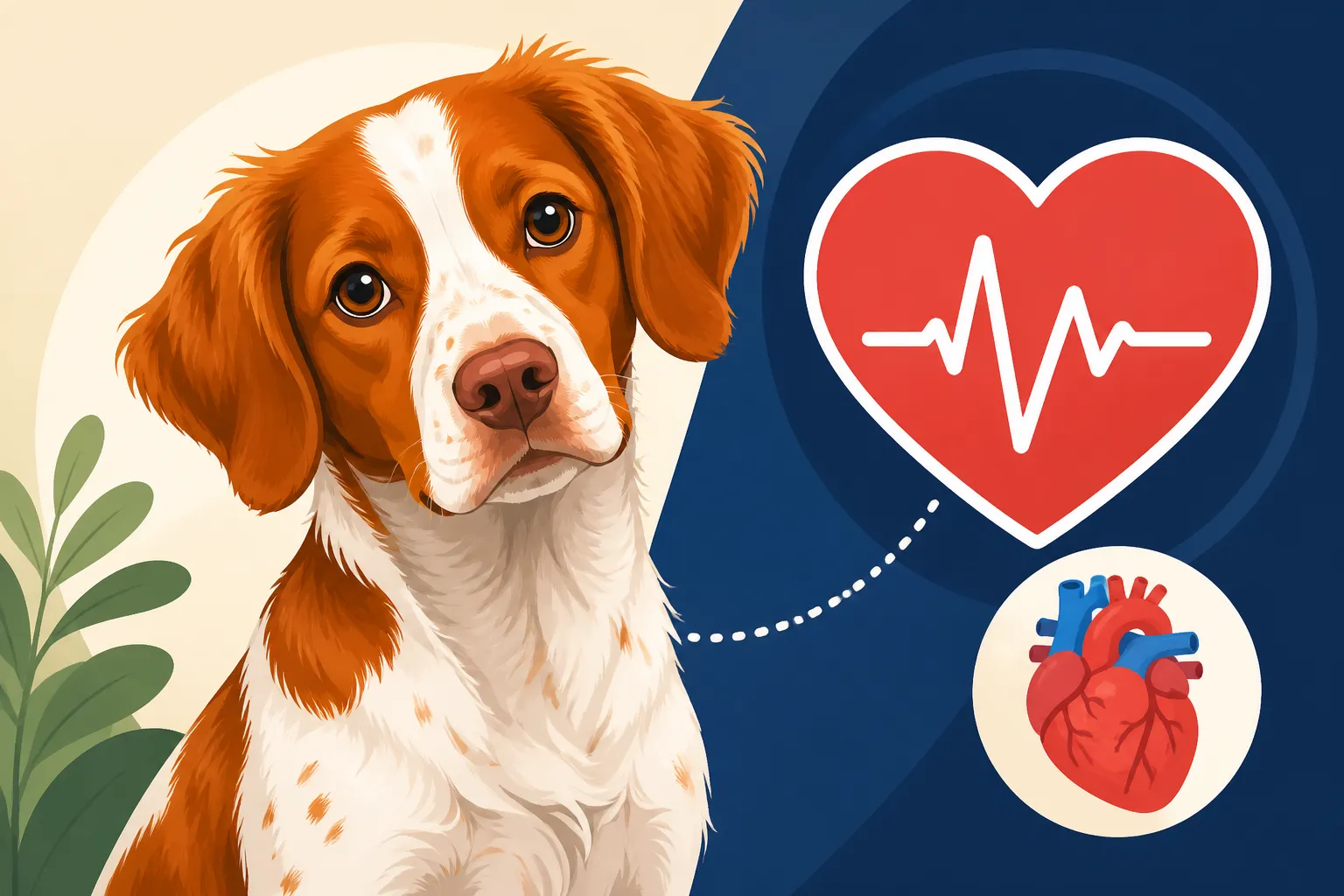
Just like in humans, a dog's heart is a complex pump, and various issues can compromise its efficiency. Heart disease simply means there's an abnormality in the heart's structure or function. It's not a single condition but a broad term encompassing many different problems, from faulty valves to weakened heart muscle. For most dogs, including Brittanys, heart disease often progresses gradually, sometimes unnoticed until it reaches a more advanced stage where symptoms become impossible to ignore. This is why understanding the possibilities, even if they're not highly prevalent in your specific breed, is crucial for early detection and intervention.
Specific Heart Concerns for Brittanys
While Brittanys aren't singled out for unique genetic heart defects by major veterinary cardiology organizations, they can certainly experience the more common forms of canine heart disease. The two most frequently encountered categories are valvular disease and myocardial disease.
-
Valvular Heart Disease (Chronic Valvular Disease – CVD): This is by far the most common type of heart disease in dogs, accounting for about 75-80% of all canine heart cases. It primarily affects smaller and medium-sized breeds as they age, but larger breeds and Brittanys are not exempt. In CVD, the valves of the heart, particularly the mitral valve (between the left atrium and left ventricle), start to thicken and degenerate. This prevents them from closing properly, causing blood to leak backward with each heartbeat. This backward flow is what a veterinarian hears as a "murmur." Over time, the heart has to work harder to pump blood efficiently, leading to enlargement and eventual failure. While smaller breeds like Cavalier King Charles Spaniels are notoriously susceptible, a Brittany could still develop it, especially in their senior years. Regular check-ups become even more critical as your Brittany enters those golden years, as discussed in Caring for a Brittany Past Ten.
-
Myocardial Disease (Dilated Cardiomyopathy – DCM): This condition affects the heart muscle itself, causing it to become thin and weak, leading to an enlarged heart that can't pump blood effectively. DCM is more typically associated with large and giant breeds such as Doberman Pinschers, Boxers, Great Danes, and Irish Wolfhounds. However, DCM can occur in any breed, including Brittanys, though it's less common. The exact cause is often unknown, though genetic factors are suspected in many breeds, and nutritional deficiencies (like taurine) have been implicated in some cases.
-
Congenital Heart Defects: These are structural abnormalities present from birth. They are less common than acquired heart diseases but can sometimes be more severe. While rare, a Brittany could be born with issues like a patent ductus arteriosus (PDA), pulmonic stenosis, or a ventricular septal defect (VSD). Reputable breeders will often screen for such issues, and understanding What a Brittany Spaniel Breeder Should Have Tested can help you make informed decisions when choosing a puppy. These types of defects can range in severity, with some causing no noticeable problems and others leading to serious health complications early in life.
Congenital vs. Acquired Heart Disease: What's the Difference?
Understanding the distinction between congenital and acquired heart disease can help you better grasp your Brittany's potential risks.
-
Congenital heart disease is present at birth, meaning your Brittany was born with a structural flaw in its heart or major blood vessels. These are often genetic, but not always. Sometimes, environmental factors during pregnancy can play a role. These conditions can manifest symptoms early in puppyhood, or sometimes remain undetected for years until a vet hears a murmur during a routine check-up. While good breeders screen their lines, some anomalies can occur spontaneously.
-
Acquired heart disease, on the other hand, develops over your Brittany's lifetime. These are much more common and typically associated with aging, wear and tear, infections, or other underlying health conditions. The most common acquired heart diseases in dogs are chronic valvular disease and dilated cardiomyopathy, as mentioned earlier. Lifestyle factors, such as diet and exercise, can influence the progression of acquired heart conditions, though they don't necessarily cause them. Knowing the difference helps in understanding how proactive care throughout your Brittany's life can influence their heart health trajectory.
Spotting the Warning Signs in Your Brittany
One of the biggest challenges with heart disease in active breeds like Brittanys is that they are masters at masking discomfort. Their high pain tolerance and unwavering drive to please and explore can make early symptoms subtle, easily dismissed, or attributed to something else. It's not uncommon for an owner to think their dog is just "getting old" or "out of shape" when, in reality, a serious heart condition is developing. This is why being hyper-aware of your Brittany's baseline behavior and knowing what to look for is absolutely essential.
Subtle Changes in Behavior and Energy
Your Brittany's boundless energy is one of its defining characteristics. Any deviation from this can be a red flag. Pay close attention to these subtle shifts:
- Decreased Exercise Tolerance: Perhaps your Brittany, who usually runs circles around you, starts lagging on walks or needs more frequent breaks during playtime or hunts. They might refuse to go as far as they used to or stop playing sooner than normal. This isn't just "getting older"; it could mean their heart isn't efficiently pumping enough oxygenated blood to their muscles. If you're wondering how much longer an aging Brittany should still run, it’s a good time to consult your vet.
- Increased Resting or Sleeping: If your Brittany seems to be napping more than usual, or takes longer to recover after activity, it could be a sign of fatigue due related to reduced cardiac output.
- Persistent Coughing or Gagging: This is a classic, though often misinterpreted, sign of heart disease. It's often worse at night or when your dog wakes up. Owners sometimes mistake it for a "kennel cough" or something stuck in their throat. However, an enlarged heart can press on the trachea, causing irritation, or fluid in the lungs (pulmonary edema) can trigger coughing as the body tries to clear it.
- Restlessness or Disorientation: In more advanced stages, a dog with heart failure might have trouble getting comfortable, pacing, or seeming disoriented, especially at night. This can be due to a lack of oxygen reaching the brain or discomfort from fluid buildup.
Physical Indicators to Watch For
Beyond behavioral changes, certain physical signs can indicate heart trouble. These often become more apparent as the disease progresses.
- Changes in Breathing: Observe your Brittany's breathing when they are completely at rest, not panting from exertion or heat. A resting respiratory rate (RRR) of more than 30 breaths per minute can be a red flag for fluid in the lungs. You can count your Brittany's breaths by watching their chest rise and fall. Also, look for increased effort in breathing, such as abdominal heaving or flared nostrils, which indicate they are struggling to get enough air.
- Abdominal Distension (Bloating): If heart failure leads to fluid retention, it can accumulate in the abdomen, causing a distended, pot-bellied appearance. This is called ascites. While many owners worry about Whether a Brittany Bloats due to gastric torsion, abdominal fluid from heart disease presents differently and slowly.
- Pale or Bluish Gums: Healthy gums should be a salmon pink. Pale or white gums can indicate poor circulation or anemia, while bluish or purplish gums (cyanosis) are a serious sign of oxygen deprivation and require immediate veterinary attention.
- Fainting or Collapse (Syncope): This is a frightening symptom and a definite emergency. If your Brittany suddenly collapses, faints, or seems to lose consciousness, even momentarily, it means their brain isn't getting enough oxygen or blood flow, often due to an irregular heartbeat or severely compromised cardiac output.
- Weight Loss or Muscle Wasting (Cardiac Cachexia): Despite a good appetite, some dogs with advanced heart disease can lose muscle mass and weight. This is due to the body working harder to compensate for the failing heart, burning more calories, and sometimes struggling with nutrient absorption. It's a stark contrast to a healthy Brittany that is Whether a Brittany Should Be Lean or Covered but well-muscled.
If you observe any of these signs, particularly a combination of them, it’s not something to wait on. Schedule an immediate visit to your veterinarian. Early diagnosis can significantly improve your Brittany's quality of life and potentially extend their lifespan.
Diagnosing and Treating Heart Conditions
When you suspect your Brittany might have heart trouble, the first step is always a thorough veterinary examination. Your veterinarian is trained to pick up on the subtle clues that might indicate a problem, even before you notice significant symptoms at home.
The Diagnostic Journey
The diagnostic process for heart disease is often a step-by-step approach, starting with non-invasive methods and progressing to more specialized tests.
- Initial Veterinary Examination: Your vet will perform a comprehensive physical exam, listening carefully to your Brittany’s heart and lungs with a stethoscope. They'll be listening for heart murmurs (abnormal sounds caused by turbulent blood flow) or arrhythmias (irregular heart rhythms). They'll also check pulses, gum color, and feel your dog's abdomen for any fluid buildup. This initial examination is crucial, and it's why How Often a Brittany Needs a Wellness Exam is so vital throughout their life.
- Bloodwork and Urinalysis: While not directly diagnosing heart disease, these tests provide valuable information about your Brittany's overall health and can help rule out other conditions or identify secondary issues, such as kidney problems that can be affected by heart medication. What a Brittany's Yearly Bloodwork Should Cover often includes tests that can indicate systemic health.
- Thoracic Radiographs (X-rays): Chest X-rays allow your vet to visualize the size and shape of your Brittany's heart and assess the lungs for fluid accumulation (pulmonary edema), which is a common sign of congestive heart failure. They can also show if the major blood vessels are enlarged.
- Electrocardiogram (ECG/EKG): An ECG measures the electrical activity of the heart. This test is crucial for detecting arrhythmias or abnormal heart rhythms. It helps determine the type of arrhythmia and its severity, which guides treatment decisions. Sometimes, a Holter monitor (a wearable ECG device) is used to record heart activity over 24-48 hours, capturing intermittent arrhythmias that might not be present during a brief office visit.
- Echocardiogram (Cardiac Ultrasound): This is considered the gold standard for diagnosing most heart conditions. An echocardiogram uses sound waves to create real-time images of your Brittany's heart. It allows the veterinarian to visualize the heart's chambers, valves, and major blood vessels, assessing their size, function, and blood flow. This test can precisely identify valve disease, measure heart chamber sizes, assess the pumping strength of the heart muscle, and detect congenital defects. It provides the most detailed information about the structural integrity and function of the heart.
- Blood Pressure Measurement: High blood pressure (hypertension) can sometimes be a cause or a consequence of heart disease, so your vet may measure your Brittany's blood pressure.
Management and Medication
Once diagnosed, the goal of treatment for heart disease is to manage symptoms, slow progression, improve quality of life, and extend lifespan. Unfortunately, most heart conditions cannot be cured, but they can often be managed effectively for many years.
Common medications include:
- Diuretics (e.g., Furosemide): These drugs help the body eliminate excess fluid, reducing pulmonary edema (fluid in the lungs) and ascites (fluid in the abdomen). This directly helps alleviate coughing and breathing difficulties.
- ACE Inhibitors (e.g., Enalapril, Benazepril): These medications help relax blood vessels, reducing the workload on the heart and improving blood flow throughout the body.
- Pimobendan (Vetmedin): This is a truly remarkable drug that has revolutionized the treatment of canine heart disease. It has a dual action: it strengthens the heart muscle's contractions (a positive inotrope) and dilates blood vessels (a vasodilator), making it easier for the heart to pump blood. It can significantly improve quality of life and survival times for dogs with congestive heart failure.
- Anti-arrhythmic Drugs: If your Brittany has an arrhythmia, specific medications like sotalol or amiodarone might be prescribed to regulate the heart rhythm.
The cost of these diagnostic tests and long-term medications can add up quickly. This is where pet insurance, such as Healthy Paws, can be an invaluable resource. Having a good pet insurance policy can help offset the financial burden of chronic conditions, allowing you to focus on getting your Brittany the best possible care without constant worry about veterinary bills. They can help cover everything from expensive diagnostic echocardiograms to the ongoing costs of daily medications, which can be substantial over many years.
Lifestyle Adjustments for Cardiac Health
Beyond medication, certain lifestyle changes are crucial for managing heart disease in your Brittany:
- Dietary Modifications: Your vet may recommend a special prescription diet, often low in sodium, to help reduce fluid retention and support heart function. These diets are carefully formulated to provide optimal nutrition while minimizing strain on the heart.
- Controlled Exercise: While Brittanys are active, a dog with heart disease will need their exercise carefully managed. Strenuous activity might be limited, but regular, gentle walks can still be beneficial for overall well-being. The key is to avoid overexertion and monitor for signs of fatigue or breathing difficulty.
- Weight Management: Maintaining an ideal body weight is critical. Obesity puts extra strain on the heart. If your Brittany is overweight, your vet will help you create a safe weight-loss plan.
- Stress Reduction: Keeping your Brittany in a calm, low-stress environment can also be beneficial, as stress can sometimes exacerbate heart conditions.
Proactive Care to Support Your Brittany's Heart Health
While heart disease can be a serious concern, there's a lot you can do as a Brittany owner to support their heart health throughout their life. From choosing a puppy wisely to diligent care in their senior years, proactive measures make a significant difference.
Breeding and Genetic Screening
For those considering bringing a Brittany puppy into their home, starting with a responsible breeder is paramount. While there isn't a specific widespread genetic test for a Brittany's heart disease (like there is for C3 Deficiency Is the Brittany's Own Genetic Disease), good breeders still prioritize overall health and temperament. They should be transparent about the health history of the sire and dam, including any cardiac issues in their lines.
- Health Certifications: Inquire if the parents have undergone recommended health screenings for the breed, even if not specifically for heart conditions prevalent in Brittanys. A breeder who is attentive to a full health panel is generally more reliable.
- Observation of Parents: Observing the puppy's parents can also provide clues about their general health and vitality, though subtle heart issues might not be apparent. A healthy, energetic dam and sire are good indicators of well-being.
Weight Management and Nutrition
Keeping your Brittany at an ideal weight is perhaps one of the most impactful things you can do for their long-term heart health. Every extra pound your dog carries means their heart has to work harder to pump blood, leading to increased strain over time.
- Balanced Diet: Feed a high-quality, balanced diet appropriate for their age, activity level, and size. Consult your vet or a canine nutritionist for guidance.
- Portion Control: Avoid free-feeding. Measure out meals and adjust as needed to maintain a healthy weight. Remember, How Much More a Brittany Eats in Hunting Season will vary, but off-season, their caloric needs drop significantly.
- Healthy Treats: Use treats sparingly and opt for healthy, low-calorie options.
- Regular Exercise: Ensure your Brittany gets consistent, appropriate exercise. For these active dogs, this means daily vigorous activity. However, as they age, this might transition to more moderate exercise, as discussed in What Changes in an Aging Brittany.
Caring for the Aging Brittany
As your Brittany ages and enters their senior years, which typically begins around The Age a Brittany Is Considered Senior, vigilance for heart disease and other age-related conditions becomes even more important. Their bodies, including their hearts, undergo natural changes.
- Increased Vet Visits: Your veterinarian might recommend more frequent wellness exams for senior Brittanys to monitor for age-related changes, including early signs of heart disease. This allows for proactive intervention if a murmur or other issue is detected.
- Monitoring Symptoms: Continue to monitor for the subtle signs of heart disease mentioned earlier. An aging Brittany might slow down due to arthritis, but a cough or labored breathing is not a normal part of aging.
- Adapting Exercise: While an aging Brittany may still want to hunt, you might need to adjust their activity levels to prevent overexertion. Shorter, more frequent outings rather than long, intense ones can be beneficial.
- Dental Health: Surprisingly, dental disease can indirectly impact heart health. Bacteria from severe dental infections can enter the bloodstream and potentially affect heart valves. Regular dental care is important for overall health.
By integrating these proactive measures into your Brittany's care routine, you can significantly contribute to their cardiovascular well-being, helping them enjoy a long, healthy, and active life by your side. Remember, organizations like Healthy Paws can provide peace of mind for unexpected health issues, ensuring you can always prioritize your Brittany's care.
Here's a quick reference for common symptoms of heart disease to help you stay vigilant:
| Symptom Category | Specific Indicators to Watch For | Urgency Level |
|---|---|---|
| Respiratory | Persistent coughing (especially at night), increased breathing rate at rest, labored breathing, panting without exertion | High |
| Energy/Behavioral | Decreased exercise tolerance, lethargy, increased sleeping, reluctance to play | Medium |
| Physical Appearance | Abdominal swelling (pot-bellied appearance), unexplained weight loss, muscle wasting | Medium |
| Circulatory | Pale or bluish gums, cold extremities, fainting or sudden collapse | Critical |
| Other | Restlessness, difficulty getting comfortable | Medium |
Remember, any sudden onset of severe symptoms like fainting or extreme difficulty breathing warrants an immediate visit to an emergency veterinary clinic. For less urgent but persistent signs, schedule an appointment with your regular veterinarian as soon as possible.
Disclaimer
This article is for general informational purposes only and does not constitute professional advice. Laws, prices and regulations vary by location and change over time. Consult a qualified professional for guidance on your specific situation.