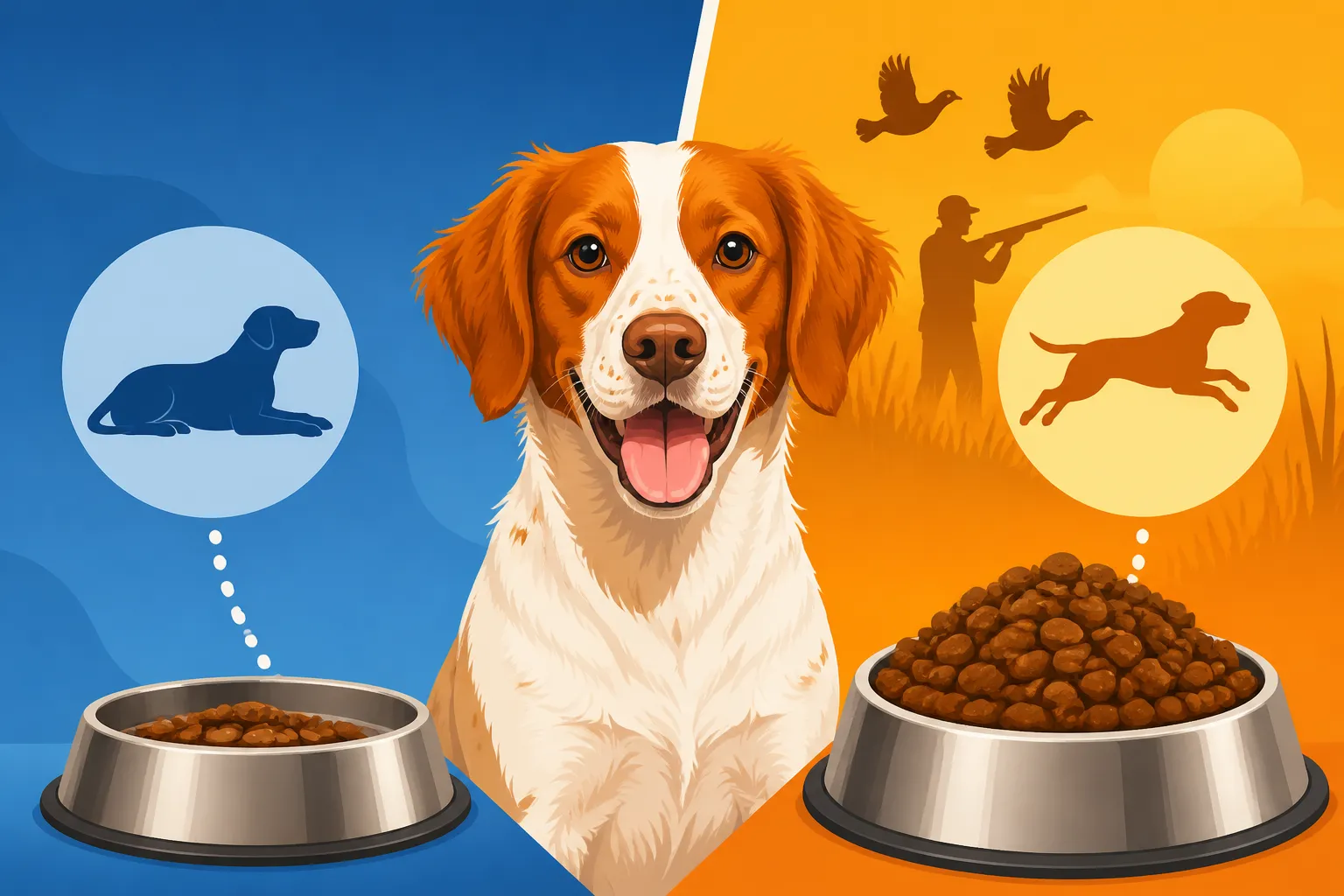
How Much More a Brittany Eats in Hunting Season
Many Brittany owners quickly learn that their usually energetic companion transforms into an absolute powerhouse once bird season rolls around. If you’ve ever wondered why your Brittany seems to shed weight or drag a bit by mid-season, even though you’re feeding them what feels like a mountain of kibble, you're not alone. The simple truth is, a Brittany expending massive amounts of energy day after day in the field needs a vastly different diet than one enjoying a more leisurely off-season. This guide will help you understand just how much more fuel your hunting Brittany truly requires to perform at its peak and stay healthy all season long.
The Tremendous Energy Demands of a Hunting Brittany
It's easy to underestimate the sheer physical output of a Brittany in the field. They aren't just taking a stroll; they're covering miles, often at a full run, through challenging terrain, all while engaging their powerful sense of smell and intense focus. This isn't just exercise; it's a job, and it demands a specialized approach to nutrition to prevent them from "running on empty."
Why Field Work Burns So Many Calories
Think about what your Brittany actually does during a hunt. They are running, often at a high pace, for hours on end. Imagine yourself sprinting through heavy brush, leaping over downed logs, and pushing through thick cover, then multiply that effort by a tenacious dog that rarely gives up. This constant, high-intensity activity burns calories at an astonishing rate. Their muscles are working overtime, their cardiovascular system is pushed to its limits, and their brain is constantly engaged in scenting, locating, and pointing birds. All of this physiological work requires a continuous supply of energy. A single day in the field can easily double or even triple their baseline energy expenditure, and if they're out several days a week, those caloric deficits can quickly add up. It's not just the running; it's the constant starting, stopping, scenting, and the mental effort that drains their reserves. They aren't just pointing; they're covering ground efficiently, quartering, and adjusting their pace and direction based on wind and scent, which all demand a lot from their body.
Beyond the obvious physical exertion, there's also the metabolic cost of recovery. After a grueling day, your Brittany's body needs energy to repair muscle tissue, replenish glycogen stores, and bring all systems back to normal. If they're not getting enough fuel, this recovery process is compromised, leading to slower bounce-back times and potentially affecting their performance on subsequent hunts. Without adequate nutrition, their body starts dipping into its own reserves, leading to muscle loss and a noticeable decline in stamina. We often talk about How Long a Brittany Can Hunt in a Day, but the ability to do so consistently comes down to how well they are fueled.
The Impact of Cold Weather and Terrain on Energy Needs
Hunting season often coincides with cooler, even cold, weather. While your Brittany's dense coat provides some insulation, maintaining core body temperature in chilly winds, frozen fields, or icy water requires additional energy. A dog working hard in 20-degree weather will burn significantly more calories just to stay warm than the same dog working on a pleasant 50-degree autumn day. This isn't just a minor increase; it can be a substantial factor, especially during late-season hunts or if your Brittany is retrieving from cold water. Their body essentially becomes a furnace, and that furnace needs more fuel to keep burning efficiently.
The type of terrain also plays a huge role. Running through an open, mown field is far less strenuous than pushing through knee-deep snow, battling dense briars, or navigating uneven, rocky ground. Each step in challenging cover demands more muscle power, more stabilization, and more overall effort. A Brittany breaking trail through heavy snow cover or wading through muddy swamps is using an immense amount of energy that flat-ground running simply doesn't compare to. This added physical resistance directly translates to higher caloric burn. It’s a common frustration for owners to see their dog thinning out, especially if they are frequently hunting in difficult conditions. This isn't because the dog is sick; it's simply that their energy output has far outstripped their intake. This is why Whether a Brittany Needs a Neoprene Vest in Cold Water is a consideration not just for warmth but for energy conservation.
Estimating Your Brittany's Increased Caloric Needs
Figuring out exactly how much more to feed your Brittany can feel like a guessing game, but there are some solid principles to follow. It's rarely a one-size-fits-all answer, as individual metabolism, age, and intensity of work vary, but you can certainly get a good estimate.
Baseline vs. Hunting Season Intake
During the off-season, your Brittany likely maintains a healthy weight on a standard maintenance diet. This "baseline" might be, for example, 2-3 cups of a quality kibble per day, or a similar caloric equivalent in fresh or raw food. When hunting season arrives, and your Brittany is consistently working, their caloric needs can increase dramatically. For light work (an hour or two a few times a week), you might only need to increase food by 10-20%. However, for moderate to heavy work (multiple hours, several days a week, especially in challenging conditions), a 50-100% increase in calories is not uncommon. In peak season, for a dog hunting hard almost daily, their caloric needs could even triple their resting energy requirement.
This isn't about simply dumping more food in the bowl at one meal; it's about providing nutrient-dense calories consistently. Many owners find success by transitioning to a high-performance dog food formula well before the season starts, often around the same time they begin their conditioning routine. How to Condition a Brittany Before Opening Day is just as important as the food itself. Look for foods that are higher in fat and protein, specifically formulated for active or sporting dogs. For instance, if your Brittany normally eats 1,000 calories a day in the off-season, they might need 1,500-2,000 calories on hunting days, possibly even more on extremely rigorous outings. This means adding an extra meal, or significantly increasing portion sizes at existing meals. For those who prefer fresh food, a brand like Ollie can provide higher-calorie, nutrient-dense options, though portion sizes would still need to be adjusted for the increased activity.
Signs Your Brittany Isn't Getting Enough Fuel
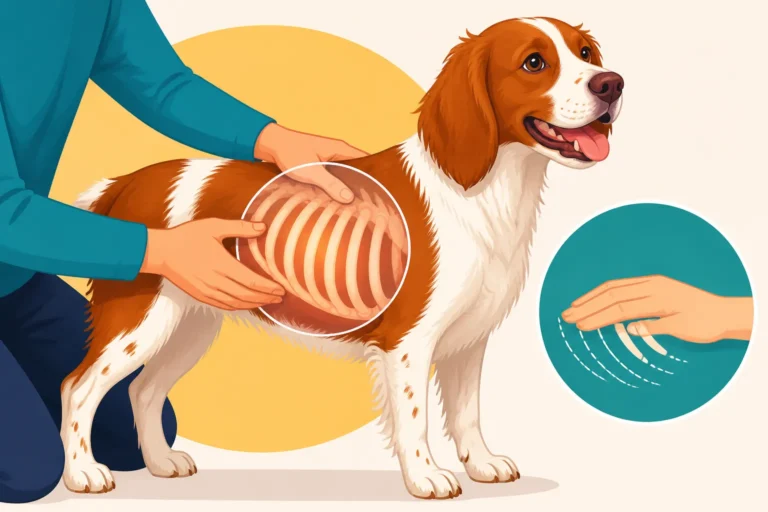
Your Brittany will often tell you, in subtle ways, if they're not getting enough fuel. The most obvious sign is weight loss. You should be able to easily feel your Brittany's ribs, but not see them prominently. If their ribs, hip bones, or spine start becoming visibly apparent, or if you pinch their skin and find very little fat cover, they're likely not getting enough calories. A simple visual check and hands-on assessment a few times a week can prevent significant weight loss. Refer to guides on How to Feel a Brittany's Ribs for proper assessment.
Beyond visible weight loss, watch for a dip in performance or energy levels. Is your Brittany slowing down earlier in the day? Are they less enthusiastic to hit the field? Are they recovering more slowly after a hunt, seeming lethargic or stiff for longer than usual? These can all be indicators of insufficient caloric intake. A well-fueled Brittany should be eager, energetic, and recover fairly quickly. Other signs might include a dull coat, reduced stamina, or even seeking out alternative food sources (like scavenging more than usual). It's also worth noting that some Brittanys may experience changes in stool consistency if their diet isn't balanced for their activity level. Paying attention to these subtle cues can help you adjust their food intake before performance is significantly impacted or health issues arise.
Fueling for Performance: Choosing the Right Diet
It's not just about quantity; it's very much about the quality and type of calories you're providing. A hunting Brittany needs specific macronutrient ratios to sustain energy, promote muscle health, and aid recovery.
Performance Dog Foods and Their Benefits
Regular maintenance dog food is designed for dogs with average activity levels. While it's fine for the off-season, it typically doesn't have the higher fat and protein content necessary for a working Brittany. Performance dog foods, on the other hand, are specifically formulated with higher caloric density, primarily from fat, which provides sustained energy, and higher protein, which supports muscle maintenance and repair. Fat is the most efficient energy source for endurance work, providing more than twice the calories per gram compared to carbohydrates or protein.
When selecting a performance food, look for options that list fat content in the 18-25% range and protein content in the 28-32% range, or even higher, depending on the intensity of work. Brands often label these as "sporting dog," "performance," "active," or "high-energy" formulas. Reputable brands available through retailers like Chewy often offer excellent options that have undergone feeding trials for active dogs. These formulas often contain a good balance of omega fatty acids for joint health and coat condition, as well as added vitamins and minerals to support overall health during periods of stress. What Protein Level Suits a Working Brittany is a key consideration, as sufficient protein is crucial for preventing muscle breakdown.
Switching foods should be done gradually over 7-10 days to avoid digestive upset. Start this transition a few weeks before hunting season begins, so your Brittany's digestive system is fully accustomed to the new diet when their energy demands peak. This ensures they can properly absorb and utilize all those extra nutrients. A sudden change can lead to an upset stomach, which is the last thing you want when your dog needs to be performing at its best.
Incorporating Supplements and Healthy Fats
Even with a high-quality performance kibble, some Brittanys might benefit from additional supplements, especially if they are particularly hard workers or hunting in extreme conditions. Adding healthy fats to their diet is a simple and effective way to boost calories without significantly increasing the volume of food. Sources like salmon oil, coconut oil, or even a tablespoon of bacon grease (sparingly, and only if tolerated) can provide a quick, calorically dense boost. These fats also contribute to a healthy coat and skin, which can suffer under the stress of heavy work.
For joint support, especially for older Brittanys or those with a history of orthopedic issues, glucosamine and chondroitin supplements can be beneficial. These are often found in chewable forms or powders that can be added directly to their food. Probiotics can also be helpful in maintaining a healthy gut, especially if your Brittany is prone to digestive upset when working hard or stressed. You can find a wide range of these supplements on platforms like Amazon, but always consult with your veterinarian before introducing new supplements to ensure they are appropriate for your individual dog and won't interact negatively with any existing conditions or medications. Remember, supplements are meant to supplement a good diet, not replace it. If you're concerned about Whether an Arthritic Brittany Can Still Hunt, joint supplements might be part of the solution.
Another consideration is providing small, easily digestible snacks during or immediately after a hunt. High-energy training treats or small portions of cooked meat can provide a rapid energy boost and help kickstart the recovery process. However, be mindful not to overdo it, as large amounts of food too close to strenuous activity can cause digestive upset or even increase the risk of bloat, which can be a serious concern for deep-chested breeds like the Brittany.
Monitoring and Adjusting Throughout the Season
Feeding a hunting Brittany is an ongoing process of observation and adjustment. What works perfectly at the beginning of the season might need tweaks as the weather changes, the intensity of hunts fluctuates, or your dog's conditioning evolves.
The Importance of Regular Body Condition Checks
The single most important tool in your nutritional arsenal is your own hands and eyes. Performing regular body condition checks (often called a "rib check") is crucial. Ideally, you should be able to feel your Brittany's ribs easily under a thin layer of fat, but not see them without applying pressure. The waist should be evident when viewed from above, and there should be an abdominal tuck when viewed from the side. If you start seeing ribs, hip bones, or a prominent spine, it's a clear sign you need to increase food. Conversely, if you're struggling to feel the ribs or notice their waistline disappearing, you might be overfeeding.
A good way to track this is to weigh your Brittany regularly – once a week or bi-weekly during peak season. Small fluctuations are normal, but a consistent downward trend indicates inadequate calories. Keep a small notebook or a log on your phone to track weight, food intake, and daily activity levels. This data can be incredibly helpful for fine-tuning their diet and also for discussing any concerns with your vet. Catching minor weight loss early is much easier to correct than trying to put significant weight back on a dog that's already looking gaunt. Learning How to Put Weight Back on a Brittany effectively is much simpler when you start early.
When and How to Fine-Tune Their Diet
The amount of food your Brittany needs isn't static. It will vary based on:
- Hunt Frequency: A dog hunting three times a week needs less than one hunting five or six.
- Hunt Duration and Intensity: A short, easy hunt is less demanding than an all-day grind through heavy cover.
- Weather Conditions: Colder temperatures demand more calories for warmth.
- Individual Metabolism: Some Brittanys are naturally "hard keepers" and burn more calories than others.
- Age: Younger, growing dogs or older dogs may have different needs.
| Factor | Impact on Caloric Need | Adjustment Strategy |
|---|---|---|
| Increased Hunt Days | High increase | Add an extra meal or significantly increase meal portions |
| Longer, Harder Hunts | High increase | Increase food by 25-50% on hunt days, add fatty snacks |
| Cold Weather | Moderate increase | Add 10-20% more food, consider a high-fat supplement |
| Demanding Terrain | Moderate increase | Adjust food up based on energy expenditure, monitor weight |
| Aging Brittany | Variable | May need more easily digestible food, joint supplements |
| Off-Season | Significant decrease | Revert to maintenance food, reduce portions |
You'll need to be flexible. On a non-hunting day, your Brittany can likely return to a slightly lower caloric intake, but don't drop it all the way back to off-season levels if they're still recovering from recent work. Many owners find success with feeding a slightly smaller meal in the morning, a substantial meal after the hunt, and sometimes a smaller snack before bed, ensuring calories are spread out for better digestion and utilization. How Much a Working Brittany Eats in Season often comes down to this kind of dynamic adjustment.
It’s about striking a balance. Too much food can lead to digestive upset, while too little will compromise performance and health. Don’t be afraid to experiment a little, always observing your Brittany's energy, weight, and stool quality. Your veterinarian can also be a valuable resource in creating a customized nutrition plan, especially if your Brittany has any underlying health conditions or specific dietary requirements.
Disclaimer
This article is for general informational purposes only and does not constitute professional advice. Laws, prices and regulations vary by location and change over time. Consult a qualified professional for guidance on your specific situation.