Signs a Brittany Has Discoid Lupus
It’s a scenario many of us Brittany owners face: you notice something a little off with your beloved dog’s nose. Maybe it’s just a bit dry from the cold, or perhaps they scraped it rooting around in the underbrush. But then it doesn't quite heal right, or it seems to be getting worse, and that nagging worry starts to set in. This guide is all about helping you recognize the often subtle, and sometimes alarming, signs that your Brittany might be dealing with Discoid Lupus Erythematosus (DLE), an autoimmune skin condition that can impact their comfort and well-being.
Understanding Discoid Lupus Erythematosus in Brittanys
When you first hear "lupus," your mind might jump to severe, systemic illnesses. But with Discoid Lupus Erythematosus, or DLE, we're talking about a specific autoimmune condition that primarily affects the skin, particularly those areas exposed to the sun. It's not the same as Systemic Lupus Erythematosus (SLE), which is a much more widespread and severe disease. DLE is often mistaken for simple allergies, scrapes, or even a persistent sunburn, which can be incredibly frustrating for dedicated owners trying to pinpoint the problem.
What DLE Is and Why It Affects Dogs
DLE is essentially an immune system misfire where the body mistakenly attacks its own skin cells. It's a localized form of lupus that tends to manifest most commonly on the face, especially the nose, but can also show up on the lips, around the eyes, and on the ears. While any dog can technically get DLE, certain breeds, including our beloved Brittanys, seem to have a higher genetic predisposition for it. This means that if you own a Brittany, being aware of the signs is just another part of responsible ownership, much like understanding other common breed health concerns. It’s important to remember that this isn't contagious, nor is it something you've done wrong; it's simply how their immune system is behaving.
Why Brittanys Are Prone to Nasal Issues
Our Brittanys are active, inquisitive dogs, always with their noses to the ground, sniffing out birds and exploring every scent. This constant use means their noses are often exposed to dirt, debris, and potential minor injuries. A healthy Brittany nose typically has a distinct black pigment and a rugged, cobblestone-like texture. Because their noses are naturally prone to scrapes, dryness from cold weather, or even chapping from wind, any slight change can easily be dismissed as a typical field-related ailment. This makes early detection of DLE particularly tricky in Brittanys, as the initial symptoms can mimic these more common, less serious issues. It's often only when the condition progresses that the true nature of the problem becomes apparent. If you’re curious about the specific impact of DLE on their unique noses, you might find more detailed information in our guide on What Discoid Lupus Does to a Brittany's Nose.
The Earliest, Often Missed Signs of Nasal DLE
The truly challenging part about DLE is that its initial signs are incredibly subtle, easily overlooked, or chalked up to something far less serious. As caring owners, we want to believe it’s just a temporary irritation, but sometimes, those small changes are actually the first whispers of a bigger issue.
Subtle Changes in Nose Pigmentation
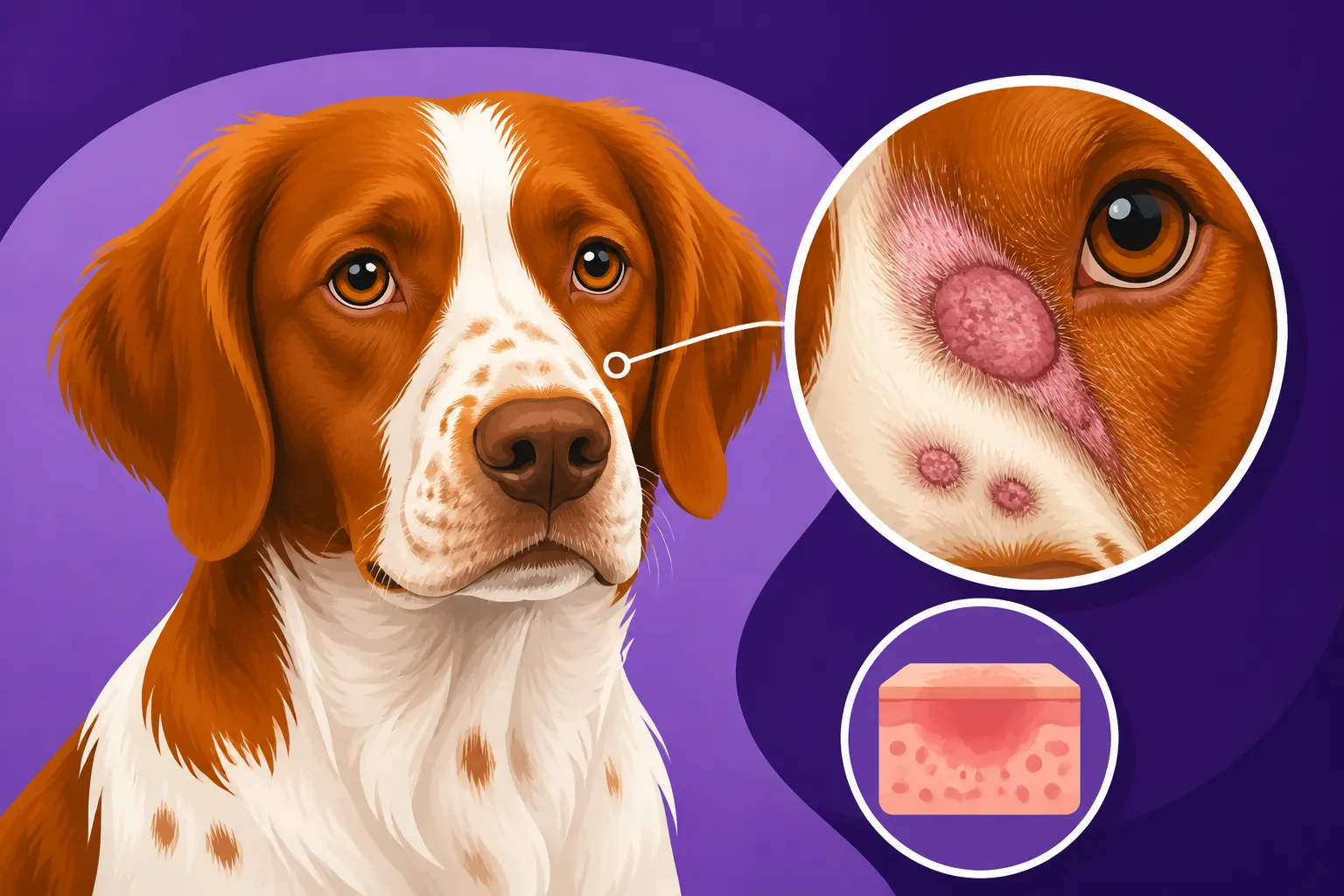
The first thing many Brittany owners might notice, often almost subconsciously, is a subtle shift in the black pigment of their dog's nose. A healthy Brittany's nose is usually a solid, deep black. With DLE, you might start to see patchy, irregular areas where the black pigment begins to fade, sometimes turning to a grayish, pinkish, or even brownish hue. This isn't usually a uniform lightening, like what you might see with a "snow nose" which can be a normal, seasonal depigmentation in some dogs. Instead, it's often more uneven, appearing around the edges of the nose pad or in specific spots.
It's so easy to dismiss this. You might think, "Oh, it's winter, maybe his nose is just lightening up," or "He probably just rubbed it." But if this fading seems persistent, doesn't match up with seasonal changes, or is accompanied by other textures, it's worth paying closer attention. This depigmentation is a hallmark sign and often the earliest indicator that something more is at play than just a typical change in your dog's appearance. Our article Why a Brittany's Nose Loses Its Black delves deeper into the nuances of nasal pigment changes.
Mild Scaling and Crusting on the Nose Bridge
Another early sign that's frequently underestimated is the appearance of mild scaling or crusting, often on the bridge of the nose or around the nostril openings. Imagine your own chapped lips or dry skin in winter – it can look a lot like that. The skin might feel a bit rough, flaky, or have small, dry scabs. You might apply a dog-safe balm or moisturizer, and for a day or two, it might seem to improve, offering a false sense of relief.
However, with DLE, this scaling and crusting tends to be more tenacious. It doesn't fully resolve with simple moisturizing and often returns or even worsens. It’s distinct from a simple cut because the entire texture of the skin in the affected area starts to change. This persistent flakiness and crust, especially when coupled with any pigment loss, should definitely raise a red flag. It’s the immune system signaling that it's attacking those superficial skin layers, causing them to slough off abnormally.
Progressive Signs and Advanced Symptoms
If those initial, subtle signs go unnoticed or are misdiagnosed, DLE can unfortunately progress to more overt and painful symptoms. This is often when owners become truly alarmed and seek immediate veterinary attention, but knowing what to look for can help you intervene much sooner.
Ulceration, Open Sores, and Bleeding
As DLE advances, the mild scaling and crusting can give way to more severe skin breakdown. This manifests as ulcerations – essentially, open sores – that can appear on the surface of the nose. These sores might be raw, red, and often ooze clear or yellowish fluid. It's a painful development, and because the nose is constantly used and bumped, these areas are highly prone to bleeding, even from minor contact. Imagine your dog sniffing around, pushing its nose into something, and then it starts to bleed. This can be quite distressing for both you and your Brittany.
This stage is hard to ignore, and it’s a clear indicator that the condition requires professional medical intervention. The appearance of such lesions tells us that the immune attack on the skin is now quite aggressive, causing significant tissue damage. Our guide on Why a Brittany's Nose Cracks and Bleeds offers further insights into this particular painful symptom.
Loss of the Cobblestone Texture and Scarring
One of the most characteristic and disheartening signs of advanced DLE on the nose is the complete loss of the normal, rugose, "cobblestone" texture of the nasal planum (the hairless part of the nose). A healthy dog's nose has a unique, slightly bumpy, patterned surface that's critical for its sensory function and overall health. As DLE damages the skin cells, this intricate texture begins to erode.
Eventually, the affected areas of the nose become smooth, shiny, and often scarred. This change isn't reversible, even with treatment, and it serves as a strong, permanent indicator of past DLE activity. While DLE doesn't typically impair a dog's incredible sense of smell, the destruction of this surface can cause chronic discomfort and increased vulnerability to further injury or sun damage. It's a visual marker that helps veterinarians confirm the diagnosis and assess the severity of the long-term impact.
Beyond the Nose: Other Areas DLE Can Affect
While the nose is certainly the most common and often the first area to show signs of DLE in Brittanys, it's crucial to understand that this autoimmune condition isn't always confined to just that one spot. Being vigilant and checking other sensitive areas of your dog's body can lead to a quicker and more comprehensive diagnosis.
Skin Lesions on the Face, Ears, and Paws
Discoid Lupus Erythematosus targets mucocutaneous junctions—where skin meets mucous membranes—and sun-exposed areas. This means that beyond the nose, you might find similar lesions on the lips, especially where they meet the gums, around the eyelids, or on the ear flaps. For Brittanys, whose ears are already prone to various issues like infections due to their drop ear structure, DLE on the ear margins can be particularly tricky to identify. You might notice depigmentation, redness, scaling, or crusting on the edges of their ear leathers, which can be easily confused with a minor scrape or even a fungal infection.
Similarly, lesions can sometimes appear on the paw pads or even the scrotum. These areas, like the nose, are often subjected to environmental stressors and can be sun-exposed, making them targets for DLE. Keeping an eye out for any persistent redness, scaling, or pigment changes in these less obvious but still vulnerable spots is a critical part of a thorough check. Our article Why a Brittany's Ears Get Infected Every Season offers great context on common ear problems, which can help differentiate symptoms.
Systemic Symptoms and Flare-ups
It’s important to reiterate that DLE is primarily a cutaneous (skin-related) condition, meaning it generally doesn't cause widespread internal illness like Systemic Lupus Erythematosus (SLE). Your Brittany with DLE typically won't experience joint pain, fever, or organ damage directly from the DLE itself. However, a severely affected nose can certainly cause secondary problems.
When DLE causes significant ulceration and pain, your Brittany might become reluctant to eat due to discomfort, leading to a temporary loss of appetite or lethargy. They might also paw at their face more, which can introduce secondary bacterial infections, complicating the picture. Furthermore, sun exposure is a well-known trigger for DLE flare-ups. If your Brittany spends a lot of time outdoors, especially without protection, you might notice the symptoms worsening during sunny periods. This can sometimes make owners think their dog has a "bad day," when in reality, the sun is directly exacerbating the autoimmune response. Understanding How Sun Worsens a Brittany's Lupus can help you manage these environmental triggers.
When to Seek Veterinary Care and Diagnosis
Noticing these signs in your Brittany can be a really worrying time. It’s natural to feel anxious when your beloved companion shows symptoms of something potentially serious. The good news is that DLE is treatable, and early intervention can make a significant difference in managing the condition and your dog’s comfort.
The Importance of Early Veterinary Consultation
The moment you start seeing persistent changes in your Brittany's nose—any unexplained depigmentation, scaling, crusting, or especially open sores—it's time to call your veterinarian. Don't wait for it to become severe. While it might be tempting to try home remedies for what seems like dry skin, DLE won't resolve with just a balm. Your vet needs to rule out other possibilities, such as fungal infections, bacterial infections, trauma, or even other, less common autoimmune skin conditions.
A thorough physical exam will be the first step, where your vet will meticulously inspect the affected areas. They’ll ask about when you first noticed the changes, if they've gotten better or worse, and your Brittany's overall health and lifestyle, including sun exposure. Providing a detailed history can be incredibly helpful for them to narrow down the potential culprits. Remember, your vet is your partner in this, and providing them with all the pieces of the puzzle will lead to the best outcome.
Navigating Diagnosis and Treatment
To definitively diagnose DLE, your veterinarian will likely recommend a skin biopsy. This is the gold standard for diagnosis and involves taking a small tissue sample from the affected area, usually under local anesthesia or light sedation, and sending it to a specialized lab for examination by a veterinary pathologist. This might sound intimidating, but it's a quick procedure that provides crucial answers. Without a biopsy, it's impossible to confirm DLE versus other conditions that might look similar. Our comprehensive guide on How Discoid Lupus Is Diagnosed in a Brittany walks you through this process in more detail.
Once diagnosed, treatment for DLE primarily focuses on managing the autoimmune response and alleviating symptoms. This often involves topical medications like steroid creams, sometimes in combination with oral medications such as corticosteroids or other immunosuppressants. Sun protection is also paramount, and your vet might recommend dog-safe sunscreens or limiting sun exposure during peak hours. Long-term management of chronic conditions can certainly add up, and having pet insurance can provide a great deal of peace of mind. Many Brittany owners find that companies like Healthy Paws can help cover the costs of diagnostics, medications, and ongoing veterinary care for conditions like DLE, allowing you to focus on your dog's health without financial stress. For more information on managing the condition, consider reading Which Medication a Brittany With Lupus Takes.
| Symptom Feature | Normal/Minor Issue (e.g., Dry Nose, Snow Nose) | Discoid Lupus Erythematosus (DLE) |
|---|---|---|
| Pigmentation | Uniform lightening (snow nose), even fading | Patchy, irregular depigmentation, often at edges |
| Texture | Smooth, may be slightly dry or chapped | Scaling, crusting, eventual loss of cobblestone texture |
| Appearance | Dry, chapped, or uniformly lighter | Redness, inflammation, ulcerations, raw sores |
| Healing Response | Improves quickly with moisturizers, time | Persistent, worsens, doesn't respond to balms |
| Pain/Discomfort | Mild irritation, if any | Often painful, sensitive to touch, prone to bleeding |
| Location | Entire nasal planum | Typically starts on the nose, can spread to lips, ears, eyelids |
| Triggers | Cold weather, genetics (snow nose) | Sun exposure, autoimmune response |
Disclaimer
This article is intended for informational purposes only and is not a substitute for professional veterinary advice, diagnosis, or treatment. Always seek the advice of your qualified veterinarian with any questions you may have regarding a medical condition or treatment for your Brittany Spaniel.