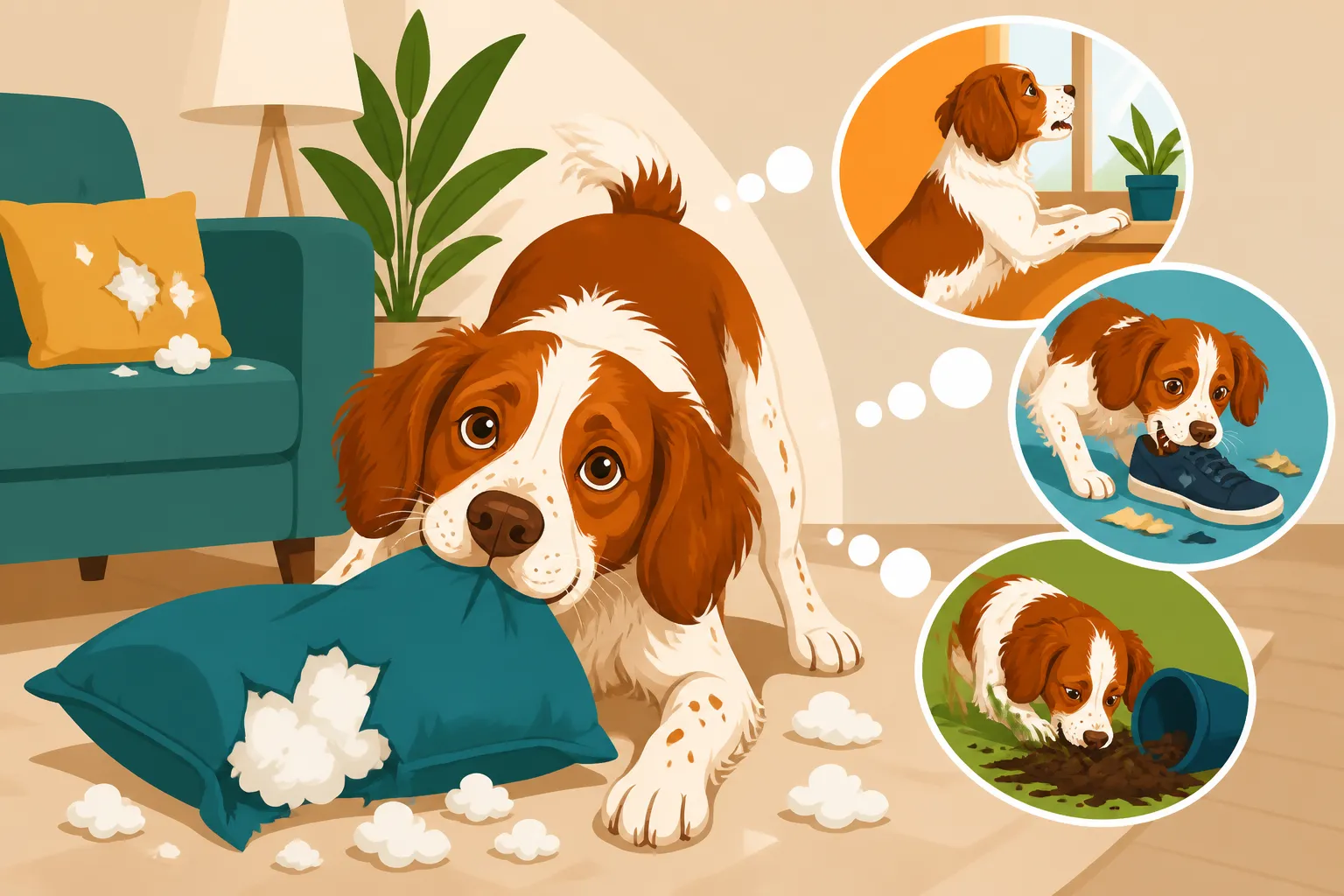
What an Under Exercised Brittany Does at Home
Oh, the dreaded "Brittany whirlwind"! Many of us have been there, walking into a home that looks like a small tornado ripped through it, only to find our sweet, innocent-looking Brittany sitting amidst the chaos with wide, questioning eyes. When your high-energy hunting companion isn't getting enough outlets for their boundless enthusiasm, they don't just quietly nap; they invent their own (often destructive) entertainment. This guide is here to shed light on exactly what an under-exercised Brittany does at home and, more importantly, how to redirect that incredible energy into positive, healthy behaviors.
The Unmistakable Signs of an Under-Exercised Brittany
If you've ever owned a Brittany, you know they aren't exactly couch potatoes. They're bred for endurance, intelligence, and an intense desire to work. When these fundamental needs aren't met, their energy doesn't just dissipate; it redirects itself into behaviors that can be frustrating, bewildering, and, at times, downright destructive. These aren't acts of malice, but rather desperate calls for attention and activity.
When a Brittany hasn't had the chance to run, sniff, and explore, they become restless. You might notice them pacing, sighing dramatically, or constantly bringing you toys, even if you've just played. This underlying tension can escalate into more problematic displays. Understanding these signs is the first step in addressing the core issue: a fundamental lack of appropriate exercise and mental stimulation.
Destructive Chewing and Property Damage
One of the most common and exasperating signs of an under-exercised Brittany is destructive chewing. It's not just a puppy phase that they'll grow out of; for an adult Brittany, it's often a direct symptom of boredom and pent-up energy. They might target furniture legs, your favorite shoes, baseboards, or even drywall.
Imagine being stuck in a small room all day with nothing to do. You'd likely start fidgeting, looking for anything to engage your mind and body. For a Brittany, chewing is a natural stress reliever and a way to explore their environment. When they don't get the physical exertion or mental puzzles they crave from hunting or long walks, they'll create their own "work," which often involves deconstructing your home. It's their way of saying, "I have too much energy and not enough to do!"
Excessive Barking, Whining, and Attention-Seeking
Another classic sign of an under-exercised Brittany is an increase in vocalizations. This isn't just a friendly "hello" bark; it's often persistent, nagging barking directed at you, the television, squirrels outside the window, or seemingly nothing at all. They might also whine incessantly, paw at you, or nudge your hand while you're trying to work or relax.
This behavior stems from a desperate need for engagement. Your Brittany is trying everything in their power to get your attention, because in their mind, any attention is better than no attention. They've got all this energy and intelligence, and they're ready to put it to use, even if that means becoming the canine equivalent of a toddler constantly asking "Are we there yet?" or poking you to play.
Hyperactivity and Inability to Settle
Perhaps the most obvious tell-tale sign is a Brittany who simply cannot settle down. Even after a short walk, they might still be bouncing off the walls, racing from room to room, or constantly inviting you to play. You might wish they would just lie down and relax, but their internal engine is still running at full throttle.
This hyperactivity can manifest as a persistent need to follow you from room to room, nudging your hand for pets, or bringing you every toy they own within minutes of your arrival home. It's not that they don't love you; it's that their body and mind are craving a release that hasn't been adequately provided. They might exhibit "zoomies," sudden bursts of frantic running in circles or laps around the house, simply because the energy has nowhere else to go. You can learn more about how to get your dog to calm down in How Long It Takes a Brittany to Settle After a Run.
Why Brittanys Need So Much Exercise
Understanding why Brittanys behave this way when under-exercised is crucial for empathy and effective intervention. It's not willful disobedience; it's instinct and genetics at play. These aren't dogs bred for quiet contemplation; they're canine athletes designed for demanding tasks.
Their physical and mental makeup makes them inherently different from many other breeds. To expect a Brittany to be content with minimal activity is to fundamentally misunderstand their nature. When their needs align with an owner's lifestyle, they are among the most joyful and devoted companions. When they don't, both dog and owner can experience significant frustration.
A Legacy of Hunting and High Energy
Brittanys, whether American Brittanys or their French counterparts, the Epagneul Bretons, were originally bred to be tireless bird dogs. They are pointers, meant to cover vast amounts of ground in search of game, hold a steady point, and often retrieve. This requires immense stamina, agility, and a sharp, focused mind. They aren't just built for short sprints; they're endurance athletes.
Think about a marathon runner who suddenly stops training. All that physical conditioning, all that muscle memory, it doesn't just disappear. Their body still craves that exertion. A Brittany has generations of this hard-wired drive in their DNA. Two short walks around the block simply won't cut it for a dog whose ancestors spent hours daily ranging fields and thickets. Their bodies are literally humming with the desire to run and explore.
Mental Stimulation is Just as Crucial
It's easy to focus solely on physical exercise, but for a breed as intelligent and biddable as the Brittany, mental stimulation is equally important. These dogs are problem-solvers; they use their keen senses to locate birds, navigate terrain, and work in partnership with their handler. If their minds aren't engaged, they get bored, and boredom is the devil's workshop for a Brittany.
A long walk where they can sniff and explore is far more mentally stimulating than a repetitive jog on a leash. Puzzle toys, scent games, and even consistent training sessions can burn significant mental energy. Without these outlets, their brilliant minds will find other, less desirable "puzzles" to solve, like how to open the pantry door or unravel a roll of toilet paper. What a Brittany's Temperament Is Really Like delves deeper into their inherent drive.
The Importance of Breed-Appropriate Outlets
For a Brittany, "exercise" isn't just about moving their legs; it's about fulfilling their purpose. This means opportunities to run freely, to use their nose, to "hunt" for things, and to engage in activities that mimic their ancestral role. A secure, fenced yard where they can dash about is great, but it's not a substitute for a long walk in new environments or actual bird work.
Consider activities like flirt poles, fetch games that involve searching, or even structured playdates with other high-energy dogs. For those interested in formal training, events like agility, flyball, or scent work can provide excellent physical and mental workouts. These breed-appropriate outlets satisfy their inherent drives in a way that simply kicking a ball around the backyard twice a day cannot.
Chewing: More Than Just a Bad Habit
When your Brittany chews through the leg of your antique coffee table, it feels personal. You might wonder if they're mad at you, or just plain naughty. But for an under-exercised Brittany, chewing is a natural response to unmet needs. It's a way to cope with stress, boredom, and excess energy. Understanding this can help you shift from frustration to a proactive approach.
The intensity of a Brittany's chewing can surprise new owners. Their strong jaws are designed to retrieve game, and when redirected, they can cause significant damage. This behavior isn't about being "bad"; it's about seeking an outlet for a powerful, inherent drive.
The Drive Behind Chewing When Bored
Boredom is a powerful motivator for a Brittany. When their highly active minds and bodies are under-stimulated, they seek engagement. Chewing releases endorphins, making it a self-soothing activity. It's also a way to explore textures and scents, and for some dogs, it's a way to try to "solve" a problem, like how to get stuffing out of a cushion. What a Bored Brittany Destroys goes into more detail about the specific targets of their destructive tendencies.
Imagine a child who is left in a room with no toys or books. They might start picking at the wallpaper or trying to dismantle furniture. It's a similar principle for dogs. Their environment becomes their playground, and if appropriate toys and activities aren't available, or if they lack the energy expenditure to rest, your belongings become fair game.
Redirecting Chewing to Appropriate Outlets
The key to managing destructive chewing is redirection and providing acceptable alternatives. Always have a variety of sturdy chew toys available. Rotate them to keep things interesting. Think about different textures: hard rubber toys, braided ropes, or even natural chews. When you see your Brittany going for something inappropriate, firmly redirect them to an approved toy.
Interactive puzzle toys, especially those that dispense treats, are fantastic for Brittanys. They engage their minds and reward appropriate chewing. Brands like KONG offer a range of durable options that can be stuffed with peanut butter or treats, keeping your Brittany occupied for a good stretch of time. These types of toys are readily available on platforms like Amazon, making it easy to stock up. The more appealing the approved chew, the less likely they are to go for your shoes.
Protecting Your Home from Brittany Teeth
While you're working on redirection and increasing exercise, it's vital to "Brittany-proof" your home as much as possible. This means putting away anything valuable or dangerous that your dog might chew. Elevate shoes, secure electrical cords, and use bitter apple spray or similar deterrents on furniture legs or other tempting targets.
Crating or confining your Brittany to a dog-proofed area when you can't supervise them is also a very effective strategy. A good-sized crate with comfortable bedding and appropriate chew toys can be a safe haven for your dog and a safeguard for your belongings. This isn't a punishment; it's a management tool that ensures their safety and prevents them from developing ingrained destructive habits.
The Symphony of Noise: Barking and Whining
A well-exercised Brittany is generally not an excessively noisy dog, save for perhaps a happy whine when you come home or a bark at the mail carrier. However, an under-exercised Brittany can develop a habit of incessant barking and whining, turning your peaceful home into a cacophony. This isn't because they enjoy the sound; it's a frantic attempt to communicate their needs.
These vocalizations can range from a soft, mournful whine to a loud, piercing bark that reverberates through the neighborhood. It's exhausting for owners and can lead to tension with neighbors. Addressing the root cause, rather than just punishing the noise, is key to restoring peace.
Why an Under-Exercised Brittany Becomes Vocal
When a Brittany has a surplus of energy and a deficit of engagement, they often resort to vocalizations to express their frustration. Barking can be a demand for attention, an expression of boredom, or even a release of pent-up energy. Whining often signals a strong desire for something – whether it's a walk, a play session, or simply your presence.
They're essentially saying, "Hey! I'm still here! I'm bored! Do something with me!" It's their primary way of getting your attention when their physical cues, like nudging or pacing, aren't working. For a breed that thrives on interaction and purpose, being ignored or under-stimulated can be incredibly stressful, and noise is their coping mechanism.
Differentiating Boredom Barks from Other Calls
It's important to differentiate boredom barking from other types of vocalizations. A "demand bark" often happens when you're busy, like while you're on the phone or watching TV. An "alert bark" might be in response to someone at the door or a squirrel outside. Boredom barking, however, is often repetitive, seemingly without a clear external trigger, and persists even after you've acknowledged your dog briefly.
Observation is key. Does the barking stop if you take them for a quick run or engage them in a puzzle game? Does the whining escalate when you ignore their attempts to solicit play? Understanding the context will help you confirm if lack of exercise is the primary driver. Often, these barks come with other signs like pacing or destructive chewing, forming a complete picture of an unfulfilled dog.
Strategies to Quiet a Noisy Brittany
The most effective strategy to quiet an under-exercised Brittany is to increase their appropriate exercise and mental stimulation. A tired dog is a quiet dog. Beyond that, avoid inadvertently rewarding the barking. If your Brittany barks for attention and you give in by petting them or talking to them, you're reinforcing the behavior. Instead, wait for a moment of quiet, then reward that stillness.
Training "quiet" commands can also be very helpful. Use a consistent phrase like "Quiet!" or "Enough!" followed by a reward when they stop barking. For persistent vocalizations, especially when alone, a professional trainer or online resources like BAXTER & Bella can provide structured guidance and techniques for managing excessive barking and separation anxiety in Brittanys, which can also contribute to noise. Whether a Brittany Is Noisy in a Dog Box discusses related challenges.
Unleashed Energy: Hyperactivity and Zoomies Indoors
One of the most endearing, yet sometimes frustrating, aspects of a Brittany is their boundless energy. When that energy isn't properly channeled outdoors, it inevitably spills over indoors, leading to hyperactivity, a general inability to settle, and bursts of frenetic activity often called "zoomies" or FRAPs (Frenetic Random Activity Periods).
While occasional zoomies can be cute, constant indoor hyperactivity indicates a deeper issue of unfulfilled needs. It's not a sign of joy as much as it is a frantic attempt to burn off excess steam. This constant motion can be disruptive, make training difficult, and even be dangerous in a crowded home.
The Inability to "Switch Off"
Brittanys are designed to be "on" for extended periods in the field. They possess incredible focus and stamina. The challenge, especially for an under-exercised Brittany, is learning how to "switch off" when they're back inside. They haven't had the opportunity to fully deplete their energy reserves, so their minds and bodies remain revved up.
This can look like constantly moving, pawing at you, bringing toys non-stop, or just wandering aimlessly through the house. They literally don't know how to relax. Their internal motor is running, but they haven't learned the off-ramp. It's a key reason why consistent, adequate exercise is so vital – it teaches their body and mind to transition from "work mode" to "rest mode."
Channeling Frenetic Energy Constructively
Rather than trying to suppress this energy, look for ways to channel it constructively. Short bursts of intense play can help. Think about a game of fetch in a long hallway, or using a flirt pole in the backyard for five to ten minutes. These activities can quickly burn off some of that frantic energy in a controlled environment.
Mental games are also excellent. Hide-and-seek with treats, scent work, or practicing new tricks can engage their brains without requiring huge amounts of physical space. Consistency is also key; a predictable routine of exercise followed by a calming activity (like a chew toy in a crate) can help your Brittany learn to settle.
The Role of Structure and Routine
A lack of routine can exacerbate hyperactivity. Dogs thrive on predictability. Knowing when they'll eat, when they'll go out, and when they'll have active play helps them manage their energy and expectations. A consistent schedule, where substantial exercise is a priority, will naturally lead to a calmer dog indoors.
Consider incorporating specific "settle" or "place" training into your routine. This involves teaching your Brittany to go to a designated spot (like a mat or bed) and lie down calmly for increasing periods. Rewarding this calm behavior helps them understand what is expected indoors. Just like a professional athlete needs a cooldown, your Brittany needs structure to transition from their intense drives to a relaxed state at home. How Much Exercise a Brittany Needs Off Season provides great insights into maintaining fitness.
Digging and Escaping: When the Outdoors Calls Too Strongly
The innate drive to explore, hunt, and dig is incredibly strong in Brittanys. When they're not getting enough mental and physical stimulation, this drive doesn't disappear; it gets redirected, often towards trying to create their own outdoor adventure. This can lead to destructive digging in your yard or, even more concerning, attempts to escape your property.
These behaviors are particularly frustrating because they can damage your landscaping and, more importantly, put your Brittany in harm's way. A Brittany on the loose is a true liability, as their prey drive can lead them into traffic or dangerous situations.
The Instinct to Dig for Entertainment
Brittanys possess a natural instinct to dig. In the field, they might dig after rodents or simply enjoy the tactile sensation. When bored in a yard, digging becomes a highly rewarding activity. They might dig elaborate holes, try to tunnel under fences, or simply excavate your prize-winning rose bushes. Whether a Brittany Digs elaborates on this natural tendency.
This isn't about being spiteful; it's about pure, unadulterated entertainment. Digging provides physical exertion, mental engagement (what might they find?), and a sensory experience. If they're left alone for long periods without other outlets, your garden beds become their personal excavation site.
The Drive to Explore Beyond the Fence
The Brittany's hunting heritage instilled in them a powerful wanderlust. They are bred to range, to follow scents, and to investigate. A fence, to an under-exercised Brittany, might simply be a challenge to overcome. If they haven't had enough "real" exploration, their drive to find new scents and cover new ground will compel them to look for ways out. Whether a Brittany Escapes a Fence highlights this common problem.
This desire to explore is amplified by boredom and excess energy. A dog who has spent hours covering ground in a safe environment is far less likely to feel the need to escape and explore the dangers of the neighborhood streets. Their curiosity, combined with their physical prowess, makes them escape artists if given the motivation.
Preventing Escapes and Providing Secure Environments
Securing your yard is paramount for a Brittany. A standard four-foot fence might not be enough if they are motivated. Consider a fence that is at least six feet high, and ensure it's secure at the bottom to prevent digging out. Anti-digging solutions, like burying chicken wire along the fence line, can be effective. How High a Fence a Brittany Needs provides essential considerations for fence height.
Beyond physical barriers, providing an acceptable digging spot (like a sandbox or a designated dirt patch) can redirect the behavior. Bury toys or treats in this area to make it more appealing. Most importantly, increase their daily exercise and mental stimulation outside of the yard. A tired Brittany is much less likely to embark on an escape mission. Always ensure they have proper identification like tags and microchips in case an escape does occur.
Addressing the Root Cause: Providing Adequate Exercise
It's clear that the solution to an under-exercised Brittany's destructive behaviors lies in providing ample, appropriate exercise. This isn't just about physical activity; it's about engaging their minds, bodies, and instincts. Ignoring this fundamental need will only lead to continued frustration for both you and your dog.
Remember, a Brittany is not a breed that thrives on minimal effort. They are intelligent, high-drive working dogs who need a job, or at least activities that simulate a job. Investing in their exercise is investing in their well-being and the peace of your home.
Daily Physical Activity Requirements
For most adult Brittanys, at least one to two hours of vigorous exercise per day is a good starting point, and for working dogs or those in their prime, even more might be needed. This isn't just a leisurely walk; it should include opportunities for running, fetching, or vigorous play. Think about activities that get their heart rate up and truly tire them out.
Off-leash running in a safe, fenced area, long hikes, swimming, or even biking with your dog (once fully mature and properly conditioned) are excellent options. The goal is to send them home happily exhausted, not still buzzing with energy. Remember, if they still want to play vigorously right after a walk, they likely didn't get enough. You can find more practical advice on this topic in How Much Exercise a Brittany Needs Off Season.
| Exercise Type | Duration/Frequency | Benefits for Brittany |
|---|---|---|
| Off-Leash Runs | 60-90 minutes daily | Best for cardiovascular health, burning pent-up energy, allowing natural scenting and exploration. |
| Structured Walks | 30-60 minutes daily | Mental stimulation through sniffing, leash manners practice, bonding. Good for warming up or cooling down. |
| Fetch/Flirt Pole | 15-30 minutes daily | High-intensity bursts of activity, great for small spaces, satisfies prey drive. |
| Swimming | 30-60 minutes weekly | Low-impact, excellent full-body workout, great for hot weather or joint health. Many Brittanys love water. |
| Hikes/Trail Runs | 1-3 hours weekly | Extended exploration, varied terrain, intense mental and physical challenge. |
| Dog Sports | 1-2 sessions weekly | Agility, Scent Work, Flyball: combines physical and mental challenges, builds confidence, strengthens bond. |
Integrating Mental Challenges
Physical exercise alone might not be enough for a smart Brittany. Their minds need a workout too! Incorporate daily mental challenges to keep them engaged and prevent boredom. This could be as simple as practicing obedience commands for 10-15 minutes, teaching new tricks, or playing "find it" games with treats around the house or yard.
Puzzle toys are fantastic for this. Companies like KONG, as mentioned earlier, offer a variety of interactive feeders and toys that require your dog to problem-solve to get their treats. You can find many options on Amazon that cater to different difficulty levels. Enrolling in a training class, whether it's basic obedience, advanced manners, or a dog sport like scent work, also provides invaluable mental stimulation and strengthens your bond. Check out resources from BAXTER & Bella for online training options that fit your schedule.
Creative Ways to Exercise a Brittany
Sometimes, life gets in the way of those long, ideal exercise sessions. On days when you're pressed for time or the weather is bad, get creative! A game of "upstairs/downstairs fetch" can use a long hallway or staircase for quick sprints. Hide kibble pieces around the house and let your Brittany sniff them out.
If you have access to a treadmill and your dog is comfortable with it, controlled sessions can be an option (always supervise!). Consider doggy daycare for social interaction and supervised play. Even a short car ride to a new park for a brisk walk can offer a fresh set of smells and sights that are far more stimulating than the same old route. Just remember, What a Brittany Needs Within an Hour of a Hunt applies to daily exercise too—they need a good warm-up and cool-down.
Long-Term Impact of Under-Exercise on a Brittany's Well-being
The consequences of consistently under-exercising a Brittany extend far beyond chewed furniture or loud barking. Over time, it can profoundly impact their physical health, behavioral development, and even the cherished bond you share. This is why addressing the issue proactively is so vital for the longevity and happiness of your companion.
It's a misconception that these behaviors will simply resolve themselves. Without intervention, an under-exercised Brittany can develop ingrained habits that are much harder to break, leading to a diminished quality of life for the dog and increased stress for the owner.
Physical Health Ramifications
When a Brittany doesn't receive adequate physical exercise, their health can suffer in several ways. The most obvious is weight gain. A sedentary lifestyle coupled with a typical diet can quickly lead to obesity, which puts undue strain on their joints, heart, and other organs. Brittanys are generally a healthy breed, but lack of exercise can exacerbate conditions like How Common Hip Dysplasia Is in Brittany Spaniels or lead to new health problems.
Beyond weight, lack of muscle tone can make them more prone to injuries when they do get a burst of activity. Their cardiovascular health will decline, making them less able to handle the exertion they were bred for. Just like humans, dogs need regular movement to maintain a strong body and immune system. A dog that is physically unconditioned is a dog at risk.
Behavioral and Temperament Changes
The chronic frustration of an under-exercised Brittany can lead to significant shifts in their temperament and behavior. A naturally biddable and friendly dog can become anxious, reactive, or even aggressive. They might develop resource guarding, become leash reactive, or show signs of separation anxiety, all stemming from underlying stress and lack of fulfillment. Whether a Brittany Gets Separation Anxiety is a common issue with under-exercised dogs.
Their intelligence, usually a blessing, can become a curse if not properly channeled, leading to cunning destructive behaviors. They might become easily agitated, less tolerant of children or other pets, and generally less pleasant to be around. This isn't their true nature; it's a manifestation of a dog crying out for purpose and activity. Why a Brittany Is Called Soft means they are very sensitive to their environment, and lack of fulfillment can easily manifest as behavioral issues.
The Bond Between Owner and Dog
Perhaps the most heartbreaking impact of an under-exercised Brittany is the strain it places on the owner-dog bond. When your dog is constantly destructive, noisy, or hyperactive, it's natural to feel frustrated, resentful, and even guilty. This can lead to less interaction, which only perpetuates the cycle of under-stimulation.
A Brittany thrives on partnership and shared activities. When you are regularly engaging them in their natural drives, you build a profound connection based on mutual understanding and respect. A tired, well-stimulated Brittany is a joy to live with – cuddly, calm, and attentive. Providing them with the exercise they need isn't just about their health; it's about nurturing that incredible bond and enjoying the companion they were truly meant to be.
Disclaimer
This article is for general informational purposes only and does not constitute professional advice. Laws, prices and regulations vary by location and change over time. Consult a qualified professional for guidance on your specific situation.