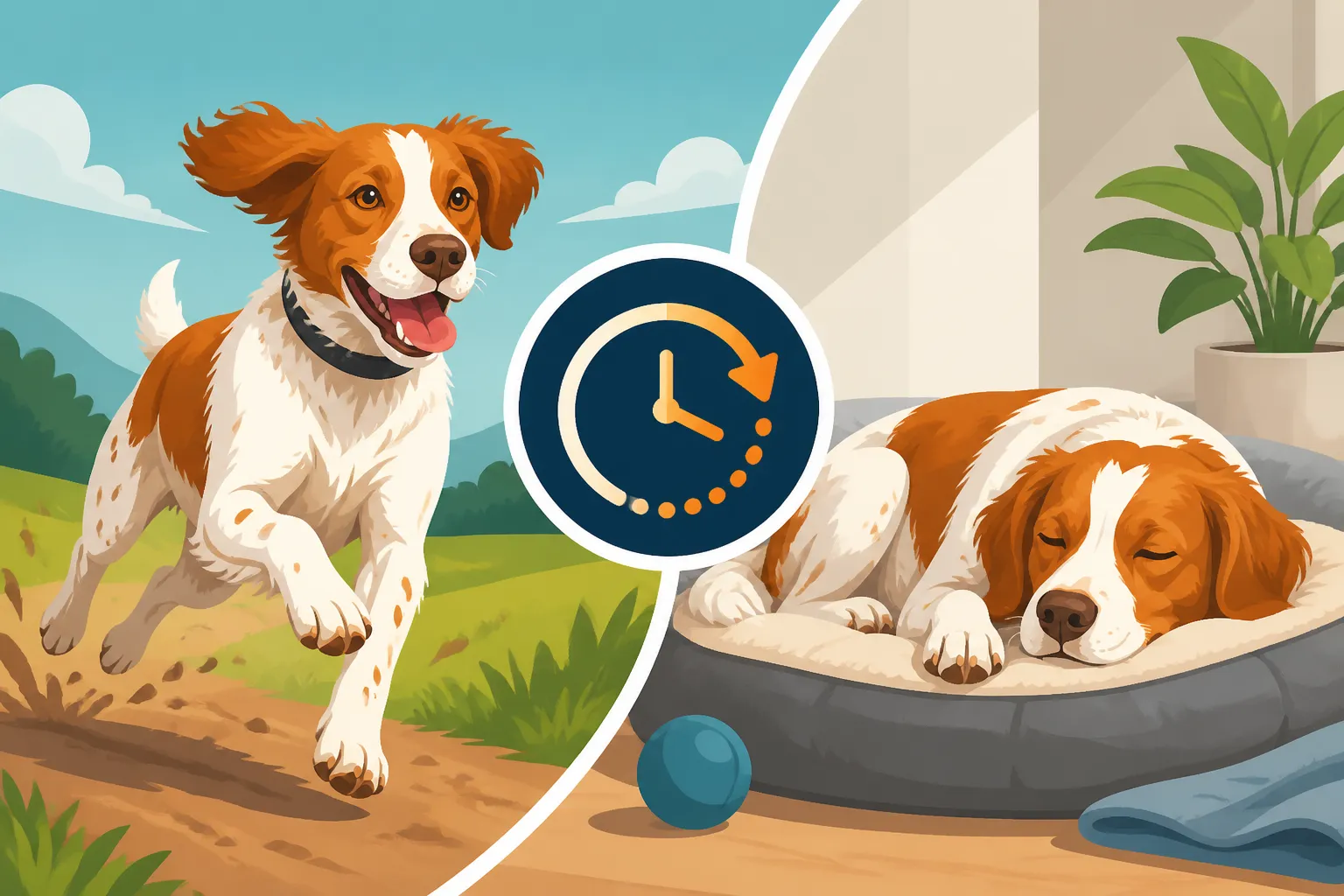
How Long It Takes a Brittany to Settle After a Run
You just got back from a fantastic run with your Brittany, utterly exhausted, picturing a cozy evening by the fire… only for your dog to immediately start zooming around the house with renewed vigor, perhaps snatching a toy or circling the coffee table. Sound familiar? It's a common frustration for Brittany owners who wonder exactly how long it takes these energetic companions to actually settle down after a vigorous outing. This guide is here to shed some light on the reality of a Brittany's post-exercise cooldown and offer practical tips to help your furry friend transition from field demon to couch potato.
Understanding the Brittany's Innate Drive for Activity
Brittanys are not just active dogs; they are purpose-bred athletes with an incredible amount of drive and stamina. Their history as versatile hunting dogs, capable of covering vast distances in search of game, means that "settling down" isn't always their immediate instinct once the formal exercise stops. It's a trait that makes them exceptional in the field but can be a challenge in the living room.
The Hunter's Stamina and Mental Engagement
Our Brittanys were developed in France to be tireless bird dogs, often working in dense cover for hours on end. This isn't just about physical endurance; it's also about intense mental engagement. When they're out in the field, they're constantly processing scents, wind, terrain, and the nuances of bird behavior. Their brains are firing on all cylinders, which is just as tiring as the physical exertion. So, when you bring them home, they might have physically run their legs off, but their minds might still be buzzing from the excitement and stimulation. It's like a child coming home from an amusement park – physically tired but still wired.
Many owners forget that for a Brittany, a good run isn't just about moving legs; it's about fulfilling their deep-seated instinct. They thrive on the chase, the scent, the point, and the retrieve. When they are truly engaged in these activities, it satisfies them on a much deeper level than just a leash walk around the block. That's why two hours of focused bird work might actually lead to a faster "settle" than two hours of unfocused running in a dog park, even if the physical output is similar.
The Role of Breed Temperament in Settling
Beyond their working drive, the Brittany temperament plays a huge role. They are known to be intelligent, sensitive, and often quite "busy" dogs. They love to be involved in whatever their people are doing. This biddability makes them wonderful partners, but it also means they don't necessarily just "switch off" when you do. They're tuned into your energy, your movements, and the general household vibe.
A Brittany's eagerness to please often manifests as a desire to keep moving or find the next "job," even if that job is just bringing you a squeaky toy to throw. This isn't naughtiness; it's just who they are. They are rarely content to just lie down and do nothing for extended periods, especially when they're younger and in their prime. Understanding What a Brittany's Temperament Is Really Like can help set realistic expectations for their post-exercise behavior.
What Influences a Brittany's Wind-Down Time?
The simple answer to "how long does it take?" is, of course, "it depends!" Many factors contribute to how quickly, or slowly, your Brittany transitions from full-throttle to relaxed. Recognizing these influences can help you fine-tune your approach to managing their energy levels.
Age and Maturity
Just like human toddlers, Brittany puppies often have endless energy reserves and might seem to bounce back from a vigorous play session almost immediately. A young Brittany puppy, say under a year old, might appear to settle for a few minutes only to leap back into action. Their brains are still developing, and they haven't yet learned the art of true relaxation. As a Brittany matures, generally past two or three years old, they often become better at self-regulating their energy and settling more quickly after exercise. An adult Brittany, especially one well into its senior years, will naturally take longer to wind up and will likely be ready for a nap much sooner after a run. Caring for an Old Brittany involves understanding these changes in their energy and recovery.
For example, a six-month-old Brittany might be ready for another round of fetch after only 15 minutes of rest, while a five-year-old might be content to snooze on the rug for an hour after the same activity. There’s a sweet spot, often between ages three and seven, where Brittanys are still incredibly energetic but have also learned to appreciate downtime.
Type and Intensity of Exercise
Not all exercise is created equal when it comes to settling a Brittany. A long, slow walk on a leash, while good for general health, might not be enough to truly "drain" a Brittany's mental and physical energy. They might still come home with a spring in their step, looking for more. Conversely, a highly stimulating activity like a dedicated bird hunt, a challenging hike with varied terrain, or even an intense session of retrieving and scent work can be far more effective at encouraging a quick settle.
Consider the difference:
- Physical-only exercise (e.g., jogging on pavement): Good for muscles, but might leave their minds buzzing. Settling time could be longer as mental energy remains high.
- Mental and physical exercise (e.g., off-leash exploring, bird training, agility): Engages both body and brain, leading to more comprehensive fatigue. Often results in a quicker and deeper settle. This is where tools from places like Amazon, like puzzle toys or snuffle mats, can bridge the gap between physical exertion and mental calm.
| Type of Activity | Physical Exertion | Mental Stimulation | Typical Settling Time | Notes |
|---|---|---|---|---|
| Leashed Walk (Neighborhood) | Low to Moderate | Low | Long to Very Long | Often not enough to truly satisfy a Brittany. Expect continued "busyness." |
| Off-Leash Trail Run (Park) | Moderate to High | Moderate | Moderate | Good physical outlet, some mental stimulation from smells and sights. |
| Field Training (Birds, Scent) | High | High | Short to Moderate | Highly fulfilling, often leads to deep relaxation due to mental and physical drain. |
| Agility/Obedience Class | Moderate | High | Moderate | Builds focus and tires the brain effectively. |
| Dog Park Play Session | Variable | Variable | Moderate to Long | Can be overstimulating and lead to continued excitability if not managed. |
Environmental Factors and Routine
The environment your Brittany comes home to also influences their ability to settle. A chaotic household with children running around, loud music, or constant interruptions will naturally make it harder for a dog to unwind. Conversely, a quiet, calm home with a predictable routine can greatly assist in their transition. Think of it from their perspective: if every time they come inside, there's another exciting thing happening, why would they ever want to lie down?
Routine is a powerful tool. If your Brittany knows that after their morning run, they get breakfast and then it's quiet time in their crate or on their bed, they are more likely to adopt that rhythm. Consistency helps them anticipate and understand what's expected. This is where a structured approach to training, like that offered by BAXTER & Bella, can instill good habits from puppyhood, making these transitions smoother.
Practical Strategies for Encouraging Calm After Activity
It's not enough to just exercise your Brittany; you also need to guide them into a calm state. This isn't always intuitive, especially with a dog whose natural inclination is to keep going. But with a bit of planning and consistency, you can help your high-energy companion become a master of relaxation.
The Power of a Post-Exercise Wind-Down Routine
Just as a cool-down is essential for human athletes, it's vital for your Brittany. Don't just pull them off the trail and straight into the house expecting immediate calm. Incorporate a gradual transition. This might look like a leisurely stroll on the leash for the last 10-15 minutes of your outing, rather than a full-speed sprint right up to the door. This allows their heart rate to come down, their breathing to regulate, and their minds to start processing that the intense work is over.
Once inside, avoid immediately engaging them in more play or excitement. Give them a chance to drink water, check for burrs or ticks (especially important after a good field run, see What to Check on a Brittany After Every Outing), and then direct them to a designated "calm spot," like their crate or a comfy dog bed. Some owners find that a quick massage or gentle grooming session can also help signal "downtime." The goal is to create a predictable sequence that signals relaxation.
Mental Stimulation as a Settling Aid
Sometimes, physical exhaustion isn't enough; their brains are still overactive. This is where mental stimulation, after physical exercise, can be incredibly effective. Instead of another game of fetch, offer a challenging puzzle toy filled with a favorite treat. A long-lasting chew, like a stuffed Kong (easily found on Amazon), can engage them in a focused, low-energy activity. This provides an outlet for their remaining mental energy in a way that encourages quiet concentration rather than physical exertion.
Another great strategy is a short, calm training session focusing on basic obedience cues like "down," "stay," or "place." These exercises require focus and self-control, which can be surprisingly tiring for a Brittany. Just 5-10 minutes of this can help redirect their buzzing energy into a more constructive, calming activity. Remember, How Long a Brittany's Training Session Should Be indicates that short, positive sessions are most effective.
Creating a Calm Environment and Consistency
Your Brittany picks up on your energy. If you come in stressed and frantic, they're likely to mirror that. Try to cultivate a calm demeanor when you come back from an outing. Lower your voice, move deliberately, and model the behavior you want to see. Designate a specific "den" or quiet space for your Brittany—a crate, a dog bed in a less trafficked room—where they can retreat and decompress without interruption.
Consistency is truly key. If sometimes they come in and are allowed to zoom around, and other times they're expected to settle immediately, they won't learn the pattern. Stick to your post-exercise routine as much as possible. Over time, your Brittany will learn to anticipate these calm transitions and will likely settle down much faster on their own. This structured approach is fundamental to success and is often emphasized in comprehensive training programs.
When an Unsettled Brittany Might Signal More Than Just Energy
While a certain level of post-exercise "zing" is typical for a Brittany, persistent inability to settle, or unusually high energy levels that seem unmanageable, can sometimes indicate underlying issues. It's important to differentiate between a normal, high-energy Brittany and one that might be struggling with something deeper.
Insufficient Exercise or Mental Stimulation
The most common reason a Brittany struggles to settle is simply that they haven't had enough appropriate exercise or mental stimulation. A quick trip to the backyard or a short leash walk isn't going to cut it for these dogs on a daily basis. They need significant physical activity combined with opportunities to use their intelligent, scent-driven brains. If your Brittany is constantly pacing, destructive, or barking excessively even after what you think was a good run, it's worth evaluating if their daily regimen truly meets their breed needs.
Think about it: if you spent all day cooped up and then only got a twenty-minute brisk walk, you might still feel restless at home. Your Brittany is the same, but with far more innate drive. What an Under Exercised Brittany Does at Home outlines many common behavioral problems stemming from this. Increasing the duration, intensity, or mental challenge of their exercise could be the simplest solution. Perhaps a longer off-leash hike in varied terrain or incorporating some scent work would make a difference.
Behavioral Issues or Anxiety
Sometimes, an inability to settle isn't just pent-up energy, but a manifestation of anxiety or a deeper behavioral concern. A Brittany that is pacing, panting, trembling, or engaging in repetitive behaviors like excessive licking, even when physically tired, might be experiencing anxiety. Separation anxiety, for example, can lead to a dog being hyper-vigilant and unable to relax even when you are present, if they anticipate your departure.
If you suspect anxiety, it's crucial to consult with a professional dog trainer or veterinary behaviorist. They can help identify triggers and develop a tailored management plan. This might involve counter-conditioning, desensitization, or even medication in severe cases. Tools like calming chews or thunder shirts (again, readily available on Amazon) can offer some support, but they are generally not a cure for underlying anxiety. Building a strong foundation with positive reinforcement, as taught in programs like BAXTER & Bella, can also help foster a more confident and relaxed dog.
Underlying Health Concerns
Rarely, but importantly, an inability to settle could be a subtle sign of an underlying health issue. Pain or discomfort from conditions like arthritis, hip dysplasia (see Signs a Brittany's Hips Hurt), or even a less obvious internal ailment can make a dog restless and unable to find a comfortable position to truly relax. Similarly, hormonal imbalances, such as an overactive thyroid, could contribute to hyperactivity.
If your Brittany's energy levels or settling habits change suddenly, or if their restlessness is accompanied by other symptoms like changes in appetite, thirst, lameness, or unusual panting, a vet visit is absolutely in order. It's always best to rule out any medical causes for behavioral changes, as early detection and treatment can make a significant difference in their quality of life. Even seemingly minor discomfort can prevent a dog from truly relaxing.
Disclaimer
This article is for general informational purposes only and does not constitute professional advice. Laws, prices and regulations vary by location and change over time. Consult a qualified professional for guidance on your specific situation.