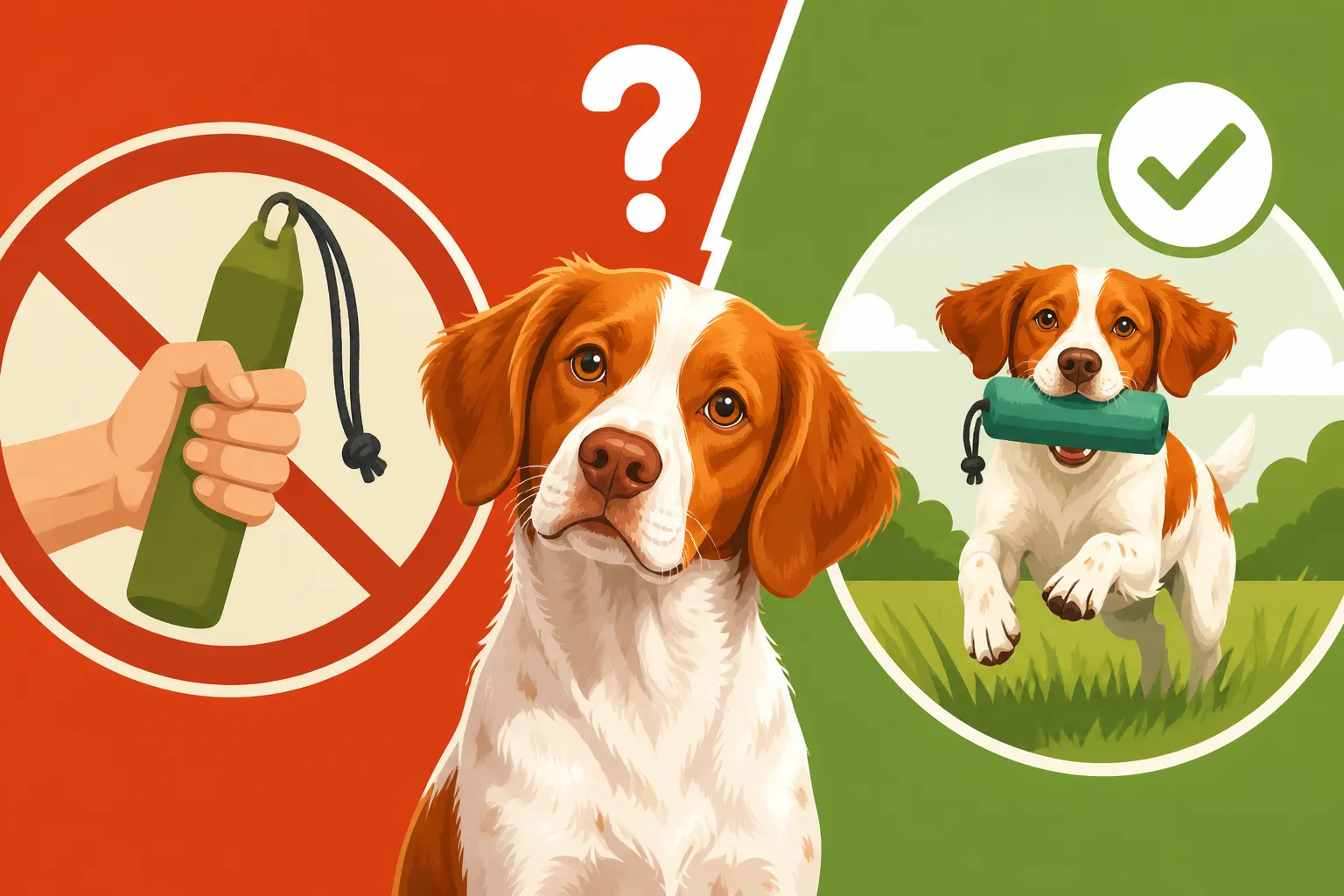
Whether a Brittany Needs Force Fetch
For many Brittany owners, the phrase "force fetch" can conjure up images of harsh methods and unhappy dogs. There's a lot of apprehension around it, especially when you have a sensitive and eager-to-please Brittany. This comprehensive guide aims to demystify force fetch, explaining what it truly is, why it's considered by serious bird dog owners, and how modern, humane methods can make it a positive experience for your beloved hunting companion.
The Force Fetch Conundrum: What It Is and Why It's Debated
The idea of "force fetch" often sparks intense debate among gun dog enthusiasts. It sounds intimidating, even cruel, to those unfamiliar with its modern application. But at its core, it's a conditioning program designed to teach a dog to reliably retrieve and hold objects on command, a skill that is invaluable in the field.
Defining Force Fetch Beyond the Misconception
Let's clear the air: modern force fetch is not about hurting your dog. The historical roots of the term might evoke images of painful ear pinches or harsh corrections, which, sadly, were sometimes the reality in earlier training eras. However, today's understanding of canine behavior and learning has transformed this process. Instead, force fetch is a systematic, step-by-step conditioning program that uses consistent, low-level pressure and immediate release to teach a dog what to do when asked to retrieve. It teaches them that relief from mild, controlled pressure comes from performing the desired action – picking up, holding, and delivering the bird or dummy. It's about building a chain of behaviors and ensuring the dog understands that "fetch" means an immediate, confident pick-up, and "hold" means to keep it until given the release command.
This isn't about breaking their spirit; it's about building an unbreakable understanding of a crucial command. We're talking about compliance, clear communication, and creating a dog that chooses to perform the retrieve because it's consistently rewarded and understood. Think of it less as forcing and more as guided education, where the consequences of non-compliance (mild pressure) are clearly linked to the desired action, leading to a profound understanding for the dog.
The End Goal: An Unbreakable Retrieve
So, why go through this detailed process? The ultimate goal of a force fetch program is to achieve an utterly reliable, dependable retrieve under any circumstances. Imagine being deep in thick cover, your Brittany points, you flush a pheasant, and it falls in a thorny briar patch. A naturally retrieving dog might get it, or it might decide the thorns are too much trouble, or drop the bird halfway back. With a force fetched dog, you have the confidence that when you give the command, your Brittany will go in, pick up that bird, hold it gently, and bring it directly to your hand.
This reliability extends beyond just difficult retrieves. It's about consistency, especially for those involved in hunt tests or field trials, where a dropped bird or a reluctant retrieve can cost you points or even a pass. The aim is to instill in your Brittany the understanding that "fetch" is not an optional command, but one that is performed every single time, without hesitation, and with a soft mouth. This level of dedication translates to less lost game, more successful hunts, and a stronger partnership between you and your dog, built on mutual understanding and clear expectations.
Brittanys and the Art of the Natural Retrieve
Brittanys are often celebrated for their keen intelligence and inherent bird drive. Many of them possess a strong natural inclination to retrieve, which makes them such a joy to hunt with. However, even with the best natural abilities, there can be nuances that make a case for formal retrieve training.
When Instinct Kicks In: The Brittany's Drive to Carry
It's true, a great many Brittanys seem to have been born knowing exactly what to do with a downed bird. You might toss a dummy in the yard, and your puppy joyfully brings it back. This innate desire to pick up and carry objects is a wonderful trait, and it's one of the reasons they excel as gun dogs. For some, the natural retrieve is so strong that it almost feels unnecessary to do anything more formal. They pick up, they bring back, they might even deliver to hand without much fuss. If you're wondering Whether a Brittany Retrieves Naturally, the answer is often yes, they have a strong predisposition!
This natural tendency is a fantastic starting point. It means you're not trying to create a retrieve out of thin air; you're often refining and strengthening an existing behavior. For casual hunters who don't run hunt tests or pursue a high volume of birds, a strong natural retrieve might be perfectly adequate. They enjoy the chase, the find, and the retrieve, even if it's not always picture-perfect. This natural enthusiasm is something we cherish in Brittanys – their joyful engagement in the hunt is infectious.
The Soft Mouth Advantage and Its Limits
Brittanys are renowned for having a "soft mouth," meaning they tend to pick up and carry game gently, without mangling or damaging it. This is a highly desirable trait, especially when you've worked hard for a bird and want to bring it home in good condition. A soft mouth ensures that the game is fit for the table, a point of pride for any hunter.
However, even a soft-mouthed Brittany can have limitations if the retrieve isn't thoroughly conditioned. A natural retriever might still:
- Drop the bird short: They might get excited or distracted and drop the bird a few feet from you, requiring you to walk to it.
- Play keep-away: Especially with young dogs, the retrieve can turn into a game of chase.
- Chew or mouth excessively: While generally soft, an excited or anxious dog might still "fuss" with the bird more than desired.
- Refuse difficult retrieves: That thorny briar patch we talked about? A natural retriever might decide it's not worth the effort or discomfort.
So, while the soft mouth is a huge advantage, it doesn't guarantee a reliable, consistent delivery to hand under all conditions. It's the "delivery to hand" part, and the refusal to drop, that often requires a bit more intentional training.
Recognizing Gaps in a "Good Enough" Retrieve
Many owners might think their Brittany's retrieve is "good enough." And for some, it might be. But if you find yourself frequently walking to retrieve a bird your dog dropped, or if your Brittany hesitates on certain types of terrain, or worse, if they don't even try to retrieve a bird that's fallen in heavy cover, then there's a gap. These gaps become even more apparent when you're dealing with wounded game. A bird that's still alive and moving needs to be picked up quickly and confidently, not played with or dropped repeatedly.
Consider these scenarios:
- You're hunting with friends, and your dog drops the bird, requiring you to break the flow of the hunt to pick it up.
- A bird falls into a shallow pond, and your Brittany gets it but drops it on the bank, shaking off water, before you can reach it.
- You're in a competitive hunt test, and your dog's hesitation or dropping the dummy costs you crucial points.
These are the moments when a conditioned, "unbreakable" retrieve truly shines. It transforms a good retrieve into a flawless one, enhancing not just your success rate but also the overall efficiency and enjoyment of your time in the field.
Common Concerns and Misunderstandings About Force Fetch
It's perfectly natural for Brittany owners to approach the topic of force fetch with caution. Brittanys are intelligent, eager, and often quite sensitive, and nobody wants to jeopardize that wonderful temperament by using outdated or harsh training methods. These concerns are valid and deserve to be addressed directly.
The Fear of "Breaking" a Sensitive Brittany
One of the biggest anxieties surrounding force fetch is the worry that it might "break" your dog's spirit, especially with a breed as inherently sensitive as the Brittany. We cherish their enthusiasm, their happy-go-lucky nature, and their desire to please. The thought of any training method that could dim that spark is understandably distressing. Indeed, The Brittany Is the Softest of the Pointing Breeds, and their responsive nature means they can be easily discouraged by overly harsh or inconsistent corrections. If you've ever raised your voice or given too strong a leash correction, you might have seen your Brittany visibly deflate or even sulk. This breed truly thrives on positive reinforcement and clear, fair communication.
Because of this sensitivity, historical force fetch methods that relied on significant physical corrections or pain could indeed be detrimental. A Brittany that is shouted at or corrected too severely can become withdrawn, refuse to work, or even develop an aversion to retrieving altogether. It’s crucial to understand that modern force fetch, when done correctly, leverages a different approach. It focuses on gentle, consistent pressure and immediate release, allowing the dog to choose the right action to alleviate the pressure, rather than punishing them for making a mistake. The goal is to build confidence through clarity, not to instill fear. It's less about a struggle of wills and more about teaching a new language, one where "pick up" or "hold" is met with understanding, not apprehension.
The Commitment to Consistent, Patient Training
Another significant concern is the time and consistency required for a proper force fetch program. This isn't a weekend workshop; it's a multi-week, sometimes multi-month, endeavor that demands dedication from the owner. You can't rush it, and you can't skip steps without risking confusion or setbacks for your dog. A trainer might tell you that How Long a Brittany's Training Session Should Be for any given exercise, and for force fetch, these sessions are typically short, perhaps 10-15 minutes, but they need to happen daily, sometimes multiple times a day, particularly in the initial stages.
The process requires immense patience. There will be days when your Brittany seems to "get it" and days when they act like they've never seen a dummy before. Consistency is the key to overcoming these plateaus. If you're not prepared to commit to this level of regular, focused training, then force fetch might not be the right path for you. Inconsistency can be more damaging than not doing it at all, as it can confuse the dog and undermine their trust in you as their trainer. Moreover, if your Brittany experiences a negative interaction due to inconsistent handling or an impatient approach, How Long a Brittany Remembers a Bad Session can be quite significant, making it harder to rebuild that trust and desire to work. This type of training is a partnership, and your commitment is just as vital as your dog's effort.
The Indisputable Value of a Force Fetched Retrieve
While the concerns about force fetch are understandable, the benefits of a well-executed program are truly transformative for a hunting Brittany and its owner. It elevates a dog's natural abilities to a level of consistent, reliable performance that greatly enhances the hunting experience.
Enhancing Performance in the Upland Field
Imagine hunting pheasants in heavy cover, where birds can fall in thickets, tall grasses, or even into ditches. A strong natural retriever might struggle, dropping the bird or even failing to find it if it's deeply hidden. A force fetched Brittany, however, has been conditioned to overcome obstacles and retrieve on command, not just when it feels like it. This means less lost game, which is not only ethical but also incredibly satisfying for the hunter. When a bird falls, you have the peace of mind knowing your dog will persist until it's in their mouth, and then bring it straight back to you.
This unwavering reliability is also crucial for locating wounded game. A bird that is merely injured and tries to escape needs a dog that is determined and understands the absolute necessity of the retrieve. The discipline instilled through force fetch helps your Brittany focus on the task, even when distractions are high or the retrieve is challenging. Whether it's navigating dense cover or searching for a scent trail in difficult conditions, the force fetched dog performs its duty with purpose and precision.
Preserving Game and Preventing Waste
A cornerstone of ethical hunting is ensuring that any harvested game is retrieved promptly and in good condition. A force fetched retrieve ensures exactly this. Because the dog is conditioned to hold the bird gently but firmly until commanded to release it, the risk of damage from rough handling, excessive mouthing, or dropping the bird in undesirable locations is significantly reduced. This means the game you bring home is fit for the table, honoring the animal and your efforts.
Furthermore, a reliable retrieve minimizes waste. Every lost bird is a missed opportunity and, more importantly, a life taken needlessly. By ensuring your Brittany brings back every downed bird, you're upholding your responsibilities as a conservation-minded hunter. This is particularly important with breeds like the Brittany, known for their excellent scenting ability and desire to work. A force fetched dog complements these natural talents with the added layer of disciplined retrieval, making them an even more effective and valuable hunting partner. It also helps avoid situations where Whether a Brittany Bumps Birds or mouths them excessively out of excitement or lack of clear direction.
Building a Deeper Bond Through Clear Communication
While "force" is in the name, a properly executed force fetch program actually strengthens the bond between handler and dog. This might sound counterintuitive, but it's about clear communication and mutual understanding. When your Brittany understands exactly what you want from them for a retrieve, and that performing the action consistently leads to positive outcomes (release of pressure, praise, rewards), their confidence grows. They learn to trust your commands, knowing that you're guiding them to the correct action.
This clarity reduces frustration for both dog and handler. Instead of yelling at a dog that drops a bird or plays keep-away, you have a dog that understands the command and executes it without question. This builds respect and trust, fostering a more harmonious working relationship in the field. When a dog knows what's expected and feels successful, they become a more confident and joyful partner. The shared experience of mastering a challenging skill like force fetch can significantly deepen the connection you have with your Brittany, transforming them into an even more capable and responsive hunting companion.
Modern, Humane Approaches to Force Fetch Training
The good news is that force fetch, in its contemporary application, has evolved considerably. Gone are the days of purely punitive methods. Today, the focus is on clear communication, positive reinforcement, and building a solid foundation of obedience, making the process much more humane and effective for sensitive dogs like Brittanys.
Foundation First: Obedience and Positive Reinforcement
Before you even think about starting a force fetch program, your Brittany needs a strong foundation in basic obedience. Commands like "sit," "stay," and a reliable "come" are absolutely essential. This isn't just about good manners; it's about establishing communication and control. Your Brittany needs to understand that when you give a command, they are expected to comply. Many owners find immense value in online resources and programs, such as those offered by BAXTER & Bella, to establish that crucial foundational obedience and communication with their Brittany before tackling specific field skills. These platforms often emphasize positive reinforcement methods that build confidence and a strong working relationship.
Positive reinforcement plays a huge role even within a pressure-based program like force fetch. Every correct action, every step forward, should be met with praise, petting, and sometimes a tasty treat. This helps to balance the pressure and ensures your Brittany associates the desired behavior with positive feelings. A dog that is eager to please and has a strong understanding of basic commands will navigate the force fetch process with much greater ease and less stress. This initial groundwork makes the later stages of training a smooth progression rather than a battle of wills.
Pressure and Release: Guiding, Not Forcing
Modern force fetch is often described as a "pressure and release" system. It starts with very mild, consistent pressure – perhaps a gentle ear pinch or a toe hitch – combined with the command "fetch." The moment your Brittany responds by opening their mouth, even slightly, the pressure is immediately released. This teaches them that their action of picking up the object stops the uncomfortable (but not painful) pressure. It's about teaching them cause and effect: "When I hear 'fetch' and feel this gentle pressure, if I pick up the dummy, the pressure goes away, and I get praise!"
This process is highly controlled and methodical. Many trainers use a training table during the initial stages to ensure the dog is focused and not distracted. E-collars, when used correctly, can also be a valuable tool in this system, but they are not for punishment. Instead, low-level stimulation (often just a vibration or a very mild tap) acts as an extension of the pressure, a form of communication. It signals to the dog that they need to comply with a known command, and the stimulation is instantly removed the moment they do. You can find quality e-collars and other training equipment through online retailers like Amazon. The key is to introduce the e-collar gently and consistently, always associating the lowest effective stimulation with a known command, so your dog understands it as a signal, not a shock. What an E Collar Costs a Brittany Owner is a consideration, but the investment often pays dividends in clear communication.
A Step-by-Step Breakdown of the Process
A typical force fetch program follows a clear, progressive series of steps, ensuring your Brittany understands each component before moving to the next.
- Table Work (Conditioning to Pressure): This usually begins with introducing a gentle ear pinch (or toe pinch) and the command "fetch." The moment the dog opens its mouth, the pressure is released. This is repeated until the dog automatically opens its mouth to avoid the pinch.
- Introduction of the Dummy: Once the dog understands the pressure-release concept, a retrieve dummy is presented. The command "fetch" is given, and the gentle pressure is applied. When the dog takes the dummy, the pressure is released. This teaches the dog that "fetch" means to take the object.
- Hold: Next comes teaching the "hold" command. With the dummy in the dog's mouth, the trainer gives the "hold" command, applying gentle upward pressure on the muzzle if the dog tries to drop it. The pressure is released when the dog holds steady. This step is critical for ensuring the dog doesn't drop the bird prematurely.
- Retrieve on the Ground: Once "fetch" and "hold" are solid on the table, the training moves to the ground. The dummy is placed in front of the dog, and the "fetch" command is given, along with the appropriate pressure if needed.
- Walking Retrieve: The handler walks backwards, encouraging the dog to follow and deliver the dummy to hand.
- Distance and Distraction: Gradually, distance is increased, and distractions are added to solidify the retrieve under various conditions.
Each step is reinforced with praise and patience. It's a methodical process designed to build clear understanding and confidence, not fear.
Making the Decision: Is Force Fetch Right for Your Hunting Partner?
Deciding whether to force fetch your Brittany is a significant choice, and it's not one to be made lightly. It truly depends on your individual dog, your hunting aspirations, and your willingness to commit to the training process.
Evaluating Your Brittany's Temperament and Drive
The first step is to take an honest look at your Brittany's individual personality. While Brittanys are generally described as "soft," there's still a spectrum of temperaments within the breed. Some are incredibly bold and confident, while others are more reserved and sensitive. A dog that is overly timid or easily stressed might require a more gradual and gentle approach, or you might find that the pressure-based system is simply not the right fit for them. Conversely, a highly driven, enthusiastic Brittany with a natural desire to please might take to the training with gusto, once they understand the parameters.
Consider What a Brittany's Temperament Is Really Like overall. Are they resilient, or do they tend to shut down easily? Are they eager to work, or do they have a more independent streak? A dog that is engaged and happy in other forms of training is a better candidate than one that struggles with basic obedience. Force fetch isn't remedial for a dog with behavioral issues; it's an advanced layer of conditioning for a well-adjusted, confident dog. It requires a dog that is mentally prepared to learn and accept guidance, even when mild pressure is involved.
Aligning Training with Your Hunting Ambitions
Your personal hunting goals play a huge role in this decision. Ask yourself: What do I want from my Brittany in the field?
- Casual Upland Hunter: If you're a casual hunter who only goes out a few times a season, primarily on planted birds or in open fields where retrieves are straightforward, a strong natural retrieve might be perfectly sufficient. You might be willing to occasionally walk over to pick up a dropped bird or accept an imperfect delivery. For you, the extensive time commitment of force fetch might not be worth the investment given your hunting style.
- Serious Upland Hunter / Competitor: If you hunt frequently, in challenging terrain, for wild birds, or if you aspire to run hunt tests (AKC Junior, Senior, or Master Hunter titles) or field trials, then a force fetched retrieve becomes almost essential. In these scenarios, reliability is paramount. You can't afford lost birds, dropped retrieves, or a dog that hesitates. Competition judges demand flawless execution, and wild birds demand unwavering determination. For these goals, force fetch ensures your Brittany is a truly finished gun dog, capable of handling any retrieval challenge thrown its way. You might also be keen on titles like those mentioned in What a Brittany Needs to Earn a Junior Hunter Title or What a Brittany Needs to Earn a Master Hunter Title, which often imply a very reliable retrieve.
When to Enlist Professional Help
If you're unsure about tackling force fetch yourself, or if you've started and hit a wall, don't hesitate to seek professional help. A good gun dog trainer specializes in these types of programs and can guide you through the process, ensuring it's done humanely and effectively. They can assess your Brittany's temperament, help you establish the necessary foundational obedience, and implement the force fetch steps with precision and consistency. Learning from a professional can prevent costly mistakes that could damage your dog's confidence or enthusiasm.
It's wise to research trainers thoroughly. Look for someone who uses modern, humane methods and has experience with sensitive breeds like Brittanys. Ask about their philosophy on force fetch and observe their training sessions if possible. The cost is a factor; What a Professional Gun Dog Trainer Charges for a Brittany can vary significantly, but it's an investment in your dog's future performance and your peace of mind. For some owners, the time commitment is the biggest hurdle, and in those cases, Whether Sending a Brittany Away to Train Is Worth It can be a great option, allowing a professional to lay the groundwork for you. Even if you send your dog away, a good trainer will teach you how to maintain the training when your Brittany comes home.
Ultimately, the decision to force fetch your Brittany is a personal one. Weigh your goals, your dog's personality, and your willingness to commit. When done correctly, it can transform an already talented Brittany into an even more exceptional hunting partner, enhancing your shared experiences in the field for years to come.
| Aspect | Natural Retrieve (Strong) | Force Fetched Retrieve (Conditioned) |
|---|---|---|
| Reliability | Good, but can be inconsistent under pressure/distraction. | Unwavering, dependable under virtually all conditions. |
| Delivery to Hand | Often good, but may drop short, play keep-away. | Consistent, direct to hand, no dropping. |
| Handling Difficult Birds | May hesitate on wounded birds or challenging terrain. | Persistent, will overcome obstacles, understands the command is absolute. |
| Mouth Control | Typically soft, but can get excited and mouth excessively. | Controlled, gentle hold until released, prevents damage. |
| Training Time | Minimal, relies on instinct. | Significant, consistent daily sessions over weeks/months. |
| Requirement for Competition | Usually insufficient for advanced hunt tests/trials. | Often essential for competitive success and titles. |
| Impact on Dog | Builds confidence through natural success. | Builds confidence through clear understanding and compliance. |
| Risk of "Breaking" | Very low, as no pressure involved. | Low, if done correctly with humane, modern methods and patience. |
Disclaimer
This article is for general informational purposes only and does not constitute professional advice. Laws, prices and regulations vary by location and change over time. Consult a qualified professional for guidance on your specific situation.