What a First Aid Kit for a Brittany Should Hold
Our active, adventurous Brittanys are magnificent companions, whether they're quartering a field, exploring a hiking trail, or just romping in the backyard. But with all that zest for life comes the inevitable bump, scrape, or minor injury. Being prepared with a well-stocked first aid kit can make all the difference, allowing you to address immediate concerns and prevent a small issue from becoming a serious problem. This guide will walk you through exactly what your Brittany's first aid kit should hold, for both quick field fixes and more comprehensive home care.
Why Your Brittany Needs a Specialized First Aid Kit
You might think a standard human first aid kit would do the trick, but a Brittany's needs are distinct. Their active lifestyle means they're prone to certain types of injuries that require specific tools and treatments. Think about it: a small cut on a human hand is one thing, but a torn paw pad on a dog that uses its feet for everything is quite another. Their fur can hide wounds, their ears are prone to issues, and their instinct to explore means they're constantly encountering potential hazards like burrs, foxtails, and ticks.
A dedicated first aid kit is not just about having supplies; it's about having the right supplies readily available. When your Brittany steps on something sharp in the field, or snags its ear on a branch, or encounters a bee, you don't want to be scrambling. Immediate attention can often prevent infection, reduce pain, and sometimes even save a trip to the emergency vet. Moreover, a dog in pain might not be cooperative, so having the right tools to handle them safely and effectively is crucial. It’s about being proactive and responsible for your adventurous partner.
Understanding Common Brittany-Specific Ailments
Brittanys, as sporting dogs, are particularly susceptible to certain injuries and irritations, which directly informs what goes into their first aid kit. Their natural curiosity and boundless energy often lead them into situations where these issues arise.
First and foremost are paw pad injuries. Whether it's sharp stubble, jagged rocks, or icy terrain, their paw pads take a beating. Cuts, punctures, abrasions, or even cracked pads are common. Secondly, their beautiful, pendulous ears, while excellent for scent work, are also perfect traps for moisture, debris, and parasites, leading to Why a Brittany's Ears Get Infected Every Season if not properly cared for. Foreign objects like foxtails and burrs are a constant menace, not just in their coat but also in ears, eyes, and between toes, sometimes leading to serious complications. And, of course, ticks are an ever-present threat in many hunting grounds and even local parks, making tick removal a regular necessity. These specific vulnerabilities mean your kit needs to be tailored to address them swiftly.
Field Kit vs. Home Kit: What's the Difference?
It’s wise to maintain two distinct first aid kits for your Brittany: a compact, portable field kit for on-the-go emergencies and a more comprehensive home kit for everyday issues and more involved treatments.
Your field kit should be small, light, and robust enough to toss in your hunting vest, backpack, or truck. It contains the absolute essentials for immediate, temporary relief and stabilization until you can get back to civilization. Think of it as a "stop-the-bleeding, remove-the-threat, get-us-home-safe" kit. You'll want to prioritize items that can manage acute injuries quickly.
The home kit, on the other hand, can be much larger and more exhaustive. It's meant for more thorough treatment of minor injuries that don't require a vet visit, or for continued care after an initial field intervention. This kit can hold bulkier items, more specialized medications (prescribed by your vet), and a wider array of diagnostic tools. It serves as your primary care station, ready for anything from a minor allergic reaction to cleaning a persistent wound. Many owners find it helpful to organize their home kit in a tackle box or clear plastic bin for easy access and visibility.
Essential Supplies for Your Brittany's Field First Aid Kit
When you're out in the field, whether for a hunt or a long hike, every ounce counts. Your field kit needs to be compact yet capable of handling the most common emergencies your Brittany might encounter. This isn't about performing surgery, but about providing immediate relief and preventing further harm.
Wound Care and Bandaging Basics
For active Brittanys, minor cuts, scrapes, and pad injuries are almost inevitable. Having the right wound care supplies can prevent infection and provide comfort until you can get home or to a vet.
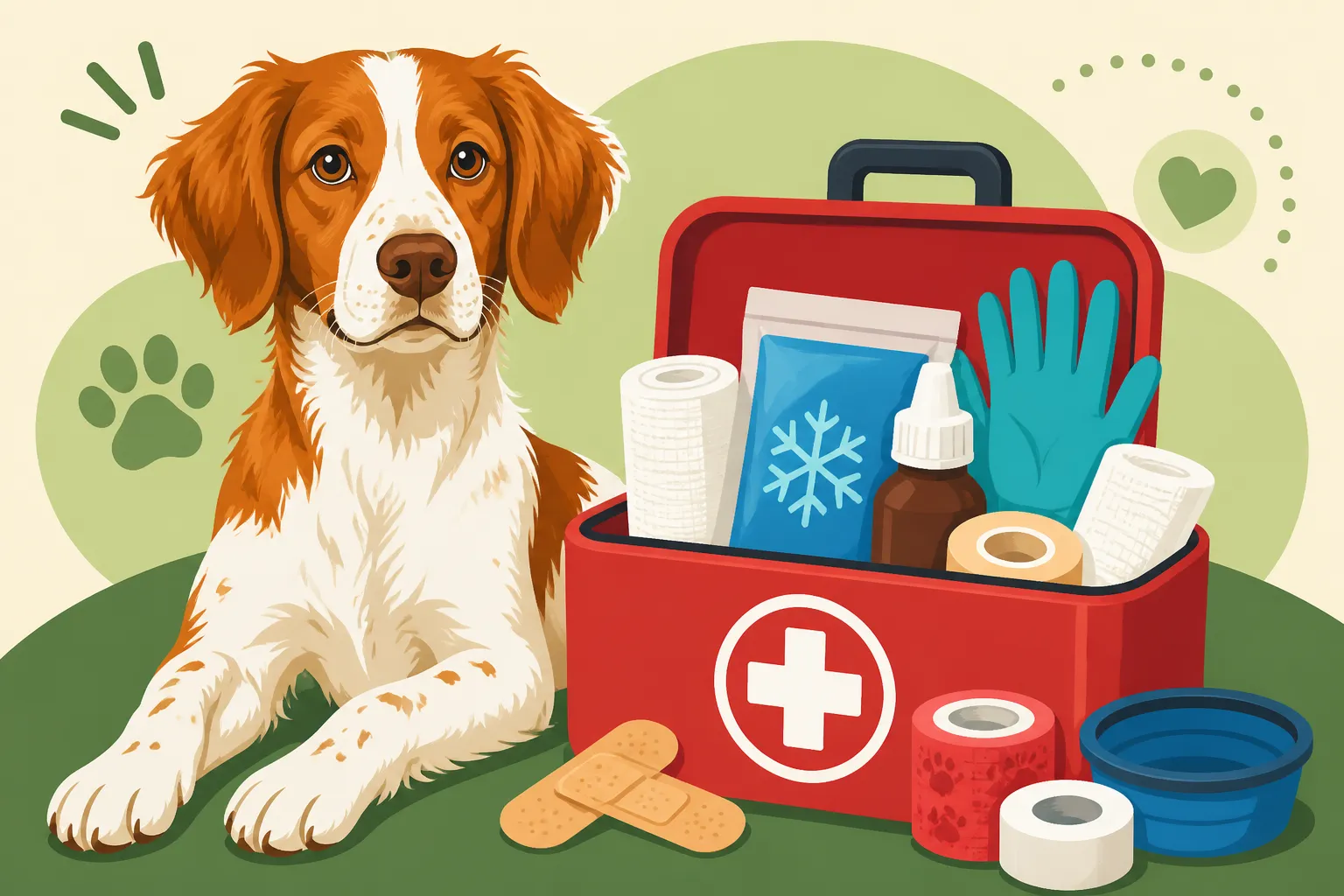
Start with antiseptic wipes or a small bottle of saline solution. These are crucial for cleaning wounds of dirt and debris. Don't use harsh human antiseptics like alcohol or hydrogen peroxide on your dog, as they can be irritating or even damaging to delicate tissue. A gentle, veterinary-approved antiseptic spray or iodine solution, diluted to the color of weak tea, is much better. Next, you'll need various gauze pads and sterile non-stick pads to cover and protect wounds. Remember, a Brittany's fur can complicate bandaging, so having plenty of material is key. Vet wrap (self-adhering bandage) is an absolute must-have; it sticks to itself, not to fur, and provides excellent compression and support. Pair it with a roll of medical tape for securing bandages that might need extra hold. Finally, a small container of styptic powder is a lifesaver for quickly stopping bleeding from small nicks, like a trimmed nail that went too far or a minor pad cut.
A common scenario: your Brittany yelps, lifts a paw, and you see a small cut on its pad. Clean the wound with saline, apply a sterile pad, wrap it snugly with vet wrap, and secure it with a bit of tape. This basic intervention can protect the wound from further contamination and allow you to finish your outing, addressing How to Treat a Brittany's Torn Pad later at home.
Tools for Removal and Examination
The field kit needs specialized tools to tackle those pesky invaders and assess injuries more closely. These are often small items, but they are indispensable.
Blunt-nosed scissors are perfect for carefully trimming fur around a wound or cutting bandage material without fear of poking your dog. A good pair of tweezers is essential for splinter removal or pulling out thorns. But for ticks and foxtails, specialized tools are much safer. A tick remover tool (like a tick twister or tick key) allows you to extract ticks completely without leaving the head embedded, reducing the risk of disease transmission. For those insidious foxtails, a small magnifying glass can help you spot them hidden in fur or between toes. How to Find a Foxtail on a Brittany can be a challenge, so this helps. A small, bright flashlight is also invaluable for examining ears, eyes, or checking pupils in low light conditions, or for spotting burrs deep in their coat. These tools empower you to be thorough and precise, which is vital when dealing with a wiggling, possibly uncomfortable dog.
Emergency Medications and Protective Gear
While most medications should only be administered under veterinary guidance, there are a few exceptions that can be included for immediate, temporary relief in a field emergency.
Always consult your vet before adding any medications to your kit. However, many vets recommend having a canine-specific anti-inflammatory or pain reliever prescribed by them for acute injuries. Never give human pain medications like ibuprofen or acetaminophen to your dog, as they can be toxic. For allergic reactions, a small amount of diphenhydramine (Benadryl) can be life-saving for bee stings or sudden plant contact, but again, get the correct dosage from your vet first. A small bottle of eye wash (sterile saline solution) is excellent for flushing out debris or irritants from your Brittany's eyes after running through heavy cover.
Beyond medications, protective gear is crucial. A simple muzzle (basket-style is preferred for comfort) isn't for aggression, but for safety. A dog in pain, even the sweetest Brittany, might snap unintentionally. A muzzle allows you to safely examine and treat them. A sturdy pair of dog boots can protect an injured paw or provide extra traction on rough terrain. Finally, a collapsible water bowl and a small bottle of fresh water are non-negotiable, especially during longer outings or in warm weather. Dehydration can rapidly exacerbate any injury or illness, and it's vital to keep your Brittany hydrated, as discussed in How Much Water a Brittany Needs on a Hunt.
Building Your Comprehensive At-Home Brittany First Aid Station
While the field kit is about immediate stabilization, your home kit is where you can provide more extensive care and monitor recovery. This kit should be more robust, allowing for longer-term treatment of minor issues or preparing you for a vet visit.
Enhanced Medical Supplies and Tools
Your home kit allows for a more comprehensive array of medical supplies, ensuring you're ready for almost anything that doesn't require immediate emergency veterinary intervention.
You'll want larger quantities of everything from your field kit: more gauze, vet wrap, and medical tape. Consider different sizes of sterile pads. Add a bottle of veterinary-specific antiseptic solution (like chlorhexidine or povidone-iodine scrub, again, diluted as advised by your vet) for thorough wound cleaning. A wound spray or ointment, recommended by your vet, can aid in healing and provide a barrier against infection for minor abrasions. A digital rectal thermometer is crucial for checking your Brittany's temperature if they seem unwell (normal range for dogs is generally 101 to 102.5°F). You might also include a pair of nail clippers or a grinder, and a good ear cleaning solution (especially important for Brittanys with their prone-to-infection ears, see How Often a Brittany's Ears Should Be Checked). Some owners even keep an emergency blanket or space blanket to help regulate body temperature in shock or extreme cold. For those times you need to clean out deeply matted feathering, having a quality slicker brush on hand, perhaps from a brand like Chewy, can be a godsend.
Medications and Important Contact Information
This section is paramount. Always consult your veterinarian before adding any prescription medications to your home kit.
Your vet may prescribe oral antibiotics for infections, stronger pain relief for more significant injuries, or specific anti-diarrhea medications that are safe for dogs. These should only be used as directed by your vet. For common ailments, some vets recommend having probiotic supplements on hand for upset stomachs, or specific topical creams for skin irritations.
Beyond the physical supplies, information is a vital part of your home kit. Create a laminated card or a clearly visible list with:
- Your regular veterinarian's phone number and address.
- The closest 24-hour emergency veterinary clinic's phone number and address.
- The ASPCA Animal Poison Control Center or other national poison control hotline number.
- A list of any known allergies your Brittany has, and their current medications.
- Your Brittany's microchip number.
Having these numbers easily accessible, perhaps even saved as favorites in your phone, eliminates precious wasted time during a crisis. If you have pet insurance, like a plan from Healthy Paws, make sure that contact information is also readily available, as they can guide you on coverage for emergency situations.
Storage and Organization
A well-organized first aid kit saves time and reduces stress when you're dealing with a stressed or injured dog.
Choose a durable, clearly labeled container that is easy to open and access quickly. A tackle box, a clear plastic storage bin, or even a dedicated drawer in your laundry room can work. Organize items logically: all wound care together, all tools together, medications separate. Consider using smaller, clear pouches or Ziploc bags within the main kit to further compartmentalize. This makes it easy to grab exactly what you need without rummaging. Regularly check expiration dates on medications and sterile supplies, and replace anything that's expired or used up. A quarterly inventory check is a good habit. Also, ensure the kit is stored in a cool, dry place, away from direct sunlight and out of reach of curious paws and small children.
Common Brittany Scenarios and First Aid Responses
Knowing what to put in the kit is only half the battle; knowing how and when to use it is equally important. Brittanys, with their active outdoor lives, tend to get into predicaments that require specific first aid responses.
Dealing with Paw and Pad Injuries
A Brittany's paws are their primary tool for navigating varied terrain, making them vulnerable to injury. Whether it's a tiny thorn, a deep cut from sharp rocks, or simply worn-out pads from a long day, you'll likely deal with paw issues.
If you suspect a paw injury, first, gently clean the area. Use a saline solution to flush out any visible debris. For small cuts, apply pressure with a gauze pad. If bleeding persists, apply styptic powder. If you find a foreign object, like a small shard of glass or a thorn, use your tweezers to carefully extract it. Once cleaned, apply an antiseptic ointment (vet-approved) and cover the wound with a non-stick pad. Then, wrap the paw securely with vet wrap, making sure it’s snug but not too tight to cut off circulation. You should be able to slip two fingers under the wrap. Monitor for swelling. For field outings, consider using dog boots to protect the injured paw while it heals, or even preemptively on rough terrain to prevent future issues. Remember, a deep puncture wound or excessive bleeding always warrants a trip to the vet. For more in-depth advice, check out How to Treat a Brittany's Torn Pad.
Managing Cuts, Scrapes, and Lacerations
From brushing through thorny thickets to encounters with barbed wire (yes, it happens), Brittanys can come away with various body cuts.
For minor scrapes and superficial cuts, simply clean the area with antiseptic wipes or a diluted antiseptic solution. You can apply a thin layer of antibiotic ointment (vet-approved) if you have it. For deeper cuts, especially those that gape open, hemostasis is key. Apply direct pressure with a clean gauze pad for several minutes to control bleeding. Once bleeding is controlled, gently clean around the wound. If the wound is deep, long, or gaping, it likely needs stitches. In this case, protect the wound with a sterile dressing and vet wrap, then head straight to the vet. Even smaller cuts can become infected if not properly cared for. How to Close a Brittany's Field Laceration provides more detailed instructions for serious cuts.
Removing Foxtails, Burrs, and Ticks
These pervasive hitchhikers are a constant menace for a hunting dog. Your kit is essential for quick and effective removal.
Burrs are usually more annoying than dangerous, but they can mat fur and cause skin irritation. Use blunt-nosed scissors to carefully cut them out of the fur, or apply a little vegetable oil or coconut oil to help them slide off. Always check your Brittany's "feathering" on their legs and belly, as this is where they tend to accumulate most. Foxtails are far more dangerous because their barbed heads can migrate into skin, ears, eyes, or nostrils, causing serious infections. After every outing, thoroughly check your Brittany, especially between the toes, in the ears, armpits, and groin. If you find a foxtail, use tweezers to carefully pull it out. If it's embedded or you suspect it's entered an orifice, do not try to remove it yourself. This often requires a vet's assistance. Where a Foxtail Lodges in a Brittany and How to Find a Foxtail on a Brittany offer more insights.
Ticks are also a serious concern. Use your specialized tick remover tool. Grasp the tick as close to the skin as possible and pull straight up with steady, even pressure. Avoid twisting or squeezing the tick's body, as this can inject more disease-causing agents into your dog. After removal, clean the area with antiseptic. Dispose of the tick properly and monitor the site for any signs of infection or irritation. Regular tick prevention is crucial, as even with diligent checking, How Many Ticks a Brittany Picks Up in a Season can be substantial.
Addressing Ear Issues and Allergic Reactions
Brittany ears are beautiful, but they need attention. And like us, dogs can have allergic reactions.
For basic ear care after a wet hunt or swim, gently wipe the outer ear canal with a soft cloth or cotton ball. If you have an ear cleaning solution (recommended by your vet), follow the instructions to clean deeper. This helps prevent moisture and debris from leading to infections. If you notice redness, discharge, foul odor, or excessive scratching, it's time for a vet visit, as these are signs of infection.
For allergic reactions, such as those from bee stings or contact with irritating plants, your vet-approved dose of diphenhydramine can provide temporary relief. Signs of an allergic reaction include swelling (especially around the face or muzzle), hives, intense itching, or difficulty breathing. Swelling around the face, especially if it compromises breathing, is an emergency. Even if you administer antihistamines, it's wise to contact your vet.
Overheating and Dehydration Concerns
Brittanys are high-energy dogs, and they can easily overheat, especially during early season hunts or intense exercise in warm weather. Knowing the signs and providing immediate care is critical.
Signs of overheating include excessive panting, bright red gums, thick drool, weakness, stumbling, and even collapse. If you suspect your Brittany is overheating, stop activity immediately. Move them to a cooler, shaded area. Offer small amounts of water, but don't force them to drink. You can use your water bottle to wet down their fur, especially on their belly, armpits, and groin, to help cool them down. A wet towel can also be draped over them. Get them to a vet as quickly as possible if signs are severe. Preventing overheating is always best; recognize Signs a Brittany Is Overheating in the Field and plan your activities accordingly, providing plenty of water from your What a Brittany's Field Water Setup Costs and rest breaks.
First Aid Kit Checklist
Here's a handy checklist to help you assemble and maintain your Brittany's first aid kits. Remember to customize this based on your vet's recommendations and your specific hunting environment or daily activities.
| Item Category | Field Kit Essentials | Home Kit Additions / Expansions | Notes |
|---|---|---|---|
| Wound Care | Saline solution (small bottle) | Larger saline bottle or wound flush | Never use hydrogen peroxide on deep wounds |
| Antiseptic wipes | Chlorhexidine/Povidone-iodine scrub (diluted) | Consult vet for proper dilution | |
| Sterile gauze pads (various sizes) | Bulk sterile gauze pads | ||
| Non-stick pads | Larger non-stick pads | ||
| Vet wrap (self-adhering bandage) | Multiple rolls of vet wrap (different widths) | Essential for securing bandages without sticking to fur | |
| Medical tape | Larger roll of medical tape | Good for extra security | |
| Styptic powder (for quick bleeds) | For nail quicks, minor cuts | ||
| Small antibiotic ointment (vet-approved) | Larger tube of vet-approved antibiotic ointment | For superficial wounds | |
| Tools & Removal | Blunt-nosed scissors | Full-size bandage scissors | |
| Tweezers | Variety of tweezers (fine-point, blunt) | ||
| Tick remover tool (tick twister/key) | |||
| Magnifying glass | Headlamp with magnifying function | For spotting small objects, examining eyes/ears | |
| Small flashlight | Powerful flashlight | ||
| Medications (Vet Rec.) | Diphenhydramine (Benadryl, vet dosage) | Vet-prescribed pain medication | Always consult your vet for dosage and administration |
| Eye wash (sterile saline) | Vet-prescribed anti-inflammatory | ||
| Vet-prescribed anti-diarrhea medication | |||
| Ear cleaning solution | Critical for a Brittany's ears | ||
| Protective/Comfort | Collapsible water bowl & fresh water | Emergency blanket | For shock, temperature regulation |
| Temporary muzzle (basket preferred) | Recovery collar (cone) | To prevent licking / chewing wounds | |
| Dog boots | Soft dog brush / slicker brush (e.g., from Chewy) | For burr removal, general coat care | |
| Diagnostic/Info | Cell phone with emergency contacts | Digital rectal thermometer | Normal dog temp: 101-102.5°F |
| Laminated emergency contact list | Vet, emergency vet, poison control, insurance (e.g., Healthy Paws) | ||
| Pet insurance info (e.g., Healthy Paws) | For contacting in case of serious injury |
Remember, this isn't an exhaustive list, and your specific needs might vary. Think of it as a living document; review it regularly, replace used or expired items, and adjust it based on your Brittany's activities and any new advice from your veterinarian. Being prepared means your Brittany can enjoy their adventures safely, and you can have peace of mind knowing you're ready for whatever comes their way. For general wellness beyond immediate first aid, also consider nutritional support, perhaps from a brand like Ollie, ensuring they're always in top form.
Disclaimer
This article is for general informational purposes only and does not constitute professional advice. Laws, prices and regulations vary by location and change over time. Consult a qualified professional for guidance on your specific situation.