How to Find a Foxtail on a Brittany
There are few things more anxiety-inducing for a Brittany owner than the thought of a foxtail burrowing its way into their beloved dog. These seemingly innocuous plant awns are silent, sharp, and notorious for causing serious, painful, and often expensive health problems. If you've ever spent hours meticulously combing through your Brittany's coat after a field outing, you know the frustration and fear. This guide is here to walk you through exactly how to find a foxtail on your Brittany, understand where they typically hide, recognize the signs of a hidden one, and take steps to protect your adventurous companion.
Understanding the Foxtail Threat to Your Brittany
Foxtails aren't just annoying burrs; they're incredibly dangerous botanical projectiles that can wreak havoc on your dog's health. Knowing what they are and why your Brittany is especially susceptible is the first step in effective prevention and early detection.
What Exactly Are Foxtails and Why Are They Dangerous?
Foxtails are the barbed seed heads of certain types of grasses, particularly common in western and midwestern states, but they can be found across the country. They get their name from their resemblance to a fox's tail when they're still on the plant, before they dry out and break apart. What makes them so perilous is their unique, one-way barbed structure. Think of a tiny, microscopic fishhook. Once they latch onto fur, they only move in one direction: forward. They can't back out. As your dog moves, the foxtail literally "walks" its way into skin, ears, paws, eyes, and even nasal passages.
Once inside, these plant parts carry bacteria and can cause severe inflammation, infection, abscesses, and even migrate to internal organs, lungs, or the brain if left untreated. The body's immune system recognizes them as foreign objects, but due to their barbed nature, it struggles to expel them. This leads to a persistent, worsening problem that requires veterinary intervention. It’s not just an itch; it’s a penetrating menace that can lead to significant discomfort and serious medical emergencies.
Why Brittanys Are Particularly Vulnerable to Foxtail Invasions
Brittanys, with their energetic, low-to-the-ground hunting style and beautiful, medium-length feathering, are practically custom-made targets for foxtails. Their instincts compel them to dive headfirst into dense cover, brush, and tall grasses where foxtails thrive. This means their entire body is exposed, from their long, floppy ears to their feathered legs and chest.
Their coat, while lovely, is excellent at trapping these tiny barbs, acting like a natural Velcro. The dense feathering around their ears, chest, belly, and legs gives foxtails ample opportunity to latch on and begin their journey inward. Moreover, Brittanys are curious sniffers and ground workers, constantly exploring with their noses close to the ground, making their nasal passages and eyes prime entry points. Their active lifestyle means they are frequently in environments where these plants are prevalent, increasing their risk exponentially compared to a less active breed or one with a very short coat.
Common Places Foxtails Hide on a Brittany's Body
Foxtails are sneaky, and they exploit every nook and cranny. For a Brittany, some areas are more common hiding spots than others due to their physical characteristics and how they interact with their environment.
The ears are a huge concern. A Brittany's long, drop ears create a perfect, sheltered tunnel for foxtails to enter and travel down the ear canal. The feathering around the ears provides excellent camouflage for the invaders. You might be interested in knowing more about why your dog's ears are so susceptible by checking out our guide on "Why a Brittany's Ears Get Infected Every Season".
Paws and between the toes are another major hotspot. As a Brittany runs through fields, foxtails easily get lodged in the fur between their paw pads or even penetrate the skin directly. This is especially true for working dogs who spend hours traversing various terrains. Our article on "How Often a Brittany's Pads Should Be Checked" offers more insight into paw health.
The eyes are also vulnerable. A foxtail can get caught in the fur around the eye and then work its way under the eyelid, causing irritation and potential corneal damage. The nose is another common entry point, as Brittanys are constantly sniffing the ground. Inhaling a foxtail can lead to serious respiratory issues. Finally, don't forget the armpits, groin, and belly feathering. These areas are often overlooked but offer plenty of soft tissue and loose skin for a foxtail to embed itself.
The Step-by-Step Foxtail Check Protocol
After every single outing into grassy or brushy areas, especially during late spring, summer, and fall when foxtails are abundant, a thorough inspection of your Brittany is non-negotiable. This isn't a quick once-over; it's a systematic, hands-on examination.
A Systematic Approach to Post-Outing Examination
Think of this as your post-hunt ritual, just as important as putting away your gun or cleaning your boots. Start a routine and stick to it, every single time. It should take about 10-15 minutes, but that time can save you thousands in vet bills and your dog weeks of discomfort. Grab a bright light, a fine-toothed comb, and some treats for your patient pup.
Begin by getting your Brittany into a comfortable, well-lit position. Many owners find having their dog lie on their side, or even on a grooming table if they have one, makes the process easier. The goal is to be methodical and leave no stone unturned. Remember, these things are tiny and can be incredibly well-hidden. Our guide on "What to Check on a Brittany After Every Outing" provides a broader look at post-field checks.
Work from head to tail, section by section. Be gentle but thorough. Part the fur, run your hands over every inch, and use your eyes to spot anything out of place. This isn't just about looking; it's about feeling for subtle lumps, bumps, or areas of tenderness that might indicate a foxtail entry point.
Focusing on Key Areas: Ears, Paws, Eyes, Nose, Coat, Groin, Armpits
Let's dive into the specifics for each high-risk area:
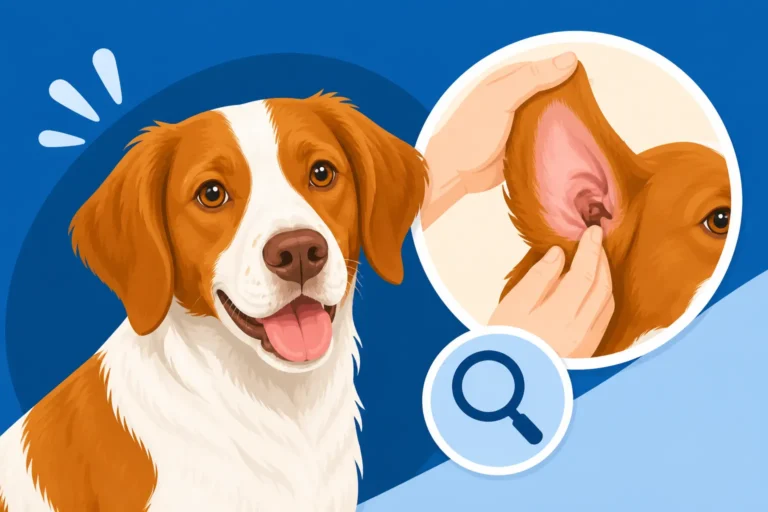
- Ears: This is perhaps the most critical area. Gently lift your Brittany's floppy ears and inspect the entire ear flap, inside and out. Pay close attention to the base of the ear, the entrance to the ear canal, and all the feathering. Use a bright flashlight to peer down into the ear canal as far as you can see. Look for any foreign objects, redness, discharge, or signs of irritation. Feel along the cartilage of the ear for any embedded material. This is where many owners find themselves needing to remove a foxtail from a Brittany's ear, a procedure that can be costly. You might even consider thinning your Brittany's ear feathering to make checks easier; our article "Whether a Brittany's Ear Hair Should Be Trimmed" discusses this.
- Paws and Between the Toes: With your Brittany sitting or lying down, carefully lift each paw. Inspect every single toe pad, the webbing between the toes, and the nails. Foxtails love to burrow here. Look for any redness, swelling, small holes, or tracts. Feel for any lumps or tender spots. Use your fingers to spread the toes apart and comb through the fur there. Check the dewclaws too. For active hunting dogs, paw protection can be beneficial; consider "Whether a Brittany Needs Boots in the Field". If you find a torn pad, our guide on "How to Treat a Brittany's Torn Pad" can help.
- Eyes: Gently part the fur around your Brittany's eyes. Look for any redness, squinting, discharge, or swelling. Carefully pull down the lower eyelid and lift the upper eyelid to check for any foreign material lodged there. If your dog is rubbing its face, it's a major red flag for an ocular foxtail.
- Nose: Inspect the nostrils for any visible foxtails or irritation. If your Brittany is sneezing excessively, pawing at its face, or has discharge from one nostril, a foxtail might have been inhaled. This requires immediate veterinary attention.
- Overall Coat and Feathering: This is where the fine-toothed comb comes in handy. Systematically comb through all the feathering on their legs, chest, belly, and tail. These areas are magnets for foxtails. Pay special attention to the longer hair. Feel for any tiny, stiff grass awns. It’s also important to know "How to Get Burrs Out of a Brittany's Coat" as foxtails can often be mistaken for them initially.
- Armpits and Groin: These areas have soft skin and often accumulate moisture, making them ideal for foxtails to embed and cause irritation. Feel deeply into the armpits and groin folds, carefully parting the fur and looking for any red spots, swelling, or entry wounds.
What to Look and Feel For
When performing your check, remember what a foxtail looks like: a small, dry, barbed seed head. They can range in color from light tan to greenish-brown. You might not see the entire thing if it's already started to burrow.
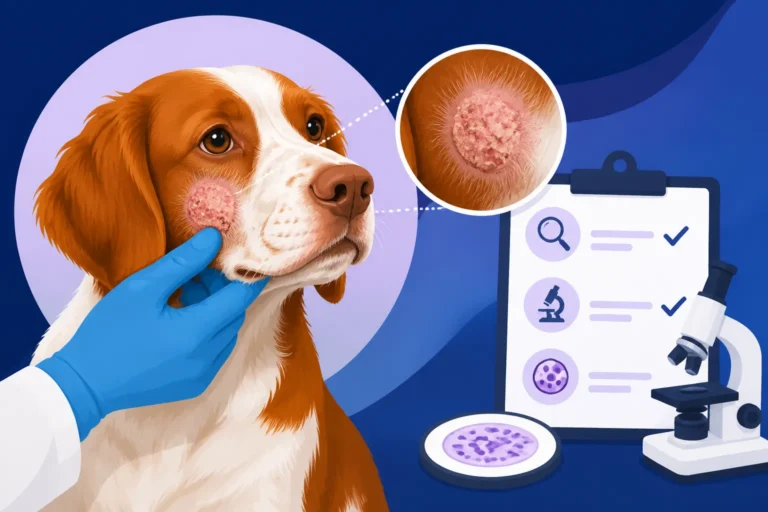
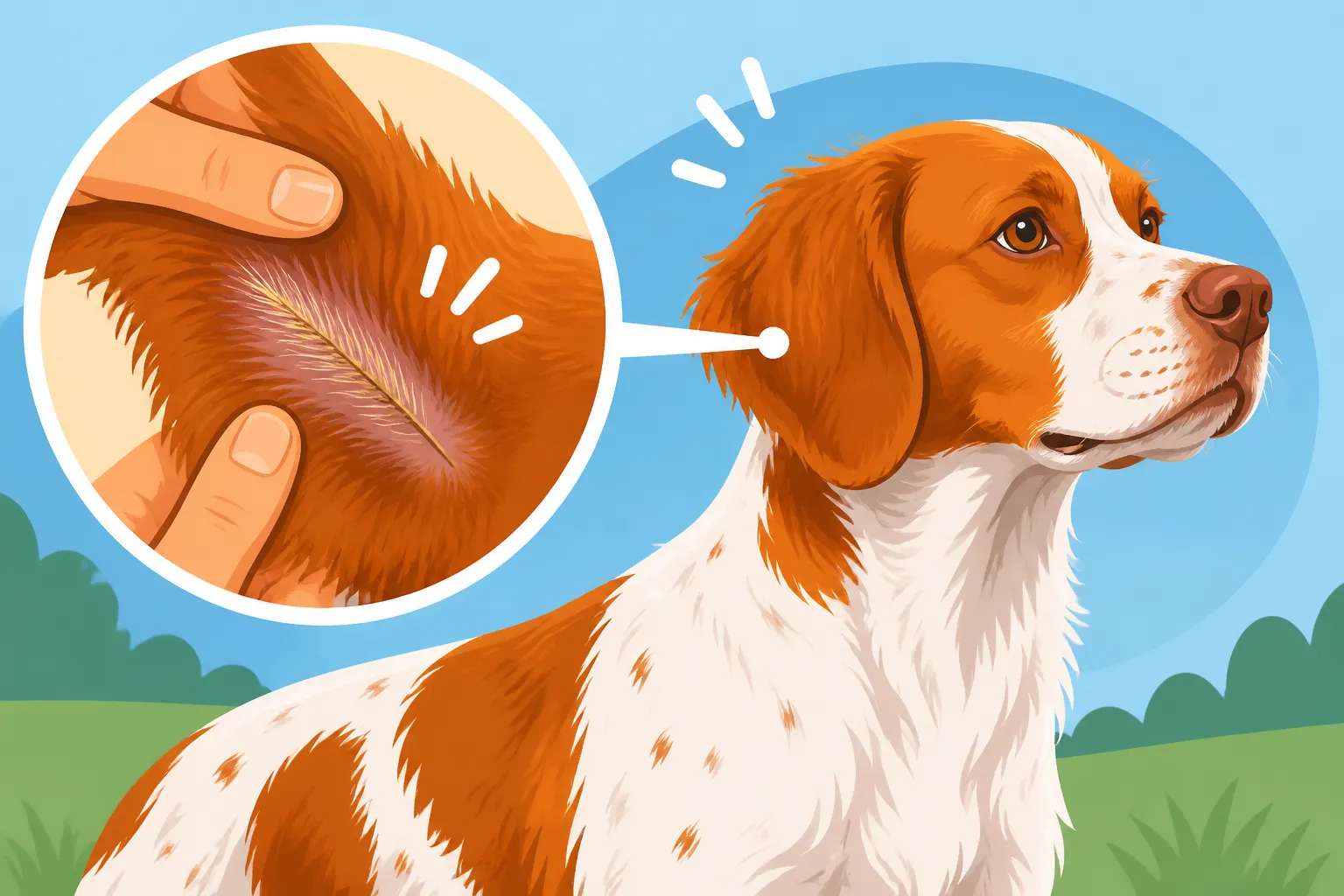
Visually: Look for tiny, wheat-like or barley-like seeds stuck in the fur, especially at the skin level. Look for small, irritated red bumps, often with a tiny hole at the center – this is an entry point. You might see a small amount of pus or discharge around it. Sometimes, you'll see a faint red "track" indicating where the foxtail has started to migrate under the skin.
By Touch: Feel for any new lumps or bumps on your dog's skin, especially if they are firm or tender to the touch. Run your fingers against the grain of the fur, as this helps to reveal anything embedded. If your Brittany flinches or pulls away when you touch a specific area, investigate that spot more closely. Swelling and heat in a localized area are also key indicators.
It's a painstaking process, but the peace of mind knowing you've done everything you can to find these nasty things is invaluable.
Recognizing the Signs of a Hidden Foxtail
Even with the most diligent checks, a tiny foxtail can sometimes slip past, or embed so quickly that symptoms only appear later. Knowing the warning signs for different body parts is crucial for prompt veterinary care.
Symptoms for Different Locations
The symptoms your Brittany displays will often give you a clue as to where the foxtail has lodged itself.
- Ear: If a foxtail is in your Brittany's ear, you'll likely notice intense head shaking, often violently, sometimes to the point of throwing their head against furniture. They might paw at the affected ear incessantly, whine, or rub their ear along the ground or furniture. You may see redness or discharge from the ear canal. This is an urgent situation because the foxtail can continue to migrate deeper, potentially damaging the eardrum or inner ear structures. An unchecked ear infection can be debilitating, so pay close attention to "How Often a Brittany's Ears Should Be Checked".
- Paw/Toes: For a foxtail in the paw, you'll see excessive licking or chewing of the paw, especially between the toes. Your Brittany might start limping, favoring the affected foot, or even refuse to bear weight on it. The paw might appear swollen, red, and warm to the touch. You may spot a small, pus-filled lump or a visible entry wound. These can quickly abscess if not treated.
- Eye: An ocular foxtail causes extreme discomfort. Your Brittany will likely be squinting or holding one eye shut, and there will be excessive tearing. The eye might appear red and inflamed. They may try to rub their eye with their paw or on furniture, potentially causing more damage. This is an emergency as it can lead to corneal ulcers and vision loss.
- Nose: If a foxtail is inhaled, your Brittany will exhibit sudden, violent sneezing fits, often prolonged and uncontrollable. They might have nasal discharge, sometimes bloody, from one nostril. They might paw at their nose or appear generally distressed. The foxtail can travel into the sinuses or even the lungs.
- Skin/Underneath Fur: If a foxtail has burrowed under the skin, you might notice a localized swelling or a firm lump that's tender to the touch. The area might be warm, red, and eventually develop into an abscess with pus and a draining tract. Your dog might lick or chew at the spot relentlessly, sometimes breaking the skin and worsening the infection.
When to Seek Veterinary Attention
Anytime you suspect a foxtail, it's a "call the vet now" situation, not a "wait and see." Foxtails are not like regular splinters; they don't simply "work themselves out." In fact, the opposite is true – they only burrow deeper.
If you observe any of the symptoms mentioned above, especially intense head shaking, limping, prolonged sneezing, or pawing at an eye, contact your veterinarian immediately. Even if you can't see the foxtail, the symptoms are strong indicators that one might be present and causing internal damage. Explain your suspicion clearly to the veterinary staff so they can prioritize the potential foxtail removal. Pet insurance providers like Healthy Paws often cover emergency removals, highlighting the severity of these incidents.
The Urgency of Prompt Action
Delaying veterinary care for a suspected foxtail can have serious consequences. The longer a foxtail remains embedded, the deeper it can travel. A foxtail that starts in the ear can migrate into the brain, causing neurological damage. One in the paw can track up a leg. Foxtails have been found in lungs, spinal cords, and other vital organs, leading to life-threatening infections and complicated surgeries.
Early intervention is key. A foxtail caught in the ear canal might be removed in a simple office visit with sedation. A deeply embedded, abscessed foxtail, however, could require general anesthesia, surgical exploration, extensive wound care, and a course of antibiotics. The cost and recovery time increase dramatically with delay. Being vigilant and acting quickly is the best way to protect your Brittany from the severe harm these tiny seeds can cause.
Preventative Measures and Field Care
While meticulous checks are your last line of defense, prevention is always better than cure. There are several proactive steps you can take to reduce your Brittany's exposure to foxtails and make post-outing checks more effective.
Tips for Minimizing Exposure
The most straightforward way to avoid foxtail issues is to minimize your Brittany's exposure to them. This can be challenging for a field-bred dog, but certain strategies can help.
- Know Your Terrain: Before heading out for a hunt or a hike, scout the area. Learn to identify foxtail grasses in your local region. Avoid fields that are heavily infested with these dry, bristly plants. If you can't avoid them entirely, try to stick to paths and trails where the grass is shorter or more mown.
- Seasonal Awareness: Foxtails are most prevalent when they dry out and break apart, typically from late spring through fall. Be extra vigilant during these months. After a dry spell, foxtails are particularly brittle and ready to hitch a ride.
- Yard Maintenance: If you have a yard, keep it mowed short, especially around areas where your Brittany plays. Remove any foxtail grasses you find to eliminate the threat at home. This simple step can prevent unexpected problems right outside your door.
Grooming Strategies to Deter Foxtails
Your Brittany's coat, while beautiful, is a foxtail magnet. Smart grooming can make a big difference in detection and prevention.
- Regular Brushing: Brush your Brittany thoroughly after every outing, even if it's just a walk around the block. This helps remove loose debris and can catch foxtails before they have a chance to burrow. Pay extra attention to the feathering on their legs, belly, and ears.
- Trimming Feathering: While a Brittany's feathering is characteristic, strategically trimming the longer hair on the belly, under the armpits, and between the paw pads can significantly reduce the surface area available for foxtails to attach. Some owners even trim the hair around the ear canal opening. This doesn't mean stripping your dog's natural coat; it's a practical measure to protect working dogs.
- Paw Protection: Consider using paw balms or waxes before field outings. While not foolproof, they can create a smoother surface that makes it harder for foxtails to adhere and may offer a small barrier against penetration. For extreme conditions or known foxtail-heavy areas, dog boots can be an excellent preventative measure, especially for protecting the vulnerable areas between the toes.
First Aid Kit Essentials for Foxtail Incidents
Having a well-stocked first aid kit specifically for field injuries, including potential foxtail issues, is invaluable. You can learn more about "What a First Aid Kit for a Brittany Should Hold".
Here are some essentials:
- Tweezers/Hemostats: For carefully plucking visible foxtails from the coat or skin if they have not yet embedded. Never attempt to pull an embedded foxtail yourself, as you risk breaking it off and leaving parts behind.
- Bright Flashlight: Essential for thorough visual inspections, especially in ears and between toes.
- Magnifying Glass: To help spot tiny foxtails or small entry wounds.
- Antiseptic Wipes/Spray: To clean any superficial cuts or suspected entry points after removal (if visible and superficial) and before contacting a vet.
- E-Collar (Cone of Shame): If your dog is excessively licking or pawing at a suspected foxtail area, an E-collar can prevent further self-trauma while you're on the way to the vet.
- Vet's Contact Info: Keep your vet's number, and the number for the nearest emergency vet clinic, readily accessible in your phone and in your kit.
Remember, a first aid kit is for first aid, not a replacement for veterinary care when a foxtail is suspected. Always consult your vet for anything beyond a completely superficial, easily removed foxtail on the fur. Prompt professional care is the best route to ensure your Brittany's health and comfort.
| Foxtail Location | Common Symptoms | Immediate Check / Action |
|---|---|---|
| Ears | Head shaking, pawing at ear, whining, redness | Lift ear flap, use flashlight to check canal, feel feathering. Call vet if any suspicion. |
| Paws/Toes | Licking/chewing paw, limping, swelling, redness | Spread toes, check between pads for entry points, swelling, tenderness. Call vet. |
| Eyes | Squinting, excessive tearing, redness, pawing eye | Gently inspect around and under eyelids. Do NOT attempt removal. Call vet immediately. |
| Nose | Violent sneezing, nasal discharge (sometimes bloody), pawing nose | Check nostrils for visible foxtails. Call vet immediately. |
| Skin/Coat | Licking/chewing spot, localized swelling, redness, small hole | Systematically comb coat, feel for lumps/tenderness. If superficial, carefully remove. If embedded, call vet. |
| Armpits/Groin | Licking area, swelling, tenderness, redness | Part fur, inspect skin folds. Call vet if embedded or signs of infection. |
Disclaimer
The information provided in this article is for educational purposes only and is not intended to be a substitute for professional veterinary advice, diagnosis, or treatment. Always seek the advice of your veterinarian or other qualified health provider with any questions you may have regarding a medical condition. Never disregard professional veterinary advice or delay in seeking it because of something you have read in this article.