Whether a Brittany Should Run NAVHDA or AKC
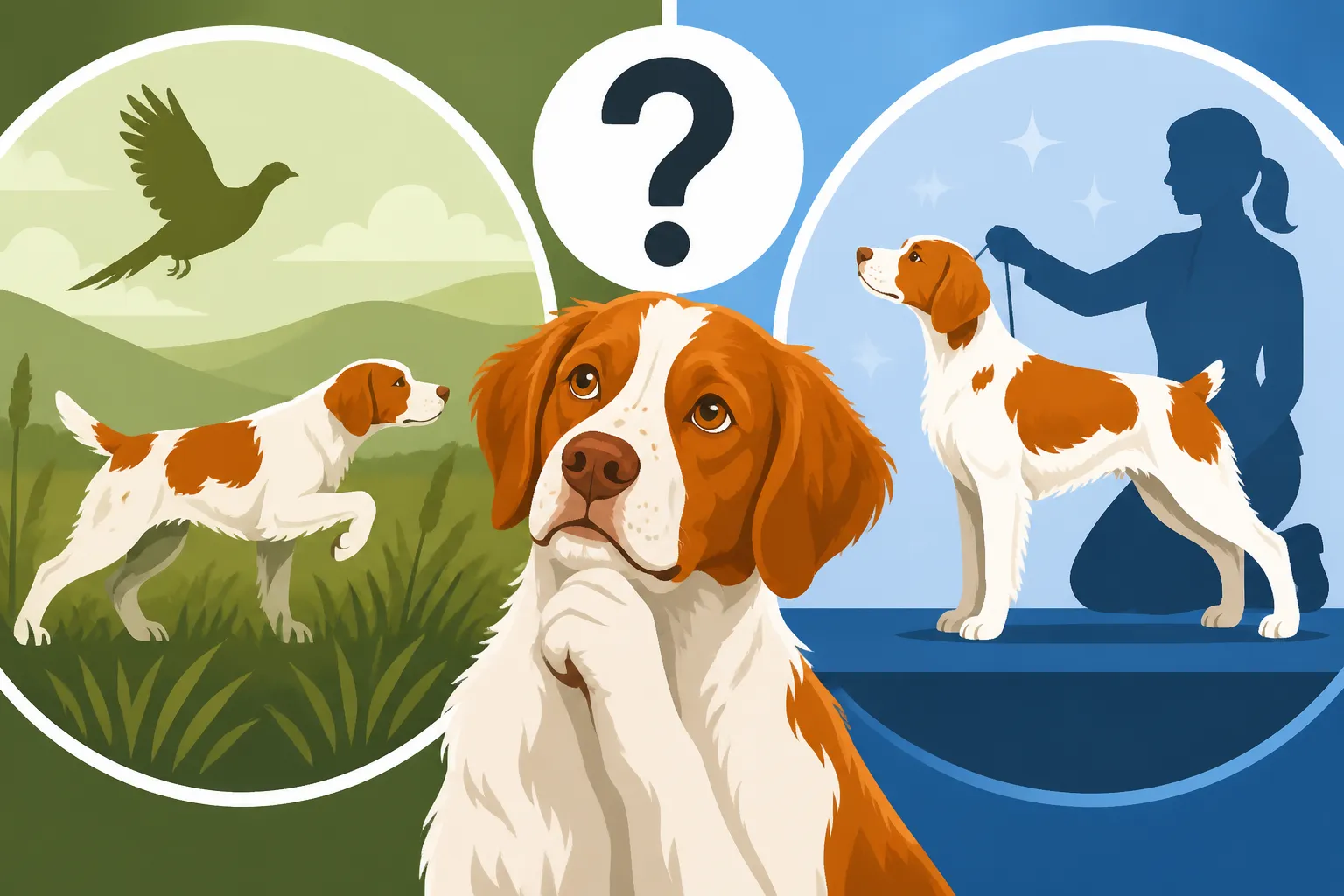
Many Brittany owners feel a real pull between fostering their dog's natural instincts and honing them into a polished hunting machine. This often leads to a common question: should your energetic companion enter the competitive world of American Kennel Club (AKC) hunt tests, or find its stride within the North American Versatile Hunting Dog Association (NAVHDA)? It's a fantastic dilemma to have, signaling a dedicated owner, and this guide will help you navigate the nuances of both paths to find the best fit for you and your beloved Brittany.
Understanding the Core Philosophies: NAVHDA vs. AKC
The Distinct Missions of Each Organization
When you delve into the world of canine field sports, you quickly realize that the AKC and NAVHDA, while both celebrating hunting dogs, operate under quite distinct missions. The AKC, steeped in tradition, aims to evaluate a finished gun dog's performance against a specific standard for pointing breeds. Their hunt tests, whether Junior, Senior, or Master Hunter, are structured to assess discrete skills: finding game, pointing staunchly, retrieving to hand, and honoring another dog's point. It’s about a demonstration of control and proficiency in specific, often stylized, scenarios that reflect a refined hunting partner.
NAVHDA, on the other hand, was founded with the explicit goal of promoting and improving the versatile hunting dog. Their philosophy revolves around a dog that can do it all – adeptly working both upland birds and waterfowl, tracking wounded game, and performing reliably under varied conditions. They look for innate abilities as much as trained skills, valuing the comprehensive utility of a dog in real-world hunting situations. The emphasis is on a complete, biddable hunting companion that excels across a spectrum of tasks, rather than specializing in just one or two. It's about a dog that is truly a partner, capable of adapting to whatever the hunting day throws its way.
Different Approaches to Judging and Scoring
The way these organizations assess a Brittany's performance also varies significantly, reflecting their differing missions. AKC hunt tests employ a pass/fail system. Your Brittany must meet a specific set of criteria for each element of the test, and if it fails to perform a critical task — say, holding a staunch point or retrieving to hand at the higher levels — it will not qualify for a pass, even if other elements were stellar. This can be a bit black and white, and sometimes a single mistake can lead to a "fail," which can be disheartening, though it pushes for precision and consistency.
NAVHDA tests, particularly the foundational Natural Ability (NA) test, use a more nuanced scoring system. Instead of simply passing or failing, young dogs are evaluated on a scale across several categories of natural ability: Nose, Search, Pointing, Tracking, Desire to Work, Cooperation, and Physical Attributes. These scores culminate in an overall "Prize" classification (Prize I, II, or III), indicating the dog's potential. This system provides a more detailed picture of a young Brittany's inherent talents, offering constructive feedback that helps owners and breeders understand a dog's strengths and areas for development. It's less about a perfect performance on test day and more about assessing the raw material and potential within your dog.
The American Kennel Club (AKC) Hunt Test Experience for Brittanys
Progression Through AKC Titles: Junior, Senior, and Master Hunter
The AKC offers a clear and structured pathway for your Brittany to earn titles, mirroring a progression from a promising youngster to a seasoned field dog. The journey typically begins with the Junior Hunter (JH) title. This is often considered the entry-level, designed to demonstrate a Brittany's inherent desire to hunt, find birds, and point. At this stage, retrieves are usually optional, and the dog doesn't need to be steady to wing and shot. It's a fantastic way to introduce a young Brittany to a formal bird-finding environment without overwhelming pressure. For many, it's a stepping stone to confirm their dog's natural instincts.
After achieving the JH title, the next level is Senior Hunter (SH). This is where things get more serious, demanding a higher degree of training and control. For an SH title, your Brittany must demonstrate steadiness to wing and shot, meaning it must remain stationary when the bird flushes and when the gun is fired. Retrieving to hand becomes mandatory, and your dog must also honor another dog's point. The pinnacle is the Master Hunter (MH) title, which requires all the skills of the SH level, but with greater consistency, higher standards of steadiness (often steady to fall), and typically in more complex field scenarios, sometimes bracing with another dog. Pursuing these higher titles requires significant dedication, and understanding What an AKC Hunt Test Entry Costs a Brittany Owner is a practical consideration for the journey ahead.
What AKC Judges Are Looking For
In AKC hunt tests, judges are evaluating your Brittany's performance against the established breed standard for a pointing dog. They want to see a dog that hunts with intelligence, purpose, and enthusiasm, covering the ground efficiently and responding promptly to the handler's commands. A strong, confident point is essential, and as you progress through the titles, steadiness becomes increasingly critical. At the Senior and Master Hunter levels, judges expect a dog to remain absolutely still as the bird is flushed and the shot is fired, demonstrating impeccable control and discipline.
For instance, a Brittany might have a beautiful nose and find birds consistently, but if it breaks point and chases the bird after the flush in a Senior Hunter test, it will not pass. Judges are looking for a complete picture of a finished gun dog that is a reliable, disciplined partner in the field. This also includes retrieving game cleanly and delivering it to hand, as well as honoring another dog's find by backing its point. The emphasis is on refined, consistent performance, which often necessitates focused, repetitive training. Many owners find that working with a professional trainer can be invaluable for achieving these standards, and it's worth noting What a Professional Gun Dog Trainer Charges for a Brittany when planning your training budget.
The North American Versatile Hunting Dog Association (NAVHDA) Program for Brittanys
The Natural Ability Test: A Foundation for Versatility
For many Brittany owners, the North American Versatile Hunting Dog Association (NAVHDA) Natural Ability (NA) test is the very first dive into formal field testing. Designed for young dogs, typically under 32 months of age, the NA test isn't about perfect obedience; it's about showcasing your Brittany's innate talents that make it a versatile hunting partner. Judges are essentially looking for the "raw materials" – the genetic predispositions that indicate a promising future in the field. They assess seven key categories: Nose, Search, Pointing, Tracking, Desire to Work, Cooperation, and Physical Attributes.
Imagine your young Brittany, full of youthful exuberance, excitedly quartering a field, using its nose to find scent, and then freezing into a natural point on a hidden bird. Even if it bumps the bird occasionally or needs a little guidance, high scores in areas like Nose and Desire to Work will still contribute to a good overall prize. The test is truly meant to be encouraging, providing a benchmark for a young dog's potential. It's a fantastic way to understand your Brittany's strengths early on and can help you tailor your future training. Observing The Age a Brittany Puppy First Points can sometimes be very young, but the NA test offers a formal, objective assessment of that natural drive.
Advancing Through Utility and Utility Preparatory Tests
Once your Brittany has demonstrated its foundational instincts in the Natural Ability test, NAVHDA offers more challenging tests to develop a truly versatile hunting dog. The next step is the Utility Preparatory (UPT) test. This test is designed for dogs that are moving beyond basic instincts and starting to show more refined training in both field and water work. In the UPT, your Brittany will be evaluated on aspects like steadiness to wing and shot, retrieve of shot birds from both land and water, and honoring another dog's point. It’s a bridge between raw talent and becoming a polished gun dog, requiring more discipline than the NA test.
The ultimate goal for many NAVHDA participants is the Utility (UT) test, which assesses a truly finished, versatile hunting dog. This demanding test requires high levels of training, steadiness, and versatility. Your Brittany will need to perform advanced field work, including complex retrieves and honoring, alongside comprehensive water work, such as a duck search and a blind retrieve from water. Steadiness to wing, shot, and fall is a crucial component at this level. A dog earning a Prize I in the UT test is recognized as an exemplary versatile hunting companion, capable of handling a wide array of hunting scenarios. Remember that while What a Brittany's NAVHDA Natural Ability Test Costs might be manageable, the time and effort for UPT and UT are significant investments.
Deciding Which Path is Right for Your Brittany and You
Considering Your Hunting Style and Goals
The choice between NAVHDA and AKC isn't just about your dog; it's deeply tied to your own hunting philosophy and what you hope to achieve with your Brittany. If you're primarily a foot hunter who enjoys walking through diverse cover for various upland birds, and perhaps dabbles in waterfowl, NAVHDA's versatile approach might feel like a natural fit. Their emphasis on a well-rounded dog that can adapt to different game and terrains perfectly aligns with the needs of a hunter who wants a reliable, all-purpose partner in the field. You might appreciate a dog that stays in closer range, which, while trainable in both, is often associated with the versatile hunting dog philosophy. An American Brittany Ranges Wide and a French One Stays Close, and this can be a factor depending on your preference for how your dog covers ground.
If your aspirations lean more towards competitive field trials, or if you simply admire and strive for that highly refined, "showcase" performance of a pointing dog, the AKC path might be more compelling. AKC tests, particularly at the Senior and Master Hunter levels, demand a precise execution of specific tasks—a staunch point, a perfect retrieve to hand, unwavering steadiness. It's about demonstrating a dog that has been trained to a high degree of perfection within those specific parameters. The Brittany, known for its exceptional trainability and bird drive, holds the record for The Brittany Holds the Dual Champion Record, meaning many have excelled in both conformation and field, a testament to their adaptability within either framework.
Assessing Your Brittany's Temperament and Natural Abilities
Every Brittany is an individual, and understanding your specific dog's temperament and innate skills is crucial for choosing the most rewarding path. Brittanys are renowned for being intelligent, eager to please, and generally quite sensitive. Indeed, it's often said that The Brittany Is the Softest of the Pointing Breeds, meaning they respond best to positive reinforcement and gentle, consistent handling. A dog that is naturally confident and biddable might thrive in the structured, clear expectations of AKC tests, assuming the training is always fair and encouraging.
However, a highly sensitive or initially timid Brittany might benefit from NAVHDA's more developmental approach, especially at the Natural Ability level. The NA test's focus on raw instinct allows a young dog to build confidence in the field without the immediate pressure of perfect performance. Consider your Brittany's natural bird drive, its willingness to cooperate, and its general comfort level in new environments. Does it naturally retrieve? Is it bold or more cautious? Understanding What a Brittany's Temperament Is Really Like will guide you toward the system where your dog will be most likely to enjoy the process and excel. A dog that genuinely loves the work will always perform at its best.
Time Commitment and Training Investment
Let's be completely transparent: successfully campaigning your Brittany in either AKC or NAVHDA hunt tests requires a substantial commitment of your time, effort, and financial resources. This isn't a casual pursuit, especially as you move beyond the introductory levels. AKC Senior and Master Hunter titles demand extensive, often meticulous, training. You'll dedicate countless hours to drills, field sessions with live birds, and simulating test scenarios to ensure your dog's steadiness, retrieving, and honoring skills are impeccable. This often means working with bird launchers, remote control systems, and potentially even professional trainers to achieve the required precision.
NAVHDA's UPT and UT tests also escalate in demands, requiring your Brittany to be proficient in both upland and waterfowl scenarios. This means specialized training in water retrieves, duck searches, and advanced handling. Both paths will involve entry fees for tests, travel expenses to events, and ongoing costs for training supplies. You'll need access to suitable training grounds and a consistent supply of birds. Thankfully, retailers like Chewy offer a vast array of training dummies, whistles, leads, and even performance dog food options to support your journey. Consider your personal schedule, your proximity to training facilities, and your budget. While demanding, the rewards of training and competing with your Brittany are immense, forging an unparalleled bond and showcasing their incredible abilities. It truly highlights What Training a Dual Champion Brittany Takes for those who pursue the highest accolades.
Preparing Your Brittany for Hunt Tests: Essential Gear and Training Considerations
Fundamental Training Principles for Success
Regardless of whether you ultimately choose the AKC or NAVHDA path for your Brittany, establishing a strong foundation of basic obedience and positive reinforcement is absolutely non-negotiable. Brittanys are intelligent and eager to please, thriving on clear communication and consistent expectations. Start with basic commands like "sit," "stay," "come," and a reliable "here" or "recall" in distraction-free environments before gradually introducing more challenging settings. Remember that How Long a Brittany's Training Session Should Be is typically short, especially for puppies – think five to ten minutes of focused work to keep their enthusiasm high and prevent burnout. Patience and positive reinforcement will be your best allies; Brittanys are sensitive, and harsh corrections can easily make them shut down.
Early, positive exposure to birds is also crucial. Start with a wing on a string to pique their interest, then introduce live birds like pigeons or quail in controlled environments. The goal is to build intense desire and confidence in finding game before you start layering on formal commands in the field. Nurture their natural instincts and channel that energy. Consistent, daily interactions and short training bursts will yield far better results than sporadic, long, frustrating sessions. Also, consider their diet; working dogs have high energy needs. Brands like Ollie, known for fresh, human-grade ingredients, can provide the optimal nutrition to support their rigorous training and physical demands.
Must-Have Gear for Hunt Test Preparation
Stepping into the world of hunt tests means equipping yourself and your Brittany with some essential gear that enhances safety, comfort, and training effectiveness. A sturdy check cord, ideally 30 to 50 feet long, is invaluable for teaching control at a distance and perfecting commands like "whoa" before you introduce an e-collar. A reliable whistle is critical for communicating with your Brittany in the field, especially for recall and directional cues when it's out of voice range. For safe transport to and from training grounds and test events, a durable dog box or crate is a must-have, ensuring your dog's security and preventing distractions in your vehicle.
For actual bird work, you'll want training birds (pigeons or quail are popular choices) and a bird launcher or remote release system to simulate realistic bird flushes. While not essential for everyone, a good quality electronic collar, or e-collar, when properly fitted and introduced, can be an effective tool for reinforcing commands at a distance, particularly for advanced steadiness. The question of Whether a Brittany Needs an E Collar is often debated, but for higher levels of competition, many handlers find them indispensable. Don't forget a well-stocked first-aid kit for field emergencies, and always carry ample water for both you and your dog to prevent dehydration during strenuous training sessions. Most of these items are readily available at major pet retailers.
The Role of Field Experience and Socialization
Beyond formal drills, real-world field experience is perhaps the most significant component of preparing your Brittany for hunt tests. The more exposure your dog has to varied types of cover (grasslands, woods, swamps), different weather conditions, and diverse scenting situations, the more adaptable and confident it will become. Regular excursions to hunting areas (where permissible and safe) not only build stamina but also familiarize your Brittany with the unpredictable nature of wild bird encounters. While tests are structured, a dog comfortable in a myriad of environments will always perform better.
Socialization for a hunting dog isn't just about meeting people and other dogs; it's also about positive exposure to all the stimuli associated with a hunt test. This includes the sound of gunshots (introduced gradually and positively, never overwhelming a young dog), other dogs working in a brace, and the general atmosphere of an event. A Brittany that can remain focused despite these distractions will have a distinct advantage. Joining a local Brittany club or a gun dog training group can provide invaluable opportunities for both supervised field experience and socialization. This also allows you to network with experienced handlers and tap into a wealth of knowledge, whether you need advice on Teaching a Brittany Whoa or tips for navigating complex cover. These communities are incredibly supportive and an excellent resource for new and seasoned owners alike.
Choosing Your Community: The Social Aspect of NAVHDA and AKC
The Camaraderie and Support of Each Group
When you decide to pursue titles with your Brittany, you're not just choosing a set of rules; you're also often choosing a community. Both NAVHDA and AKC affiliated clubs offer tremendous camaraderie and support, but they each have a slightly different flavor. NAVHDA clubs are often praised for their welcoming atmosphere, particularly for newcomers. The emphasis is heavily placed on education and helping members develop their versatile hunting dogs from puppyhood right through to advanced levels. You'll find a strong sense of mentorship, with experienced handlers eager to share their knowledge on training techniques, breeding, and general dog care. It often feels like a collective effort to nurture natural talent, and the training days are often collaborative and instructional.
AKC-affiliated Brittany clubs, while equally passionate, can sometimes feel a bit more competitive, especially as you reach the higher levels of titles like Master Hunter. However, this environment also fosters a deep commitment to excellence and precision. You'll connect with highly dedicated individuals who live and breathe Brittany performance, and who are often happy to share their insights on specific training challenges or strategies. Many regional Brittany clubs offer resources and events, fostering local connections. The best way to discern which community resonates most with you is to attend an event for both organizations – observing the interactions and atmosphere firsthand can be incredibly enlightening.
Training Days and Resources Offered
Both organizations provide a wealth of training resources and opportunities designed to help you and your Brittany succeed. NAVHDA chapters frequently host hands-on "training days." These informal sessions allow members to work their dogs through various scenarios under the guidance of experienced handlers and judges. It’s an ideal setting to get feedback on your Brittany’s progress, practice specific elements of a test, and acclimatize your dog to the test environment without the pressure of an official score. These days are invaluable for learning everything from how to manage your dog's range to specific bird-handling techniques. Whether you're trying to figure out How to Shorten a Brittany's Range or teach advanced water work, these sessions are a goldmine of practical advice.
Similarly, AKC-affiliated Brittany clubs and local hunt test clubs regularly host training events, seminars, and practice tests. These might be more structured than NAVHDA training days, often focusing on specific skills required for Junior, Senior, or Master Hunter titles, such as steadiness, retrieving, or honoring. Many clubs also provide access to training grounds and birds, which is often difficult for individual owners to secure. Both organizations maintain comprehensive websites with rulebooks, training tips, and schedules of upcoming events. No matter which path you choose, you’ll find a supportive network ready to help you and your Brittany reach your full potential in the field.
| Feature | NAVHDA (North American Versatile Hunting Dog Association) | AKC (American Kennel Club) Hunt Tests |
|---|---|---|
| Primary Focus | Versatile hunting dog (field, water, tracking, natural abilities) | Specific pointing dog performance (pointing, retrieving, honoring) |
| Entry Level Test | Natural Ability (NA) – for young dogs (under 32 months) | Junior Hunter (JH) – basic pointing & retrieve (optional) |
| Advanced Tests | Utility Preparatory (UPT), Utility (UT) | Senior Hunter (SH), Master Hunter (MH) |
| Judging Philosophy | Evaluates 7 innate qualities (Nose, Search, Pointing, etc.), scored with Prizes (I, II, III) | Pass/Fail based on detailed performance criteria for each element |
| Emphasis on Steadiness | Gradual: NA minimal, UPT moderate, UT requires full steadiness | Required at higher levels: SH (wing/shot), MH (wing/shot/fall) |
| Water Work | Integral part of UPT and UT tests | Typically not a primary focus, can be part of retrieving but less complex |
| Tracking | Evaluated in NA and UT tests | Not explicitly tested as a separate element |
| Training Style | Encourages natural development, often less formal early on | Requires structured, precise training for defined tasks |
| Typical Brittany Fit | Owners desiring an all-around hunting companion, foot hunters | Owners interested in competitive field trials, highly polished performance |
Disclaimer
This article is for general informational purposes only and does not constitute professional advice. Laws, prices and regulations vary by location and change over time. Consult a qualified professional for guidance on your specific situation.