Where a Foxtail Lodges in a Brittany
As a Brittany owner, there are few things that strike more fear into your heart after a glorious day in the field than the thought of a foxtail. These seemingly innocent little plant awns are truly insidious, capable of burrowing into almost any part of your dog's body and causing serious problems. Finding where these sneaky devils lodge in your active, feathered companion is crucial for their health and your peace of mind. This guide will walk you through the most common hiding spots and what to look for.
The Brittany's Unique Vulnerabilities to Foxtails
Our beloved Brittanys are magnificent athletes, built for busting through cover and ranging far and wide. Their dense, water-repellent coat and extensive feathering on their legs, ears, and belly, while beautiful, also serve as a perfect natural trap for all sorts of field debris, especially those notoriously barbed foxtails. When they're crashing through tall grasses and brush, those tiny, arrow-like seeds can easily latch on and, once caught, only move in one direction: forward. This makes our spirited companions particularly susceptible to foxtail invasions in places other breeds might not experience as severely. The longer a foxtail remains lodged, the deeper it can penetrate, leading to painful infections, abscesses, and even damage to internal organs. It's a real and constant threat that requires diligence.
Beyond their coat, a Brittany's active nose, questing ears, and hard-working paws are also prime entry points. They stick their noses into every scent, their ears flap through vegetation, and their feet are constantly churning through varied terrain. Each of these actions presents an opportunity for a foxtail to find a way in. Knowing these high-risk zones is the first step in a thorough post-hunt inspection routine that should become as second nature as praising a good point. Without vigilant inspection, a small irritation can quickly escalate into a veterinary emergency, causing significant discomfort for your dog and potentially costly treatments.
The Sneaky Hiding Spots: Where Foxtails Lodge
Foxtails have an uncanny ability to find the most vulnerable and often hidden spots on your Brittany. Knowing exactly where to look, and what signs to watch for, is half the battle. Regular, thorough inspections, especially after every outing into grassy or brushy areas, are non-negotiable for a Brittany owner.
Ears: A Common Culprit
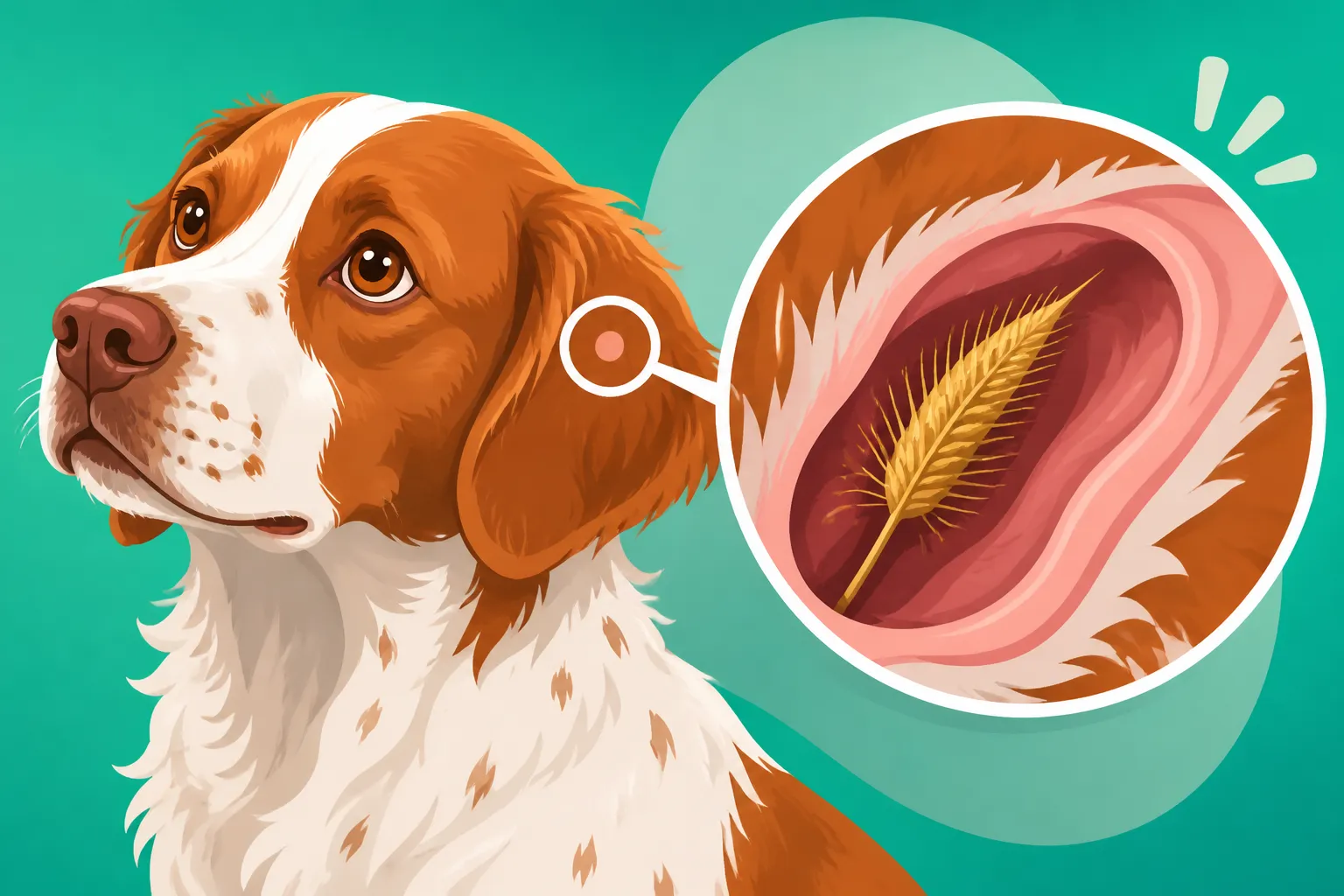
The ears are arguably the most notorious hiding spot for foxtails on any floppy-eared breed, and our Brittanys are no exception. Their characteristic drop ears, while wonderful for funneling scent, also create a warm, dark, and often moist environment that’s perfect for trapping foreign objects. As your Brittany plunges through tall grass, the foxtails easily flick into the ear canal. Once inside, the barbs prevent them from backing out, and the dog's own head shaking only serves to drive them deeper.
A foxtail in the ear can cause intense irritation and pain. You might notice your Brittany suddenly shaking their head violently, pawing at their ear incessantly, or tilting their head to one side. Sometimes they'll vocalize in pain when you touch the affected ear. If left untreated, a foxtail can migrate deep into the ear canal, perforate the eardrum, and even cause neurological issues if it reaches the brain. This is a situation that absolutely requires immediate veterinary attention. Don't try to dig it out yourself; you risk pushing it further in or damaging sensitive ear structures. Your vet will have specialized tools to safely remove it, often requiring sedation. For more details on preventing ear issues, check out our guide on Why a Brittany's Ears Get Infected Every Season. When considering pet insurance, a good plan from providers like Healthy Paws can be a lifesaver for unexpected vet visits like these.
Paws and Between the Toes
Brittanys are all about covering ground, and their paws take a beating. The soft skin between their toes and the pads themselves are incredibly vulnerable to foxtails. As they run through fields, these barbed seeds can get wedged between the toes, work their way into nail beds, or even puncture the pad itself.
The signs of a foxtail in the paw usually include persistent licking or chewing at the paw, lameness, or a reluctance to put weight on the foot. You might also notice swelling, redness, or a small, draining lesion or abscess forming. Carefully spread your Brittany's toes apart, inspecting deeply into the webbing and around each nail. Pay close attention to the dewclaws as well, as they can sometimes catch these weeds. I've known more than one hunter whose dog developed a painful limp from a hidden foxtail that required a trip to the vet. This is one of the reasons it's so important to regularly check a dog's feet; consider reading our article on How Often a Brittany's Pads Should Be Checked. If you spot a tiny hole or a swollen area with no obvious entry wound, it’s highly likely a foxtail has already burrowed in and will require professional extraction. These types of minor injuries can quickly become major concerns, and having pet insurance like that offered by Healthy Paws can help cover the diagnostic and treatment costs.
Eyes and Nose: Delicate Entry Points
While less common than ears or paws, foxtails can certainly find their way into your Brittany's eyes and nose, causing immediate and intense distress. Our Brittanys are constantly using their noses to scent game, making them prime targets for inhaling these irritants.
If a foxtail enters the nostril, your Brittany will likely experience sudden, violent sneezing fits, sometimes accompanied by nose bleeds or pawing at their face. It’s an alarming sight, and if the sneezing doesn't dislodge it, the foxtail can continue its upward journey into the nasal passages or even the lungs, leading to severe respiratory issues or infections. For the eyes, symptoms include excessive tearing, squinting, rubbing the face, and redness. A foxtail can scratch the cornea, cause conjunctivitis, or even become embedded in the soft tissues around the eye. Both of these situations are emergencies and warrant immediate veterinary attention. Any delay risks deeper penetration and more severe complications. Be sure to check your Brittany's eyes carefully after a day in the field; you can learn more about general eye care in Whether a Brittany Needs a Yearly Eye Exam.
Other Insidious Spots on Your Brittany
Foxtails aren't just limited to the obvious spots. Their barbed nature means they can latch onto almost any part of your Brittany and begin to burrow. You need to be thorough in your checks, paying attention to areas that collect debris or have thinner skin.
One common, often overlooked, area is the armpits. The skin here is soft and thin, and it's a natural collection point for debris as your dog runs. Similarly, the groin area and under the tail are prone to picking up foxtails. The feathering on a Brittany's belly can also hide these seeds, providing cover as they work their way into the skin. I’ve heard of foxtails migrating to truly unexpected places, like mammary glands in female dogs or even into the chest cavity, causing lung infections or pneumothorax. On male dogs, they can also lodge in the prepuce. Look for any new lumps, bumps, redness, swelling, or draining tracts. If you notice a small, firm bump that feels like a pimple and your dog is bothering it, it could be an embedded foxtail trying to form an abscess. This is why our article on How to Check a Brittany for Lumps is so relevant. When doing your post-hunt pat-down, don't just feel for burrs; really get in there and spread the fur, looking for these tiny, dangerous seeds. Even if you have to shave down some feathering to get a better look, it’s worth it. Knowing the potential for such invasive issues reinforces the value of comprehensive pet insurance, such as that offered by Healthy Paws, which can cover the diagnostics and procedures for these types of removals.
A Post-Hunt Inspection Checklist
Developing a comprehensive post-hunt inspection routine is your best defense against foxtails. Consistency is key, especially during prime foxtail season. Think of it as a vital part of your post-hunt cool-down for both you and your dog.
| Area to Inspect | What to Look For | Signs of Trouble | Action Needed |
|---|---|---|---|
| Ears (inside & out) | Plant material, redness, swelling, unusual odors | Head shaking, pawing at ears, tilting head, pain on touch | Vet visit for removal, potential sedation |
| Paws (between toes, pads, nail beds) | Seeds, redness, swelling, small puncture wounds, burrs | Licking/chewing paws, lameness, limping, draining abscess | Manual removal (if superficial), vet visit if embedded |
| Eyes | Foreign objects, redness, discharge, squinting | Excessive tearing, rubbing face, sensitivity to light | Vet visit (emergency) |
| Nose (nostrils) | Seeds, redness, discharge | Sudden violent sneezing, nose bleeds, pawing at face | Vet visit (emergency) |
| Armpits, Groin, Belly | Seeds, redness, swelling, small bumps, draining tracts | Licking/chewing area, tenderness, signs of infection | Manual removal (if superficial), vet visit if embedded |
| Coat (full body) | Any burrs, stickers, matted fur with embedded debris | Any area your dog is bothering repeatedly | Thorough brushing, manual removal |
This routine should ideally be done immediately after leaving the field, but definitely before your Brittany settles in for the night. The sooner you find a foxtail, the less chance it has to burrow deeply.
Immediate Actions and Prevention Strategies
If you find a foxtail that hasn't embedded deeply and is still visible and easily accessible, you can try to remove it carefully with tweezers. However, if there’s any doubt, or if it appears to have already punctured the skin, do not attempt to dig it out yourself. You risk pushing it further in or breaking it, making professional removal much harder. In those cases, it’s always best to head straight to your veterinarian. They can accurately diagnose and safely remove the foxtail, often using a sedated procedure to ensure your dog’s comfort and prevent further injury. Being prepared for these unexpected vet visits means you won't hesitate, and that's where a robust pet insurance plan can really make a difference. Many Brittany owners find that companies like Healthy Paws offer great coverage for these types of accidental injuries and necessary procedures.
Preventative measures are also vital. During foxtail season, try to avoid areas with dense, dry foxtail grass. If you can’t avoid it, consider trimming the feathering on your Brittany’s legs and belly to reduce the surface area for foxtails to attach. While it won't prevent everything, it can help. Some hunters also use protective gear like vests or leg wraps, but always ensure they fit properly and don't chafe or restrict movement. Keeping your Brittany’s coat well-groomed and brushed during the season also makes detection easier.
It's also a good idea to discuss tick and parasite prevention with your vet, as these can sometimes be confused with foxtail issues or complicate symptoms. For more insights on this, read our article, How Many Ticks a Brittany Picks Up in a Season. Remember, vigilance and quick action are your best tools in keeping your energetic Brittany safe from the threat of foxtails.
Disclaimer
This article is intended for informational purposes only and does not constitute veterinary advice. Always consult with a qualified veterinarian for any health concerns or before making any decisions about your Brittany's medical care.