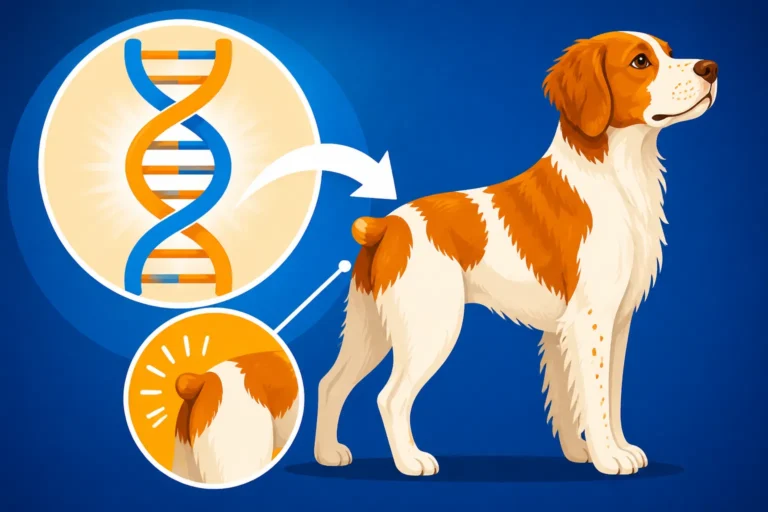
Whether a Tailless Brittany Puppy Is Worth More
A tailless Brittany puppy can look unusual beside its littermates, and it’s natural to wonder whether that rare-looking feature makes the puppy more valuable. Usually, a short or absent tail does not automatically justify a higher price. This guide explains what may cause the appearance, what to ask a breeder, and which qualities matter more when choosing a Brittany.
What a tailless Brittany puppy’s appearance can mean
Natural bobtail is different from a docked tail
A Brittany puppy with a very short tail may have been born that way, or its tail may have been surgically shortened, a procedure commonly called docking. A naturally short tail is often called a natural bobtail. Because the appearance can be similar, don’t rely on a quick glance or a breeder’s casual description to tell you which it is.
Ask the breeder directly whether the puppy was born with a short tail, whether any procedure was performed, and whether that information is recorded in the puppy’s veterinary or litter records. If the answer is unclear, ask your veterinarian to examine the puppy and explain what can and cannot be determined from the examination. A short tail alone is not proof of a particular genetic history.
Tail length can also vary among Brittanys. Some are born with a naturally short tail, while others have a longer tail that may have been docked. The breed’s history and standards around tail length can be confusing for new owners, especially if you’ve encountered breeders or online discussions that use “bobtail,” “docked,” and “tailless” as though they mean the same thing. For more background, see Some Brittanys Are Born Without a Tail and Whether a Brittany's Tail Is Docked.
A short tail does not tell you the puppy’s whole story
It’s easy to focus on the feature that stands out. But tail length doesn’t tell you whether a puppy will be healthy, confident, easy to train, comfortable in a busy home, or suited to hunting. Those qualities depend on a much wider picture: the puppy’s health, temperament, early experiences, and inherited traits.
Look at the puppy as an individual. Does it recover after a surprising noise? Does it engage with people without seeming constantly overwhelmed? How does it behave around its littermates? These are not definitive tests of adult behavior, but they can help you talk with the breeder about the puppy’s personality and the kind of home where it may thrive.
The parents matter, too. Ask to meet the dam if possible, and ask the breeder to describe the temperaments and health histories of both parents. A puppy with a striking natural bobtail is not automatically a better choice than a littermate with a longer tail. If you’re comparing puppies, prioritize the fit between the dog and your household over the feature that first caught your eye.
Is a natural bobtail worth more?
There is no automatic premium for a short tail
A natural bobtail may seem unusual, but unusual does not automatically mean more valuable. There is no universal rule that a tailless or short-tailed Brittany should cost more than its littermates. Breeders set their own terms, and the reasons behind a puppy’s asking price can vary. What matters is whether the breeder can clearly explain the price and show that it reflects responsible care, appropriate health screening, and the puppy’s individual circumstances—not just a rare-looking feature.
Be wary of a sales pitch that treats the puppy’s tail length as proof of superior quality or guaranteed hunting ability. A short tail does not by itself establish better breeding, a stronger working background, or a healthier puppy. If the breeder suggests that the puppy is worth more solely because it is tailless, ask what evidence supports that claim and whether the same standards apply to the rest of the litter.
It can help to compare the breeder’s explanation with the puppy’s overall documentation. Ask what health tests were completed for the parents, whether results are available for you to review, and what veterinary care the litter has received. The questions in Which Questions to Ask a Brittany Breeder can help you organize that conversation. For a broader look at health documentation, see What a Brittany Breeder Should Have Tested.
Breeding plans and registration can affect how breeders describe value
Some breeders may discuss tail length in relation to breed standards, show prospects, or a future breeding program. Those are separate considerations from whether a puppy will make a healthy, loved companion. If you’re buying a pet, be clear about that from the beginning. A breeder should be able to explain any registration conditions or contract terms without implying that a puppy’s unusual appearance guarantees future success in the show ring or as a breeding dog.
If you are considering breeding, the conversation needs to go well beyond appearance. Ask how the breeder evaluates the puppy’s structure, temperament, health, and pedigree, and whether they have consulted knowledgeable breed mentors or veterinary professionals. Natural bobtail inheritance can be more complicated than simply pairing two short-tailed dogs and expecting a predictable result. Breeding decisions should be based on health and responsible genetic planning, not on the hope of producing a particular look.
For registration and breed-type questions, be precise about the puppy’s background and documentation. Brittanys from different lines may be discussed using terms such as American Brittany and French Brittany, and those labels can lead to questions about standards and events. American Brittany and Epagneul Breton Went Separate Ways explains why those distinctions come up. A puppy’s tail length alone does not establish which type it belongs to or what opportunities it may have.
| What you are evaluating | What to ask or check | Why it matters |
|---|---|---|
| Tail appearance | Was the puppy born with a short tail, or was it docked? | Helps clarify the puppy’s history rather than relying on appearance |
| Price | What specific factors explain the asking price? | Separates documented value from a premium based only on looks |
| Health | Which recommended health screenings were completed for the parents? | Health information is more meaningful than tail length when assessing responsible breeding |
| Temperament | What has the breeder observed about this puppy and its littermates? | Helps you choose a dog suited to your household and plans |
| Contract | Are registration, breeding, or placement terms clearly written? | Prevents misunderstandings about what you are agreeing to |
| Veterinary records | Can you review the puppy’s examination and care records? | Gives you a clearer picture of the puppy’s health history |
How to assess the puppy and breeder
Ask for clear records and straightforward answers
A responsible breeder should be comfortable answering questions about the puppy’s tail and the litter’s care. Ask whether the puppy’s tail length was noted at birth, whether a procedure was performed, and what records are available. If the puppy has been examined by a veterinarian, ask to review the paperwork and discuss any findings with your own veterinarian before finalizing the decision.
You can also ask the breeder to explain the puppy’s health screening in plain language. “The parents are healthy” is not the same as showing what checks were done. Ask what screening is appropriate for the breed and the particular lines, and whether you can see results. You can learn more about hip screening in What Hip Screening Did for the Brittany Spaniel and about the breed’s overall health in The Brittany Is One of the Healthiest Sporting Breeds.
Pay attention to how the breeder responds. A thoughtful breeder may not know every answer immediately, but should be willing to clarify, provide relevant records, or help you speak with a veterinarian. Pressure to pay quickly, vague claims about a puppy being “rare,” or reluctance to discuss health and contract terms are reasons to slow down. Don’t let fear that another buyer will take the puppy rush you past basic questions.
Choose for lifestyle, not a novelty feature
A Brittany is an energetic sporting dog, and the best match depends on more than appearance. Think honestly about the exercise, training, companionship, and daily routine you can provide. A family seeking an active companion may have different needs from a hunter looking for a dog to work in the field. Tell the breeder how the puppy will spend its days and ask which puppy’s temperament and likely needs seem like the best fit.
This is especially important if you are choosing between littermates. One puppy may be bolder and more persistent, while another may be more reserved or people-focused. Early observations are only a starting point, not a guarantee of how a dog will mature, but the breeder’s experience with the litter can help you make a more informed choice. The puppy with the shortest tail is not necessarily the one best suited to your life.
Once you’ve chosen a puppy, prepare for ordinary puppy care rather than treating the tail as a special status symbol. Make a plan for food, a safe sleeping area, identification, grooming, and veterinary visits. If shopping at Chewy is part of your routine, you can use a basic supply checklist to avoid buying gear you don’t need before you know your puppy’s size and habits. Ask the breeder what food the puppy is currently eating and discuss any transition with your veterinarian.
Practical steps before you decide
Use this checklist during the breeder conversation
Before placing a deposit or bringing a puppy home, take a few minutes to write down your questions. It’s surprisingly easy to forget what you meant to ask when you’re standing in a room full of lively puppies. Keep the conversation focused on the puppy’s history, health, and fit for your home.
- Ask whether the puppy was born with a short tail or whether it was docked.
- Request available veterinary records and relevant documentation about the litter.
- Ask what health screening was completed for the parents and whether you can review results.
- Discuss the puppy’s observed temperament and how it compares with its littermates.
- Read the contract carefully, including any registration or breeding restrictions.
- Ask what the breeder recommends for the puppy’s first weeks at home, including feeding and follow-up care.
- If anything about the tail or the puppy’s health is uncertain, arrange a conversation with your veterinarian before making a final commitment.
You don’t need to become a genetics expert to make a responsible decision. You do need enough information to understand what the breeder is telling you and to notice when the explanation doesn’t add up. If the puppy’s tail length is an important part of the breeder’s price or sales pitch, ask for a clear explanation rather than assuming that rarity equals value.
Plan for care after bringing the puppy home
A puppy’s needs will change as it grows, so keep the first shopping list practical. Focus on safe everyday basics, a comfortable crate or resting space, a leash and collar that fit properly, and food that won’t require an abrupt change. If you use Chewy to source routine supplies, compare products based on your puppy’s actual needs and your veterinarian’s guidance instead of choosing items simply because they’re marketed for sporting breeds.
Check the puppy regularly as part of normal handling and grooming. You’ll get used to what is typical for your dog and are more likely to notice a new irritation, injury, or change in comfort. The coat and ears deserve attention too, particularly if your Brittany will explore brush, grass, or wet ground. For practical care habits, see What to Check on a Brittany After Every Outing and Keeping Water Out of a Brittany's Ears. Chewy may be one convenient place to look for grooming or cleaning supplies, but ask your veterinary clinic which products are suitable if your puppy has sensitive skin or an ear problem.
Above all, remember that a puppy’s worth is not measured by tail length. A natural bobtail can be an interesting part of a Brittany’s appearance, but responsible breeding, good health information, a suitable temperament, and a strong match with your home matter far more. If a breeder’s explanation is transparent and the puppy is a good fit, the short tail can simply be one distinctive feature of the dog you bring home.
Disclaimer
This article is for general informational purposes only and does not constitute professional advice. Laws, prices and regulations vary by location and change over time. Consult a qualified professional for guidance on your specific situation.